
Patek Philippe Perpetual Calendar: From Reference 1526 to the 5320G

Zach Charles • August 2, 2026

Share this article

Patek Philippe Perpetual Calendar: History of the Complication

A perpetual calendar is watchmaking's answer to the irregular structure of the Gregorian year. It knows not just how many days are in each month — 28, 29, 30, or 31 — but sequences through them automatically, including the four-year cycle of leap years. Once correctly set, a perpetual calendar wristwatch requires no manual adjustment until 2100, the century year that is not a leap year despite being divisible by four. Patek Philippe has been producing perpetual calendar wristwatches longer than any other manufacture, beginning with the reference 1526 in approximately 1941, and the complication has remained central to the brand's technical identity through every decade since.


Patek Philippe Museum, Geneva
The Patek Philippe Museum in Geneva — housing over 2,000 timepieces spanning five centuries of horological history, from 16th-century enamel watches to modern Patek complications.
Photo: Mourad Ben Abdallah (Moumou82) — CC BY-SA 3.0 — Wikimedia Commons

The First Perpetual Calendar Wristwatch: Reference 1526

Patek Philippe watch collection at Tiffany & Co., New York, 2008
Patek Philippe watches displayed at the Tiffany & Co. dedicated boutique opening in New York, April 2008 — illustrating the depth of the brand’s complications range.
Photo: Kamal Aboul-Hosn — CC BY 2.0 — Wikimedia Commons
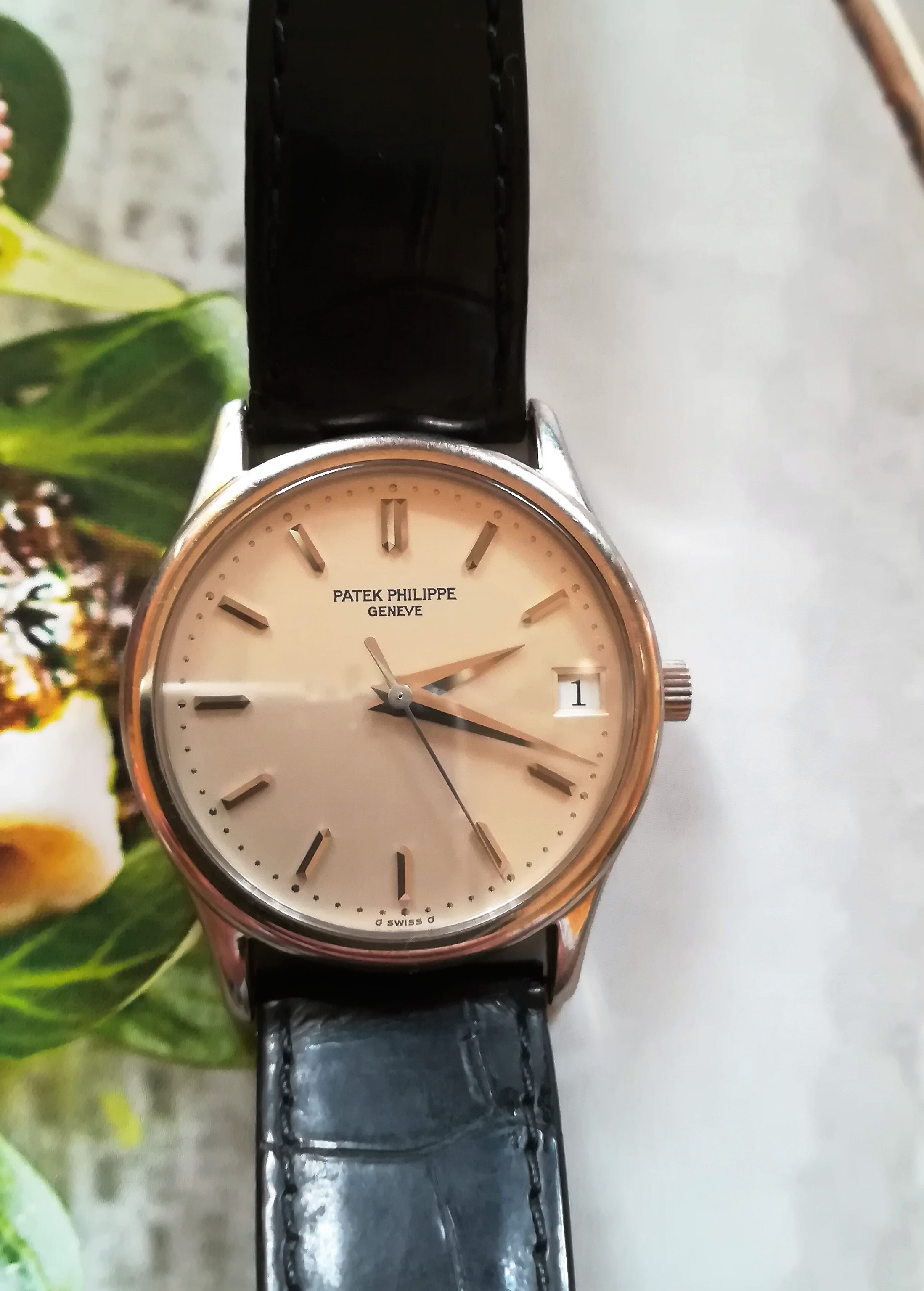
The reference 1526 holds the distinction of being the first serially produced perpetual calendar wristwatch. Introduced in approximately 1941, it placed the complication — which had existed in pocket watches for over a century — into the format that would define the twentieth century's approach to fine timekeeping. The 1526 was powered by a manually wound movement and displayed the perpetual calendar's outputs across a dial arrangement that would establish the visual grammar used by Patek for decades afterward: separate apertures or subdials for the day, date, month, and moon phase.

The production numbers for the 1526 are small by any modern standard, as was typical for high-complication wristwatches of the 1940s. Most examples are in yellow gold. The 1526 is now among the most significant vintage Patek references, valued not only as an object but as a historical marker — the point at which the perpetual calendar transition from pocket watch complication to wristwatch complication was completed.


Reference 3940: The Modern Foundation

Patek Philippe Calatrava — the archetypical dress watch
A Patek Philippe Calatrava — the reference that defined the modern round dress watch: clean dial, Calatrava cross hourglass lugs, and a movement of museum quality.
Photo: Clyde94 — CC BY-SA 4.0 — Wikimedia Commons

The reference 3940, introduced in 1985, defined the perpetual calendar wristwatch for a full generation of collectors. It was powered by the Calibre 240 Q — a self-winding movement built around Patek's celebrated micro-rotor, which winds the mainspring through a small rotor recessed into the movement plane rather than a full-sized rotor spinning above it. The result is a thinner movement profile that allowed the 3940 to achieve dimensions appropriate to a dress watch despite the mechanical complexity of a perpetual calendar.

The Calibre 240 Q remains one of Patek's most important movements. The micro-rotor design compresses the movement to a total thickness that few manually wound perpetual calibres can match, and the mechanism's reliability over decades of service established it as the reference standard for automatic perpetual calendar movements. The 3940's dial layout — day and month in windows at 12 o'clock, date indicated by a large hand pointing to a peripheral scale, moon phase at 6 o'clock — became the template that subsequent references would modify but not fundamentally redesign.


Reference 5140 and the Ultra-Thin Proposition

Patek Philippe Archives building, Plan-les-Ouates, Geneva
The Patek Philippe Archives in Plan-les-Ouates, Geneva — where records dating to the brand’s 1839 founding are maintained, enabling authentication of every historical reference.
Photo: Franck Schneider — CC BY-SA 3.0 — Wikimedia Commons

The reference 5140, introduced in 2006, carried the Calibre 240 Q forward into a 38.5mm case with an exhibition caseback that revealed the micro-rotor's elegance. It was the direct evolution of the 3940: same movement architecture, more refined presentation, and an overall package that positioned the perpetual calendar as an ultra-thin dress watch rather than a technical showpiece. The 5140 was discontinued and replaced by the 5327, but it occupies an important position in the transition from the 3940's generation to the current catalogue.

The 5327, introduced in 2016, is the current flagship perpetual calendar built on the Calibre 240 Q platform. It uses Breguet Arabic numerals on its dial — a choice that references the historical typographies of eighteenth- and nineteenth-century watchmaking — and maintains the classical case proportions established by the 5140. The 5327 is, by explicit design philosophy, the heir to the 3940's tradition: a perpetual calendar that presents the complication with maximum elegance and minimum case bulk.


Reference 5320G: A Different Approach

Patek Philippe watch collection at Tiffany & Co., New York, 2008
Patek Philippe timepieces at Tiffany & Co., New York, April 2008 — the Tiffany partnership, dating to 1851, is one of the longest-running authorised dealer relationships in watchmaking.
Photo: Kamal Aboul-Hosn — CC BY 2.0 — Wikimedia Commons
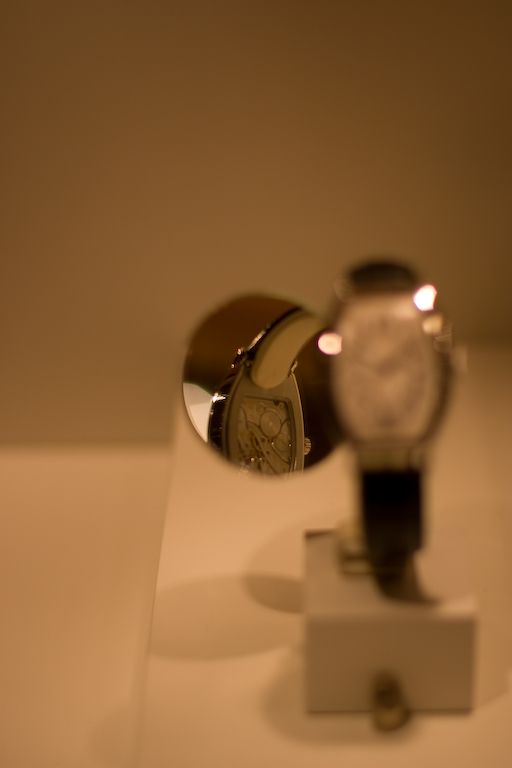
The reference 5320G, introduced in 2017, takes the perpetual calendar in a different direction from the 5327. Where the 5327 emphasizes thinness and restraint, the 5320G uses the Calibre 324 S Q — a movement containing 367 parts, beating at 21,600 vph, that is architecturally separate from the ultra-thin 240 Q platform. The practical difference is immediately visible on the dial: the 5320G features a center sweep seconds hand, which the 5140 and 5327 lack entirely.

The 5320G's display is organized around a day and month indication at 12 o'clock — both in the same window, separated by a vertical marker — with a retrograde date display using a hand that sweeps across a sector before snapping back at month-end. This is a more visually animated approach to the perpetual calendar than the classical layout, and it attracted significant collector attention at launch, particularly in the salmon dial variant (5320G-011), which combined the retrograde display with a warm pink-toned dial in white gold.

The 5320G and 5327 are not competing products within Patek's view; they represent distinct approaches to the same complication and address collectors with different aesthetic preferences. The 5327 is the classical choice; the 5320G is the contemporary one.


Understanding the Perpetual Calendar Mechanism

Patek Philippe complications at Tiffany & Co., New York, 2008
Patek Philippe complications on display at the Tiffany & Co. boutique, New York, April 2008 — the perpetual calendars and chronographs that define the brand’s Grand Complication programme.
Photo: Kamal Aboul-Hosn — CC BY 2.0 — Wikimedia Commons
The perpetual calendar's ability to track irregular month lengths automatically is achieved through a programmable cam or lever system that encodes the calendar year's structure. A 48-month cam — one full rotation over four years — carries the information needed to advance the date display by the correct amount at each month-end, accounting for the 28, 29, 30, and 31-day months in sequence. The February 29 position on the cam is active only once every four years, handling the leap year automatically.

The consequence of this mechanical programming is that the perpetual calendar requires no correction from the wearer until 2100, when the Gregorian calendar convention that century years are not leap years (unless divisible by 400) creates a discrepancy that a standard perpetual calendar's four-year cycle cannot anticipate. A perpetual calendar set correctly today will need its February corrected once, 74 years from now.

The distinction from the annual calendar — a separate Patek invention discussed in its own article — is significant: an annual calendar distinguishes 30-day from 31-day months automatically but still requires a single manual correction each year at the end of February, because it does not account for the full leap year cycle. The perpetual calendar handles February's variable length automatically.


Latest News

Frequently Asked Questions

What was the first perpetual calendar wristwatch?
The Patek Philippe reference 1526, introduced in approximately 1941, is the first serially produced perpetual calendar wristwatch. It predates comparable wristwatch perpetual calendars from any other manufacture.

What is the Calibre 240 Q?
The Calibre 240 Q is Patek Philippe's ultra-thin automatic perpetual calendar movement, built around a micro-rotor that winds the mainspring through a small rotor recessed into the movement plate. It powers the reference 5327 and was used in the 3940 and 5140. Its combination of thinness and perpetual calendar function is the foundation of Patek's classical perpetual calendar wristwatch.

How does the 5320G differ from the 5327?
The 5327 uses the ultra-thin Calibre 240 Q with a classical dial layout and no center seconds hand. The 5320G uses the Calibre 324 S Q with a center sweep seconds, retrograde date display, and day/month at 12 o'clock. Both are perpetual calendars, but they represent different philosophies: the 5327 is classical and ultra-thin; the 5320G is contemporary and display-forward.

How often does a perpetual calendar need correction?
A perpetual calendar set correctly requires no manual adjustment until the year 2100. At that point, a one-day correction is needed because 2100 is not a leap year despite being divisible by four (century years must be divisible by 400 to qualify as leap years under the Gregorian system, and 2100 is not).

What is a micro-rotor?
A micro-rotor is a self-winding mechanism in which the winding rotor is a small disc recessed into the movement plane rather than a full-sized rotor mounted above the movement bridges. The micro-rotor allows for a thinner overall movement profile. Patek Philippe's Calibre 240 series, including the 240 Q perpetual calendar, uses this construction.


Related Articles

Recent Posts

By Zach Charles • October 10, 2026
Hamilton's American Classic Cushion Mechanical revives its 1926 Art Deco cushion watches, seen in Oppenheimer, in 30mm and 34mm with the new hand-wound…
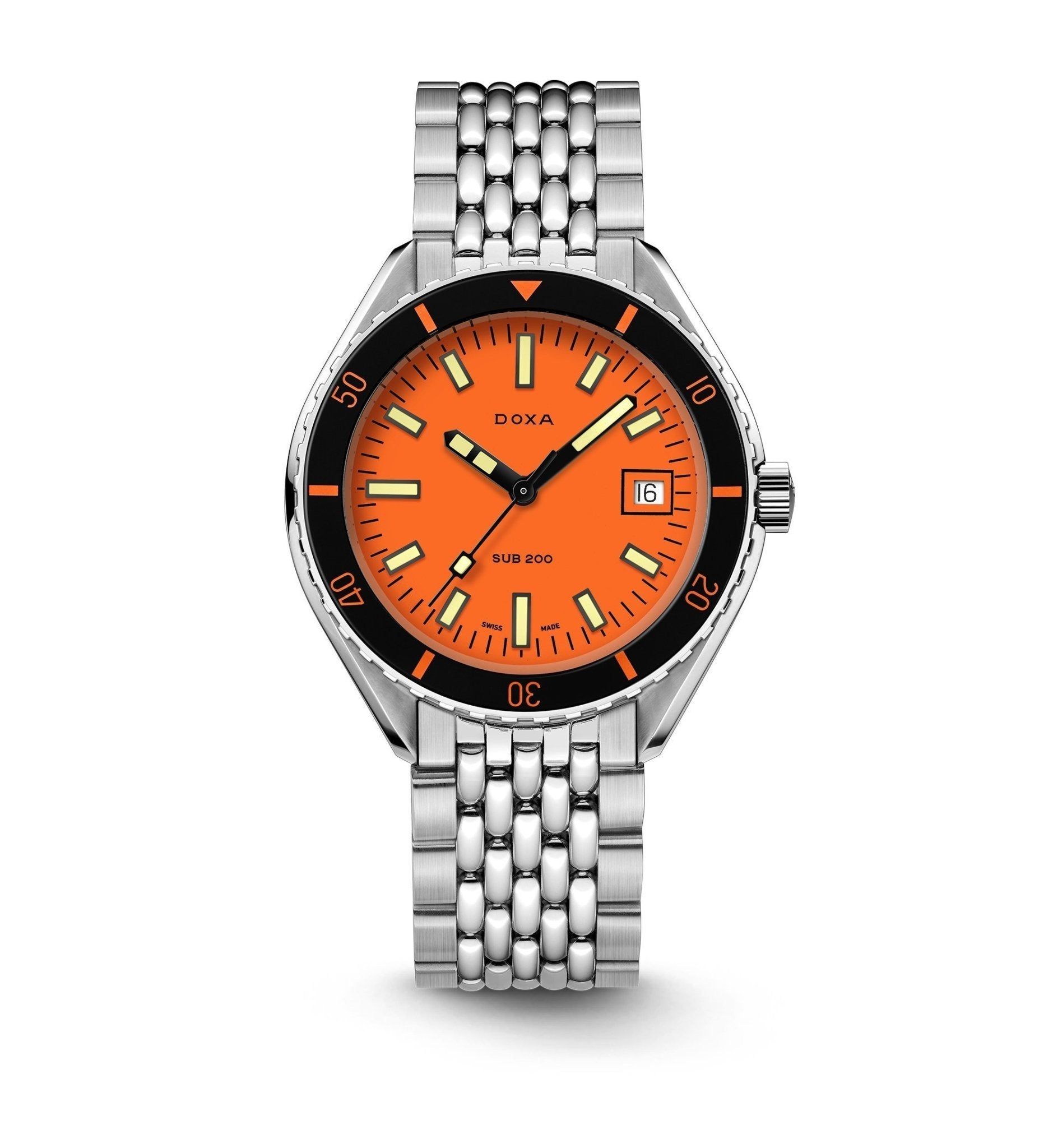
Doxa SUB 200: The Accessible Everyday Diver
By Zach Charles • October 10, 2026
Complete guide to the Doxa SUB 200 — 42mm, 200m, four colorways, Sellita SW200-1. The accessible entry to the Doxa SUB family with the full…
By Zach Charles • October 10, 2026
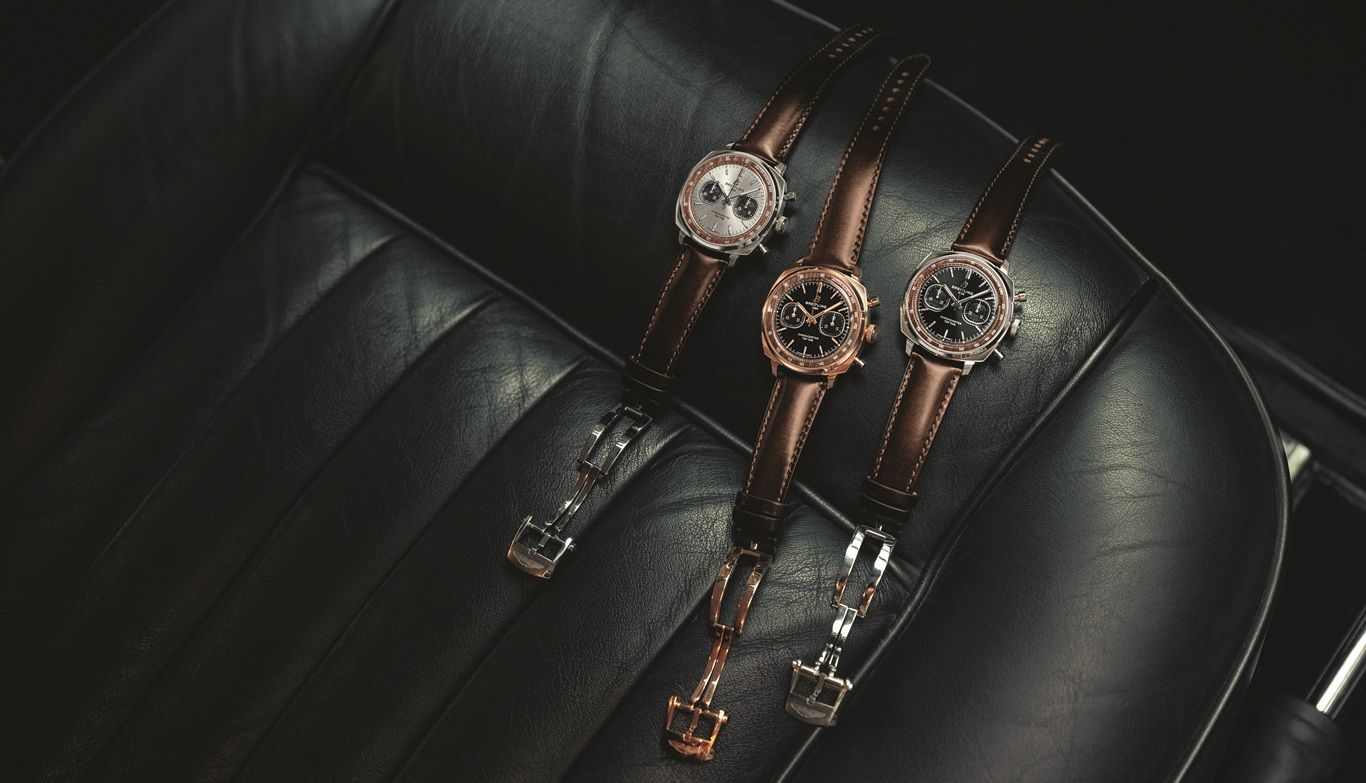
The Breitling Top Time B01 Aston Martin DB5 pairs a cushion-shaped 41mm case, a wooden inner ring and the in-house Caliber 01 across three limited…
By Zach Charles • October 10, 2026
TAG Heuer developed the Mikrograph (2011, 1/100th second), Mikrotimer Flying 1000 (2011, 1/1000th second), and Mikrogirder (2012, 1/2000th second).
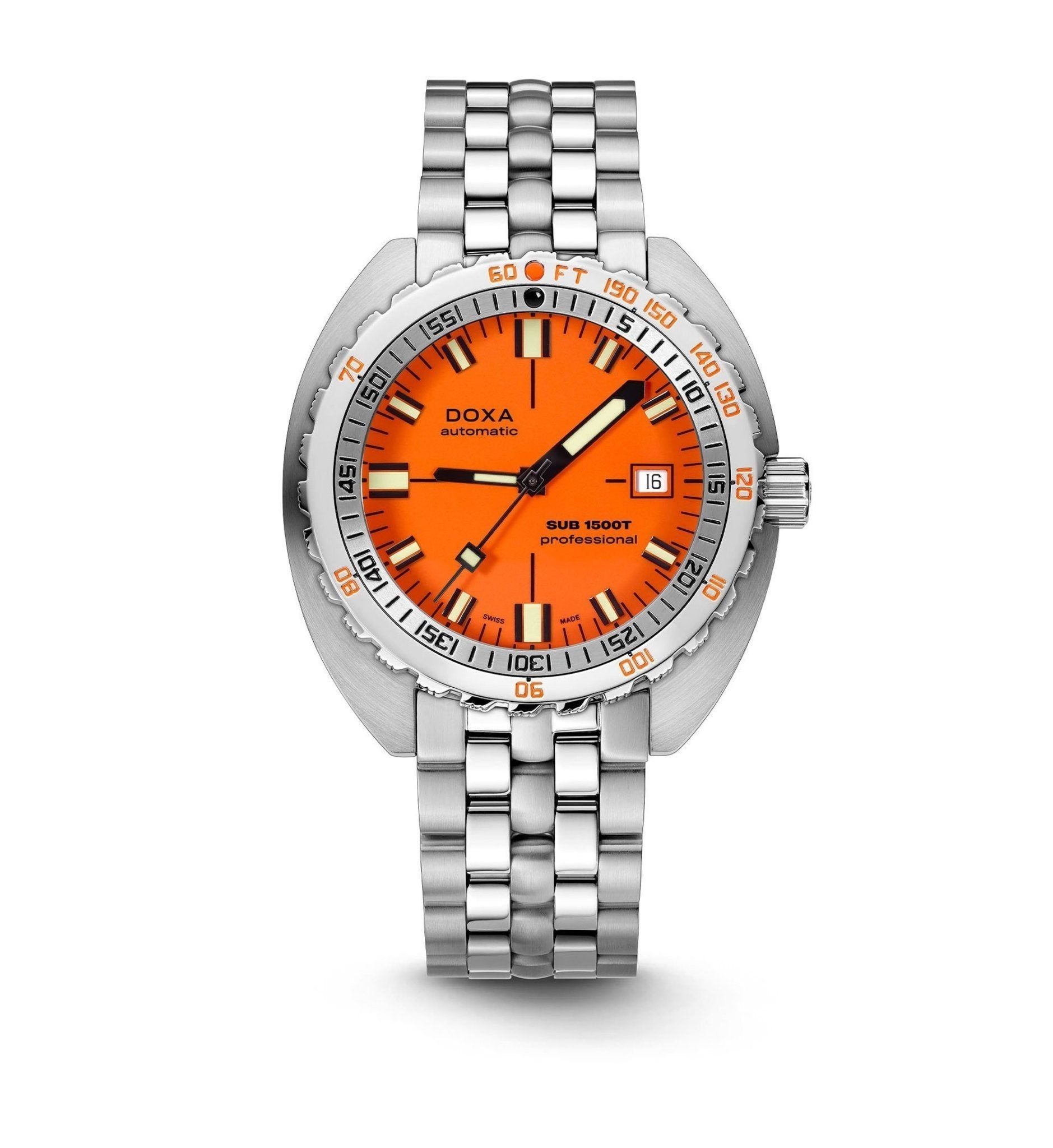
Doxa SUB 1500T: The 1,500-Metre Depth-Rating Flagship
By Zach Charles • October 10, 2026
Complete guide to the Doxa SUB 1500T — 45mm, 1,500m depth rating, helium escape valve, ETA 2892-2 movement, USD 2,690.
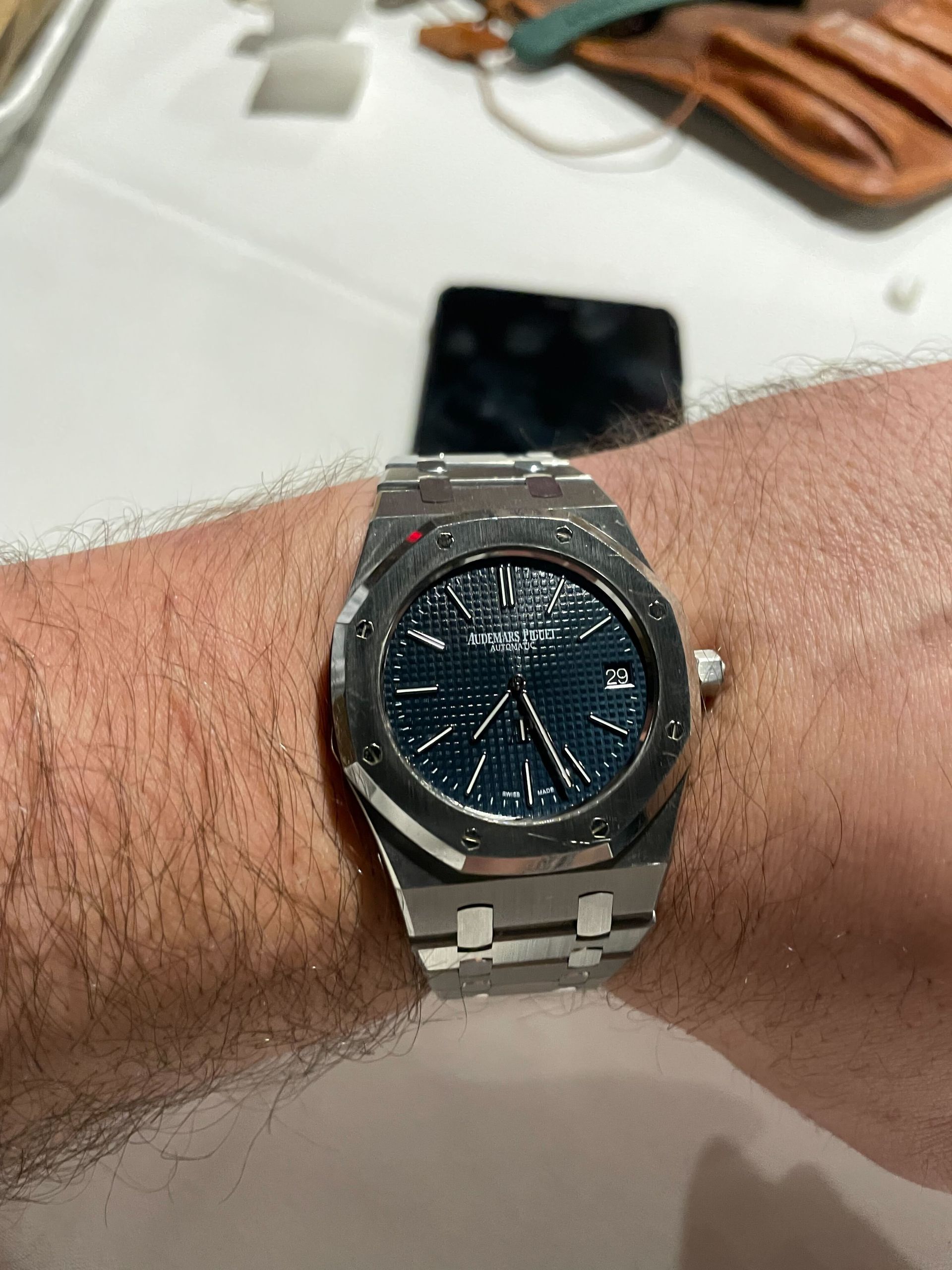
Audemars Piguet Royal Oak 'Jumbo' ref. 15202 with blue tapisserie dial and integrated steel bracelet
By Zach Charles • October 10, 2026
The Audemars Piguet × Swatch Royal Pop is a $400 bioceramic pocket watch in 8 colourways, powered by a new hand-wound SISTEM51 with 90+ hour power…

Time on the Move logo
By Zach Charles • October 10, 2026
Zach Charles is the editor of Time on the Move, an independent watch reference covering brand and model histories, buying guides and release news…
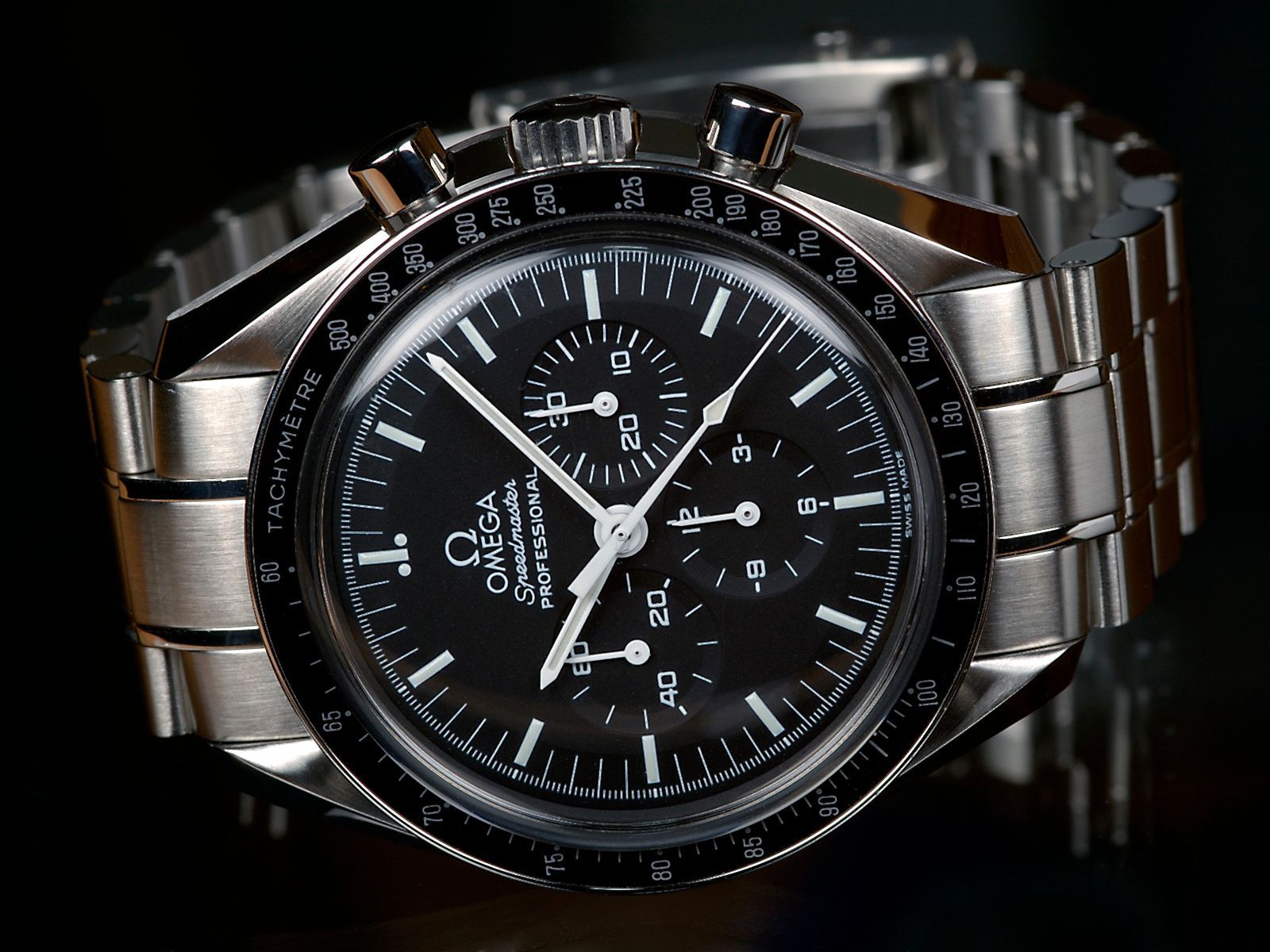
Omega Speedmaster Professional 'Moonwatch' chronograph, front view on steel bracelet
By Zach Charles • October 9, 2026
Find the best watches at every price point from $500 to $15,000 — new and pre-owned. Covers every budget tier with specific reference picks, brand…
By Zach Charles • October 9, 2026
The latest watch news: new releases, Watches and Wonders coverage, discontinuations, industry analysis, and market trends. Currently 1 article.
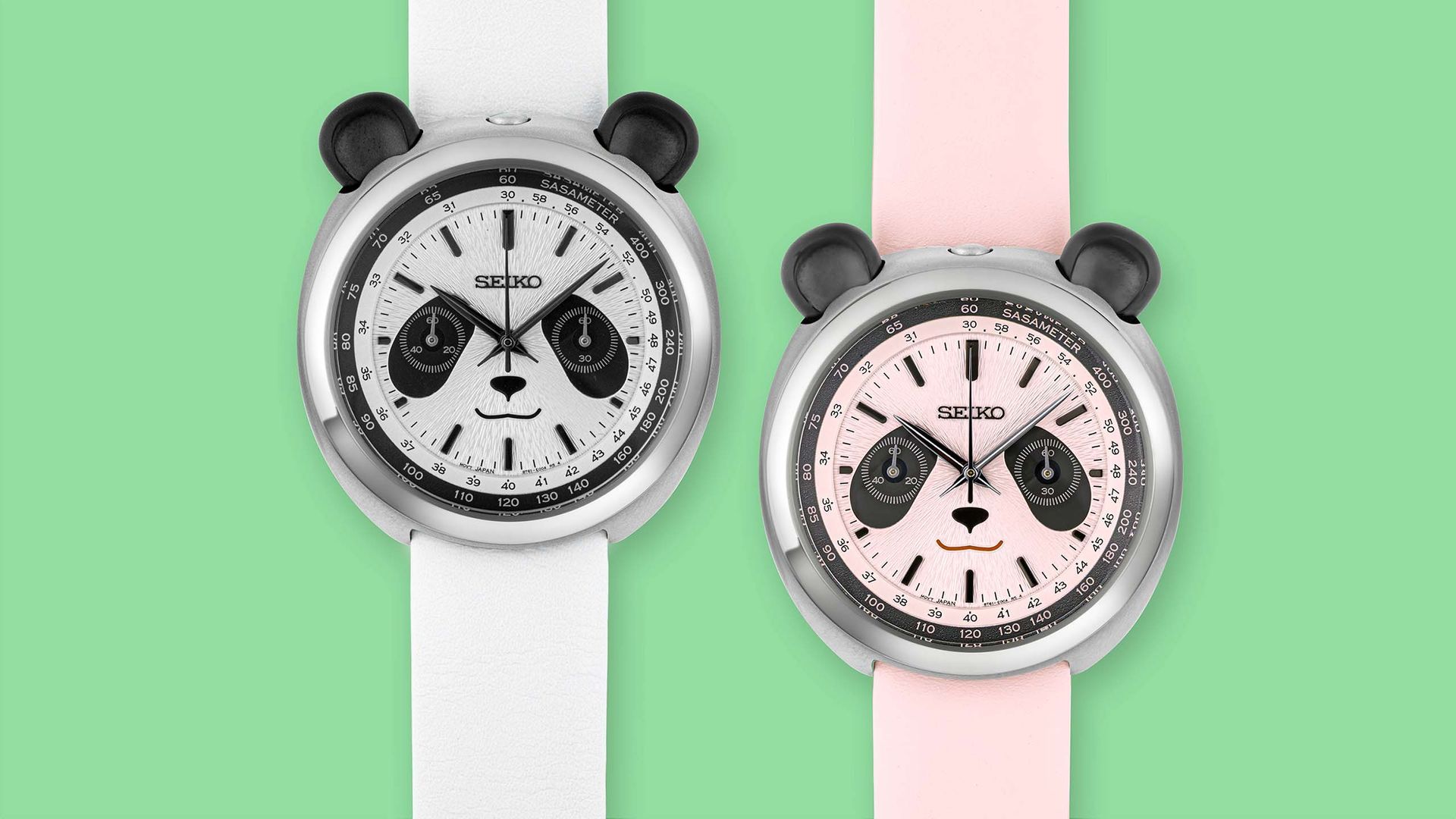
Seiko's New Panda Chronograph Is Literally a Panda: The Power Design Project HHK001 and HHK002
By Zach Charles • October 8, 2026
Seiko's Power Design Project panda chronograph (HHK001, HHK002) turns the panda dial into an actual panda face, with ear pushers, a 'Sasameter' and a 3D…
Show More