Patek Philippe Calatrava: The Dress Watch Standard Since 1932
Calatrava: Patek Philippe's Bauhaus Dress Watch Since 1932
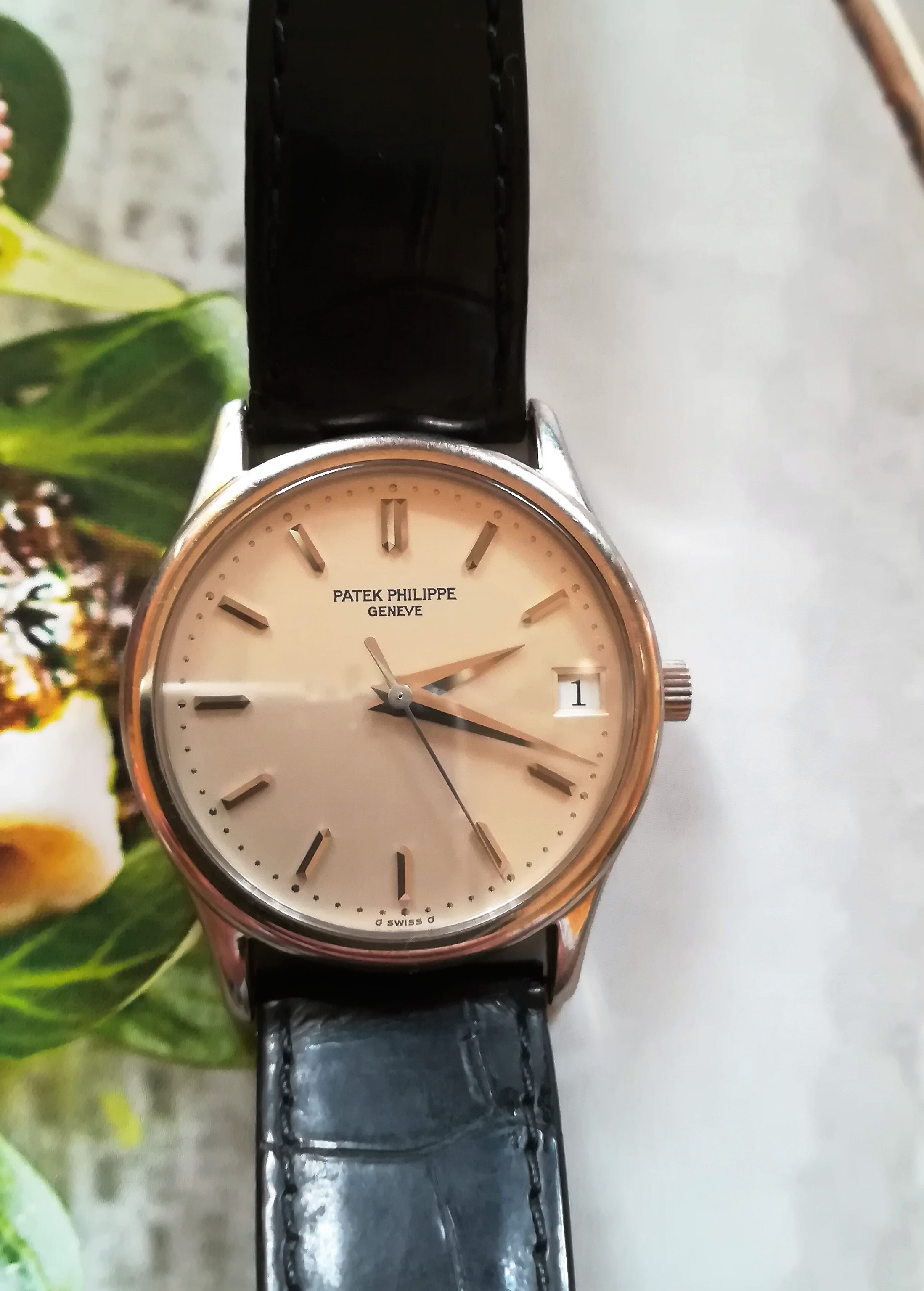
Everything Patek Philippe is not visible in the Calatrava. There is no complication beyond the hands and an occasional seconds display. There is no sports case, no integrated bracelet, no avant-garde material. The Calatrava is a round watch, in a precious metal case, with a clean dial and a movement whose excellence is not on display because the caseback is closed. It argues its case entirely through what it is not.
The Bauhaus school — founded in Weimar in 1919, at its peak influence in European design when the Calatrava was created in 1932 — held that form follows function, that ornamentation is applied without principle, and that a designed object's geometry should emerge from its purpose rather than be imposed on it. The Calatrava reference 96 applied that logic to watchmaking: the round case follows the round movement; the dial carries only the information the watch is required to display; nothing else is present.
Ninety-plus years on, that logic has not been superseded. The Calatrava remains in production in forms that are directly continuous with the 1932 original.
Photo: Clyde94 — CC BY-SA 4.0 — Wikimedia Commons
The Calatrava Cross and the Naming
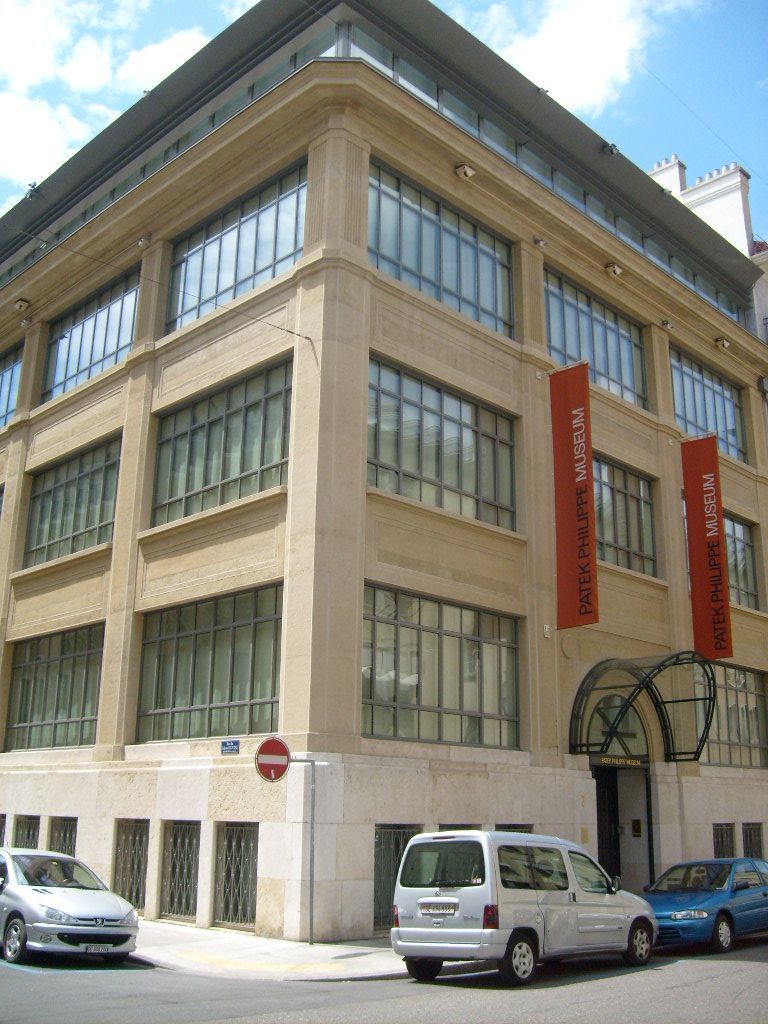
Photo: Mourad Ben Abdallah (Moumou82) — CC BY-SA 3.0 — Wikimedia Commons
The Calatrava cross — a flared cross with forked extremities — was registered as a Patek Philippe trademark on 27 April 1887 , forty-five years before the watch collection bearing its name was introduced. The cross originates from the Knights of Calatrava, a twelfth-century Spanish military order that defended the Calatrava fortress against the Moors in 1158.
The watch collection was named Calatrava only in reference to the cross that had been Patek's mark for nearly half a century. The relationship is not thematic — there is nothing specifically chivalric about the watch's design — but the name has held for nearly a century without revision.
Reference 96 — 1932
Photo: Franck Schneider — CC BY-SA 3.0 — Wikimedia Commons
The first Calatrava was reference 96 , introduced in 1932 and assigned Patek Philippe's first formally tracked reference number. It remains one of the most significant watch designs in the history of the round dress watch.
Original specifications:
- Case diameter: 31mm
- Movement: A 12-ligne ébauche from LeCoultre, then — from 1934
— Patek's in-house Calibre 12"'120
, developed under watchmaker Jean Pfister following the Stern family's 1932 acquisition
- Dial: Clean, minimal, in ivory or silver; subsidiary seconds at 6 o'clock
- Lugs: Soldered directly to the case in a style that made them appear to grow from the middle case rather than being attached as separate elements — a distinction from the bolted-lug aesthetic of many contemporaries that had carried over from pocket watch cases
The Bauhaus connection: The Ref. 96's geometry is explicitly Bauhaus-influenced. The principles: form follows function, geometric purity, no applied decoration. The circular case diameter corresponds to the circular movement inside. The lugs emerge organically from the case rather than interrupting it. The dial provides only what is needed — hours, minutes, seconds — without subsidiary ornamentation. The watch communicates exactly what it costs to produce without announcing it.
Production of the reference 96 ran from 1932 to approximately 1973 — over forty years, with variations in dial style, hand configuration, and finishing across its production span.
Reference 570 — 1938
Photo: Kamal Aboul-Hosn — CC BY 2.0 — Wikimedia Commons
Reference 570 , introduced in 1938 , was effectively the Calatrava at 35.5mm — a "big brother" to the 31mm ref. 96, using the same Calibre 12"'120 architecture. It ran until approximately 1970, producing a family of variants including rare examples in platinum.
The coexistence of the 96 and 570 — differing only in case size and minor dial details — established a pattern the Calatrava has followed ever since: the same design principles applied across a range of case dimensions, allowing the buyer to choose proportions without choosing a different watch.
Reference 2526 — First Automatic Calatrava
Photo: Kamal Aboul-Hosn — CC BY 2.0 — Wikimedia Commons
Reference 2526 , introduced in 1953 , carries two historical firsts: it was Patek Philippe's first serially produced automatic wristwatch, and it housed an enamel dial.
The movement: Calibre 12-600 AT — Patek's first automatic calibre, 30 jewels, reportedly accurate to ±1 second per day at its 1953 introduction. The self-winding mechanism represented a significant production investment for a brand that had focused on hand-wound movements.
The enamel dial: Grand feu enamel — fired at high temperature onto a copper base — is among the most durable watch dial materials, resistant to fading and aging in ways that lacquer and print dials are not. The 2526's enamel dial was not purely aesthetic; it was a durability choice for a watch whose case was 36mm (large for the era) in yellow gold.
Production figures: Approximately 2,500 total pieces across all metals — roughly 480 in yellow gold, 50 in pink gold, 30 in white gold, 20 in platinum, though these figures vary across sources and should be treated as approximate.
The reference 2526 is among the most sought Calatrava references in the vintage market. Original examples in good condition command prices that reflect both their historical significance and the difficulty of finding unworn or original-dial examples after seven decades.
Modern Key References
Photo: Kamal Aboul-Hosn — CC BY 2.0 — Wikimedia Commons
Ref. 5120 (2001–2016): 35mm, automatic Calibre 240 (micro-rotor), no running seconds, sapphire caseback. A clean expression of the Calatrava for the modern collector who values movement visibility.
Ref. 5196 (introduced 2004 ): Often described as the most authentic modern Calatrava — the direct heir to the ref. 96's aesthetic. 37mm, hand-wound Calibre 215 PS, small seconds at 6 o'clock. Available in yellow, white, and rose gold and platinum. The 5196 is admired precisely because it does not update the original's logic; it continues it.
Ref. 5127 (introduced 2005 ): 37mm, automatic, center seconds, date at 3 o'clock. The Calatrava for daily wear rather than formal occasions — the date and sweep seconds add utility without departing from the design vocabulary.
Ref. 6119 (introduced approximately 2021): The contemporary primary Calatrava. 39mm, Calibre 26-330 automatic, center seconds, date at 3. Updated lug profile; modern case proportions while maintaining the classical Calatrava geometry.
What the Calatrava Is Not
Understanding the Calatrava requires understanding what it deliberately excludes.
It is not a complicated watch. The Calatrava family carries dates and seconds — occasionally a moonphase — but grand complications belong to other collections. A Calatrava with a perpetual calendar exists; it is not what the Calatrava is principally designed to express.
It is not primarily a collector speculation vehicle. Calatrava references trade near or at retail in most configurations. They do not command the secondary market premiums driven by allocation scarcity that the Nautilus family generates. The Calatrava is for buyers who want the watch, not the investment.
Collector Position
The Calatrava occupies what is simultaneously the most classical and the least discussed position in Patek's modern catalogue. Collectors who evaluate watches on manufacturing quality — movement finishing, case geometry, dial execution — consistently rate the Calatrava among the highest expressions of what Patek does. Collectors whose primary metric is secondary market appreciation focus on the Nautilus and Aquanaut.
Both groups are correct in their contexts. The Calatrava's market is defined by people who want to wear an excellent watch rather than hold an appreciating asset. That buyer profile is smaller than it was in 1995 and larger than it was in 2015.
Price range: Current production Calatrava references in 18K gold retail from approximately CHF 20,000–35,000 for time-only models. Complications add substantially. Platinum variants carry further premiums.
Frequently Asked Questions
What is the Calatrava?
Patek Philippe's core dress watch collection, introduced as reference 96 in 1932. A round precious-metal watch in the Bauhaus tradition — form following function, no ornamentation beyond what the design requires. The collection has been in continuous production for over ninety years.
Where does the name "Calatrava" come from?
From the Calatrava cross, which Patek Philippe registered as a trademark in 1887. The cross originates from the Knights of Calatrava, a twelfth-century Spanish military order. The watch collection bearing the name was introduced in 1932.
What is the reference 5196?
The 37mm hand-wound Calatrava introduced in 2004 and widely considered the most authentic modern expression of the original 1932 Calatrava design. Small seconds at 6 o'clock, Calibre 215 PS, available in gold and platinum. Often described by collectors as the Calatrava closest in character to the reference 96.
What was the first Calatrava automatic?
Reference 2526, introduced in 1953 — Patek's first serially produced automatic wristwatch. It featured Calibre 12-600 AT and a grand feu enamel dial. Approximately 2,500 were produced across all metals. It is among the most sought vintage Calatrava references.
How does the Calatrava trade on the secondary market?
Most Calatrava references trade near or at retail in pre-owned condition. The collection does not generate the allocation-driven premiums of the Nautilus or Aquanaut. Vintage references — particularly the 2526 in unworn or original-dial condition — are the exceptions, commanding significant premiums from collectors focused on historical significance and quality of preservation.