Patek Philippe Annual Calendar: The 1996 Patent and Reference 5035
Patek Philippe Annual Calendar: The 1996 Patent and Its Legacy
There are 365 days in most years and 366 in leap years. Of the twelve months, seven have 31 days, four have 30, and February has 28 or 29. A watch that tracks the calendar without owner intervention must account for all of this. A perpetual calendar does it completely — program the mechanism once, and it handles every combination for approximately a century. But perpetual calendar mechanisms are expensive to produce and complex to reset when a watch runs down.
The annual calendar occupies the middle position. It distinguishes 30-day months from 31-day months automatically — requiring no correction from March through January. The one exception is February, which ends on the 28th in most years and the 29th in leap years. The owner must advance the calendar manually once per year, at the end of February.
Patek Philippe developed a specific mechanism to achieve this practically, patented it in 1991, and introduced it commercially in 1996. The mechanism is the basis for one of the most commercially successful complications in the brand's modern history.
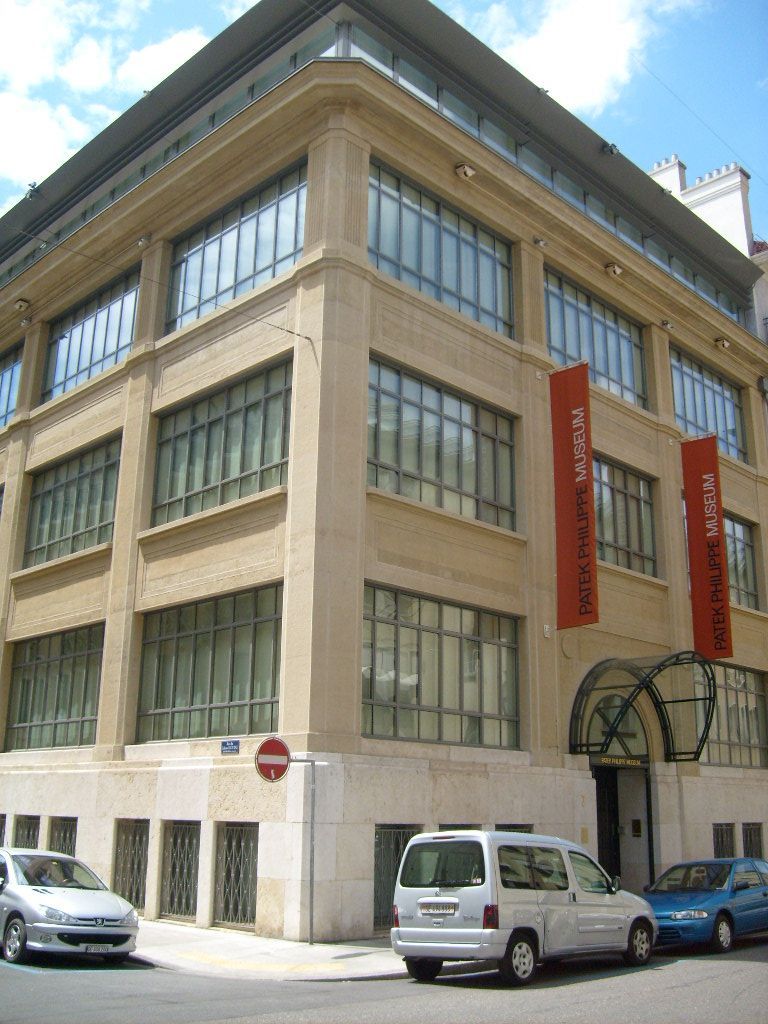
Photo: Franck Schneider — CC BY-SA 3.0 — Wikimedia Commons
The Patent — What Patek Actually Invented
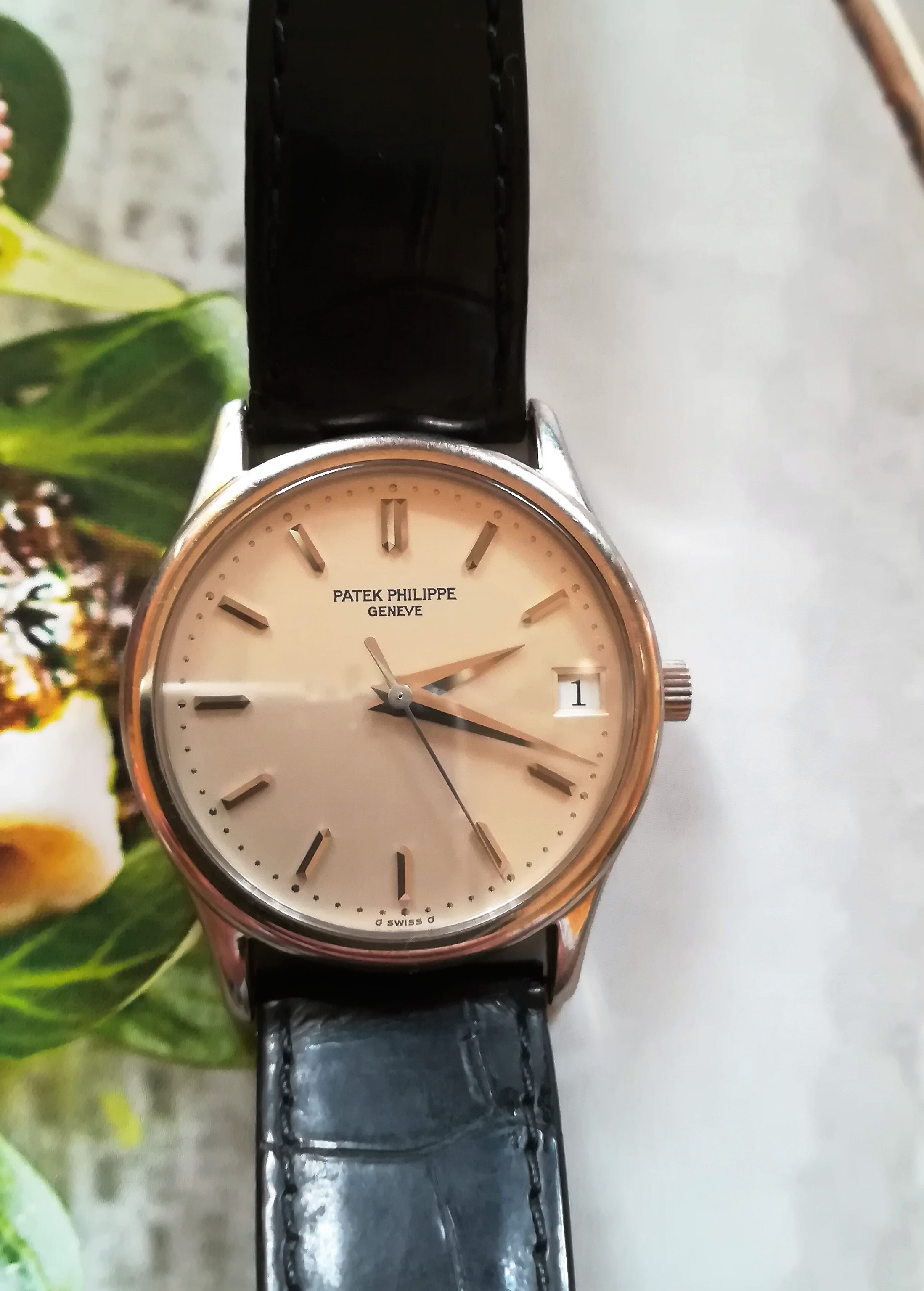
Photo: Mourad Ben Abdallah (Moumou82) — CC BY-SA 3.0 — Wikimedia Commons
The precise claim matters here. Patek Philippe holds Patent CH685585G for an annual calendar mechanism. The task of developing the implementation was assigned in 1991 to final-year students at the Geneva School of Engineering (École d'Ingénieurs de Genève). The inventors credited in the patent are Cédric Fague and Philip Barat .
Patek's contribution was a specific practical implementation using rotating gear wheels — rather than the jumper springs, cams, racks, and levers that might have been used in alternative approaches — that could be manufactured reliably at scale and integrated into a wristwatch movement. That specific mechanism is what the patent covers.
The defensible claim is: Patek Philippe developed and patented the first commercially produced annual calendar mechanism for a wristwatch . The broader formulation — that Patek "invented the annual calendar" — overstates it. The concept of a mechanism needing only annual adjustment is not inherently novel in watchmaking theory; the practical, commercially viable implementation is what Patek contributed.
Reference 5035 — 1996 Launch
Photo: Clyde94 — CC BY-SA 4.0 — Wikimedia Commons
The first annual calendar reference, the 5035 , was introduced at Baselworld in 1996 and won Watch of the Year from the Swiss magazine Montres Passion in the same autumn.
Specifications:
- Case diameter: 37mm
- Movement: Calibre 315 S QA
— automatic, 21,600 vph, 48-hour power reserve
- Three corrector pushers in the case band for calendar adjustment
- 24-hour subdial: a practical necessity, since the calendar should only be set when the hands are in the "safe zone" — away from the midnight transition where the calendar mechanics are changing. The 24-hour display tells the wearer whether it is safe to adjust
- Retail price at launch: approximately USD 17,500
The 5035 established the annual calendar as a Patek complication with a clear value proposition: most of the calendar intelligence of a perpetual calendar, at a more accessible (though still significant) production complexity and price point.
Reference 5396 — 2006
Photo: Kamal Aboul-Hosn — CC BY 2.0 — Wikimedia Commons
Ref. 5396 , introduced in 2006 , replaced the 5035 as the standard annual calendar reference. The upgrade was substantial:
- Case: 38.5mm , Calatrava-style round case
- Movement: Calibre 324 S QA — upgraded from the 315 base, 28,800 vph, 45-hour power reserve
- Dial: sector/railway-track layout with a vintage aesthetic, 24-hour subdial retained
- Available in yellow, white, and rose gold, and white gold with a blue dial
The 5396 has remained in production in various dial and metal configurations since its introduction and represents the current mainstream annual calendar expression in the Calatrava format. The railway-track minute chapter and the sector dial layout give it a classical appearance that reads as a dress watch with a useful complication rather than a complications-forward technical statement.
Reference 5960 — Annual Calendar Meets Flyback Chronograph
Photo: Kamal Aboul-Hosn — CC BY 2.0 — Wikimedia Commons
Ref. 5960 , introduced approximately 2006–2007 , represents the most ambitious combination in the annual calendar family: a flyback chronograph combined with an annual calendar in a single movement.
Movement: Calibre CH 28-520 IRM QA 24H
- In-house automatic flyback chronograph
- Annual calendar module integrated
- 24-hour subdial (for safe setting)
- Silicon Spiromax balance spring — one of the early production examples of Patek's Advanced Research silicon components applied to a production calibre
- 40.5mm case
The flyback function allows the chronograph to be reset and restarted with a single pusher press rather than the three-step stop-reset-restart sequence of a conventional chronograph. Combining this with the annual calendar in a single movement — without stacking them as separate modules — required movement architecture discipline that Patek's manufacture capability was specifically positioned to provide.
The 5960 was the first Patek to combine a flyback chronograph with an annual calendar in a single movement. It attracted collector attention on launch and has retained it.
Reference 5905 — Evolution of the Combination
The 5905 continues the flyback chronograph + annual calendar concept introduced in the 5960, with movement updates to the Calibre CH 28-520 QA 24H . It represents the mature expression of the combination that the 5960 pioneered.
Annual Calendar vs. Perpetual Calendar — The Practical Distinction
Photo: Kamal Aboul-Hosn — CC BY 2.0 — Wikimedia Commons
This distinction is worth stating clearly because it governs the purchase decision for anyone considering either:
Perpetual calendar ( see the dedicated article): handles all months, including February in non-leap years and leap years. Requires correction only at 1 March 2100 — when the Gregorian calendar's century exception means the perpetual calendar mechanism is one day ahead. Correction required approximately once per century.
Annual calendar : handles all months except February. Requires one manual correction per year, at the end of February. The owner advances the date by one day (from 28 February to 1 March in standard years; the leap year February 29 is correct without intervention).
The annual calendar's single annual correction is not a deficiency — it is the honest cost of a mechanism that is significantly less complex to produce and reset than a perpetual calendar. For many buyers, one correction per year is a perfectly acceptable trade for the resulting movement architecture and price difference.
Collector Position
Annual calendar references occupy a secondary market position between the Nautilus-level allocation dynamics and the Calatrava's near-retail trading. The 5960 and 5396 in particular have attracted buyers who value the complication's practical utility over the prestige of a perpetual calendar's mechanical completeness.
Pre-owned 5035 references in good condition represent the original annual calendar proposition at prices that reflect their age and production period. The 5396 in blue dial configurations has attracted premium interest in recent years.
Frequently Asked Questions
Did Patek Philippe invent the annual calendar?
Patek developed and patented the first commercially produced annual calendar mechanism for a wristwatch (Patent CH685585G, inventors Cédric Fague and Philip Barat, filed 1991, launched commercially 1996). The concept of a mechanism requiring only annual adjustment is not inherently novel, but Patek's specific practical implementation — using rotating gear wheels — was a genuine technical contribution that enabled reliable commercial production.
What is the difference between an annual calendar and a perpetual calendar?
A perpetual calendar handles all months automatically, including February in non-leap years, requiring correction only once per century (at 1 March 2100). An annual calendar handles all months except February, requiring one manual correction at the end of February each year. The perpetual calendar is more complex to produce and more expensive; the annual calendar trades one correction per year for a simpler mechanism.
What was the first annual calendar reference?
Reference 5035, introduced at Baselworld 1996. 37mm, Calibre 315 S QA automatic, retail approximately USD 17,500. It won Watch of the Year from Swiss magazine Montres Passion in autumn 1996.
What is the 24-hour subdial on annual calendar references for?
The calendar mechanics in a watch operate at and around midnight. Adjusting the calendar during this transition can damage the mechanism. The 24-hour subdial shows whether it is AM or PM — the owner adjusts the calendar only when the hands are well clear of midnight, typically at 6 AM or later.
Is there an Aquanaut with an annual calendar?
Yes — the Nautilus reference 5726A was the first stainless steel Patek Philippe with an annual calendar. The annual calendar had previously been confined to dress watch (Calatrava-format) cases. Introducing it in a Nautilus case was a notable departure.
Related Articles
- Patek Philippe Perpetual Calendar: History of the Complication
- Patek Philippe: The Last Independent Geneva Manufacture
- Nautilus: Gérald Genta's Steel Sports Watch for Patek Philippe
- Patek Philippe Chronograph: From the 1518 to the CH 29-535 PS
- Patek Philippe Calatrava: The Bauhaus Dress Watch Since 1932