
Patek Philippe Chronographs: Reference 1518, 2499, and the 5170

Zach Charles • August 2, 2026

Share this article

Patek Philippe Chronograph: From the 1518 to the CH 29-535 PS

Patek Philippe's chronograph tradition spans more than eighty years, from one of the most historically significant watches ever made to a fully in-house movement architecture that ranks among the finest manually wound chronograph calibres in current production. The story moves from wartime scarcity to record-breaking auction results to a modern movement that took decades to develop.

Two references define the vintage chapter: the 1518 and the 2499. Both combined the perpetual calendar with a chronograph in a wristwatch — a combination that had never been serially produced before the 1518 appeared in 1941. Both are among the most valuable vintage watches in existence when they appear at auction in the right configuration. The modern chapter is defined by the CH 29-535 PS — Patek's first fully in-house manually wound chronograph calibre, introduced around 2010.


Patek Philippe watch collection at Tiffany & Co., New York, 2008
Patek Philippe watches displayed at the Tiffany & Co. dedicated boutique opening in New York, April 2008 — illustrating the depth of the brand’s complications range.
Photo: Kamal Aboul-Hosn — CC BY 2.0 — Wikimedia Commons

Reference 1518 — The First Serially Produced Perpetual Calendar Chronograph

Patek Philippe Masonic pocket watch, 1897
Patek Philippe Masonic pocket watch, 1897 — an example of the bespoke pocket watches with symbolic engraving and enamel decoration that characterised high-end commissions of the late 19th century.
Photo: Patekphilipe1897 — CC BY-SA 4.0 — Wikimedia Commons

The reference 1518 , produced from 1941 to approximately 1954–55 , represents a genuine horological first: the first watch to combine a perpetual calendar with a chronograph in serial production. It had been done before in one-off pieces; the 1518 was the first time a manufacturer committed to producing it as a catalogued reference.

Key facts:
- Total production: 281 pieces
- Movement: Calibre 13"'130 — a Valjoux-based ébauche extensively modified and decorated by Patek Philippe, with a perpetual calendar module added
- Metals: yellow gold and pink gold predominantly
- Stainless steel examples: 4 confirmed — the rarest and most valuable configuration. Steel examples of the 1518 have set multiple world auction records and represent some of the most consequential transactions in the vintage watch market

The steel examples are among the most discussed pieces in vintage watch collecting. Steel was not a prestige material in 1941; producing a grand complication perpetual calendar chronograph in steel suggests either a specific client request or a production decision whose full context has been lost. The scarcity that results — four documented examples — has made them objects of sustained collector obsession.

Production years are sometimes given as 1941–1951. The more accurate endpoint is closer to 1954 or 1955 , based on serial number analysis.


Reference 2499 — Thirty-Five Years of Production

Patek Philippe watch collection at Tiffany & Co., New York, 2008
Patek Philippe timepieces at Tiffany & Co., New York, April 2008 — the Tiffany partnership, dating to 1851, is one of the longest-running authorised dealer relationships in watchmaking.
Photo: Kamal Aboul-Hosn — CC BY 2.0 — Wikimedia Commons

The 2499 succeeded the 1518 and ran from 1950 to 1985 — a production span of thirty-five years, the longest of any Patek perpetual calendar chronograph reference. The two references overlapped for several years in the early 1950s.

Key facts:
- Total production: approximately 349 pieces (the precise number is the current scholarly consensus; some sources round to "about 350")
- Two platinum examples were produced outside the main run, for specific clients; their inclusion in the official count is debated
- Movement evolved across the production run: early examples used a Jaeger-based movement; later series used the Calibre 27-70 Q
- Four distinct series across the 35-year run, distinguishable by dial configuration, case geometry, and pusher/crown details
- Yellow gold predominates; pink gold examples command significant premiums

The 2499 represents one of the longest continuous production runs for any significant grand complication reference in Swiss watchmaking. Its four series provide a chronological record of Patek's evolving case and dial standards across three and a half decades.


Reference 5170 — The First Fully In-House Modern Chronograph

Patek Philippe Museum, Geneva
The Patek Philippe Museum in Geneva — housing over 2,000 timepieces spanning five centuries of horological history, from 16th-century enamel watches to modern Patek complications.
Photo: Mourad Ben Abdallah (Moumou82) — CC BY-SA 3.0 — Wikimedia Commons

The 5170 , introduced approximately 2010 , marked a milestone: Patek's first serially produced watch housing a fully in-house manually wound chronograph movement designed for modern production.

Calibre CH 29-535 PS:
- Hand-wound
- 270 parts , 33 jewels
- 28,800 vph (4Hz)
- 65-hour power reserve
- Six patented innovations, including a proprietary column wheel
- The column wheel governs chronograph operations through positive mechanical engagement — producing the tactile quality at the pushers that distinguishes high-grade chronograph mechanisms from lever-based alternatives

Reference specifications:
- Case: 40mm
- Available in yellow gold (5170J), white gold (5170G), and rose gold (5170R)
- No perpetual calendar integration — a pure time-and-chronograph watch, which was deliberately positioned as the calibre's showcase in its most essential form

The CH 29-535 PS was the culmination of a development programme that Patek had been building toward for years. The decision to create a fully in-house hand-wound chronograph movement — rather than continuing to base chronograph watches on purchased ébauches — reflected both the manufacture capability Patek had been building (particularly post-PP6) and the recognition that an in-house chronograph movement was necessary for the brand's long-term manufacture credibility.


Reference 5172 — Evolution of the 5170

The 5172 , introduced in 2019 , carries the same Calibre CH 29-535 PS as the 5170 in an updated case design at 41mm . The dial proportions were revised to accommodate the larger case; the movement architecture is unchanged.

The 5172G-010 with salmon dial generated immediate collector interest upon introduction. The combination of the salmon dial, white gold case, and the manually wound in-house calibre visible through an exhibition caseback created one of the more distinctive references in recent Patek production. It represents the modern Patek chronograph in its clearest current form.


Split-Seconds (Rattrapante) Chronographs

Patek Philippe Archives building, Plan-les-Ouates, Geneva
The Patek Philippe Archives in Plan-les-Ouates, Geneva — where records dating to the brand’s 1839 founding are maintained, enabling authentication of every historical reference.
Photo: Franck Schneider — CC BY-SA 3.0 — Wikimedia Commons
The rattrapante — split-seconds chronograph — adds a second seconds hand that can be stopped independently, capturing intermediate elapsed times while the main chronograph continues running. Resetting the split hand catches it back to the running hand. The mechanism requires additional components and extraordinary movement architecture discipline.

Ref. 5959 (introduced 2005 ):
- Ultra-thin split-seconds chronograph
- Movement: Calibre CHR 27-525 PS — the thinnest split-seconds chronograph calibre ever made at time of introduction, with an architecture descended from a 1923 movement
- Two-pusher design — unusual, as traditional rattrapante uses three pushers
- Production rate: approximately 10 pieces per year — among the most limited serial productions in the Patek catalogue
- A watch for collectors who value movement architecture above all other considerations

Ref. 5370 (introduced Baselworld 2015 ):
- Two-pusher split-seconds chronograph — the first two-pusher rattrapante from Patek since the reference 1463
- Movement: Calibre CHR 29-535 PS — the CH 29-535 PS architecture with the rattrapante complication added
- Case: 41mm platinum ; available in multiple dial colours, including enamel variants
- Power reserve: 55–65 hours depending on chronograph use

The 5370 is the definitive modern statement of Patek's rattrapante capability: fully in-house, based on the core CH 29-535 PS architecture, in platinum at a scale that allows the movement to breathe. It is produced in numbers that reflect the mechanism's production demands.


Chronograph Calibre Architecture — Why It Matters

Patek Philippe Calatrava — the archetypical dress watch
A Patek Philippe Calatrava — the reference that defined the modern round dress watch: clean dial, Calatrava cross hourglass lugs, and a movement of museum quality.
Photo: Clyde94 — CC BY-SA 4.0 — Wikimedia Commons
Two architectural decisions define chronograph quality at the movement level:

Column wheel vs. cam/lever: A column wheel governs chronograph functions through positive mechanical steps — each rotation of the column wheel advances the mechanism one position, engaging and disengaging functions precisely. A cam-and-lever system achieves similar functions through spring tension rather than positive engagement. The column wheel's action is typically more precise, more tactile at the pusher, and more durable under repeated operation. The CH 29-535 PS uses a column wheel.

Vertical clutch vs. horizontal clutch: The clutch connects the chronograph mechanism to the timekeeping train. A horizontal clutch produces a brief jerk at chronograph start (the hands realign). A vertical clutch engages without jarring the seconds hand — the chronograph starts cleanly from zero. The CH 28-520 C (used in the Nautilus 5980 and Aquanaut 5968A) uses a vertical clutch.


Collector Position

Vintage Patek chronographs — particularly the 1518 in steel and early 2499 examples — represent the upper tier of the vintage watch market. Steel 1518s have achieved prices above USD 10 million at auction. Pink gold 2499s in early series configuration regularly exceed USD 1 million.

Modern references (5170, 5172, 5370) trade at premiums above retail in pre-owned condition, driven by the allocation dynamics of Patek's authorised dealer network rather than the historical rarity that governs vintage pricing. The 5172G-010 salmon dial in particular has attracted sustained secondary market interest.


Frequently Asked Questions

What was the reference 1518?
Patek Philippe's reference 1518 (1941–c.1954/55) was the first serially produced watch combining a perpetual calendar with a chronograph. 281 pieces were produced. Four are confirmed in stainless steel — among the most valuable vintage watches in existence, having set multiple world auction records.

What is the Calibre CH 29-535 PS?
Patek Philippe's fully in-house manually wound chronograph movement, introduced around 2010 in the reference 5170. 270 parts, 33 jewels, 28,800 vph, 65-hour power reserve, column wheel, six patented innovations. The first fully in-house hand-wound chronograph calibre in Patek's modern production.

What is a split-seconds chronograph?
A chronograph with a second seconds hand that can be stopped independently to capture an intermediate elapsed time while the main chronograph continues running. Also called a rattrapante. Patek produces two current rattrapante references: the 5959 (ultra-thin, ~10 pieces per year) and the 5370 (two-pusher, Calibre CHR 29-535 PS, in platinum).

How many steel 1518s exist?
Four examples in stainless steel are currently documented and confirmed. The figure is sometimes cited as five or six in older sources; four is the current scholarly consensus.

What is the reference 5172?
The 2019 evolution of the reference 5170: same Calibre CH 29-535 PS in a 41mm case with updated proportions. The 5172G-010 with salmon dial has attracted particular collector interest.


Related Articles

Recent Posts

By Zach Charles • October 10, 2026
Hamilton's American Classic Cushion Mechanical revives its 1926 Art Deco cushion watches, seen in Oppenheimer, in 30mm and 34mm with the new hand-wound…
Doxa SUB 200: The Accessible Everyday Diver
By Zach Charles • October 10, 2026
Complete guide to the Doxa SUB 200 — 42mm, 200m, four colorways, Sellita SW200-1. The accessible entry to the Doxa SUB family with the full…
By Zach Charles • October 10, 2026
The Breitling Top Time B01 Aston Martin DB5 pairs a cushion-shaped 41mm case, a wooden inner ring and the in-house Caliber 01 across three limited…
By Zach Charles • October 10, 2026
TAG Heuer developed the Mikrograph (2011, 1/100th second), Mikrotimer Flying 1000 (2011, 1/1000th second), and Mikrogirder (2012, 1/2000th second).
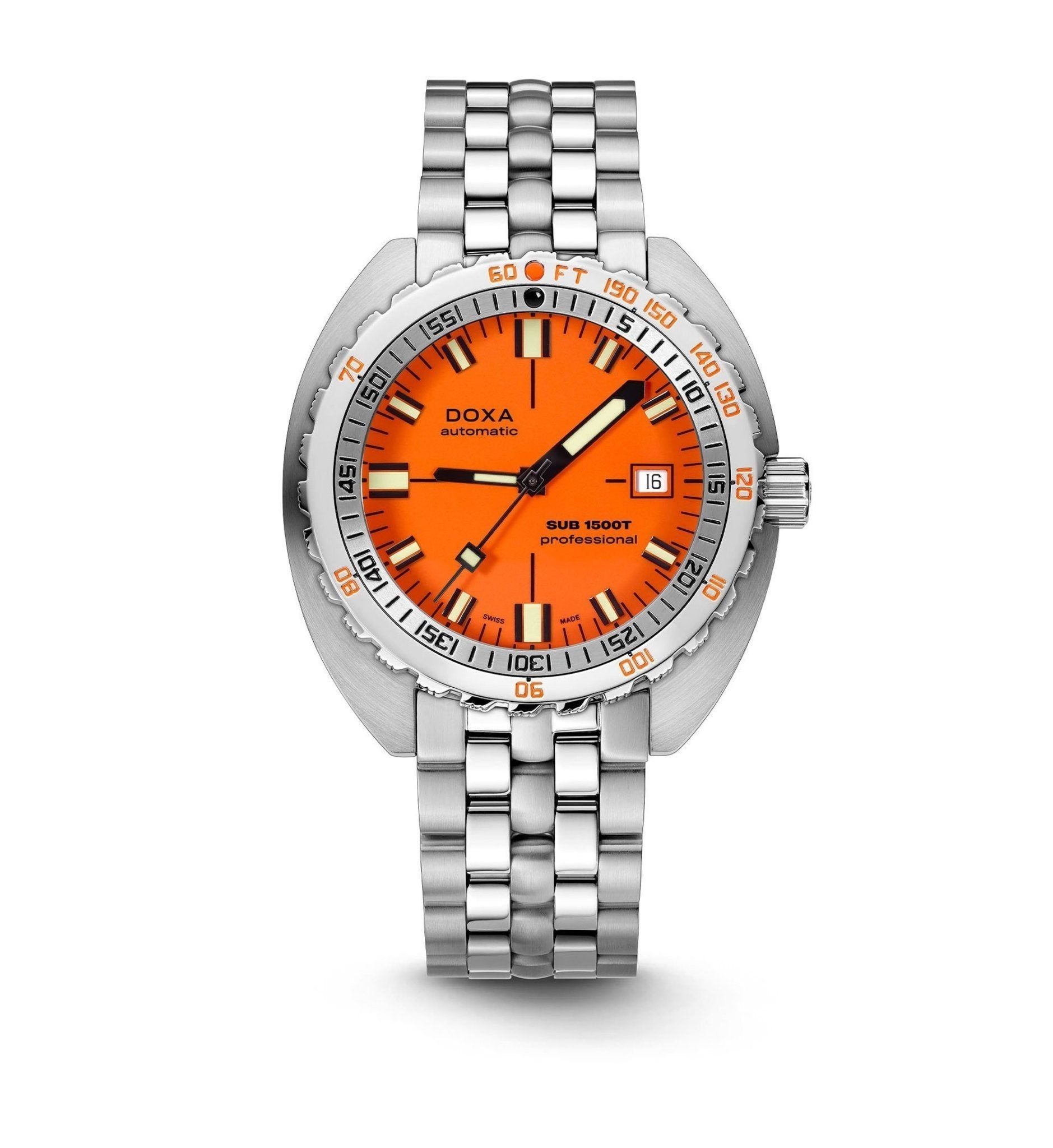
Doxa SUB 1500T: The 1,500-Metre Depth-Rating Flagship
By Zach Charles • October 10, 2026
Complete guide to the Doxa SUB 1500T — 45mm, 1,500m depth rating, helium escape valve, ETA 2892-2 movement, USD 2,690.
Audemars Piguet Royal Oak 'Jumbo' ref. 15202 with blue tapisserie dial and integrated steel bracelet
By Zach Charles • October 10, 2026
The Audemars Piguet × Swatch Royal Pop is a $400 bioceramic pocket watch in 8 colourways, powered by a new hand-wound SISTEM51 with 90+ hour power…

Time on the Move logo
By Zach Charles • October 10, 2026
Zach Charles is the editor of Time on the Move, an independent watch reference covering brand and model histories, buying guides and release news…
Omega Speedmaster Professional 'Moonwatch' chronograph, front view on steel bracelet
By Zach Charles • October 9, 2026
Find the best watches at every price point from $500 to $15,000 — new and pre-owned. Covers every budget tier with specific reference picks, brand…
By Zach Charles • October 9, 2026
The latest watch news: new releases, Watches and Wonders coverage, discontinuations, industry analysis, and market trends. Currently 1 article.
Seiko's New Panda Chronograph Is Literally a Panda: The Power Design Project HHK001 and HHK002
By Zach Charles • October 8, 2026
Seiko's Power Design Project panda chronograph (HHK001, HHK002) turns the panda dial into an actual panda face, with ear pushers, a 'Sasameter' and a 3D…
Show More