Longines: Les Longines, the Winged Hourglass, and Swiss Watchmaking Heritage
By Zach Charles, Editor, Time on the Move
The name on every Longines watch is a place. "Les Longines" — in the Franco-Provençal dialect of the Swiss Jura — means the long meadows: the elongated plots of land along the River Suze in Saint-Imier where Ernest Francillon built his factory in 1867. The name was not invented by a marketing team; it was simply where the factory stood. Francillon trademarked it in 1880, and the winged hourglass logo in 1889. Both remain in continuous use today — making Longines the holder of the oldest unchanged active trademark in watchmaking. The company's history is similarly continuous: one location, one craft, practiced without interruption since the nineteenth century.
Photo: Roland Zumbühl — CC BY-SA 4.0 — Wikimedia Commons
Auguste Agassiz and the Founding — 1832
Photo: Chriusha (Christian Kleis) — CC BY-SA 3.0 — Wikimedia Commons
The enterprise that became Longines was established in 1832 in Saint-Imier , canton of Berne, under the name Raiguel Jeune & Cie . The driving figure was Auguste Agassiz — a watchmaker, and younger brother of the naturalist Louis Agassiz. The early business operated under the établissage system: components were produced by craftspeople working in their homes, then assembled and regulated centrally. It was the prevailing production model in the Jura Valley, and it was effective for its era — but it imposed fundamental limits on consistency and scale.
Agassiz's nephew, Ernest Francillon , joined the firm in 1852 and became its directing force by 1862. Where Agassiz had built a trading and assembly operation, Francillon envisioned something more radical: a single factory where every operation — component manufacture, assembly, regulation, casing — occurred under one roof.
The Factory at Les Longines — 1867
Photo: Reuben Mallaby — CC BY-SA 3.0 — Wikimedia Commons
In 1866 , Francillon purchased two plots of land in the locality known locally as "Les Longines" — the elongated meadows along the right bank of the River Suze, just outside Saint-Imier. The factory was built in 1867 and began production the same year.
The Calibre 20A — the first movement produced entirely within the new building — was completed in 1867. It was not simply the first Longines movement; it was one of the first watch movements produced anywhere in a purpose-built watch factory where all manufacturing occurred in one place. The Saint-Imier factory has operated on this same site continuously ever since — an uninterrupted production run now exceeding 155 years.
Ernest Francillon trademarked the Longines name in 1880 . The winged hourglass logo — representing time as a bounded, measurable resource — was registered with WIPO in 1889 . Both remain in continuous use: Longines holds the oldest unchanged active trademark in the watch industry.
Technical Milestones — Chronograph and Aviation
Photo: EMore98 — CC BY-SA 4.0 — Wikimedia Commons
From the beginning, Longines specialised in precision timekeeping for applications beyond the wrist. The chronograph was central to this:
| Year | Achievement |
|---|---|
| 1878 | First Longines chronograph movement (20H, pocket watch, mono-pusher) — gold medal, Paris Exposition Universelle |
| 1913 | Calibre 13.33Z — first Longines chronograph movement designed for a wristwatch |
| 1925 | Manufactured the Zulu Time — cited as the first dual-time-zone wristwatch |
| 1927 | Official FAI timekeeper for Charles Lindbergh's New York–Paris transatlantic flight |
| 1931 | Collaboration with Lindbergh on the Hour Angle navigation watch |
| 1934 | First flyback chronograph function |
| 1936 | Calibre 13ZN — first flyback chronograph wristwatch movement ever produced commercially |
| 1984 | Calibre 276.2 — first V.H.P. (Very High Precision) thermocompensated quartz movement |
The Calibre 13ZN of 1936 occupies a special place in wristwatch history. The flyback function — allowing the chronograph seconds hand to return instantly to zero and restart on a single push, without the stop–reset–restart sequence — was a genuinely new capability when Longines introduced it. The movement remained in production until the early 1970s, an extraordinary run for any single architecture.
Swatch Group — 1983
Photo: Xavor (Reuben Mallaby) — CC BY-SA 3.0 — Wikimedia Commons
Longines entered the Swatch Group orbit through the pivotal consolidation of the Swiss watch industry's response to the quartz crisis. By the early 1980s, Longines was part of ASUAG (Allgemeine Schweizerische Uhrenindustrie AG), the Swiss umbrella body for ébauche manufacturers and watch brands. On 8 December 1983 , ASUAG merged with SSIH (which owned Omega) to form SMH — the organisation that Nicolas Hayek subsequently led and renamed Swatch Group in 1998.
Longines has been part of the Swatch Group structure since 1983. Within Swatch Group's brand hierarchy, Longines sits in the High Range tier — above mid-range brands (Tissot, Hamilton, Mido, Certina) and below the prestige tier (Omega, Blancpain, Breguet). This positioning determines its price architecture, movement sourcing from ETA, and marketing focus. Revenue has reached CHF 1.11 billion (2023) — making it one of the largest Swiss watch brands by value.
The Brand Today
Photo: LonginesOfficial — CC BY-SA 4.0 — Wikimedia Commons
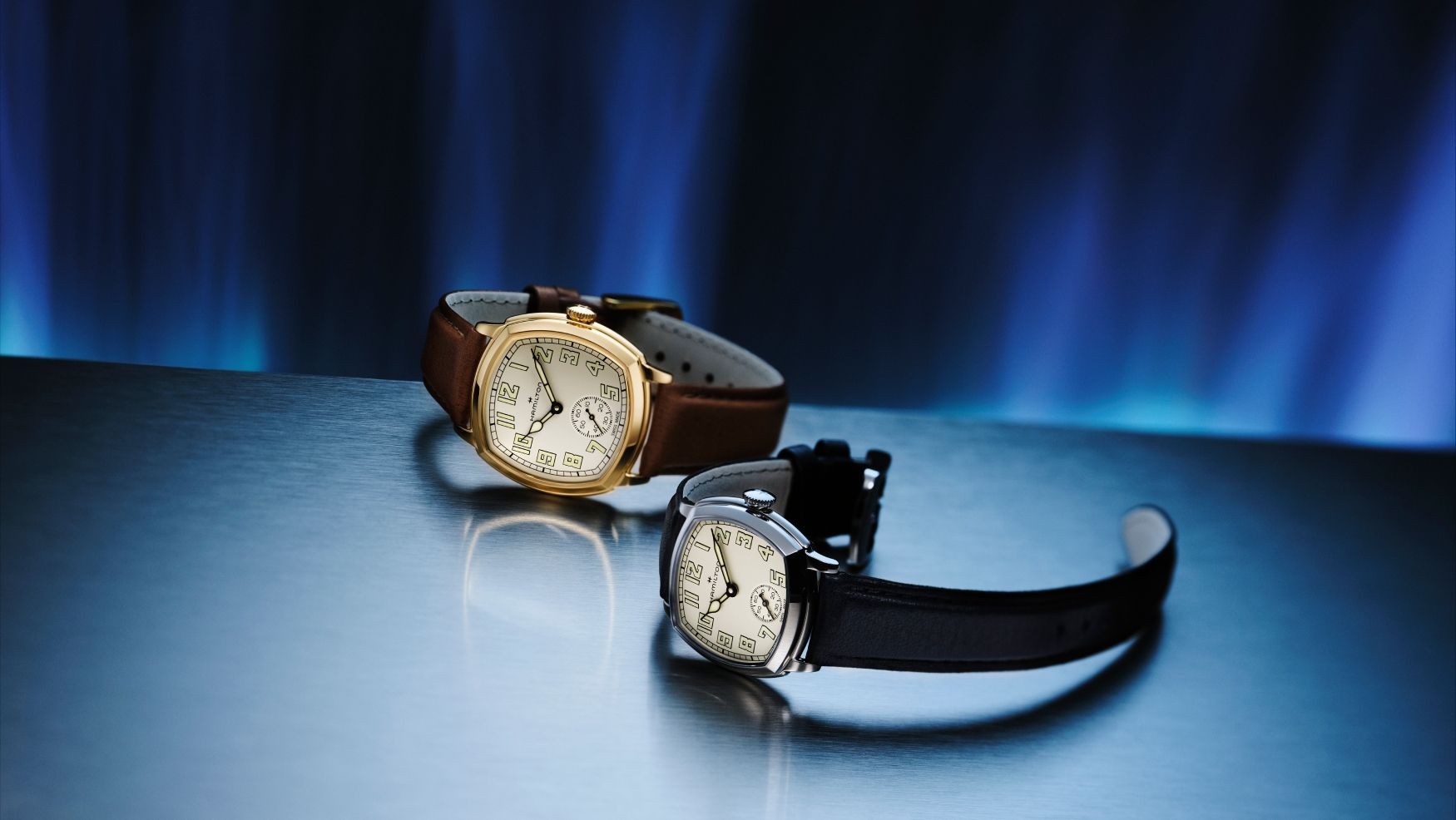
Patrick Aoun serves as President of Longines. The brand's tagline — "Elegance is an Attitude" , adopted in 1999 — reflects a deliberate repositioning toward fashion-adjacent marketing, with ambassador relationships including international equestrian sport, alpine skiing, tennis, and gymnastics. The tagline replaced the previous "The World's Most Honoured Watch" — a reference to the brand's historical precision competition record.
The current Longines collection is organised around five principal families: Conquest (sport and precision quartz), HydroConquest (dive), Spirit (aviation and field), Master Collection (complications and elegance), and DolceVita (rectangular dress). The Heritage line draws on archival designs across all categories. Each family has its own movement architecture, distinct aesthetic language, and price position — together covering a range from approximately USD $800 to $7,000 at retail.
The Saint-Imier factory continues to operate, and the Longines Museum on the same site displays over 160 years of production history — movements, casings, advertising archives, and the instruments used to time Lindbergh's flight.
Longines Model and Technology Guides
Each Longines collection and key technology has its own in-depth history on Time on the Move:
- Longines Calibres and Timing Heritage
- Longines Conquest: The First Named Collection
- Longines DolceVita: The Rectangular Dress Watch
- Longines Heritage Collection: Archive Designs Revived
- Longines HydroConquest: The Dive Watch
- Longines Lindbergh Hour Angle Watch: Celestial Navigation on the Wrist
- Longines Master Collection: Complications and Elegance
- Longines Record: The First COSC-Certified Longines Collection
- Longines Spirit: Aviation Heritage Revived
Frequently Asked Questions
What does "Longines" mean?
"Les Longines" is a Franco-Provençal toponym meaning "the long meadows" — the name of the locality along the River Suze in Saint-Imier where Ernest Francillon built the factory in 1867. The name was trademarked in 1880.
Who founded Longines?
The predecessor company was founded in 1832 by Auguste Agassiz. His nephew Ernest Francillon built the dedicated factory at Les Longines in 1867 and established the brand as it exists today. Longines traces its founding to 1832 but its factory-based identity to 1867.
When did Longines join Swatch Group?
1983, when ASUAG (which included Longines) merged with SSIH (which included Omega) to form SMH, subsequently renamed Swatch Group in 1998.
What is the winged hourglass?
Longines' logo, registered with WIPO in 1889. It represents time as a bounded, measurable resource. It is the oldest unchanged active trademark in continuous use in the watch industry.