
Longines Conquest: The First Named Collection

Zach Charles • June 15, 2026

Share this article

Longines Conquest: The First Named Collection

The Conquest occupies a specific place in watchmaking history: it was the first collection to carry a proper name, rather than a model number or calibre reference, in the Longines catalogue. The patent was filed on 3 April 1954, establishing the Conquest as a distinct product identity at a moment when sports and precision were becoming central to the brand's marketing. Over seven decades, the collection has encompassed mechanical automatics, early quartz, the Very High Precision (VHP) line, and the current L888-powered range. The name has remained constant while the technology beneath it has evolved substantially.


Longines Conquest 2024
Longines Conquest (2024) — the current generation of the brand's first named collection, patented 1954.
Photo: EMore98 — CC BY-SA 4.0 — Wikimedia Commons

The 1954 Patent and Early Conquest

Vintage Longines Grand Prize automatic, 1960s, 10kt gold
Vintage Longines “Grand Prize” automatic wristwatch in 10-karat gold, 1960s — era contemporary with the early Conquest collection.
Photo: Joe Haupt — CC BY-SA 2.0 — Wikimedia Commons

The Conquest name was established by a patent filed 3 April 1954 — making it the first named collection in Longines' history . The early Conquest models were oriented toward sporting use: robust cases, legible dials, automatic movements, and waterproofing that reflected the growing market for watches worn during physical activity.

The design language of the 1950s Conquest drew on contemporary sport watch conventions: applied hour markers, broad hands with luminous fill, and cases with enough thickness to house a reliable automatic movement. These were not dress watches; they were precision instruments for wearers who expected accuracy under real-world conditions.

The Conquest's first era established an identity that has persisted across subsequent generations: a Longines watch positioned at the sporting and technical end of the collection, rather than at the formal or decorative end.


Longines 19.4 manual-wind, 1960s
Longines 19.4 manual-wind wristwatch, 1960s — representative of the precision watchmaking that preceded the VHP quartz era.
Photo: Clyde94 — CC BY-SA 4.0 — Wikimedia Commons

The VHP — Very High Precision

Longines 341 automatic wristwatch, mid-1960s
Longines 341 automatic wristwatch, mid-1960s — representative of the mid-century Longines automatic collection.
Photo: Clyde94 — CC BY-SA 4.0 — Wikimedia Commons

The Very High Precision (VHP) line was introduced in 1984 with the Calibre 276.2 — Longines' first thermocompensated quartz movement. The thermocompensation system addressed one of quartz's fundamental weaknesses: the frequency of a quartz oscillator varies slightly with temperature. By continuously measuring ambient temperature and adjusting the regulation circuit to compensate, the 276.2 achieved accuracy that conventional quartz movements could not match.

The 1984 VHP was positioned as a demonstration of what quartz technology could achieve at its technical ceiling — accuracy that no mechanical movement could rival, and resilience to temperature variation that standard quartz calibres lacked. It was, in context, a significant technical achievement.

The VHP line was revived in 2017 as the L288.2 and L289.2 calibres. The modern VHP achieves ±5 seconds per year — accuracy equivalent to the COSC standard for quartz movements. The revival coincided with renewed collector interest in high-accuracy quartz and a broader repositioning of the Conquest as Longines' technical sport line.


Current Conquest — L888 Calibre Family

Longines Conquest Classic Moonphase Chronograph
Longines Conquest Classic Moonphase Chronograph (ref. L2.798.4.72.3) — a complication variant within the Conquest family.
Photo: Minzoblate — CC BY-SA 4.0 — Wikimedia Commons

The current Conquest automatic collection is powered by the L888 calibre family — a Longines-exclusive ETA-based movement produced under licence for the brand. The specifications:

Calibre Beat Rate Power Reserve Silicon Spring COSC
L888.4 25,200 vph 64 hours Yes Yes
L888.5 25,200 vph 59 hours Yes No
L888.6 25,200 vph 72 hours Yes No

The L888.6 powers the standard Conquest automatics with a 72-hour power reserve — a full three days of reserve without winding. The silicon balance spring improves accuracy and resistance to magnetism and corrosion compared to traditional alloy springs.

Case sizes in the current Conquest range from 34mm to 42mm , covering both dress-oriented and sport-oriented proportions. The collection includes three-hand, chronograph (via the L688 calibre), and GMT variants. Water resistance is rated to 300 metres on the Conquest sport variants — sufficient for serious recreational diving.

Retail pricing ranges from approximately EUR 2,100 to EUR 4,000 for automatic variants, with VHP quartz models at lower price points.


Conquest in the Longines Range

Longines Conquest women's watch, mid-1980s
Longines Conquest women's watch, mid-1980s — showing the collection's reach across gender and era.
Photo: Clyde94 — CC BY-SA 4.0 — Wikimedia Commons
Within the current Longines collection, the Conquest occupies the sport and precision position — alongside the HydroConquest for dive-specific use and the Spirit for aviation heritage. It is differentiated from the Master Collection (complications and elegance), DolceVita (dress and fashion), and Spirit (aviation identity) by its orientation toward active, technical use.

The Conquest's chronograph variant — using the L688 — and its 300m water resistance place it in competition with sport watches from Tissot, Hamilton, and Mido at lower price points, and at the entry of the market segment that includes Omega's Seamaster Aqua Terra at higher price points.


Frequently Asked Questions

When was the Longines Conquest introduced?
The Conquest was patented on 3 April 1954, making it the first named collection in Longines' history. Early models were automatic sport watches.

What is VHP?
Very High Precision — Longines' thermocompensated quartz line, first introduced in 1984 with Calibre 276.2 and revived in 2017 with L288.2/L289.2 achieving ±5 seconds per year.

What movement does the current Conquest use?
The automatic Conquest uses L888 family calibres — Longines-exclusive ETA-based movements with silicon balance spring and 59–72 hour power reserve depending on variant.

Is the Conquest good for diving?
The Conquest sport variants are water resistant to 300 metres and conform to ISO 6425 standards — making them suitable for recreational and sport diving.


Related Articles

Recent Posts

By Zach Charles • October 10, 2026
Hamilton's American Classic Cushion Mechanical revives its 1926 Art Deco cushion watches, seen in Oppenheimer, in 30mm and 34mm with the new hand-wound…
Doxa SUB 200: The Accessible Everyday Diver
By Zach Charles • October 10, 2026
Complete guide to the Doxa SUB 200 — 42mm, 200m, four colorways, Sellita SW200-1. The accessible entry to the Doxa SUB family with the full…
By Zach Charles • October 10, 2026
The Breitling Top Time B01 Aston Martin DB5 pairs a cushion-shaped 41mm case, a wooden inner ring and the in-house Caliber 01 across three limited…
By Zach Charles • October 10, 2026
TAG Heuer developed the Mikrograph (2011, 1/100th second), Mikrotimer Flying 1000 (2011, 1/1000th second), and Mikrogirder (2012, 1/2000th second).
Doxa SUB 1500T: The 1,500-Metre Depth-Rating Flagship
By Zach Charles • October 10, 2026
Complete guide to the Doxa SUB 1500T — 45mm, 1,500m depth rating, helium escape valve, ETA 2892-2 movement, USD 2,690.
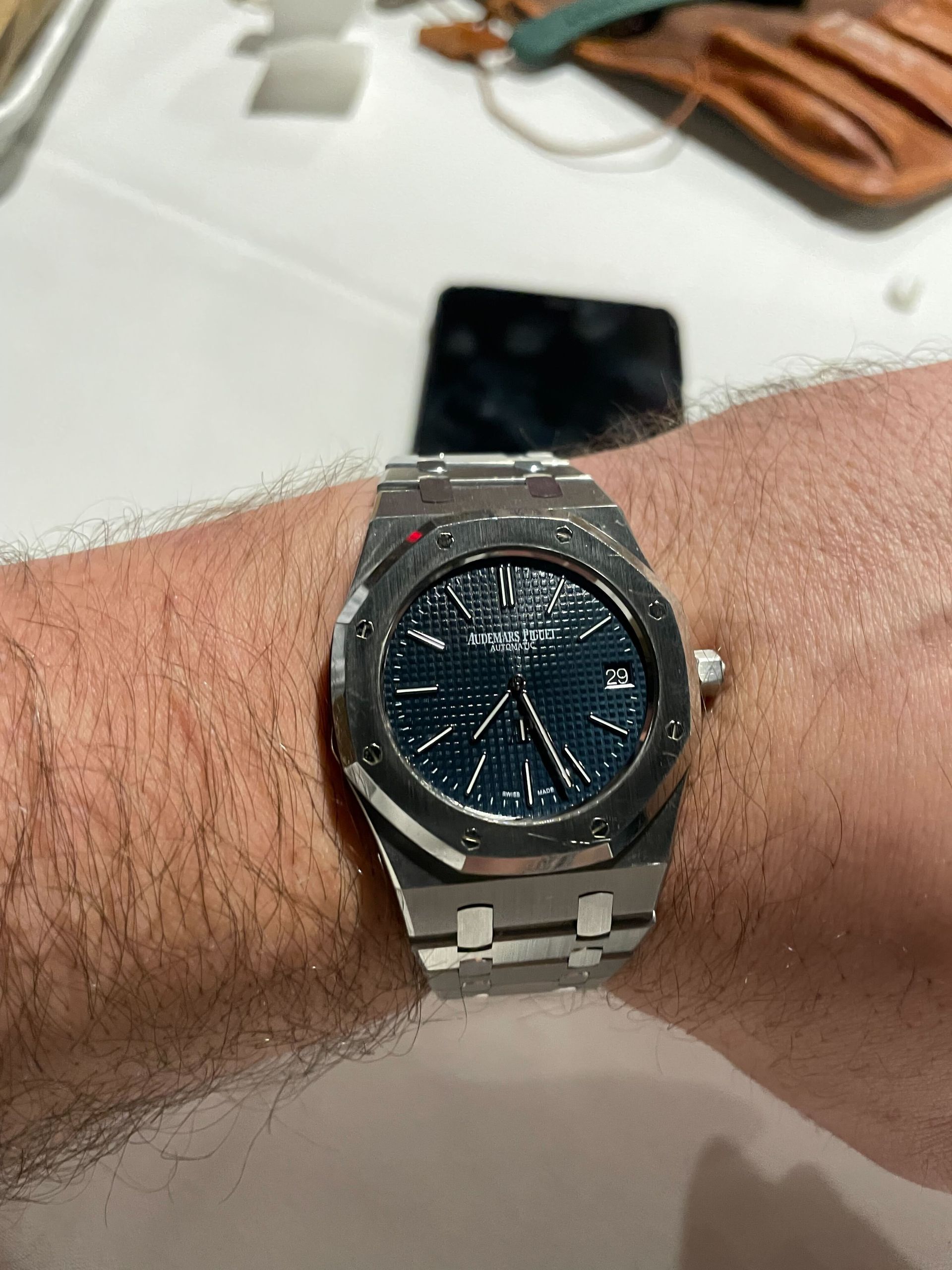
Audemars Piguet Royal Oak 'Jumbo' ref. 15202 with blue tapisserie dial and integrated steel bracelet
By Zach Charles • October 10, 2026
The Audemars Piguet × Swatch Royal Pop is a $400 bioceramic pocket watch in 8 colourways, powered by a new hand-wound SISTEM51 with 90+ hour power…

Time on the Move logo
By Zach Charles • October 10, 2026
Zach Charles is the editor of Time on the Move, an independent watch reference covering brand and model histories, buying guides and release news…
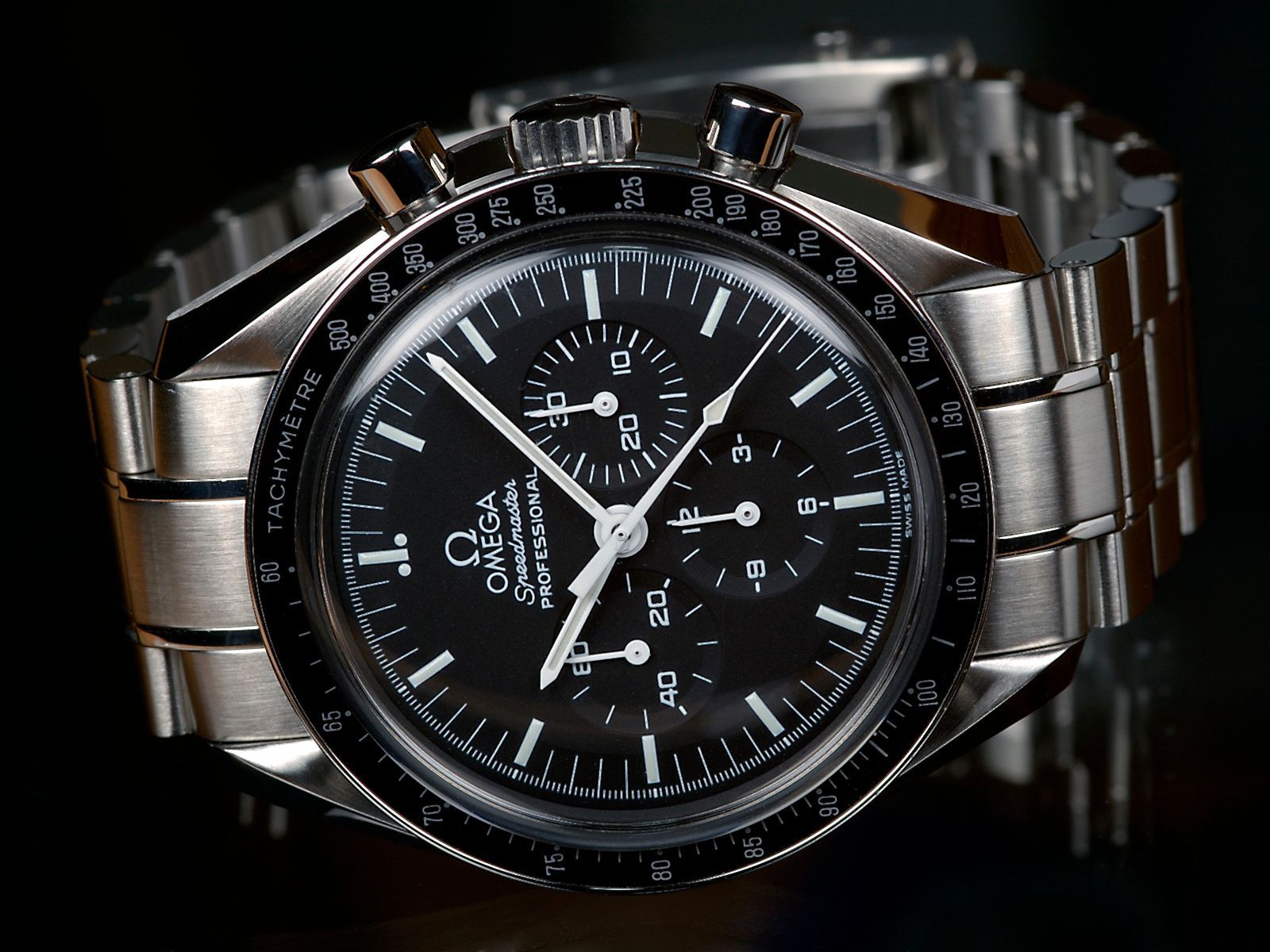
Omega Speedmaster Professional 'Moonwatch' chronograph, front view on steel bracelet
By Zach Charles • October 9, 2026
Find the best watches at every price point from $500 to $15,000 — new and pre-owned. Covers every budget tier with specific reference picks, brand…
By Zach Charles • October 9, 2026
The latest watch news: new releases, Watches and Wonders coverage, discontinuations, industry analysis, and market trends. Currently 1 article.
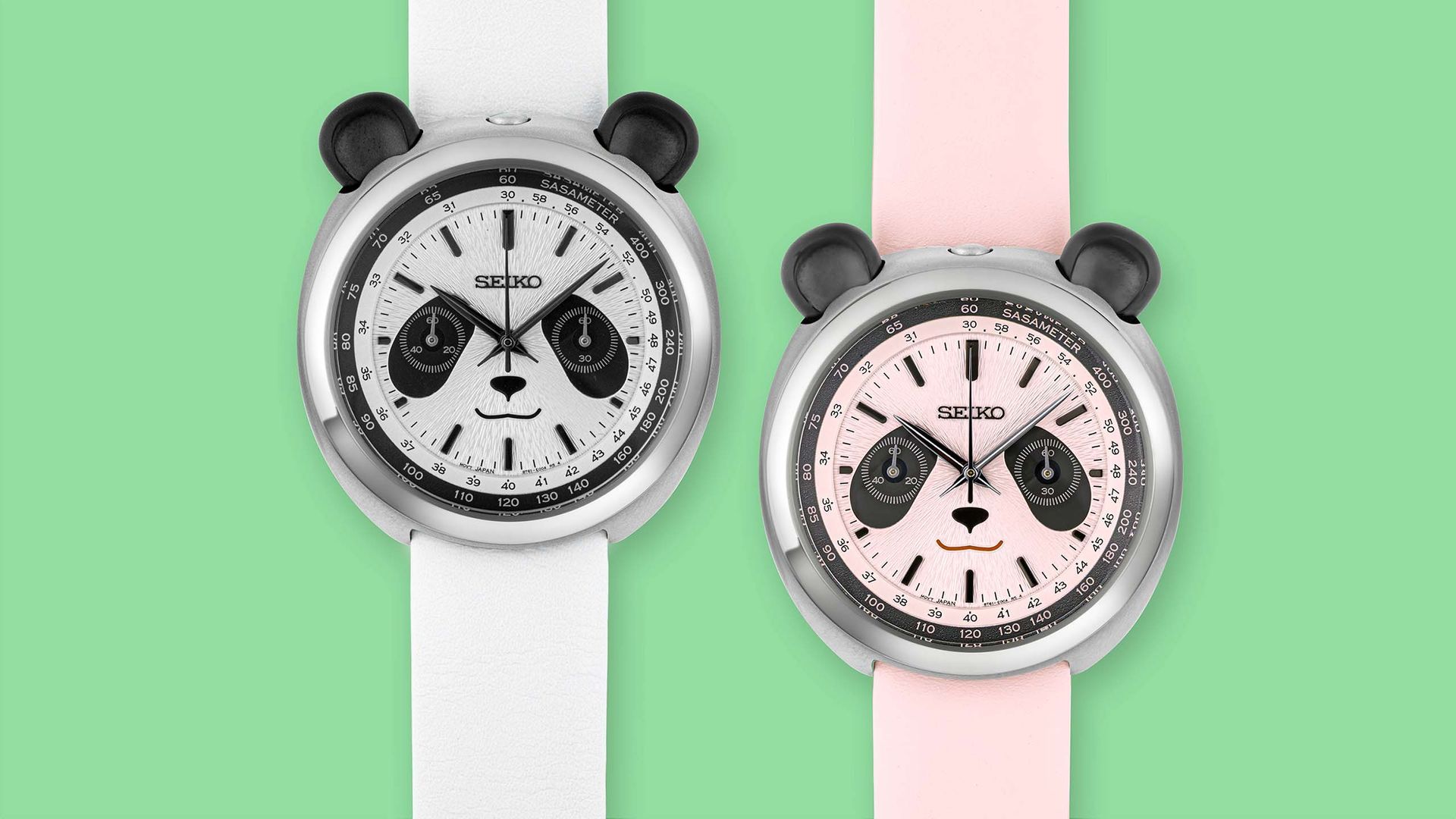
Seiko's New Panda Chronograph Is Literally a Panda: The Power Design Project HHK001 and HHK002
By Zach Charles • October 8, 2026
Seiko's Power Design Project panda chronograph (HHK001, HHK002) turns the panda dial into an actual panda face, with ear pushers, a 'Sasameter' and a 3D…
Show More