The Seiko Quartz Revolution: December 1969 and the Swiss Industry Crisis

Zach Charles • June 8, 2026

Share this article

Seiko and the Quartz Revolution

The quartz crisis was called a crisis in Switzerland and a revolution in Japan — and both descriptions were accurate. What happened between 1969 and 1983 was not merely a new technology replacing an old one; it was a restructuring of the global watch industry so severe that the established hierarchy of manufacturers was effectively inverted. Switzerland, which had dominated watchmaking for two centuries, lost more than half its manufacturers and two-thirds of its workforce. Japan, which had been building toward this moment for a decade, emerged as the centre of the world's most accurate and most affordable timekeeping. The instrument that triggered this transformation was a gold watch sold at Christmas, at the price of a car, in an edition of approximately 100 pieces.


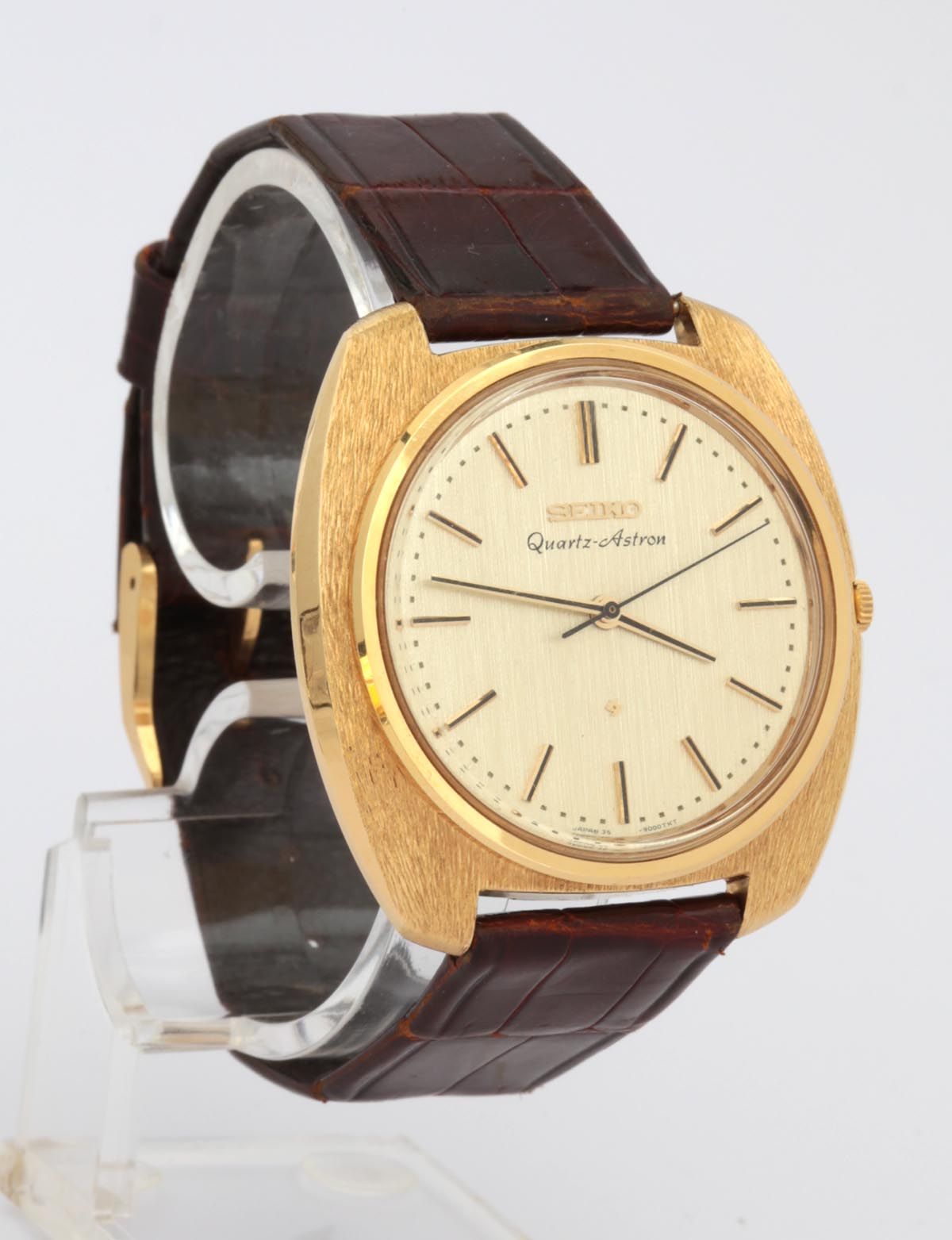
Seiko Astron 35SQ — world's first commercial quartz wristwatch, 1969
The Seiko Astron 35SQ — the world’s first commercial quartz wristwatch, sold on 25 December 1969 in Tokyo at 450,000 yen. Only 100 were made in the first production run.
Photo: Deutsches Uhrenmuseum — CC BY-SA 4.0 — Wikimedia Commons

The Technical Precursor — 1964 Tokyo Olympics

Seiko 5 SNKA23 automatic watch
The Seiko 5 SNKA23 — a classic example of the Seiko 5 family, featuring automatic winding and day/date display.
Photo: Ash Crow (Sylvain Boissel) — CC BY-SA 3.0 — Wikimedia Commons
The path to the Quartz-Astron ran through the 1964 Tokyo Olympics. When Seiko was appointed Official Timer for the 1964 Games, it committed to building precision timing instruments for every event at every venue — instruments that would, for the first time in Olympic history, time athletic performances to 1/100th of a second .

The achievement required quartz technology: mechanical timing instruments were insufficiently precise and insufficiently consistent across the temperature and humidity variations of a multi-day outdoor event. Seiko built the Crystal Chronometer QC-951 — the world's first portable quartz clock — to deliver field timing at Olympic standards. They connected starting guns to quartz clocks to photo-finish cameras, creating an integrated timing system whose output was accurate to 0.01 seconds.

These were not wristwatches. They were precision instruments the size of briefcases or larger. But the engineering required to build them — miniaturised quartz oscillators, stable power supplies, stepping motor drives — established the technical vocabulary for the wristwatch miniaturisation project that followed.

Seiko would later write in its own documentation: "Seiko's role in 1964 spurred the development of many innovative products, including the world's first quartz watch Astron in 1969." The connection between Olympic timing and the Astron is not retrospective storytelling. It is engineering succession.


Parallel Development — Seiko and the Swiss

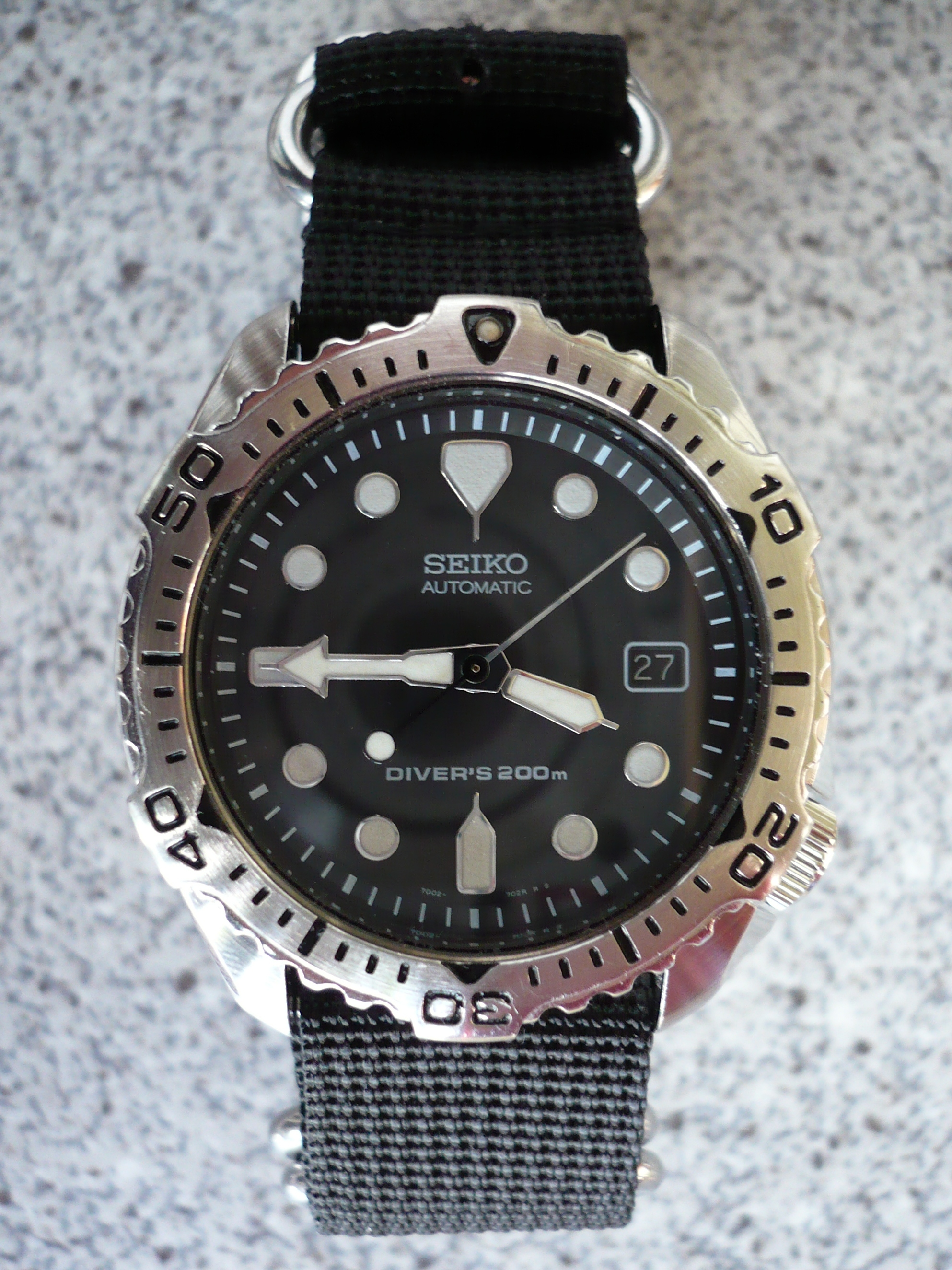
Seiko 7002-7020 diver's 200m on a 4-ring NATO strap
A Seiko 7002-7020 diver’s 200m on a 4-ring NATO strap — the pre-SKX design that established Seiko’s reputation for affordable, capable tool watches.
Photo: Francis Flinch — Public Domain — Wikimedia Commons

By 1967 , two organisations had completed quartz wristwatch prototypes:

  • Suwa Seikosha (Seiko's Nagano facility): Astron prototype completed
  • Centre Electronique Horloger (CEH) (Neuchâtel, Switzerland): Beta 1 prototype completed

The CEH was a consortium of approximately 20 Swiss watchmaking companies — including Omega, Patek Philippe, and other major manufacturers — organised to develop quartz technology collectively. The Beta 1 was their proof-of-concept.

The two organisations had arrived at the same technical destination simultaneously, through parallel development efforts that proceeded independently. Neither knew precisely where the other was in the process. Both knew that the other existed and was working on the same problem.

The race then became a race to commercial production.


25 December 1969 — The Astron Goes on Sale

Seiko 6309 calibre — movement of the original Turtle diver
The Seiko 6309 calibre — the automatic movement that powered the original 6309-7040 ‘Turtle’ diver from 1976 and many classic Seiko sport references.
Photo: Les Zetlein — Public Domain — Wikimedia Commons

Seiko won.

On 25 December 1969 , the Seiko Quartz-Astron 35SQ went on sale in Japan. The price was ¥450,000 — more than the cost of a Toyota Corolla, approximately one year's salary for a mid-level Japanese salaryman. The case was 18-karat solid gold. The production was approximately 100 pieces.

The Swiss Beta 21 appeared at the Basel Fair in April 1970 — approximately four months later . It was larger, less refined, and more expensive than the Astron. It was produced in an edition of approximately 6,000 units before the consortium concluded that the market and manufacturing infrastructure for commercial quartz watches did not yet exist in Switzerland.

Seiko did not make the same conclusion.


The Seiko Strategy — Volume and Patents

King Seiko 5246-6000 Hi-Beat Automatic —
King Seiko 5246-6000 Automatic Special Hi-Beat — “Chronometer Officially Certified” — from the era of direct competition between Daini Seikosha and Suwa Seikosha.
Photo: Roland Fischer (Dnalor 01) — CC BY-SA 3.0 AT — Wikimedia Commons

Where the Swiss CEH consortium treated commercial quartz as a future development requiring further infrastructure, Seiko treated it as an immediate manufacturing challenge. The strategy:

Mass production priority : Seiko invested in the production infrastructure necessary to build quartz movements at volume and at declining cost. Each generation of quartz calibre was cheaper to manufacture than the previous one.

Open patents : Seiko made its quartz patents publicly available rather than maintaining proprietary control. This was a deliberate choice: by establishing quartz as an industry standard technology, Seiko accelerated the conditions under which mass-market quartz adoption would occur — and in those conditions, Seiko's manufacturing scale would be an advantage rather than an obstacle.

Internal competition : Suwa Seikosha and Daini Seikosha continued their parallel development of quartz technology, producing competing implementations that each drove cost reduction and miniaturisation further than either would have achieved alone.

By 1978, quartz watches had surpassed mechanical watches in global market share. Seiko, Citizen, and Casio commanded the volume end of the market.


The Swiss Crisis — By the Numbers

The impact on Switzerland was the most severe contraction the watch industry had ever experienced:

Metric 1970 1983–1988 Change
Swiss watch manufacturers ~1,600 ~600 -62%
Swiss watch industry employment ~90,000 ~28,000 -69%
Mechanical watch global market share dominant minority Inverted

These numbers obscure the human dimension: 62,000 jobs lost in a small country where watchmaking was the primary industry of entire regions — the Jura mountains, the valleys around Neuchâtel, the towns around Biel/Bienne. Communities built around watchmaking over generations were restructured in a decade.

The crisis was not uniformly distributed. High-end Swiss makers — Patek Philippe, Audemars Piguet, independent ateliers — continued to sell mechanical watches to buyers who valued them as prestige objects rather than timekeeping instruments. The crisis was concentrated in the mid-market and volume tiers, where Swiss mechanical watches competed directly on price with Japanese quartz.


Seiko's Additional Contributions

Seiko's quartz innovations extended beyond the original Astron:

Year Innovation
1973 World's first six-digit LCD digital quartz watch
1982 World's first TV watch (quartz display technology)
1983 Calibre 7A28 — world's first analogue quartz chronograph
1988 Kinetic technology — body motion generates electricity to power quartz regulation
2012 Astron GPS Solar — world's first GPS Solar watch

The 7A28 is particularly significant: a quartz chronograph with an analogue display, all-metal gear train, sweeping seconds hand, and split-seconds function. It appeared in over 40 variants, including watches used as film props in James Bond productions and in Aliens — embedding Seiko's quartz chronograph technology in popular culture.


Recovery — Swatch and Swiss Repositioning

Seiko Spring Drive 5R86 calibre — disassembled components
The Seiko Spring Drive 5R86 calibre disassembled — the tri-synchro regulator combines mechanical energy with an electromagnetic governor to achieve ±0.5 seconds per day.
Photo: Ferengi — CC BY-SA 3.0 — Wikimedia Commons
The Swiss industry's recovery is its own story — but it depended on two simultaneous strategic decisions:

The Swatch : In March 1983 , the merged ASUAG/SSIH consortium (which became Swatch Group) launched the Swatch — an inexpensive, fashionable, Swiss-made quartz watch. The Swatch demonstrated that Swiss quartz could compete on price through radical manufacturing simplification (51 components, ultrasonic welding, no caseback). More than 2.5 million units sold within two years. The Swiss had re-entered the volume quartz market.

Mechanical as luxury : Simultaneously, Swiss producers repositioned mechanical watches not as timekeeping instruments but as luxury objects — expressions of craftsmanship, heritage, and status that required no comparison to a quartz movement's accuracy. A mechanical watch was not a worse timekeeper than a quartz; it was a different object, valued for different reasons. This repositioning was the Swiss industry's most durable strategic achievement of the 20th century.

These two moves — volume quartz through Swatch, luxury mechanical through repositioning — rebuilt the Swiss industry into its current form. Swatch Group became the world's largest watch manufacturer; the Swiss mechanical watch retained its prestige positioning.

Seiko, meanwhile, continued in both registers: volume quartz production at the affordable end, Spring Drive and 8L35-equipped Prospex references at the premium end, Grand Seiko at the top. The company that triggered the quartz revolution has never stopped making mechanical watches.


Frequently Asked Questions

Did Seiko really beat the Swiss to market with quartz?
Yes. The Seiko Quartz-Astron 35SQ went on sale 25 December 1969. The Swiss Beta 21 debuted at the Basel Fair in April 1970 — approximately four months later. Seiko was first to commercial production.

How severely did the quartz crisis affect Switzerland?
Swiss watchmakers declined from approximately 1,600 to 600 between 1970 and 1983. Employment fell from approximately 90,000 to 28,000 between 1970 and 1988 — a loss of roughly 62,000 jobs.

What was the Swatch's role in Swiss recovery?
Launched March 1983, the Swatch was an inexpensive, Swiss-made quartz watch with 51 components and ultrasonic welding — manufacturing simplification that made Swiss quartz cost-competitive. More than 2.5 million units sold within two years, re-establishing Swiss volume quartz production.

Why did Seiko make its quartz patents public?
To establish quartz as an industry standard technology rather than maintaining proprietary control — thereby accelerating the conditions for mass-market quartz adoption, in which Seiko's manufacturing scale and technical lead would be decisive advantages.


Related Articles

Recent Posts

By Zach Charles • October 10, 2026
Hamilton's American Classic Cushion Mechanical revives its 1926 Art Deco cushion watches, seen in Oppenheimer, in 30mm and 34mm with the new hand-wound…
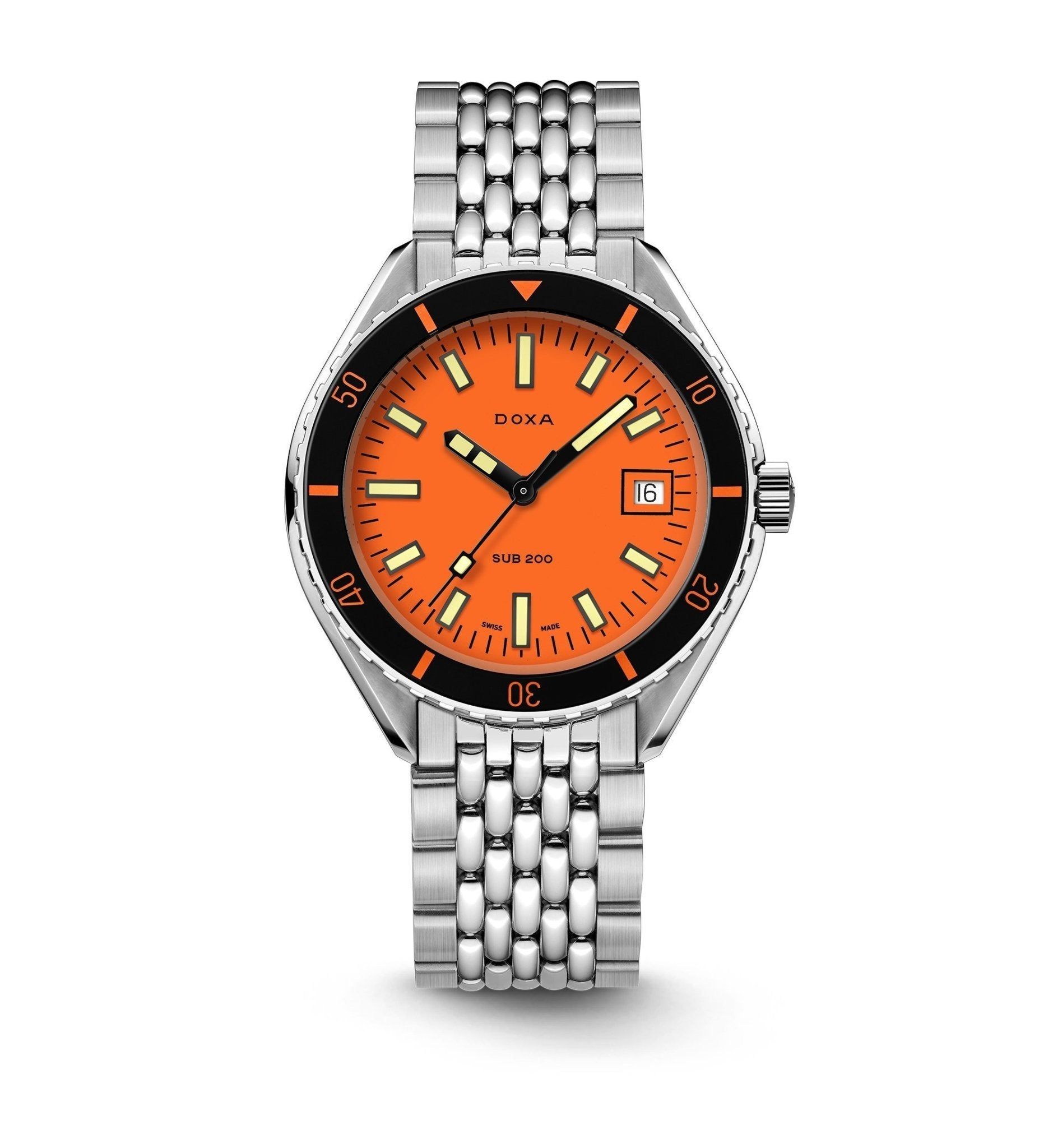
Doxa SUB 200: The Accessible Everyday Diver
By Zach Charles • October 10, 2026
Complete guide to the Doxa SUB 200 — 42mm, 200m, four colorways, Sellita SW200-1. The accessible entry to the Doxa SUB family with the full…
By Zach Charles • October 10, 2026
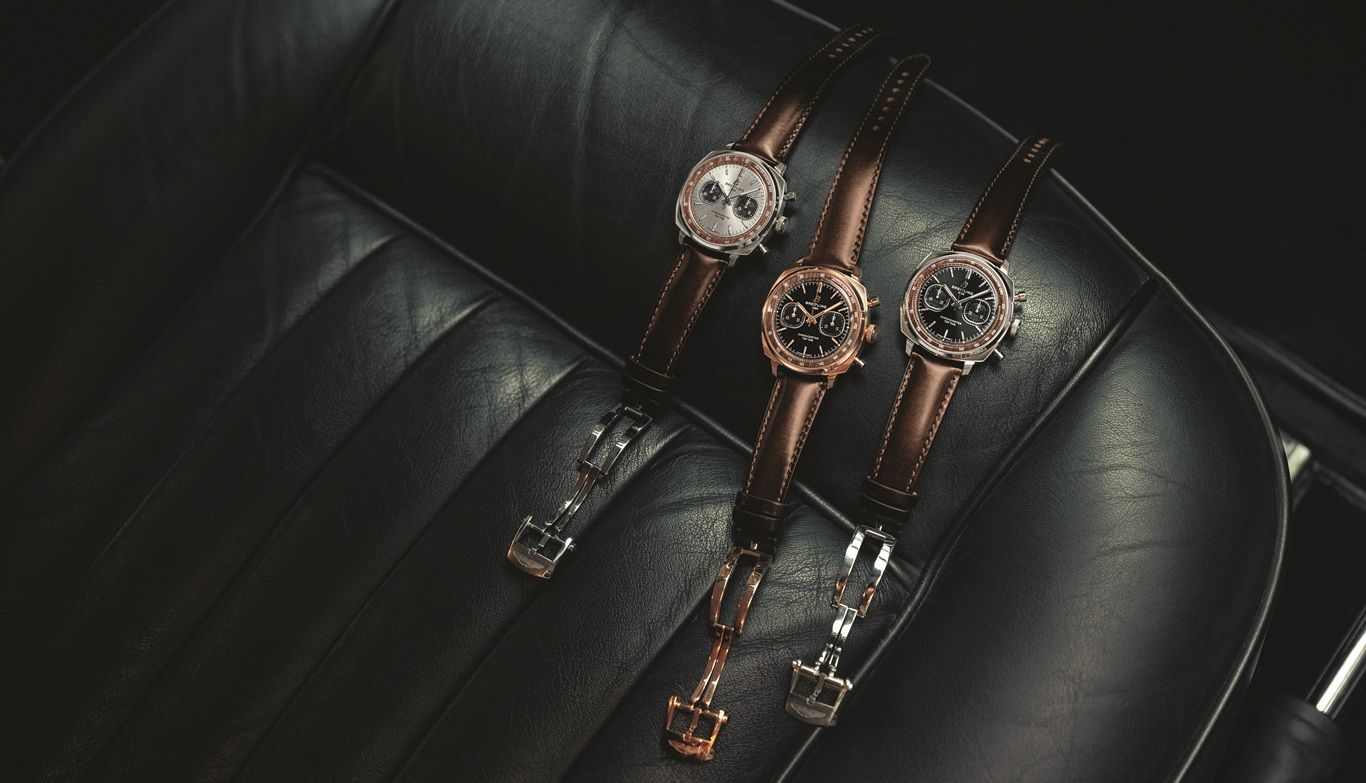
The Breitling Top Time B01 Aston Martin DB5 pairs a cushion-shaped 41mm case, a wooden inner ring and the in-house Caliber 01 across three limited…
By Zach Charles • October 10, 2026
TAG Heuer developed the Mikrograph (2011, 1/100th second), Mikrotimer Flying 1000 (2011, 1/1000th second), and Mikrogirder (2012, 1/2000th second).
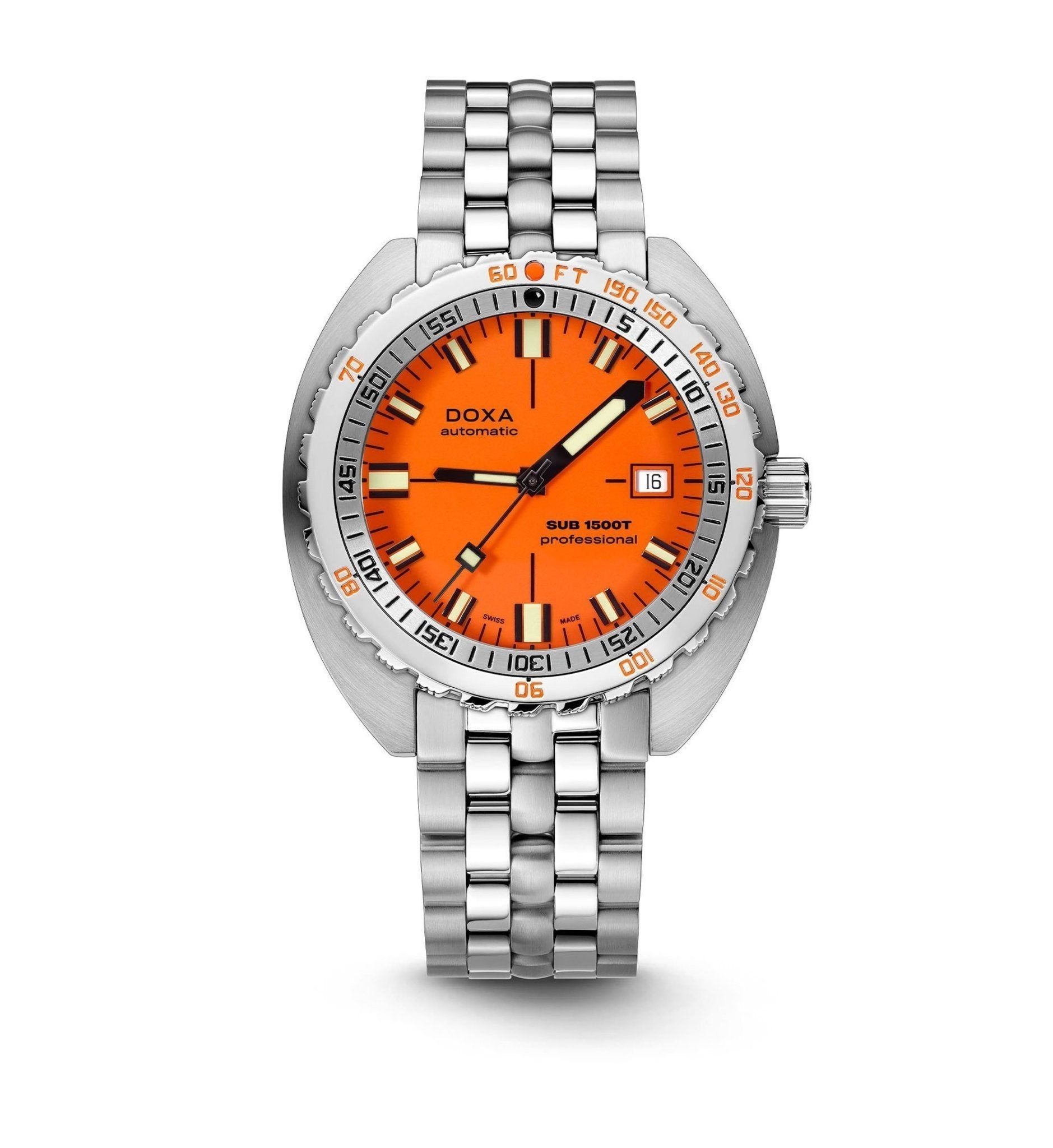
Doxa SUB 1500T: The 1,500-Metre Depth-Rating Flagship
By Zach Charles • October 10, 2026
Complete guide to the Doxa SUB 1500T — 45mm, 1,500m depth rating, helium escape valve, ETA 2892-2 movement, USD 2,690.
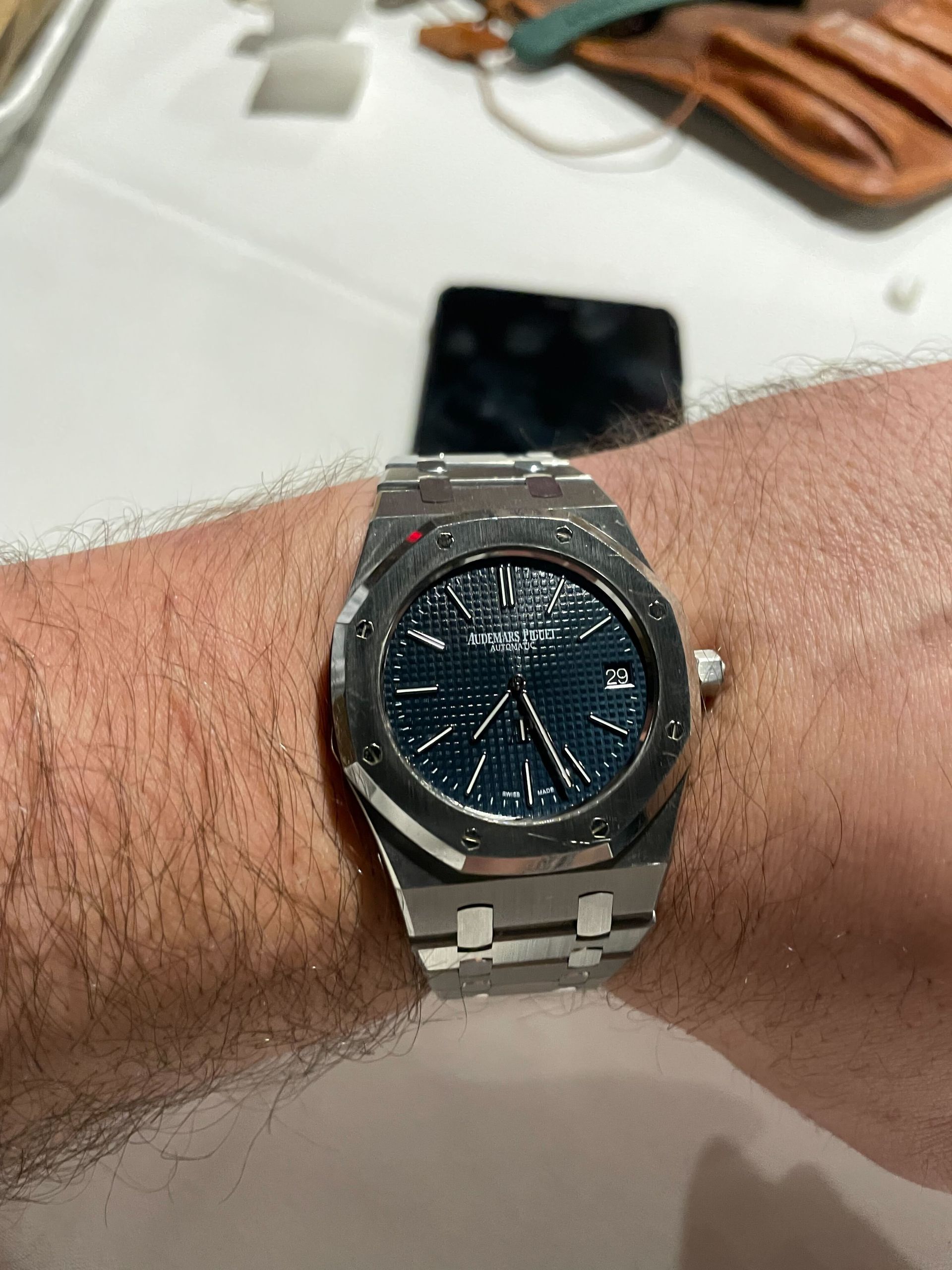
Audemars Piguet Royal Oak 'Jumbo' ref. 15202 with blue tapisserie dial and integrated steel bracelet
By Zach Charles • October 10, 2026
The Audemars Piguet × Swatch Royal Pop is a $400 bioceramic pocket watch in 8 colourways, powered by a new hand-wound SISTEM51 with 90+ hour power…

Time on the Move logo
By Zach Charles • October 10, 2026
Zach Charles is the editor of Time on the Move, an independent watch reference covering brand and model histories, buying guides and release news…
Omega Speedmaster Professional 'Moonwatch' chronograph, front view on steel bracelet
By Zach Charles • October 9, 2026
Find the best watches at every price point from $500 to $15,000 — new and pre-owned. Covers every budget tier with specific reference picks, brand…
By Zach Charles • October 9, 2026
The latest watch news: new releases, Watches and Wonders coverage, discontinuations, industry analysis, and market trends. Currently 1 article.
Seiko's New Panda Chronograph Is Literally a Panda: The Power Design Project HHK001 and HHK002
By Zach Charles • October 8, 2026
Seiko's Power Design Project panda chronograph (HHK001, HHK002) turns the panda dial into an actual panda face, with ear pushers, a 'Sasameter' and a 3D…
Show More