A. Lange & Söhne Zeitwerk: Digital Jumping Numerals and Constant-Force Escapement

Zach Charles • August 8, 2026

Share this article

A. Lange & Söhne Zeitwerk: Digital Time Display

The Zeitwerk — "time machine" or "clockwork" in German — represents A. Lange & Söhne's most radical formal departure from the horological conventions of the traditional dress watch. Introduced in 2009 , it displays the time not with hands but with jumping numerals — disc-based digital display that snaps each hour and each minute into position with mechanical precision. The mechanism requires a constant-force escapement to deliver the energy needed for instantaneous jumps without disrupting the timekeeping gear train. The result is a watch that reads like a digital display but runs on a purely mechanical movement.


A. Lange & Söhne Grande Complication pocket watch No. 42.500
An A. Lange & Söhne Grande Complication pocket watch (No. 42.500) — one of the most complex timepieces from the Glasütte manufacture, demonstrating the movement-finishing traditions that define Lange’s horological identity.
Photo: Ventus55 — CC BY-SA 4.0 — Wikimedia Commons

Launch — 2009

A. Lange & Söhne manufacture building, Glasütte
The A. Lange & Söhne manufacture in Glasütte, Saxony — the town that Ferdinand Adolph Lange chose in 1845 to re-establish German precision watchmaking, and where the Lange factory was re-founded on 7 December 1990 after the communist era.
Photo: Derbrauni — CC BY 4.0 — Wikimedia Commons

The Zeitwerk appeared in 2009. Its presentation created genuine surprise: A. Lange & Söhne had, in the fifteen years since the 1994 re-launch, been associated almost entirely with classical or neo-classical design — the asymmetric but conventionally hand-displayed Lange 1, the traditional-dial 1815, the precision-instrument Richard Lange. The Zeitwerk announced that Lange's design vocabulary included radical propositions as well as classical ones.

The movement behind the display was the reason the Zeitwerk was possible: without a constant-force mechanism delivering precisely regulated energy to the disc jump, the energy required for each digit change would have disrupted the gear train's rate. The display innovation was only achievable because of a specific mechanical engineering solution.


Calibre L043.1 — The Original Zeitwerk Movement

Golden pocket watch from Glasütte, A. Lange & Söhne
A golden Glasütte pocket watch from the Lange & Söhne tradition — exemplifying the three-quarter plate, Glasütte stripe finishing, and hand-engraved balance cock that have characterised Lange movements since the 1845 re-founding.
Photo: Werneuchen — Public Domain — Wikimedia Commons

Calibre L043.1 (original Zeitwerk):
- Diameter: 36.0 mm
- Jewels: 68
- Frequency: 18,000 vph (2.5 Hz)
- Power reserve: 36 hours


The Constant-Force Escapement — Remontoire d'Égalité

A. Lange & Söhne manufacture, Glasütte — exterior view
The A. Lange & Söhne manufacture exterior in Glasütte — the facility that produces approximately 5,000 watches per year across the Lange 1, Saxonia, 1815, and Zeitwerk collections, each assembled twice and then disassembled for final movement finishing.
Photo: Derbrauni — CC BY 4.0 — Wikimedia Commons

The remontoire d'égalité (constant-force spring) is the Zeitwerk's defining mechanical innovation. In a conventional mechanical watch, the force driving the gear train decreases as the mainspring unwinds — the result is a slight variation in rate over the power reserve cycle. In most watches this variation is negligible for practical purposes, but in a disc-jump display system it creates a specific problem: the energy required to snap the discs to a new position is substantially higher than the energy required for ordinary timekeeping, and if that energy is drawn directly from the gear train, it creates a rate disturbance at each jump.

The remontoire addresses this by pre-charging a small intermediate spring every 60 seconds. The main gear train winds this small spring; the spring then drives the escapement directly, delivering constant-force impulses to the balance wheel regardless of the mainspring's state of wind. The constant-force delivery ensures consistent rate between jump events.

The Y-lever mechanism triggers simultaneously: the disc jump and the escapement impulse occur at the same moment — the constant-force charge dissipates in a single event that both updates the display and maintains the beat.

A Windflüge (wind vane — a friction governor) dissipates any excess energy from the disc jump mechanism, preventing overshoot or bounce in the numeral discs.

The total mechanism fires 1,608 times per day .


The Jumping Numeral Display

A. Lange & Söhne Grande Complication pocket watch No. 42.500
An A. Lange & Söhne Grande Complication pocket watch (No. 42.500) — one of the most complex timepieces from the Glasütte manufacture, demonstrating the movement-finishing traditions that define Lange’s horological identity.
Photo: Ventus55 — CC BY-SA 4.0 — Wikimedia Commons

The Zeitwerk displays hours in a single digit aperture and minutes in two-digit form — tens and units. The apertures are arranged horizontally across the dial.

Hours: A single disc presents 1 through 12. At each hour mark, the disc jumps to the next position instantaneously — the same instantaneous advance mechanism that distinguishes the Datograph's minutes counter.

Minutes: Two separate discs — tens (0–5) and units (0–9) — advance in sequence. The units disc advances every minute; the tens disc advances at the 10-minute marks; both discs simultaneously reset to 00 at the top of each hour while the hours disc advances to the next numeral.

The dial design accommodates the display: large apertures at the top of the dial, subsidiary seconds at the lower portion (mechanically independent from the disc system), and the Lange three-quarter plate visible through the exhibition caseback.


Zeitwerk Striking Time — Calibre L043.2

Golden pocket watch from Glasütte, A. Lange & Söhne
A golden Glasütte pocket watch from the Lange & Söhne tradition — exemplifying the three-quarter plate, Glasütte stripe finishing, and hand-engraved balance cock that have characterised Lange movements since the 1845 re-founding.
Photo: Werneuchen — Public Domain — Wikimedia Commons

The Zeitwerk Striking Time (introduced 2011 ) adds self-striking hammers to the Zeitwerk: at each hour and half-hour, the mechanism automatically strikes the hour count — without any pusher interaction, without a repeating mechanism in the traditional sense. Calibre L043.2 .


Zeitwerk Minute Repeater — Calibre L043.5

The Zeitwerk Minute Repeater (introduced 2015 , platinum; subsequently white gold, limited to 30 pieces) is the most complex Zeitwerk variant and one of the most technically demanding pieces in the A. Lange & Söhne catalogue.

Calibre L043.5:
- Parts: 771
- Jewels: 93

The minute repeater in the Zeitwerk context strikes a decimal sequence — not the traditional hour / quarter-hour / minute pattern of a Swiss minute repeater, but hours, 10-minute intervals, and then remaining minutes. This decimal system is coherent with the Zeitwerk's digital display: the display shows the time in decimal intervals (hours, tens of minutes, units of minutes), and the repeater strikes the same information in the same logical structure.

The combination of constant-force escapement (required for the disc jump display) with a minute repeater (requiring its own acoustic and mechanical architecture) demanded three years of development. The 771 parts represent approximately double the complexity of the original L043.1.


Current Zeitwerk — Calibre L043.6 (2022)

In 2022 , A. Lange & Söhne updated the base Zeitwerk with Calibre L043.6 :

  • Parts: 451
  • Jewels: 59
  • Power reserve: 72 hours (extended from 36 hours via twin-barrel architecture)

The power reserve extension from 36 to 72 hours — the primary limitation of the original L043.1 — was achieved by doubling the barrel arrangement. The 2022 update represents a significant improvement to the practical ownership experience without altering the Zeitwerk's display architecture or the constant-force mechanism.


The Zeitwerk's Position

The Zeitwerk addresses a question that A. Lange & Söhne's catalogue had not previously answered: can the precision engineering identity of a Lange movement — the three-quarter plate, the constant-force spring, the gold chatons — support a display architecture borrowed from digital technology?

The answer the Zeitwerk demonstrates is yes — but only because the digital display requires a mechanical solution (the remontoire d'égalité) that is itself a demonstration of engineering at the highest level. The Zeitwerk is not a digital watch in the sense of using electronics; it is a purely mechanical disc-jump display system that happens to read like a digital clock, and the mechanism that makes it possible is more complex than most watches' entire movement architecture.


Frequently Asked Questions

What is the Zeitwerk?
A. Lange & Söhne's jumping-numeral digital display watch, introduced 2009. Hours and minutes are shown as numerals that snap to each new position instantaneously, driven by a constant-force escapement (remontoire d'égalité) that delivers regulated energy for each jump. Current Calibre L043.6: 451 parts, 72-hour power reserve.

What is the constant-force escapement in the Zeitwerk?
A remontoire d'égalité — a small intermediate spring charged every 60 seconds by the main gear train, then delivering constant-force impulses to the escapement and triggering the disc jump simultaneously. This prevents the high-energy disc jump from disturbing the gear train's rate. The mechanism fires 1,608 times per day.

What is the Zeitwerk Minute Repeater?
Calibre L043.5 — 771 parts, 93 jewels. Adds a decimal minute repeater (striking hours, 10-minute intervals, and remaining minutes) to the Zeitwerk display. The decimal strike sequence matches the digital display format. First released in platinum in 2015.

How does the Zeitwerk show the time?
Three apertures display hours (single digit) and minutes (tens and units digits). The digits snap to each new position instantaneously. A subsidiary seconds indicator occupies the lower dial.

What is Calibre L043.6?
The 2022 updated Zeitwerk movement: 451 parts, 59 jewels, 72-hour power reserve (up from the original 36 hours via twin barrels) — while retaining the constant-force escapement and jumping numeral display.


Related Articles

Recent Posts

By Zach Charles • October 10, 2026
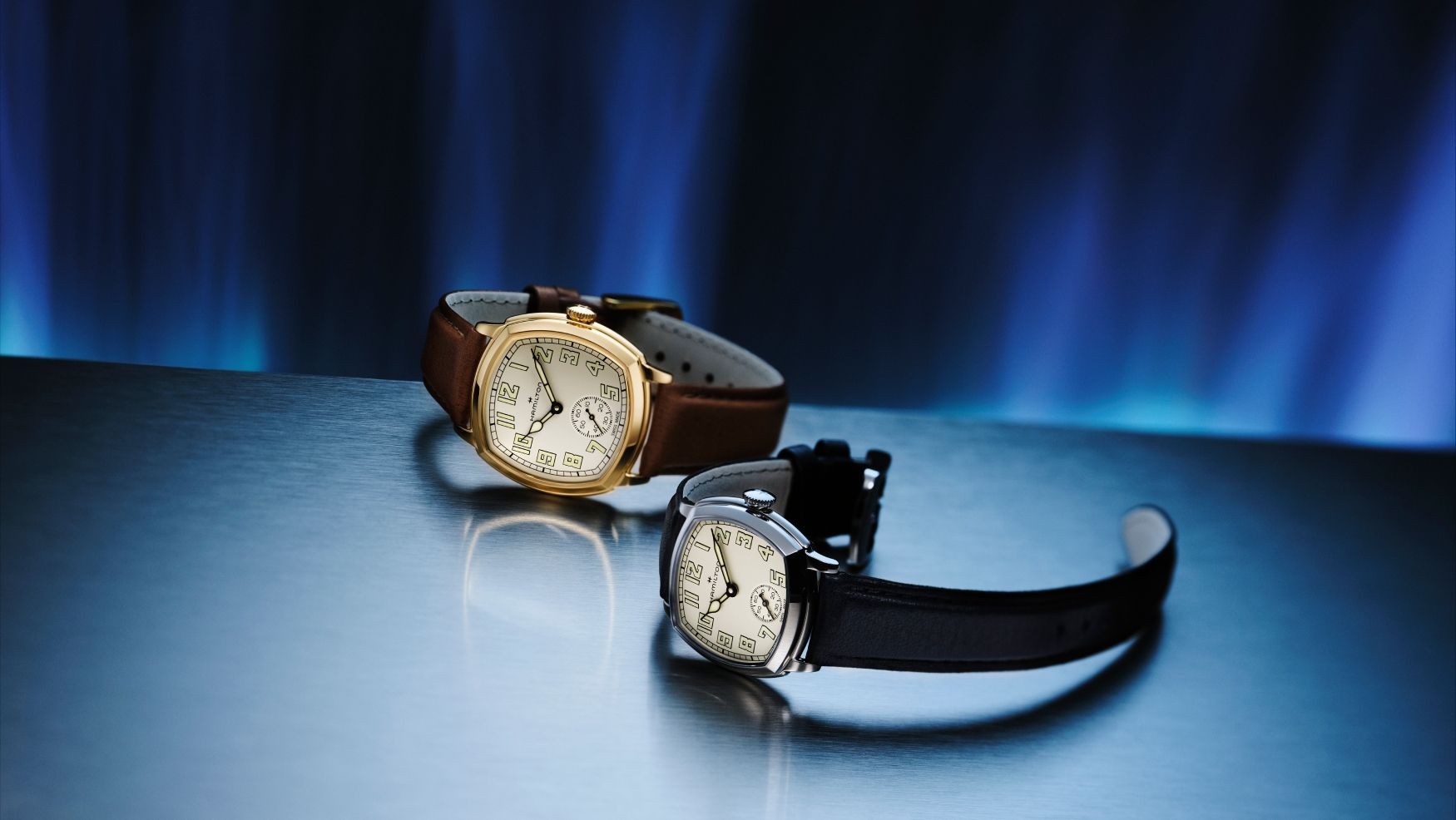
Hamilton's American Classic Cushion Mechanical revives its 1926 Art Deco cushion watches, seen in Oppenheimer, in 30mm and 34mm with the new hand-wound…
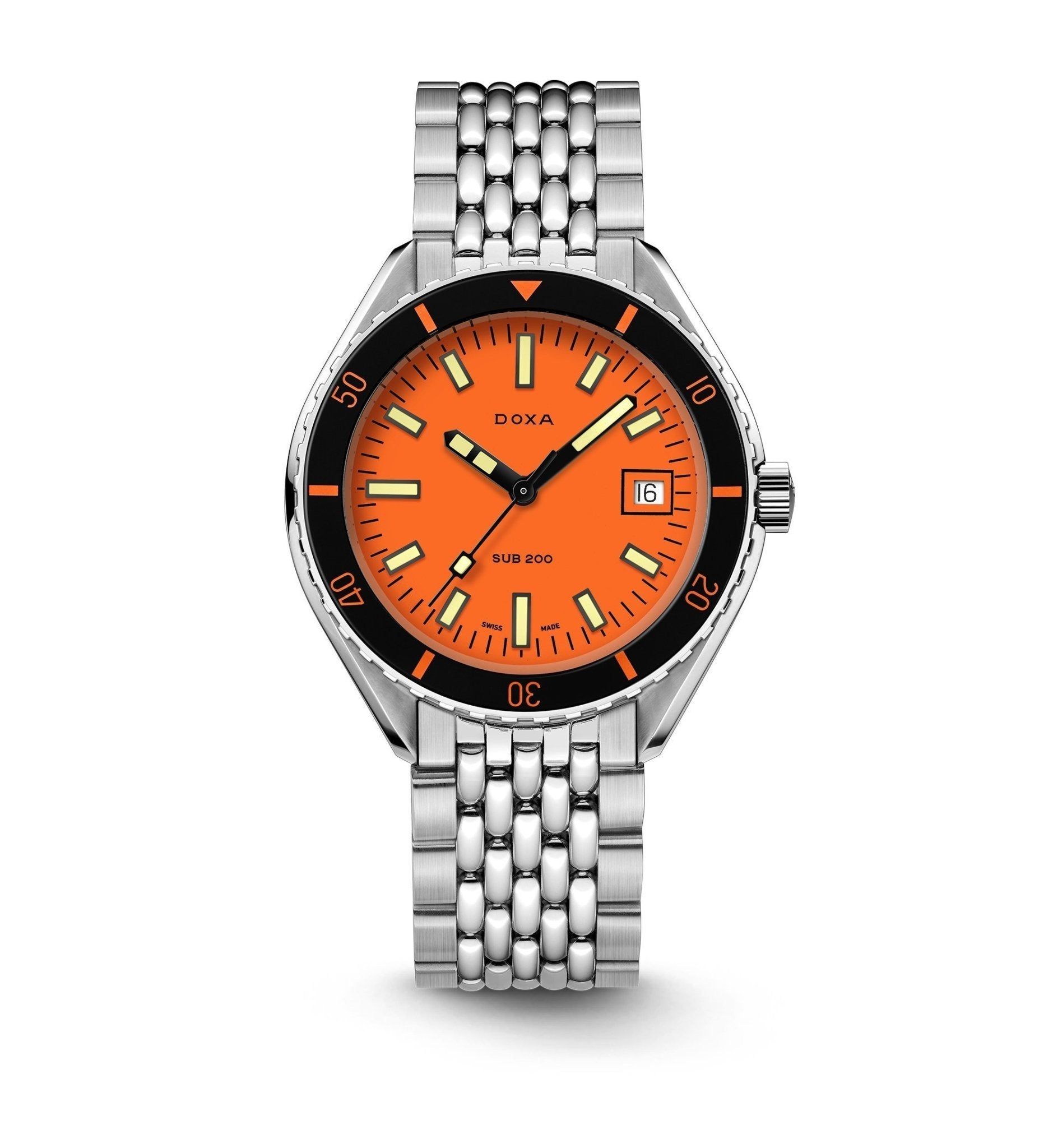
Doxa SUB 200: The Accessible Everyday Diver
By Zach Charles • October 10, 2026
Complete guide to the Doxa SUB 200 — 42mm, 200m, four colorways, Sellita SW200-1. The accessible entry to the Doxa SUB family with the full…
By Zach Charles • October 10, 2026
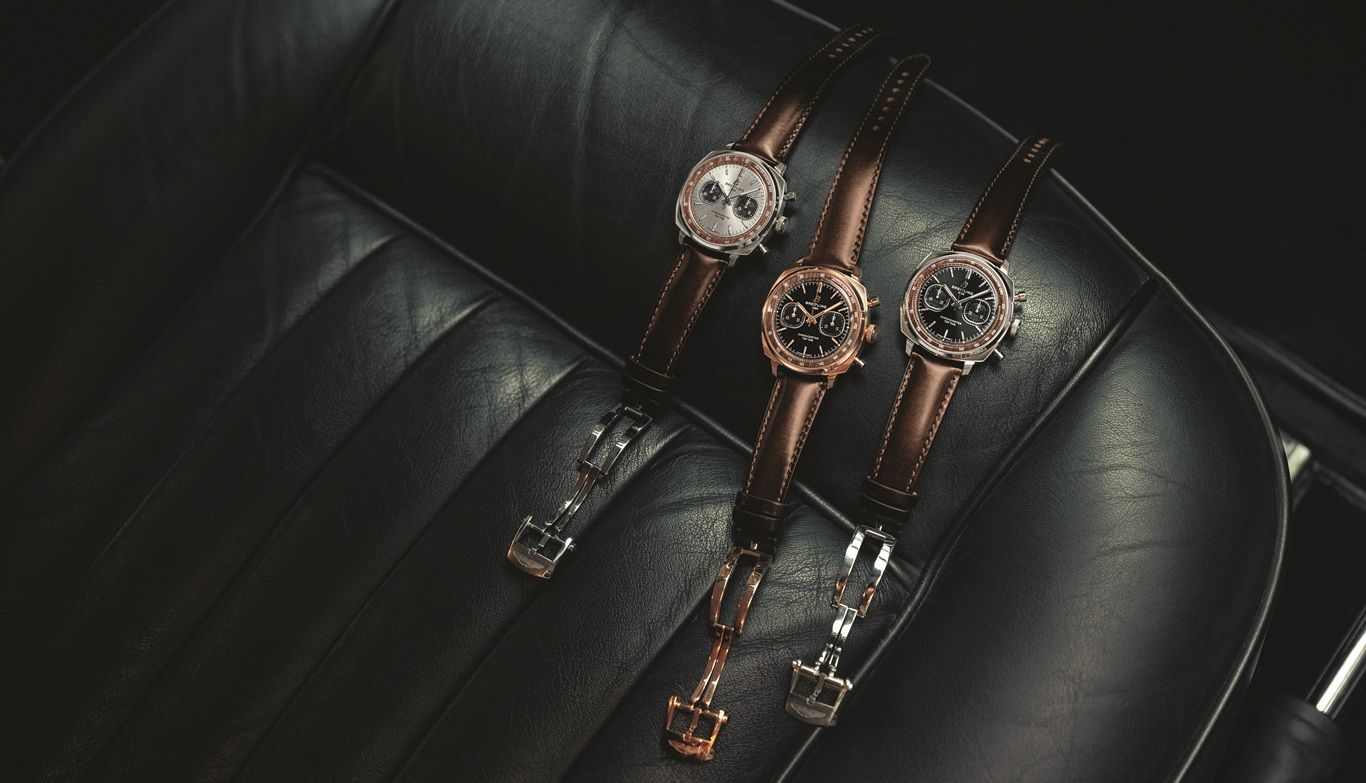
The Breitling Top Time B01 Aston Martin DB5 pairs a cushion-shaped 41mm case, a wooden inner ring and the in-house Caliber 01 across three limited…
By Zach Charles • October 10, 2026
TAG Heuer developed the Mikrograph (2011, 1/100th second), Mikrotimer Flying 1000 (2011, 1/1000th second), and Mikrogirder (2012, 1/2000th second).
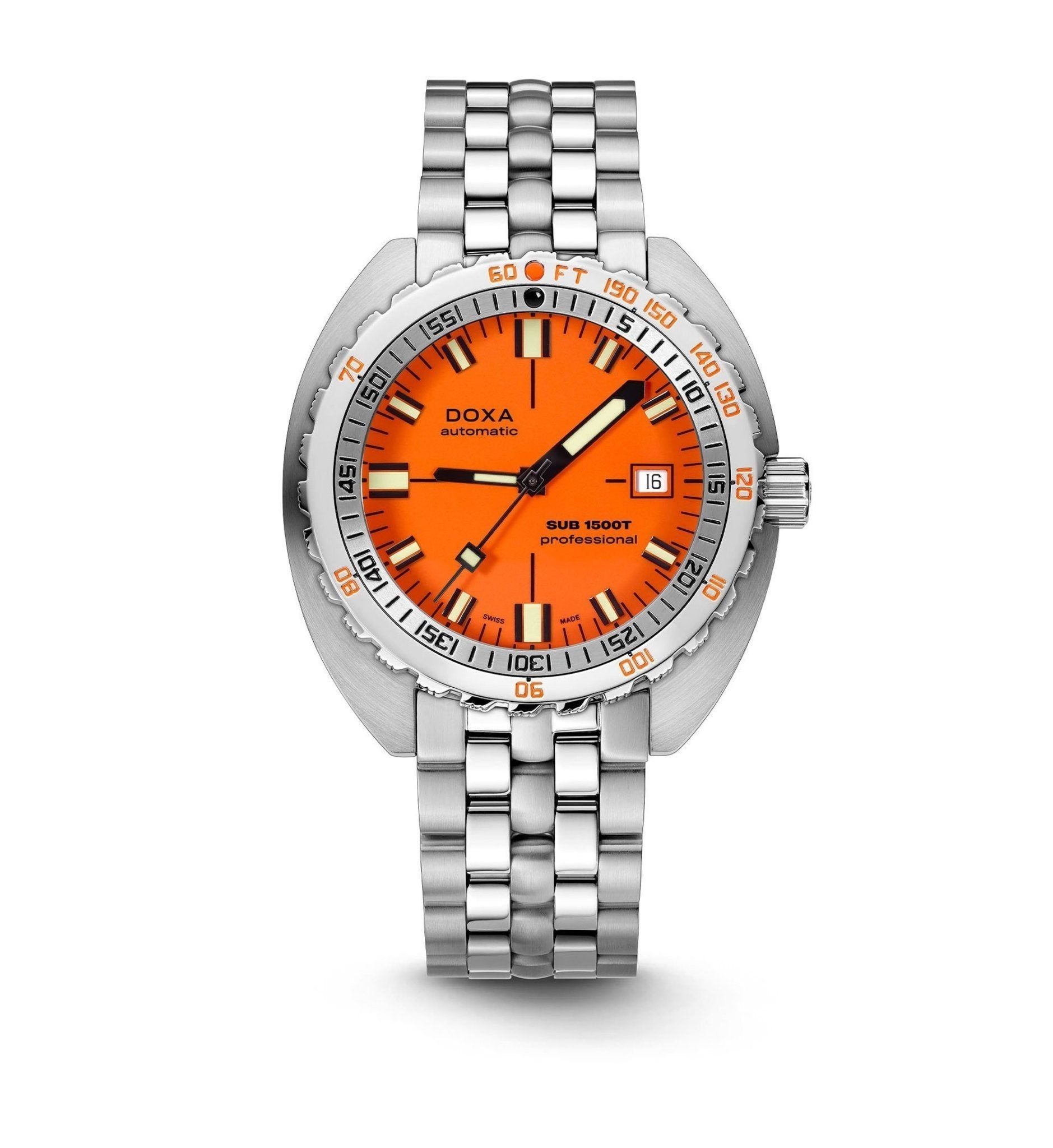
Doxa SUB 1500T: The 1,500-Metre Depth-Rating Flagship
By Zach Charles • October 10, 2026
Complete guide to the Doxa SUB 1500T — 45mm, 1,500m depth rating, helium escape valve, ETA 2892-2 movement, USD 2,690.
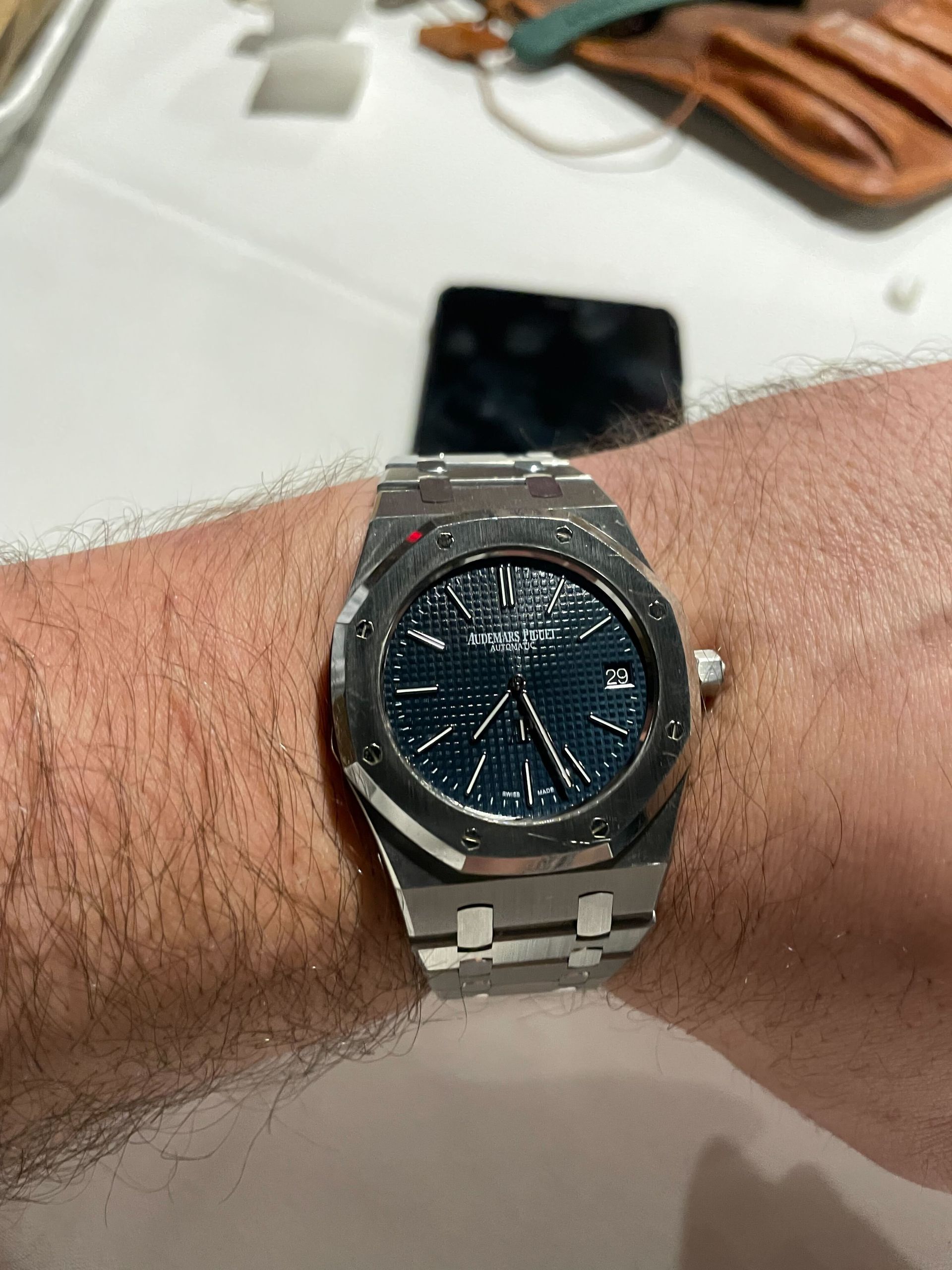
Audemars Piguet Royal Oak 'Jumbo' ref. 15202 with blue tapisserie dial and integrated steel bracelet
By Zach Charles • October 10, 2026
The Audemars Piguet × Swatch Royal Pop is a $400 bioceramic pocket watch in 8 colourways, powered by a new hand-wound SISTEM51 with 90+ hour power…

Time on the Move logo
By Zach Charles • October 10, 2026
Zach Charles is the editor of Time on the Move, an independent watch reference covering brand and model histories, buying guides and release news…
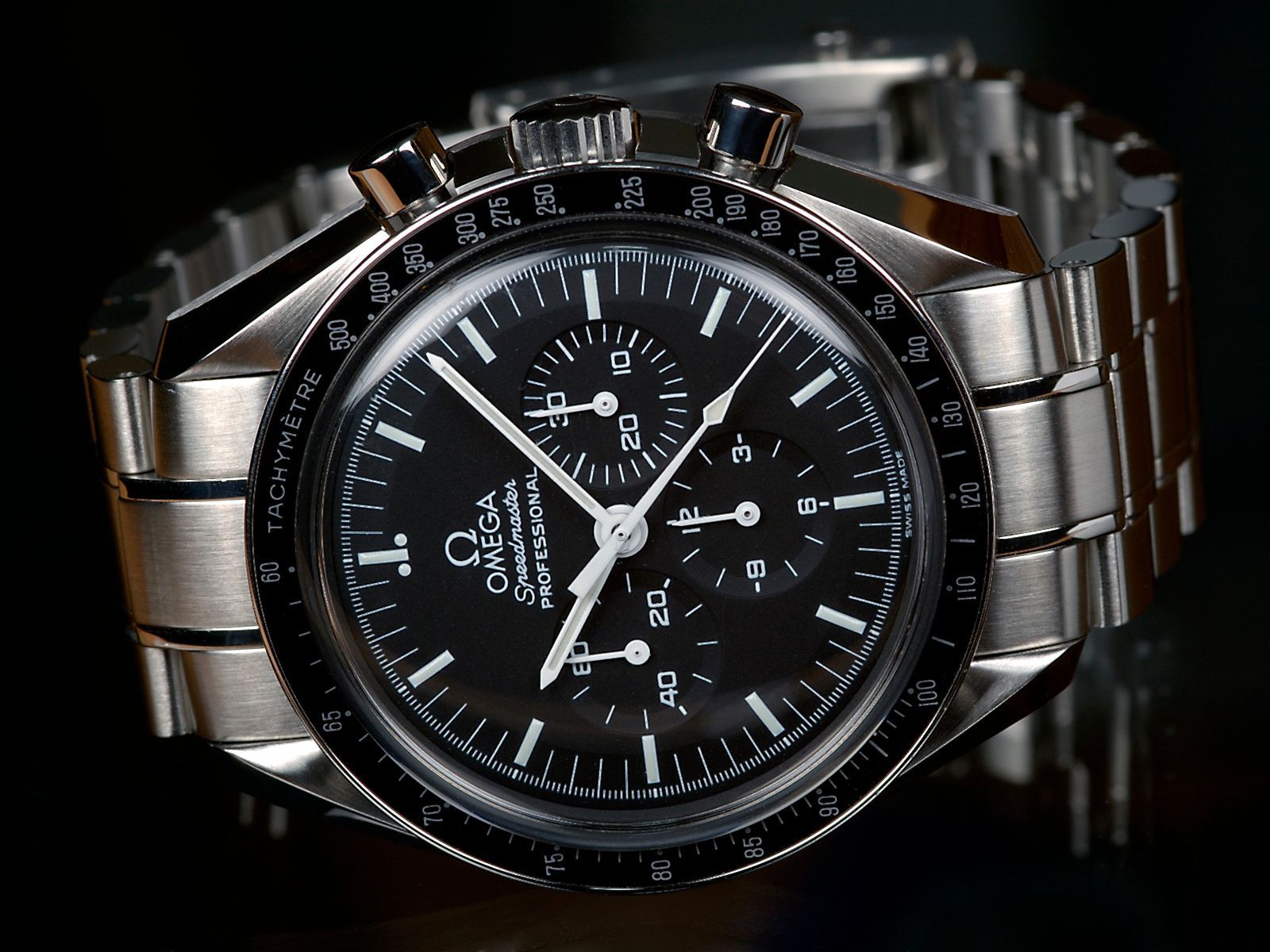
Omega Speedmaster Professional 'Moonwatch' chronograph, front view on steel bracelet
By Zach Charles • October 9, 2026
Find the best watches at every price point from $500 to $15,000 — new and pre-owned. Covers every budget tier with specific reference picks, brand…
By Zach Charles • October 9, 2026
The latest watch news: new releases, Watches and Wonders coverage, discontinuations, industry analysis, and market trends. Currently 1 article.
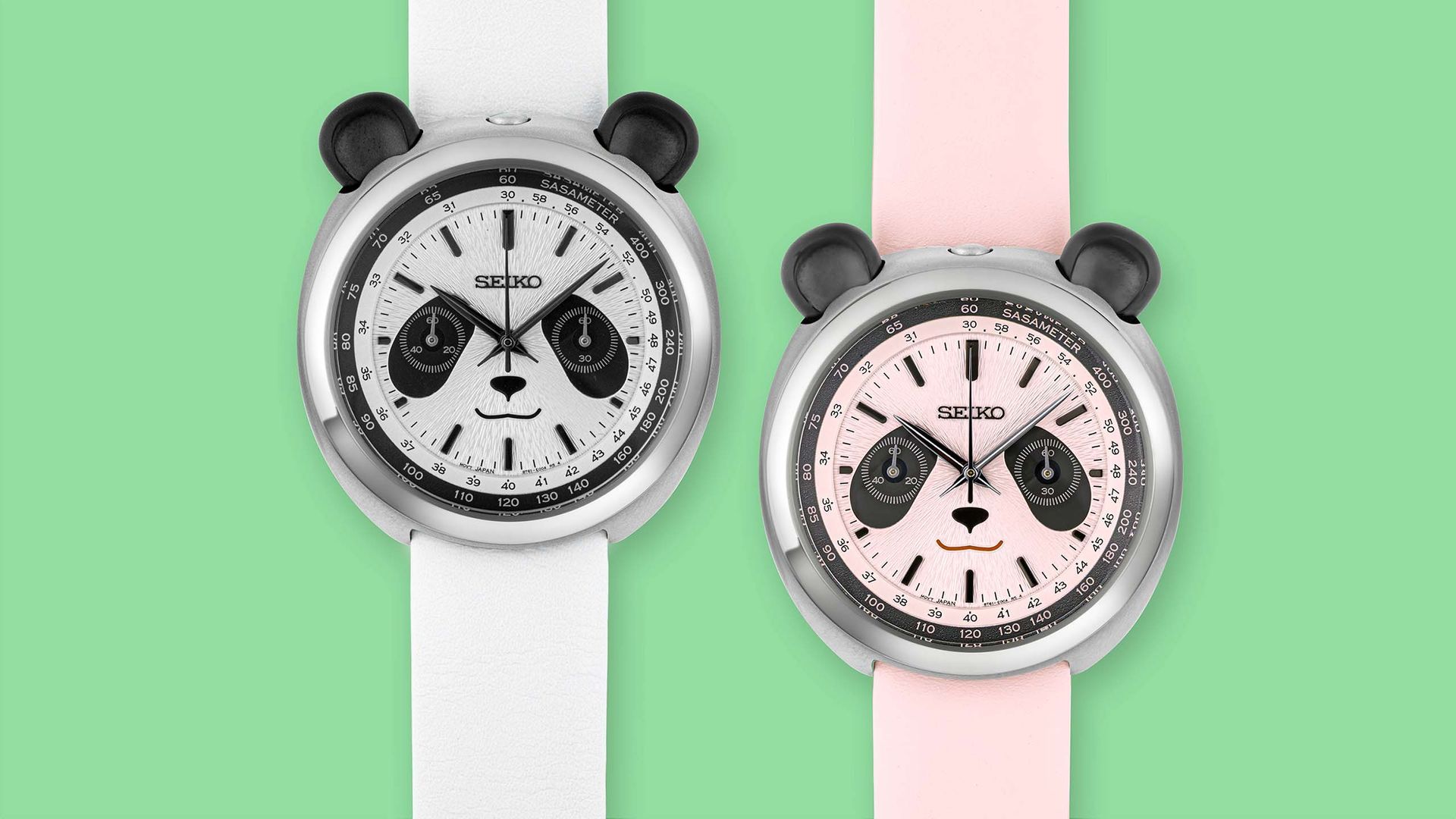
Seiko's New Panda Chronograph Is Literally a Panda: The Power Design Project HHK001 and HHK002
By Zach Charles • October 8, 2026
Seiko's Power Design Project panda chronograph (HHK001, HHK002) turns the panda dial into an actual panda face, with ear pushers, a 'Sasameter' and a 3D…
Show More