
Omega Speedmaster: History of the Moonwatch

Zach Charles • September 6, 2026

Share this article

Omega Speedmaster: The Complete History of the Moonwatch

The Omega Speedmaster is arguably the most historically significant wristwatch ever made. It is the only watch ever worn on the Moon, the timepiece that helped save the lives of the Apollo 13 crew, and an unbroken commercial icon that has remained in continuous production since 1957. Where other legendary watches earn their fame through precision timekeeping, design innovation, or celebrity association, the Speedmaster earned its place in history through genuine professional utility at the highest possible stakes — human spaceflight. No other wristwatch has been subjected to more gruelling testing, worn in more extreme environments, or carried a heavier burden of responsibility. Yet it remains available today, nearly unchanged in spirit from the watch that Buzz Aldrin wore onto the surface of the Moon.


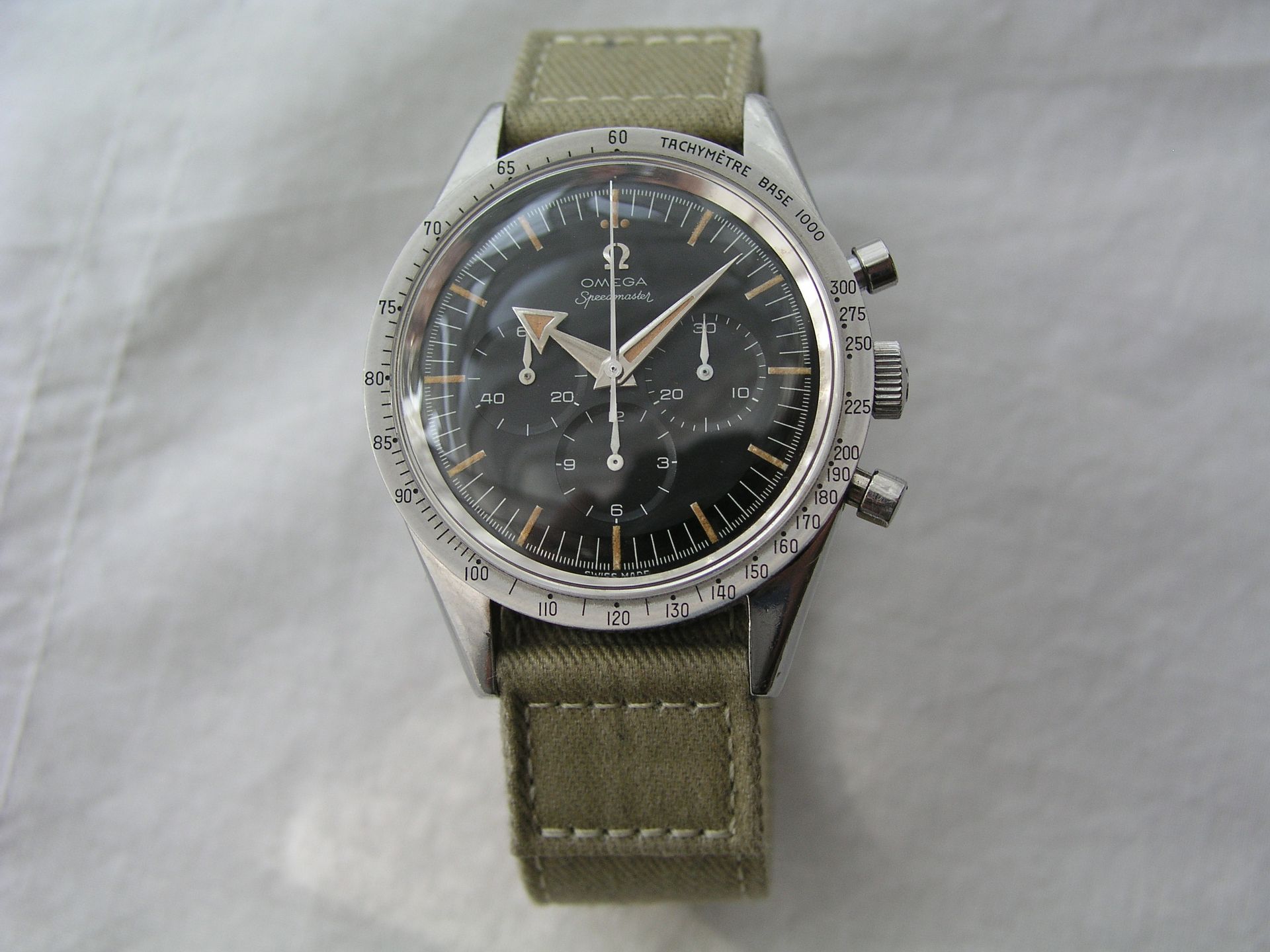
Omega Speedmaster CK2915 — the first-generation Speedmaster (1957)
The Omega Speedmaster CK2915 — the first-generation Speedmaster introduced in 1957, here photographed with a period-correct stainless steel bracelet. The CK2915 housed the Cal. 321 column-wheel chronograph movement with the lever escapement that would later accompany astronauts to the Moon. The asymmetric case with pump pushers set the visual language for every Speedmaster that followed.
Photo: Superspido~commonswiki — CC BY-SA 3.0 — Wikimedia Commons
1957 — Born for Speed

Omega Speedmaster CK2915 — the first-generation Speedmaster (1957)
The Omega Speedmaster CK2915 — the first-generation Speedmaster introduced in 1957, here photographed with a period-correct stainless steel bracelet. The CK2915 housed the Cal. 321 column-wheel chronograph movement with the lever escapement that would later accompany astronauts to the Moon. The asymmetric case with pump pushers set the visual language for every Speedmaster that followed.
Photo: Superspido~commonswiki — CC BY-SA 3.0 — Wikimedia Commons

The Speedmaster was not born for space. It was born for the racetrack.

When Omega introduced the Speedmaster in 1957, the target customer was a racing driver, an engineer, or a test pilot — someone who needed to measure elapsed time and calculate speed at a glance. The watch's very name derives from its defining feature: the tachymeter scale inscribed on the bezel, which allows the wearer to calculate speed over a fixed distance by reading where the chronograph seconds hand stops after one measured unit of travel. This was a practical tool for motorsport professionals, not a scientific instrument destined for orbit.

The original reference, the CK 2915, was designed with distinctive "Broad Arrow" hands — a thick pointer shape tapering to a clean arrowhead, providing strong legibility against the black dial. At its heart beat the Calibre 321, a movement derived from the Lemania 2310 base, featuring a column-wheel chronograph mechanism with a lateral clutch. Watchmakers and collectors regard the Cal. 321 with particular reverence: the column wheel provides precise, tactile control over the start/stop/reset sequence, while the lateral clutch allows the chronograph to be engaged at any moment without a jump in the seconds hand. It is, by most expert assessment, one of the finest hand-wound chronograph movements ever produced in the twentieth century.

The tachymeter bezel was a meaningful departure from earlier chronograph convention; previous sporting chronographs had often placed the scale on the dial itself, where it cluttered the reading surface. Moving the scale to the bezel was both practical and visually clean — a decision that would define the Speedmaster's identity for the next seven decades.


Reference Evolution to the Moonwatch

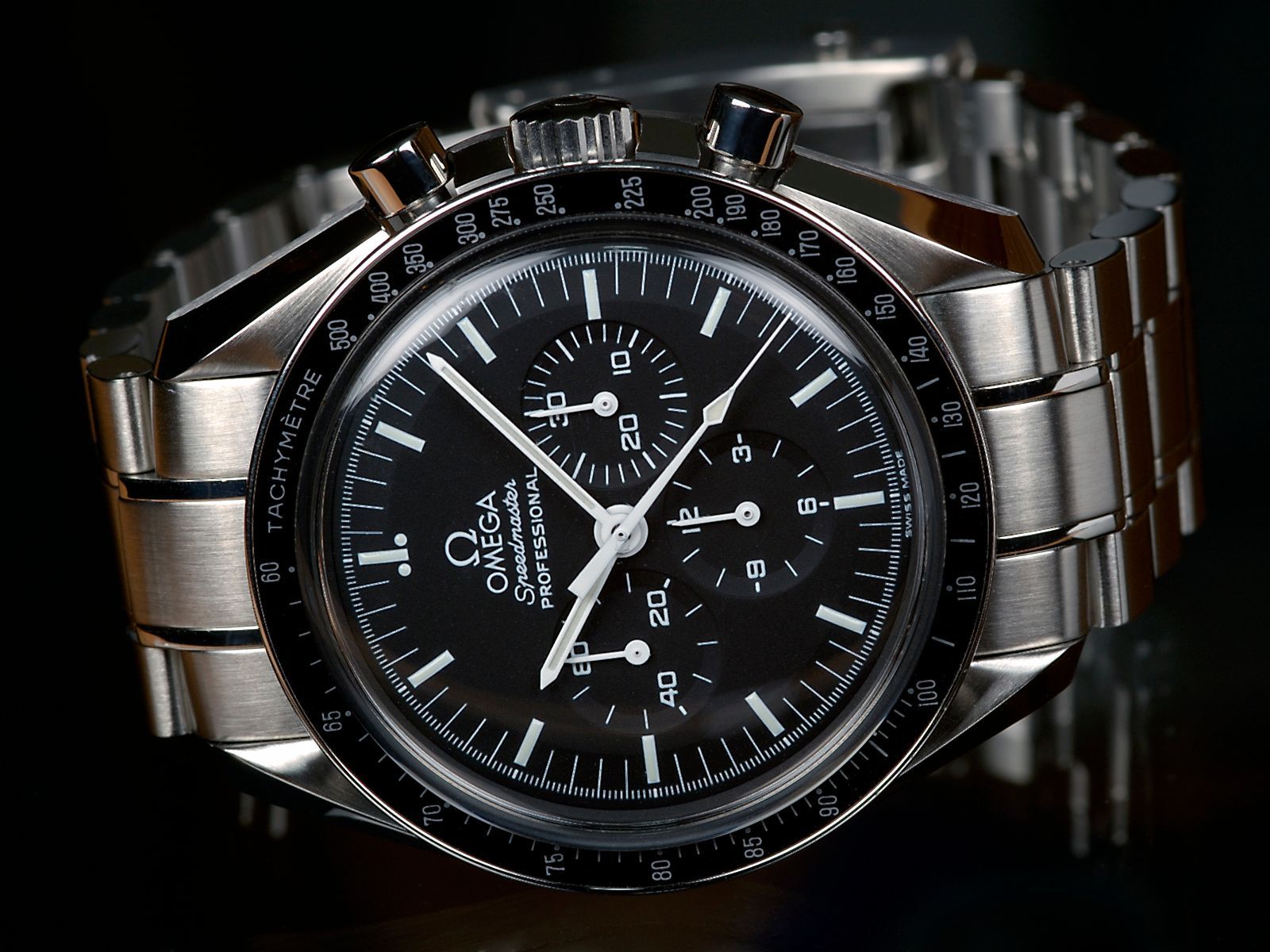
Omega Speedmaster Professional — the Moonwatch
The Omega Speedmaster Professional — the reference worn on the Moon during Apollo 11 in July 1969 and subsequently on every crewed NASA lunar mission. NASA’s 1965 qualification testing subjected eleven watches to eleven tests including thermal shock, humidity, pressure, and magnetic field; the Speedmaster Professional was the only watch to pass all eleven. Its Cal. 321 movement and hesalite crystal remain the standard configuration for the professional Moonwatch.
Photo: Torsten Bolten — Public Domain — Wikimedia Commons
The path from that first racing chronograph to the watch that walked on the Moon spanned twelve years and a series of incremental reference changes that collectors now trace with almost archaeological precision.

  • CK 2915 (1957–1959): asymmetric case, Broad Arrow hands, first generation
  • CK 2997 (1959–1961): "Alpha" hands, minor case refinements
  • CK 2998 (1961–1963): Cal. 321 in essentially modern configuration
  • ST 105.002 (1963–1965): straight-lug case geometry, the NASA test watch
  • ST 105.003 (1965): the "Pre-Moon" — passed NASA qualification, worn on Gemini missions
  • ST 105.012 (1966–1968): dial text simplified to "Omega" only
  • ST 145.012 (1968–1969): the reference worn during Apollo 11

These small typographic and case details matter enormously to serious collectors; the difference between references can represent tens of thousands of dollars on the secondary market.


NASA Selection — The Most Rigorous Watch Test in History (1965)

Omega Speedmaster CK2915 — the first-generation Speedmaster (1957)
The Omega Speedmaster CK2915 — the first-generation Speedmaster introduced in 1957, here photographed with a period-correct stainless steel bracelet. The CK2915 housed the Cal. 321 column-wheel chronograph movement with the lever escapement that would later accompany astronauts to the Moon. The asymmetric case with pump pushers set the visual language for every Speedmaster that followed.
Photo: Superspido~commonswiki — CC BY-SA 3.0 — Wikimedia Commons

The story of how the Speedmaster became the official NASA chronograph is one of the great pieces of industrial history in the watch world — and it begins with a purchasing officer, not an engineer.

Procurement officer Dick Koos was tasked with sourcing chronograph candidates and, crucially, purchased them off store shelves — not from manufacturer representatives presenting hand-selected samples. The initial field included ten chronographs from Rolex, Longines, Hamilton, Bulova, and others. NASA subjected all of them to eleven standardised tests: temperature cycling from -18°C to +93°C, vacuum, humidity, shock loading to 40g in six directions, linear acceleration at 7.25g for 333 seconds, oxygen atmosphere, vibration, and high-intensity acoustic noise.

Every competitor failed at least one test. The Speedmaster — in the form of the CK 2998 and ST 105.003 — passed all eleven. On March 1, 1965, NASA formally declared the Speedmaster "Flight Qualified for All Manned Space Missions." No other watch has ever received an equivalent designation. The Speedmaster's success is often attributed to its mechanical simplicity: a robust hand-wound movement, no automatic rotor, a hesalite crystal that would not shatter in vacuum, and a case that protected the crown and pushers from accidental activation.


Apollo Missions — Walking on the Moon

Omega Speedmaster Professional — the Moonwatch
The Omega Speedmaster Professional — the reference worn on the Moon during Apollo 11 in July 1969 and subsequently on every crewed NASA lunar mission. NASA’s 1965 qualification testing subjected eleven watches to eleven tests including thermal shock, humidity, pressure, and magnetic field; the Speedmaster Professional was the only watch to pass all eleven. Its Cal. 321 movement and hesalite crystal remain the standard configuration for the professional Moonwatch.
Photo: Torsten Bolten — Public Domain — Wikimedia Commons

The Speedmaster's space career began before the Moon. Gemini 3 in March 1965 carried the first American crew into orbit wearing the newly qualified watch, and Gemini 4 in June 1965 brought it to its first spacewalk — photographs of Ed White floating free of the capsule show the Speedmaster clearly on his wrist.

Apollo 11 in July 1969 is the defining moment. Both Neil Armstrong and Buzz Aldrin wore the ST 145.012. Armstrong left his in the Lunar Module after the LEM's onboard clock malfunctioned, repurposing his Speedmaster as the module's backup timer. Aldrin wore his on the surface. When Buzz Aldrin stepped onto the lunar regolith, his Speedmaster became the first watch worn on the Moon.

The defining test of the Speedmaster's practical value came during the crisis of Apollo 13. On April 13, 1970, an oxygen tank in the service module ruptured, disabling the main power systems. The crew needed to execute a precise 14-second engine burn to correct their trajectory for a return to Earth — without the computer to time the burn, Jack Swigert relied on his Speedmaster. The margin for error was essentially zero: a mistake of more than two seconds would alter the reentry trajectory fatally. The burn was precisely correct. The crew survived. NASA subsequently awarded the Speedmaster the "Silver Snoopy" award — the agency's highest honour for equipment contributing to mission safety.


Calibre 321 — The Original Moon Movement

Omega Speedmaster Professional — the Moonwatch
The Omega Speedmaster Professional — the reference worn on the Moon during Apollo 11 in July 1969 and subsequently on every crewed NASA lunar mission. NASA’s 1965 qualification testing subjected eleven watches to eleven tests including thermal shock, humidity, pressure, and magnetic field; the Speedmaster Professional was the only watch to pass all eleven. Its Cal. 321 movement and hesalite crystal remain the standard configuration for the professional Moonwatch.
Photo: Torsten Bolten — Public Domain — Wikimedia Commons

The Cal. 321 employed a column wheel to coordinate start, stop, and reset functions, and a lateral clutch to engage the seconds wheel. Together they produced the satisfying, precise action that Speedmaster enthusiasts describe with near-religious reverence. Omega discontinued the Cal. 321 in 1968, replacing it with the Calibre 861 for production efficiency. The Cal. 861 — and its successor the Cal. 1861 — is mechanically simpler but durable and accurate, and has been the Moonwatch movement for over fifty years.

In 2019, Omega announced the return of the Cal. 321. For the Apollo 11 50th Anniversary edition, the movement was reconstructed from original technical documentation and built entirely by hand. The reintroduced Cal. 321 commands a meaningful premium in select Speedmaster references — it is, in a real sense, the movement that went to the Moon, brought back to life.


The Modern Moonwatch Professional

The current Moonwatch Professional (ref. 310.30.42.50.01.001) measures 42mm, uses the asymmetric case tracing directly to the ST 105.003, wears a black dial with white indices, and is powered by the Cal. 1861 or — in the Co-Axial Master Chronometer version — the Cal. 3861. The crystal is hesalite rather than sapphire: not an economy measure, but a deliberate historical choice. Hesalite does not shatter under vacuum decompression, which was the specific NASA requirement in the 1960s. Sapphire is available on certain variants, but the purist's Moonwatch wears hesalite.

The Cal. 3861 Master Chronometer, introduced in 2021, is METAS-certified to 0/+5 seconds per day and antimagnetic to 15,000 gauss. The current retail price sits at approximately $5,200 — high for a hand-wound watch without date, low for a piece of this historical significance.


Special Editions — A Collector's Universe

No watch has generated a richer ecosystem of special editions than the Speedmaster.

The Apollo 11 50th Anniversary (2019, ref. 310.60.42.50.99.001) pairs a Sedna gold case with the reconstructed Cal. 321, priced around $13,500.

The "Dark Side of the Moon" family uses ceramic throughout the case and dial. The "Grey Side of the Moon" adds an actual meteorite dial within the ceramic case.

The Snoopy editions occupy a special collector tier, commemorating the Silver Snoopy Award NASA astronauts gave Omega on October 5, 1970. The first Snoopy (2003, ref. 3578.51.00), limited to 5,441 pieces in reference to the Apollo 13 mission's duration, carried Snoopy and the words "Eyes on the Stars" in the small-seconds subdial and now trades at roughly $15,000–$25,000. The 2015 Apollo XIII 45th Anniversary "Silver Snoopy Award" (ref. 311.32.42.30.04.003), limited to 1,970 pieces, has a white dial with black details, "Failure is not an option" beside Snoopy, and a luminous track asking "What could you do in 14 seconds?" — it now trades above $40,000. The 2020 "Silver Snoopy Award" 50th Anniversary (ref. 310.32.42.50.02.001), with a silver "Ag925" dial, blue ceramic bezel and Cal. 3861, added an animated caseback on which Snoopy, riding the Command and Service Module, circles the moon whenever the chronograph runs — one of the most inventive caseback complications in recent Speedmaster history. It launched at $9,600 and, unlike the first two, is not limited. See our guide to the best Snoopy watches for all three alongside the Snoopy MoonSwatches and other Snoopy watches.

The "Speedy Tuesday" 2017 edition sold via Instagram in under four hours — the first watch sold primarily through social media. The Alaska Project editions (2008 and 2019) recreated a 1969 NASA-commissioned extreme-temperature prototype with an orange case and white insulating outer shell.


Speedmaster vs. Rolex Daytona

The Speedmaster and Rolex Daytona are the two most collected chronographs in the world but occupy distinct positions. The Speedmaster carries authentic documented historical significance in human spaceflight — no other watch can claim the same. It is hand-wound, available at retail without significant waiting, and priced accessibly for its stature. The Daytona is self-winding, commands roughly twice retail on the secondary market, and is persistently waitlisted at authorised dealers. For those who value documented history and retail availability, the Speedmaster wins. For those who prioritise secondary market appreciation and prestige of scarcity, the Daytona has the edge.


Collecting Vintage Speedmasters

  • CK 2915 "Broad Arrow" (1957–59): rarest, $20,000–$80,000 in quality condition
  • ST 105.012 "Pre-Moon" : $5,000–$15,000
  • ST 145.012 Apollo-era : $3,000–$8,000 depending on originality
  • 2003 Snoopy (ref. 3578.51.00, 5,441 pieces): approximately $15,000–$25,000

The vintage Speedmaster market rewards condition and originality. Refinished dials, replaced hands, and incorrectly serviced movements all reduce value significantly.


The Speedmaster 38 in 2026

In 2026 Omega refreshed its mid-size Speedmaster line with a seven-reference Speedmaster 38 collection. All share a 38mm case and 100 metres of water resistance, with round sub-dials replacing the earlier oval layout. The headline reference is a steel, black-dial, no-date model (calibre 3332) built to echo the discontinued Speedmaster Reduced of 1988 — a "dot over ninety" aluminium bezel, printed Super-LumiNova markers and a symmetrical dial that reads as a shrunken Moonwatch. The six remaining references add a date window (calibre 3330) across steel, two-tone Moonshine and Sedna gold, and diamond-set variants. Omega did not revive the "Reduced" name, but the black no-date model is widely regarded as its spiritual successor.

Latest News

Frequently Asked Questions

Was the Speedmaster really on the Moon?
Yes — Buzz Aldrin wore his ref. ST 145.012 on the lunar surface during Apollo 11 in July 1969. Neil Armstrong left his in the Lunar Module as a backup timer after the LEM's onboard clock failed. Aldrin's Speedmaster is the one that made history on the surface.

What movement is in the classic Moonwatch?
The traditional Moonwatch Professional uses the Cal. 1861 (hand-wound). Since 2021, the Co-Axial Master Chronometer version uses the Cal. 3861, METAS-certified and antimagnetic to 15,000 gauss. Select editions offer the Cal. 321 — the original Moon movement — reconstructed from vintage specifications.

Are Snoopy Speedmasters valuable?
Yes. The 2003 Snoopy (5,441 pieces) trades at roughly $15,000–$25,000 and the 2015 Silver Snoopy Award (1,970 pieces) above $40,000. The 2020 50th Anniversary is not limited but has traded well above its $9,600 launch price. See the best Snoopy watches for a full comparison.


Related Articles

Recent Posts

By Zach Charles • October 10, 2026
Hamilton's American Classic Cushion Mechanical revives its 1926 Art Deco cushion watches, seen in Oppenheimer, in 30mm and 34mm with the new hand-wound…
Doxa SUB 200: The Accessible Everyday Diver
By Zach Charles • October 10, 2026
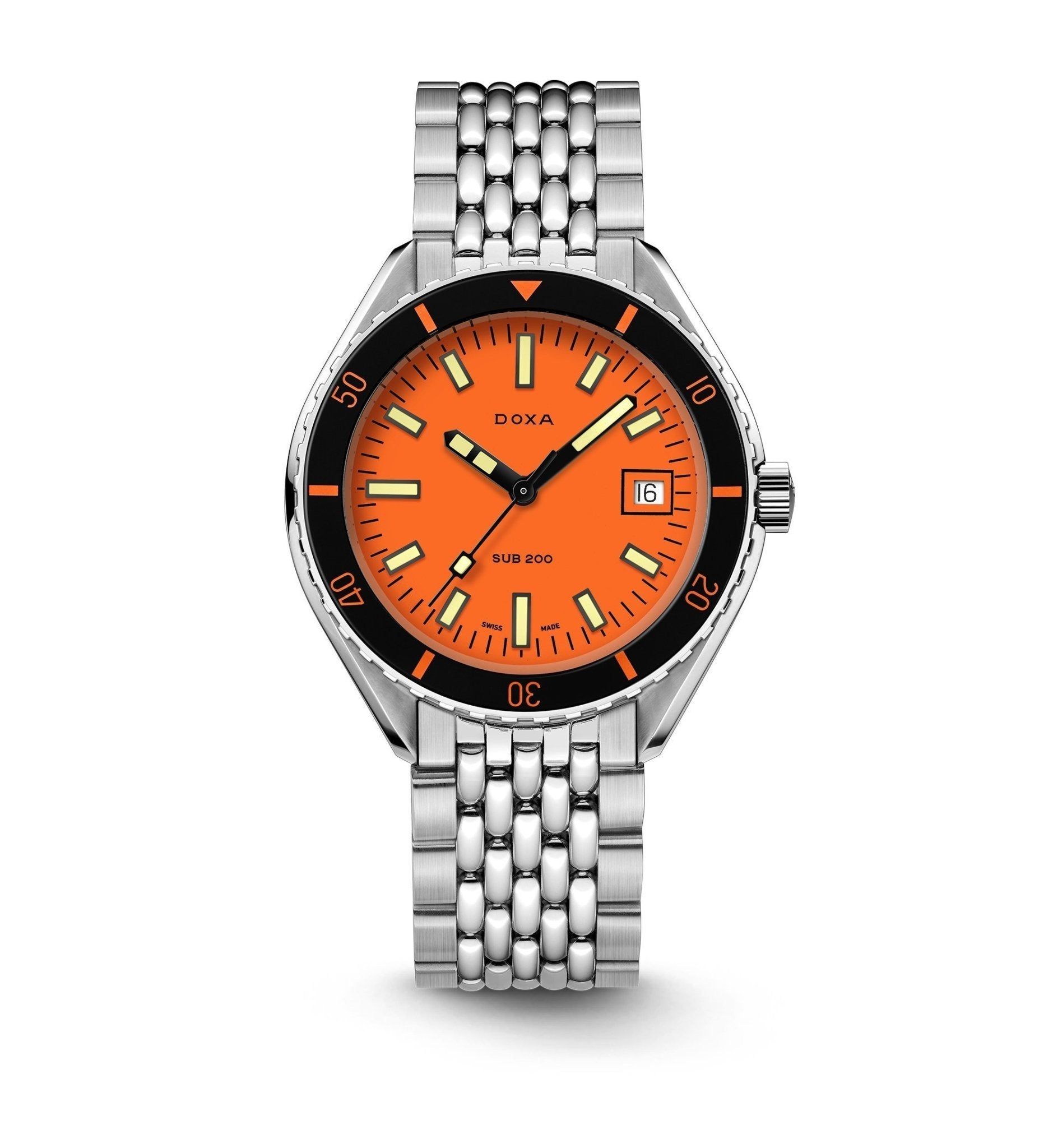
Complete guide to the Doxa SUB 200 — 42mm, 200m, four colorways, Sellita SW200-1. The accessible entry to the Doxa SUB family with the full…
By Zach Charles • October 10, 2026
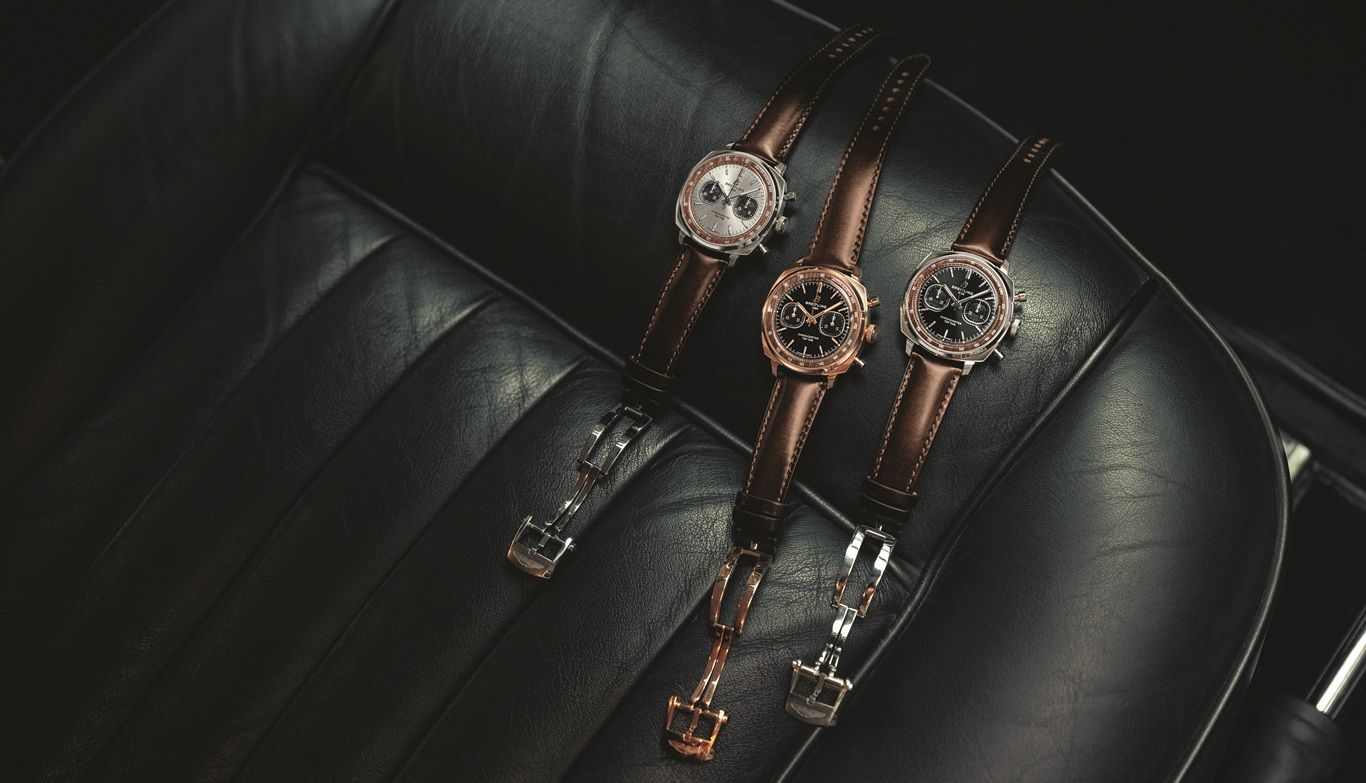
The Breitling Top Time B01 Aston Martin DB5 pairs a cushion-shaped 41mm case, a wooden inner ring and the in-house Caliber 01 across three limited…
By Zach Charles • October 10, 2026
TAG Heuer developed the Mikrograph (2011, 1/100th second), Mikrotimer Flying 1000 (2011, 1/1000th second), and Mikrogirder (2012, 1/2000th second).
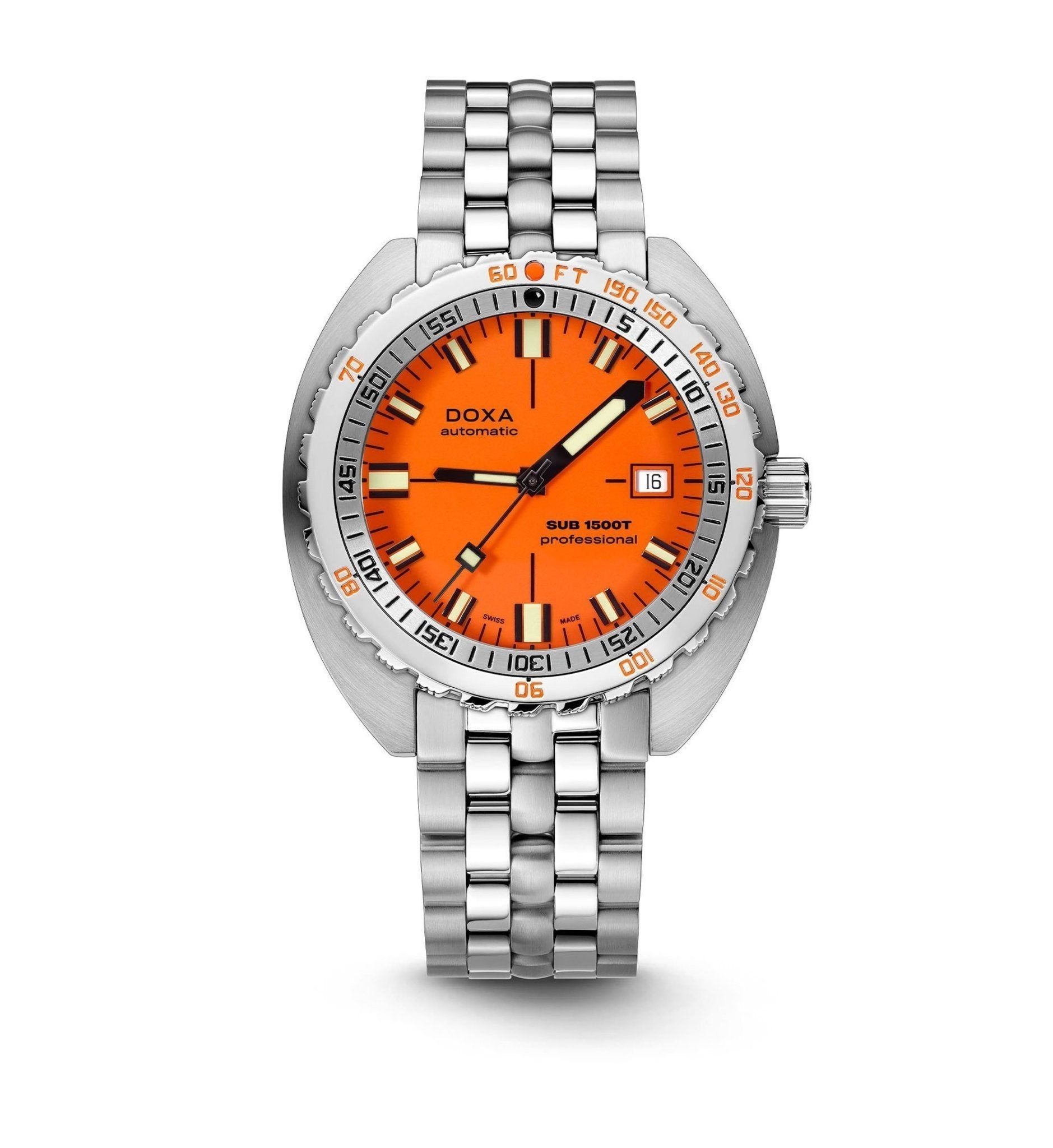
Doxa SUB 1500T: The 1,500-Metre Depth-Rating Flagship
By Zach Charles • October 10, 2026
Complete guide to the Doxa SUB 1500T — 45mm, 1,500m depth rating, helium escape valve, ETA 2892-2 movement, USD 2,690.
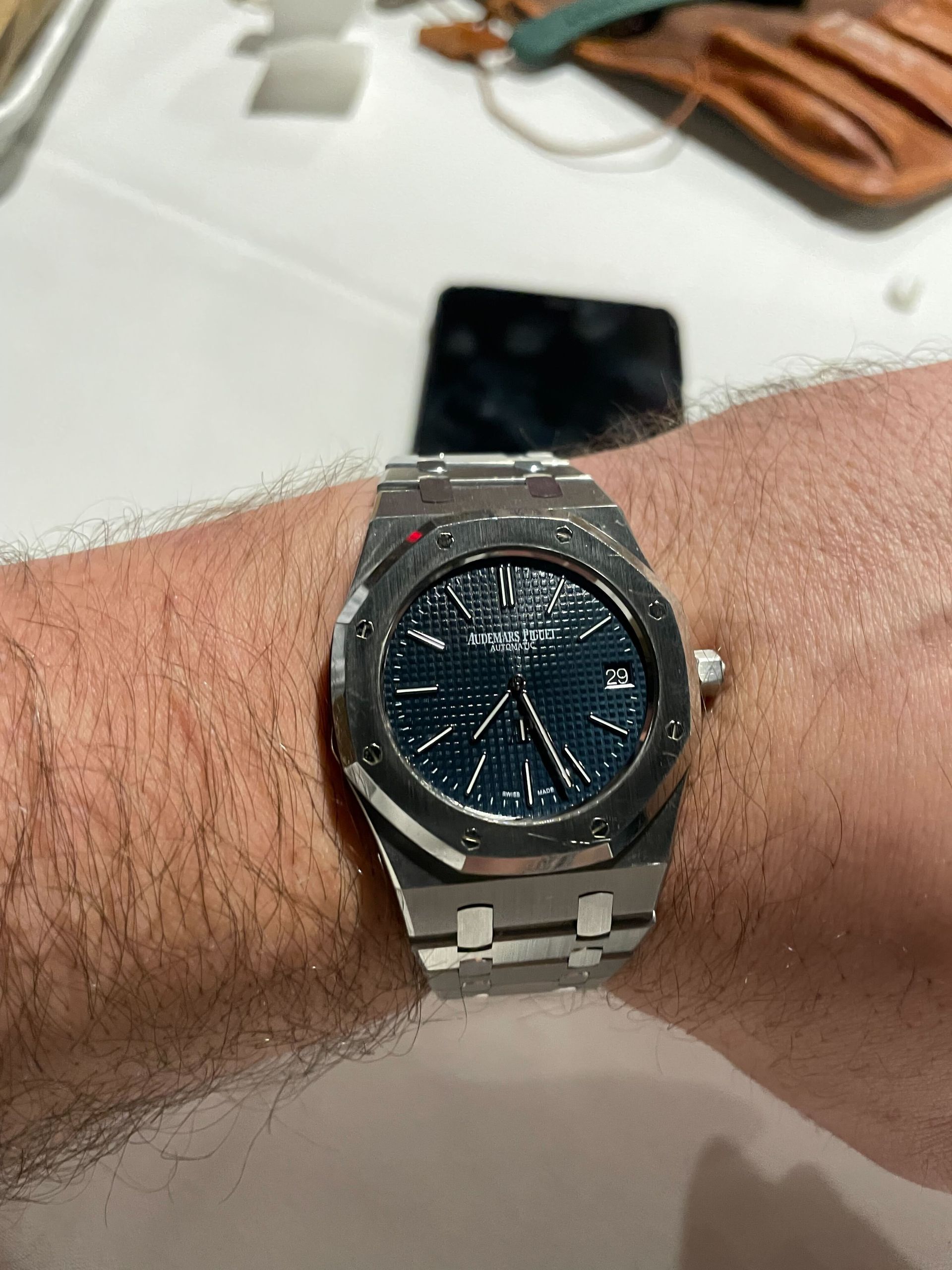
Audemars Piguet Royal Oak 'Jumbo' ref. 15202 with blue tapisserie dial and integrated steel bracelet
By Zach Charles • October 10, 2026
The Audemars Piguet × Swatch Royal Pop is a $400 bioceramic pocket watch in 8 colourways, powered by a new hand-wound SISTEM51 with 90+ hour power…

Time on the Move logo
By Zach Charles • October 10, 2026
Zach Charles is the editor of Time on the Move, an independent watch reference covering brand and model histories, buying guides and release news…
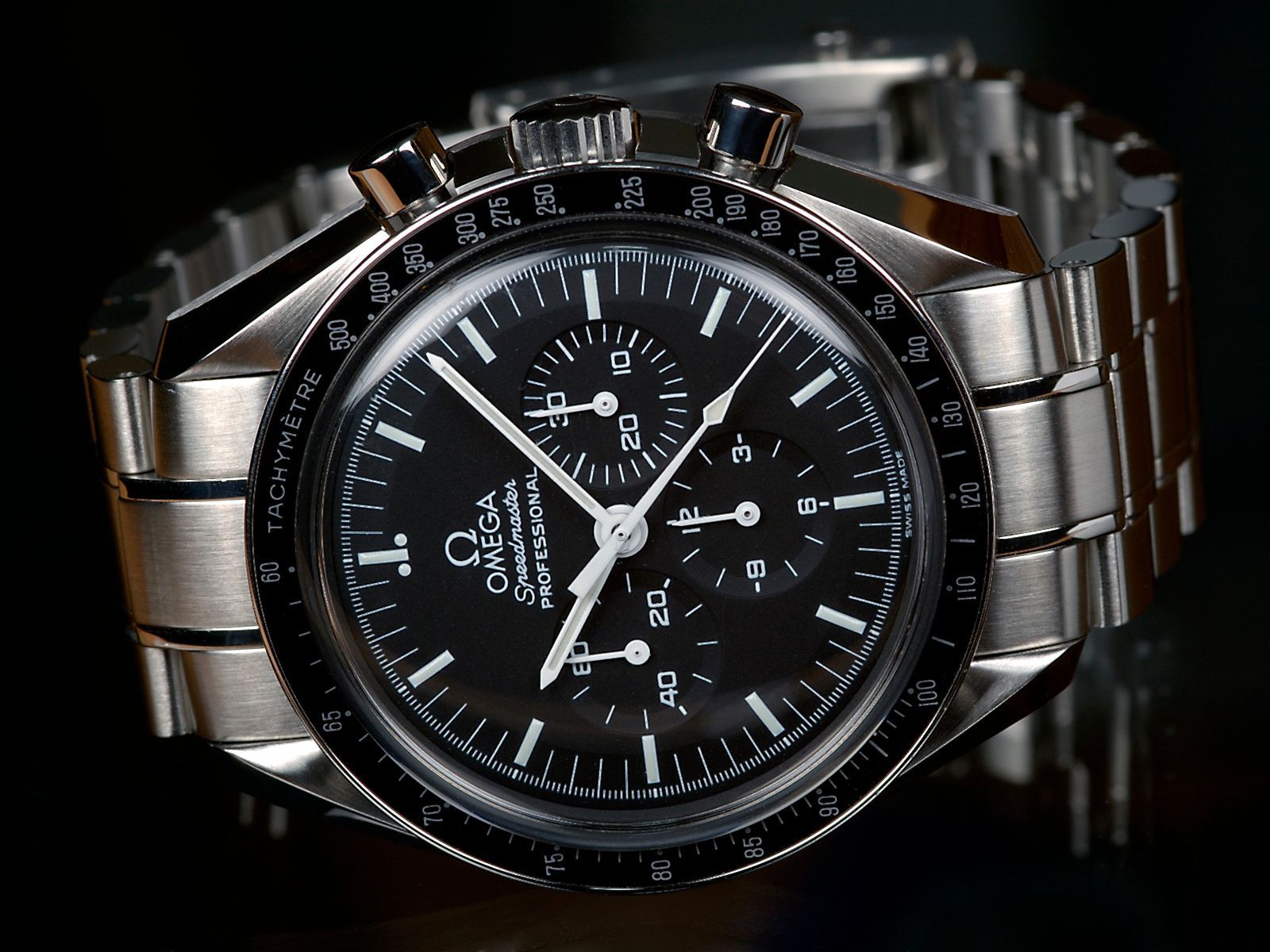
Omega Speedmaster Professional 'Moonwatch' chronograph, front view on steel bracelet
By Zach Charles • October 9, 2026
Find the best watches at every price point from $500 to $15,000 — new and pre-owned. Covers every budget tier with specific reference picks, brand…
By Zach Charles • October 9, 2026
The latest watch news: new releases, Watches and Wonders coverage, discontinuations, industry analysis, and market trends. Currently 1 article.

Seiko's New Panda Chronograph Is Literally a Panda: The Power Design Project HHK001 and HHK002
By Zach Charles • October 8, 2026
Seiko's Power Design Project panda chronograph (HHK001, HHK002) turns the panda dial into an actual panda face, with ear pushers, a 'Sasameter' and a 3D…
Show More