A. Lange & Söhne 1815: Named for the Birth Year of Ferdinand Adolph Lange

Zach Charles • July 5, 2026

Share this article

A. Lange & Söhne 1815: The Classical Collection

The 1815 collection takes its name from the year of Ferdinand Adolph Lange's birth — 1815 . It is A. Lange & Söhne's most explicitly historical collection: a round case, Arabic numerals, subsidiary seconds at 6 o'clock, and a traditional dial arrangement that references the pocket watch aesthetic of the 19th century German watchmaking tradition rather than the 20th century Geneva dress watch. Where the Saxonia is German minimalism and the Lange 1 is German complexity, the 1815 is German classicism.


A. Lange & Söhne Grande Complication pocket watch No. 42.500
An A. Lange & Söhne Grande Complication pocket watch (No. 42.500) — one of the most complex timepieces from the Glasütte manufacture, demonstrating the movement-finishing traditions that define Lange’s horological identity.
Photo: Ventus55 — CC BY-SA 4.0 — Wikimedia Commons

Design Language

A. Lange & Söhne manufacture building, Glasütte
The A. Lange & Söhne manufacture in Glasütte, Saxony — the town that Ferdinand Adolph Lange chose in 1845 to re-establish German precision watchmaking, and where the Lange factory was re-founded on 7 December 1990 after the communist era.
Photo: Derbrauni — CC BY 4.0 — Wikimedia Commons

The 1815's design vocabulary is deliberate and conservative:

  • Arabic numerals at the hour positions — not applied markers, not Roman numerals, but the typeface of 19th century precision instruments
  • Small seconds at the 6 o'clock position — the traditional layout of a quality pocket watch movement in a wristwatch case
  • Simple chapter ring without the decorative complexity of the Lange 1's multiple displays or the Saxonia Thin's ultra-thin minimalism
  • Blued steel hands — not rhodium-plated, not gold, but blued steel, the finishing choice of a craftsman

The case is round, the proportions are classical, and nothing on the dial distracts from the time display. It is the collection in which Lange's argument is made not through the complexity of what is shown but through the quality of how it is shown.


1815 Chronograph — Calibre L951.5

Golden pocket watch from Glasütte, A. Lange & Söhne
A golden Glasütte pocket watch from the Lange & Söhne tradition — exemplifying the three-quarter plate, Glasütte stripe finishing, and hand-engraved balance cock that have characterised Lange movements since the 1845 re-founding.
Photo: Werneuchen — Public Domain — Wikimedia Commons

The 1815 Chronograph is among the most respected standalone chronograph watches in current production — a manually wound flyback chronograph in a classical 40.9 mm round case.

Calibre L951.5:
- Diameter: 30.6 mm
- Thickness: 6.1 mm
- Parts: 306
- Jewels: 34
- Frequency: 18,000 vph (2.5 Hz)
- Power reserve: 60 hours
- Winding: Manual
- Function: Flyback chronograph

The flyback function — which allows the chronograph to be reset and restarted in a single pusher action rather than the conventional stop-reset-start sequence — is combined with the classical 1815 dial aesthetic. The sub-registers maintain the traditional chronograph layout: running seconds at the 9 o'clock position, 30-minute counter at the 3 o'clock position, subsidiary hours at 6 o'clock.

The 18,000 vph (2.5 Hz) frequency is intentional: the lower beat rate is more appropriate for a classical chronograph in the 1815 tradition, provides better audibility of the tick, and allows for optimised power delivery to the flyback mechanism.


1815 Rattrapante — Calibre L101.2

A. Lange & Söhne manufacture, Glasütte — exterior view
The A. Lange & Söhne manufacture exterior in Glasütte — the facility that produces approximately 5,000 watches per year across the Lange 1, Saxonia, 1815, and Zeitwerk collections, each assembled twice and then disassembled for final movement finishing.
Photo: Derbrauni — CC BY 4.0 — Wikimedia Commons

The 1815 Rattrapante is a split-seconds chronograph — one of the most demanding mechanical complications, requiring a second chronograph hand that can be stopped independently to capture an intermediate time while the first hand continues running.

Calibre L101.2:
- Dimensions: 32.6 × 7.4 mm
- Parts: 365
- Frequency: 21,600 vph
- Power reserve: 58 hours
- Winding: Manual

The rattrapante complication adds approximately 60 parts to the base chronograph mechanism. Lange's L101.2 integrates the split-seconds function into the 1815's classical round case — a watch that, from the front, appears as a standard chronograph with two pusher crowns until the rattrapante pusher is engaged and the second hand separates from the first.

1815 Rattrapante Perpetual Calendar — Calibre L101.1

The 1815 Rattrapante Perpetual Calendar adds a perpetual calendar — correct until 1 March 2100 — to the rattrapante chronograph architecture.

Calibre L101.1:
- Parts: 631 (211 for the perpetual calendar, 206 for the rattrapante mechanism)
- Frequency: 21,600 vph
- Power reserve: 42 hours

At 631 parts, the L101.1 is one of the more complex movements in the current Lange catalogue. The 42-hour power reserve reflects the energy demands of maintaining three concurrent functions: the rattrapante chronograph, the perpetual calendar programme mechanism, and the base timekeeping gear train.


1815 Tourbillon — Calibre L102.1

A. Lange & Söhne Grande Complication pocket watch No. 42.500
An A. Lange & Söhne Grande Complication pocket watch (No. 42.500) — one of the most complex timepieces from the Glasütte manufacture, demonstrating the movement-finishing traditions that define Lange’s horological identity.
Photo: Ventus55 — CC BY-SA 4.0 — Wikimedia Commons

The 1815 Tourbillon presents the rotating cage complication in the collection's classical round case.

Calibre L102.1:
- Parts: 262
- Jewels: 21 (including 1 diamond endstone)
- Frequency: 21,600 vph
- Power reserve: 72 hours
- Winding: Manual

The diamond endstone at the balance wheel is a traditional Glashütte watchmaking detail — a diamond bearing reduces friction at the most critical point in the escapement system. The tourbillon cage completes one revolution per minute; the 1815 case places it at the 6 o'clock position through a dial aperture, visible from the front, with the subsidiary seconds function integrated into the tourbillon's rotation.


1815 Annual Calendar

Golden pocket watch from Glasütte, A. Lange & Söhne
A golden Glasütte pocket watch from the Lange & Söhne tradition — exemplifying the three-quarter plate, Glasütte stripe finishing, and hand-engraved balance cock that have characterised Lange movements since the 1845 re-founding.
Photo: Werneuchen — Public Domain — Wikimedia Commons
The 1815 Annual Calendar adds a calendar display — day, date, month — to the classical 1815 architecture. The annual calendar distinguishes the months of 30 and 31 days automatically but requires one manual correction per year at the end of February (unlike a perpetual calendar, which also handles February automatically).

The calendar display is integrated into the 1815 dial without disrupting the classical Arabic numeral chapter ring — a design discipline that the Lange 1 does not face because its asymmetric layout accommodates displays in defined zones.


1815 Up/Down

The 1815 Up/Down adds a power reserve indicator to the time-only 1815 case. The "Up/Down" designation refers to the sector display that shows whether the mainspring is wound ("up") or unwinding ("down") — a traditional term from pocket watch watchmaking that Lange uses without irony.

The power reserve indicator allows the wearer to monitor the remaining running time without consulting a separate device — a practical function that the 1815's classical positioning makes appropriate. A pocket watch would have had a similar indicator; the wristwatch version continues that tradition.


The 1815 in Context

The 1815 occupies a position in the Lange catalogue that no other collection fills: it is the historically grounded classical option, the watch that makes the fewest concessions to contemporary design conventions. It does not have the Lange 1's display architecture, which requires the wearer to read an unfamiliar dial layout. It does not have the Saxonia Thin's extreme thinness. It does not have the Zeitwerk's digital display.

What it has is the direct line to the 19th century German watchmaking tradition — the Arabic numeral dial of a quality pocket watch made wrist-sized without modification of its essential character, with Lange's movement architecture and finishing standards applied throughout.

For buyers who want Lange without the visual complexity of the asymmetric Lange 1 and without the minimalism of the Saxonia, the 1815 is the collection that most directly expresses the manufacture's historical identity.


Frequently Asked Questions

Why is the collection called the 1815?
Named for the birth year of Ferdinand Adolph Lange — the founder of A. Lange & Söhne, born 25 February 1815 in Dresden. The number is both a date and a tribute.

What is the 1815 Chronograph movement?
Calibre L951.5 — 30.6mm, 6.1mm thick, 306 parts, 34 jewels, 18,000 vph, 60-hour power reserve, manually wound flyback chronograph.

What is the 1815 Rattrapante?
A manually wound split-seconds chronograph — Calibre L101.2, 365 parts, 21,600 vph, 58-hour power reserve. A second chronograph hand can be stopped independently to capture an intermediate time while the first continues running.

What is the 1815 Tourbillon movement?
Calibre L102.1 — 262 parts, 21 jewels (including one diamond endstone), 21,600 vph, 72-hour power reserve. The tourbillon cage at 6 o'clock completes one revolution per minute.

How does the 1815 differ from the Lange 1 and Saxonia?
The 1815 uses a traditional round case with Arabic numerals and small seconds — the classical German pocket watch aesthetic in a wristwatch. The Lange 1 has an asymmetric display layout; the Saxonia is an ultra-thin minimal design. The 1815 is the most historically grounded of the three.


Related Articles

Recent Posts

By Zach Charles • October 10, 2026
Hamilton's American Classic Cushion Mechanical revives its 1926 Art Deco cushion watches, seen in Oppenheimer, in 30mm and 34mm with the new hand-wound…
Doxa SUB 200: The Accessible Everyday Diver
By Zach Charles • October 10, 2026
Complete guide to the Doxa SUB 200 — 42mm, 200m, four colorways, Sellita SW200-1. The accessible entry to the Doxa SUB family with the full…
By Zach Charles • October 10, 2026
The Breitling Top Time B01 Aston Martin DB5 pairs a cushion-shaped 41mm case, a wooden inner ring and the in-house Caliber 01 across three limited…
By Zach Charles • October 10, 2026
TAG Heuer developed the Mikrograph (2011, 1/100th second), Mikrotimer Flying 1000 (2011, 1/1000th second), and Mikrogirder (2012, 1/2000th second).
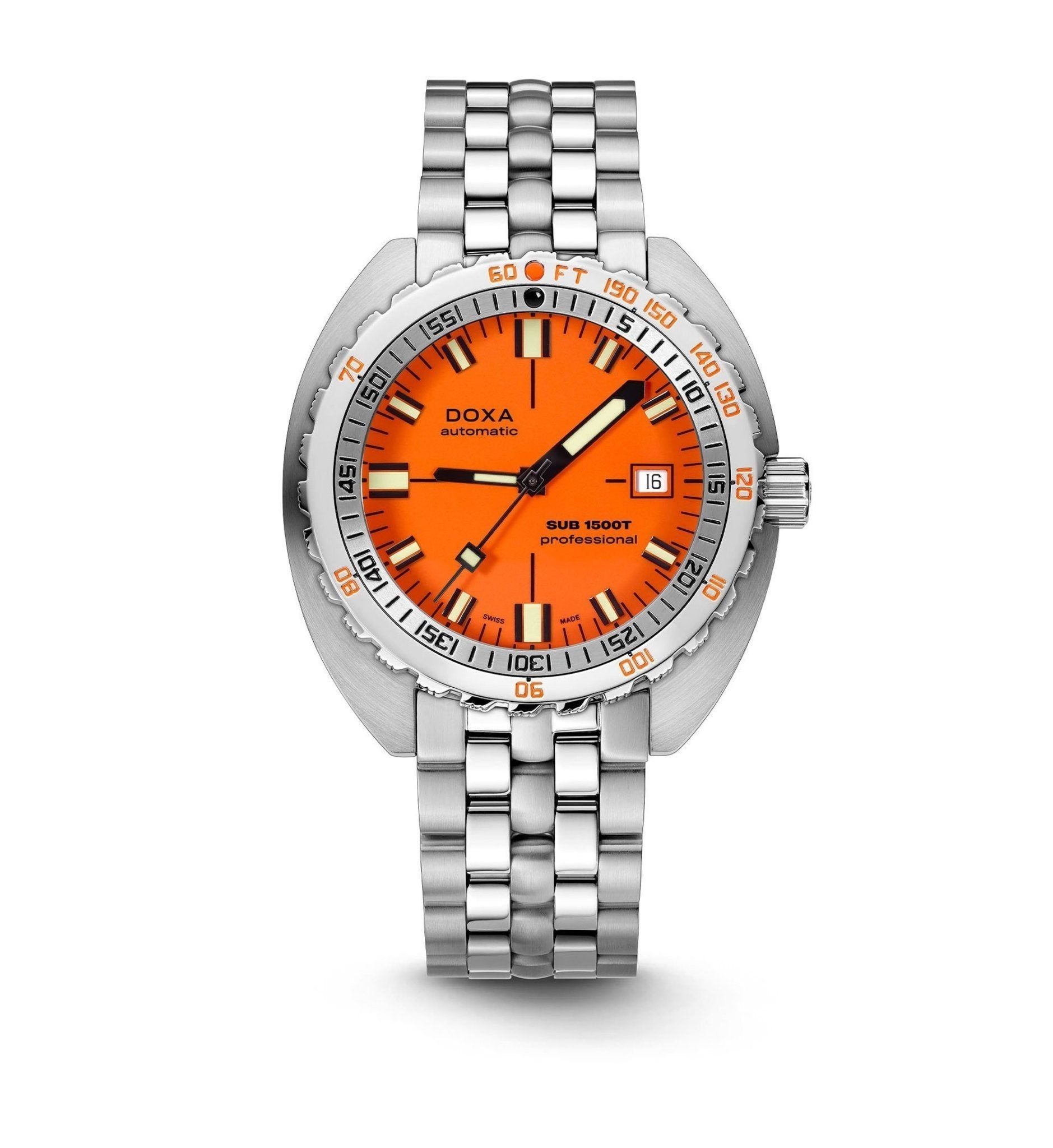
Doxa SUB 1500T: The 1,500-Metre Depth-Rating Flagship
By Zach Charles • October 10, 2026
Complete guide to the Doxa SUB 1500T — 45mm, 1,500m depth rating, helium escape valve, ETA 2892-2 movement, USD 2,690.
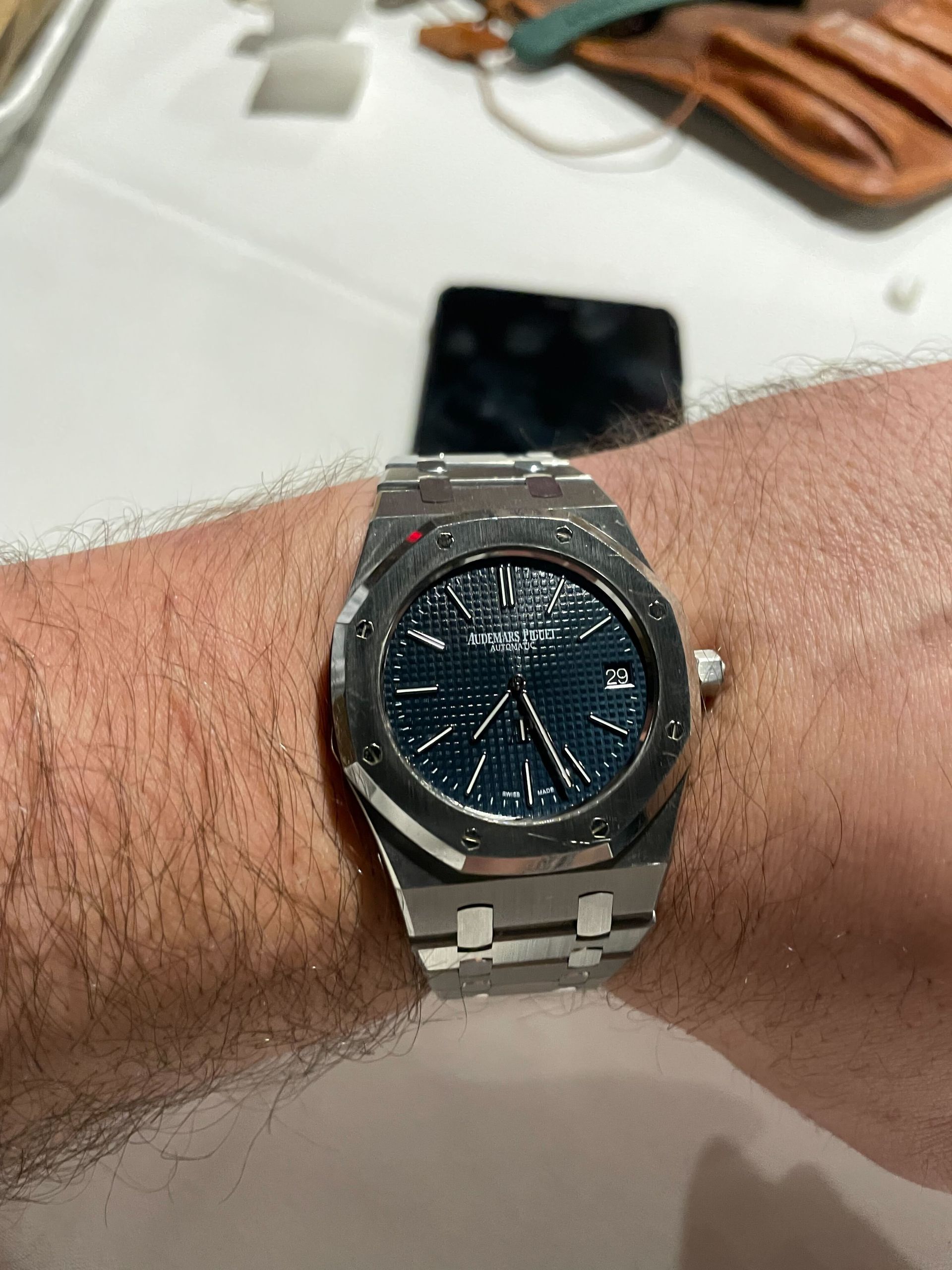
Audemars Piguet Royal Oak 'Jumbo' ref. 15202 with blue tapisserie dial and integrated steel bracelet
By Zach Charles • October 10, 2026
The Audemars Piguet × Swatch Royal Pop is a $400 bioceramic pocket watch in 8 colourways, powered by a new hand-wound SISTEM51 with 90+ hour power…

Time on the Move logo
By Zach Charles • October 10, 2026
Zach Charles is the editor of Time on the Move, an independent watch reference covering brand and model histories, buying guides and release news…
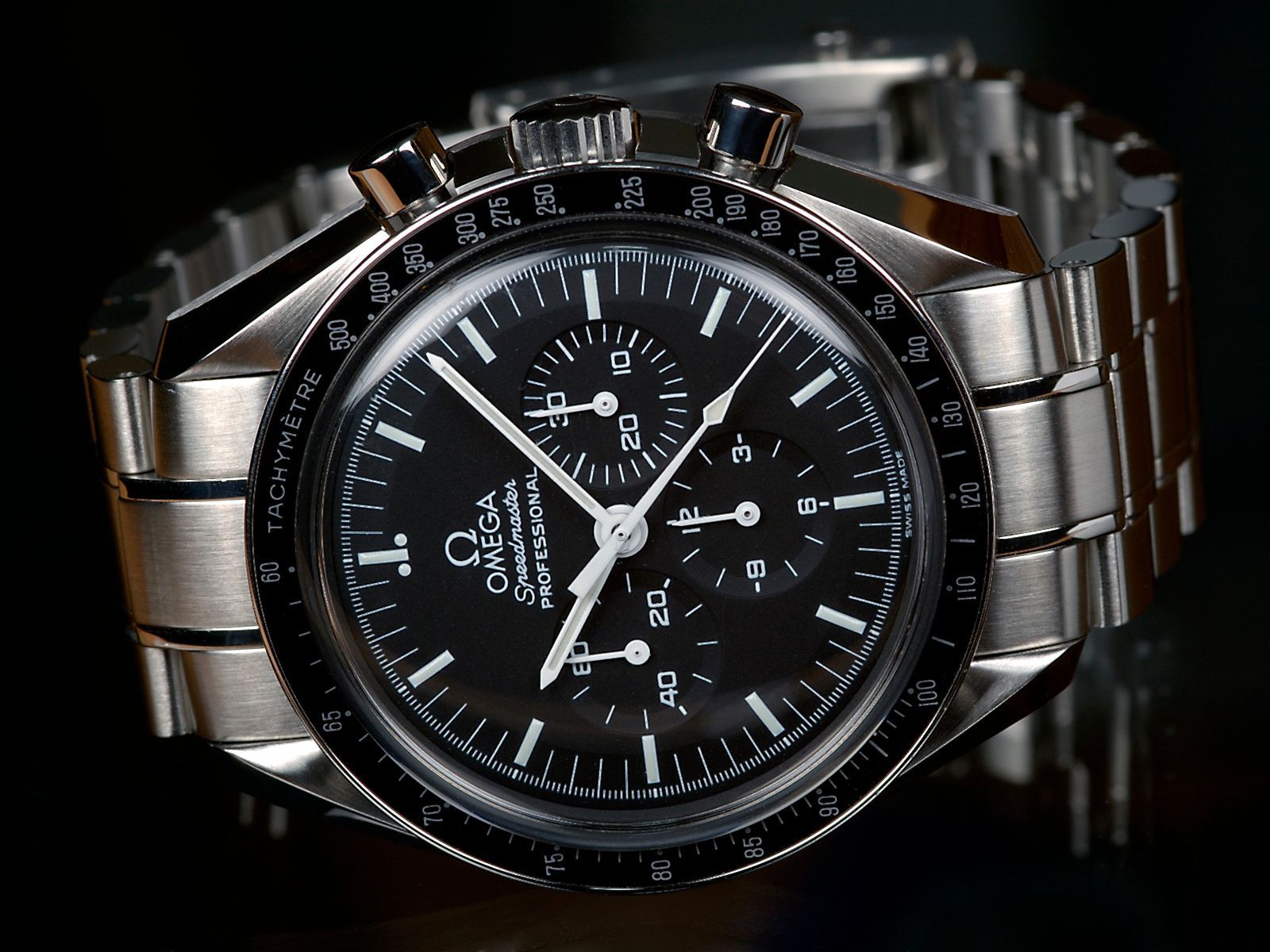
Omega Speedmaster Professional 'Moonwatch' chronograph, front view on steel bracelet
By Zach Charles • October 9, 2026
Find the best watches at every price point from $500 to $15,000 — new and pre-owned. Covers every budget tier with specific reference picks, brand…
By Zach Charles • October 9, 2026
The latest watch news: new releases, Watches and Wonders coverage, discontinuations, industry analysis, and market trends. Currently 1 article.
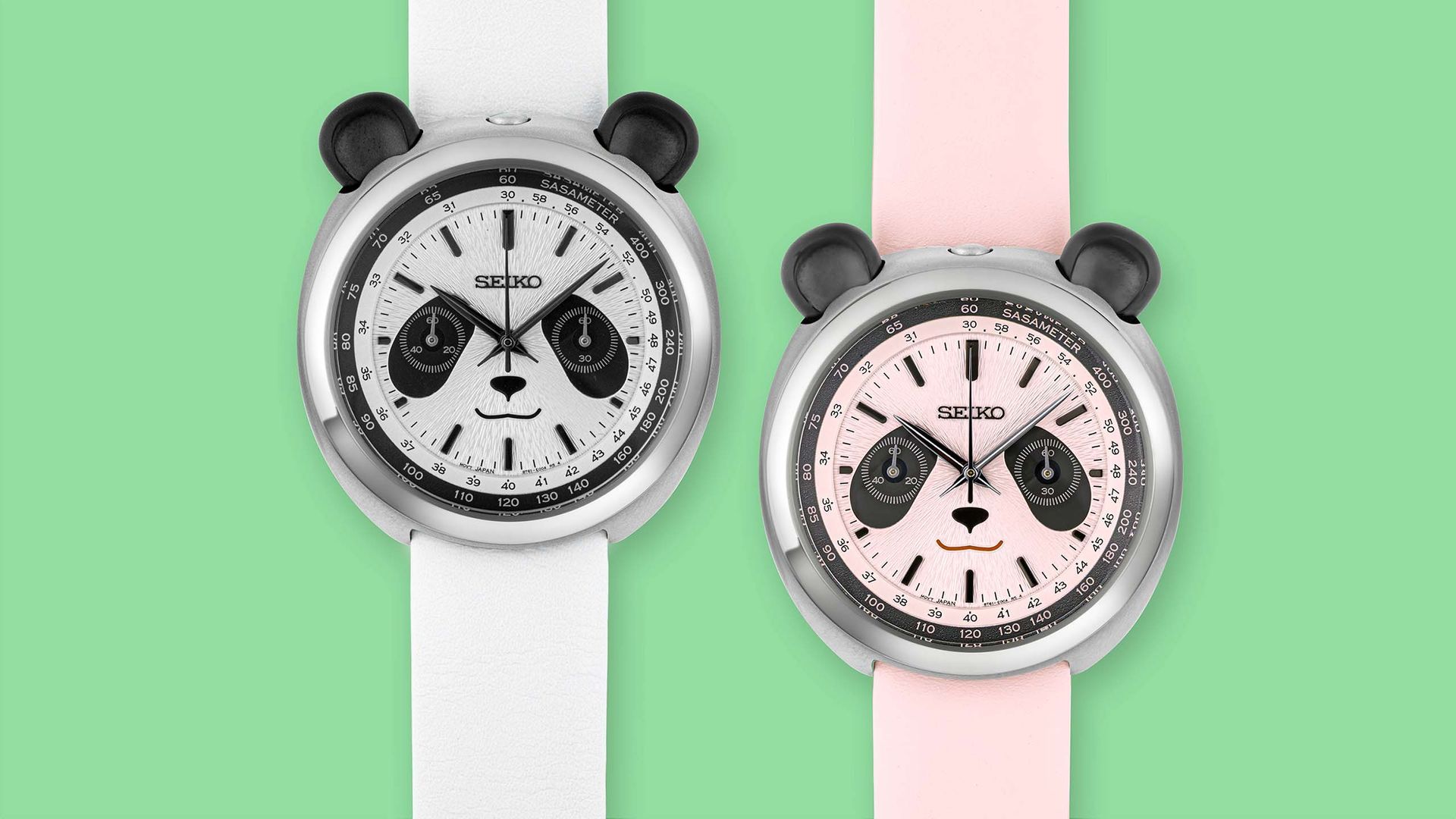
Seiko's New Panda Chronograph Is Literally a Panda: The Power Design Project HHK001 and HHK002
By Zach Charles • October 8, 2026
Seiko's Power Design Project panda chronograph (HHK001, HHK002) turns the panda dial into an actual panda face, with ear pushers, a 'Sasameter' and a 3D…
Show More