
A. Lange & Söhne: The Re-founding of German Watchmaking in 1990

Zach Charles • May 28, 2026

Share this article

A. Lange & Söhne: The Glashütte Watchmaking Revival

The history of A. Lange & Söhne is, in a precise sense, two histories separated by 45 years of forced absence. The first begins on 7 December 1845 in Glashütte, a small town in the Erzgebirge mountains of Saxony. The second begins on the same date in 1990 , when Walter Lange — great-grandson of the founder — re-registered the company in the newly reunified Germany. Both histories converge on a single proposition: that the finest possible watch movement is made in Glashütte, in the tradition of Ferdinand Adolph Lange, to standards no outside institution has ever required of the manufacture.


A. Lange & Söhne manufacture building, Glasütte
The A. Lange & Söhne manufacture in Glasütte, Saxony — the town that Ferdinand Adolph Lange chose in 1845 to re-establish German precision watchmaking, and where the Lange factory was re-founded on 7 December 1990 after the communist era.
Photo: Derbrauni — CC BY 4.0 — Wikimedia Commons

Ferdinand Adolph Lange and the Founding

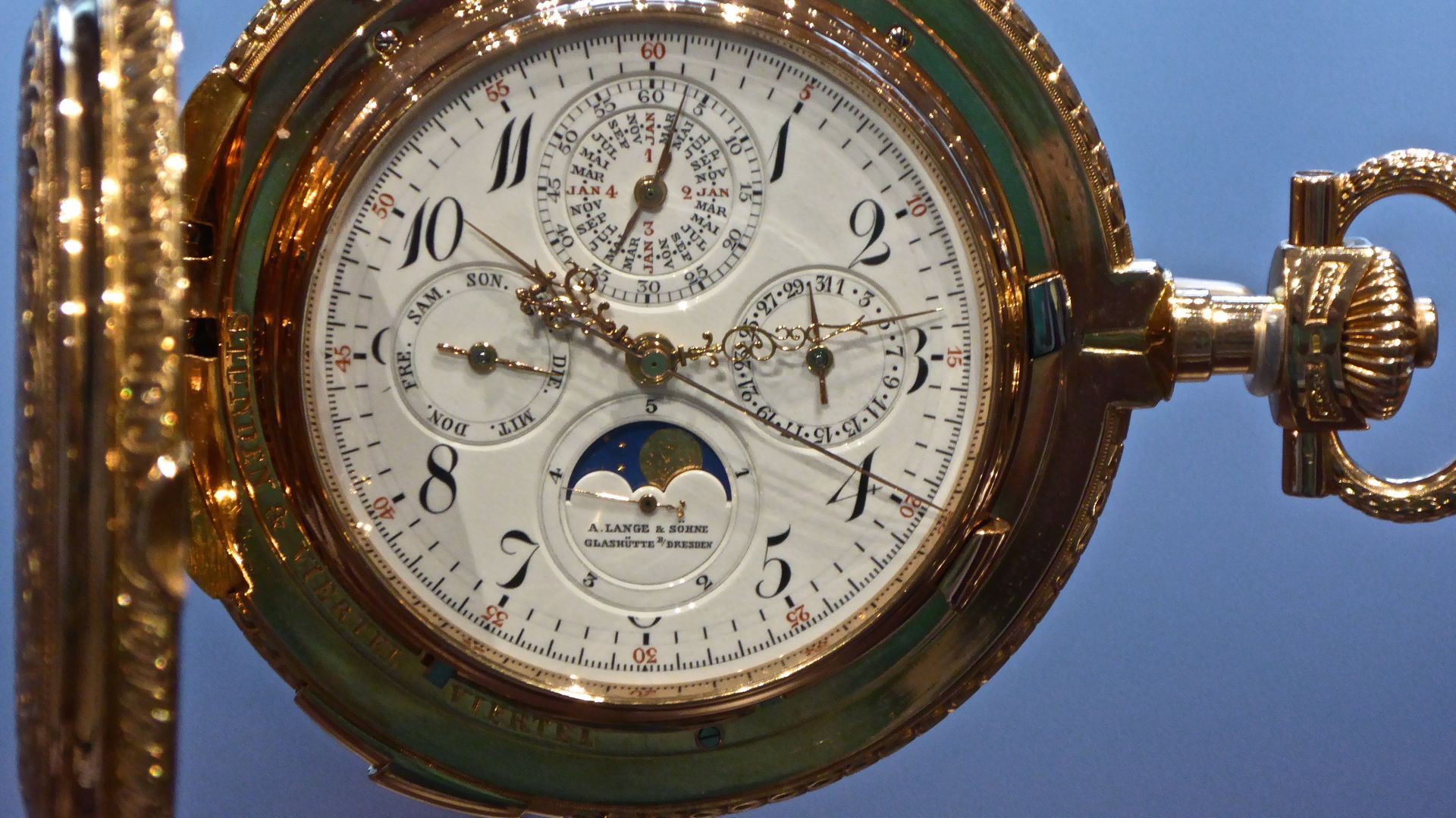
A. Lange & Söhne Grande Complication pocket watch No. 42.500
An A. Lange & Söhne Grande Complication pocket watch (No. 42.500) — one of the most complex timepieces from the Glasütte manufacture, demonstrating the movement-finishing traditions that define Lange’s horological identity.
Photo: Ventus55 — CC BY-SA 4.0 — Wikimedia Commons

Ferdinand Adolph Lange was born in Dresden on 25 February 1815 . He was apprenticed from 1829 under Johann Christian Friedrich Gutkaes — the court clockmaker in Dresden, responsible among other things for the city's famous Five-Minute Clock on the Semperoper. After completing his apprenticeship in 1835, Lange spent two further years working as Gutkaes's assistant, then travelled through Europe to study watchmaking in France and England.

He returned to Saxony with a specific purpose: to establish a watchmaking industry in Glashütte, a depressed mining town where unemployment was severe. In 1845 , the Saxon government agreed — Lange received state support, and on 7 December 1845 , A. Lange & Cie was established in Glashütte with 15 apprentices drawn from local mining families.

The significance was not purely commercial. Lange introduced systematic training, consistent component manufacture, and documentation standards that had not existed in Glashütte before. He was, in the modern sense, a manufacturer — not a craftsman producing unique objects but a systematic organiser of skilled labour around a common standard of quality.

In 1868 , when his son Richard joined the firm, the name became A. Lange & Söhne — "A. Lange & Sons."

Ferdinand Adolph Lange died on 3 December 1875 .


The GUB Era — Nationalization and Loss

Golden pocket watch from Glasütte, A. Lange & Söhne
A golden Glasütte pocket watch from the Lange & Söhne tradition — exemplifying the three-quarter plate, Glasütte stripe finishing, and hand-engraved balance cock that have characterised Lange movements since the 1845 re-founding.
Photo: Werneuchen — Public Domain — Wikimedia Commons

In 1948 , three years after the end of the Second World War, the Soviet occupation authorities expropriated all private watchmaking enterprises in Glashütte. A. Lange & Söhne ceased to exist as an independent company. In 1951 , all Glashütte watchmaking enterprises were consolidated into GUB — Glashütter Uhrenbetrieb — a state-owned enterprise employing approximately 2,000 people, producing watches under the Glashütte Original and other state-approved designations.

The Lange name survived only in historical records and in the memory of the Lange family. For four decades, no watch left Glashütte bearing the A. Lange & Söhne signature.


The Re-founding — 7 December 1990

A. Lange & Söhne manufacture, Glasütte — exterior view
The A. Lange & Söhne manufacture exterior in Glasütte — the facility that produces approximately 5,000 watches per year across the Lange 1, Saxonia, 1815, and Zeitwerk collections, each assembled twice and then disassembled for final movement finishing.
Photo: Derbrauni — CC BY 4.0 — Wikimedia Commons

German reunification in October 1990 changed the legal landscape. Walter Lange — Ferdinand Adolph Lange's great-grandson — had spent the GUB decades in West Germany, watching from a distance. Günter Blümlein — the executive responsible for IWC and Jaeger-LeCoultre at LMH (Les Manufactures Horlogères) — recognised the opportunity immediately.

On 7 December 1990 — exactly 145 years to the day after the original founding — Lange Uhren GmbH was re-registered in Glashütte. The date was deliberate and documented.

The re-founding was not simply a brand revival. Glashütte under the GUB had been producing watches on Soviet-era equipment. Lange Uhren GmbH had to rebuild from the foundations: new manufacture facilities, new tooling, new training programmes, and entirely new movement designs — because no GUB movements met the standard Walter Lange and Günter Blümlein intended.


24 October 1994 — Four Watches, One Announcement

A. Lange & Söhne Grande Complication pocket watch No. 42.500
An A. Lange & Söhne Grande Complication pocket watch (No. 42.500) — one of the most complex timepieces from the Glasütte manufacture, demonstrating the movement-finishing traditions that define Lange’s horological identity.
Photo: Ventus55 — CC BY-SA 4.0 — Wikimedia Commons

The development period lasted four years. On 24 October 1994 , at a presentation in Dresden, A. Lange & Söhne unveiled its first four watches simultaneously:

  1. Lange 1 — the asymmetric flagship; outsize date, power reserve, subsidiary seconds
  2. Saxonia — the pure round dress watch in the German tradition
  3. Arkade — an arched-case dress watch, later discontinued
  4. Tourbograph — a flyback chronograph with tourbillon; the immediate statement of grand complication intent

123 pieces total were presented at the event. Each watch was a production piece, not a prototype. The four models announced Lange's complete design vocabulary at launch: the outsize date, the three-quarter plate, the hand-engraved balance cock, the German silver movement.

The impact was immediate. Watches had not been made under the A. Lange & Söhne name for 46 years. The four 1994 watches announced that German haute horlogerie — with its own distinct tradition, its own movement architecture, its own finishing standards — was returning.


Richemont Acquisition — 2000

In July 2000 , Richemont acquired A. Lange & Söhne, IWC, and Jaeger-LeCoultre together from Mannesmann (which had inherited the LMH group following the Vodafone takeover). The total transaction value was approximately CHF 3.02–3.08 billion. Richemont outbid Swatch Group and LVMH.

Günter Blümlein, who had guided both the re-founding and the Richemont transition, died in 2001. Walter Lange remained connected to the manufacture until his own death in 2017.

The Richemont acquisition gave the manufacture financial resources and group infrastructure, but Lange's design, finishing, and production standards remained independent of group homogenisation. A. Lange & Söhne produces approximately 5,000–5,500 watches per year from its Glashütte manufacture with approximately 770 employees .


The Distinctive Movement Architecture

Golden pocket watch from Glasütte, A. Lange & Söhne
A golden Glasütte pocket watch from the Lange & Söhne tradition — exemplifying the three-quarter plate, Glasütte stripe finishing, and hand-engraved balance cock that have characterised Lange movements since the 1845 re-founding.
Photo: Werneuchen — Public Domain — Wikimedia Commons
The Lange movement is immediately identifiable by four features absent from, or different in, Swiss manufacture movements:

1. Three-quarter plate (Dreiviertellplatine): A single large plate — machined from German silver — covers three-quarters of the movement, replacing the Swiss system of separate bridges. The aesthetic effect is dramatic: a nearly continuous silver surface, striped with the Glashütte decoration, interrupted only by the gold chatons and the hand-engraved balance cock.

2. German silver (Neusilber): The three-quarter plate and bridges are made from German silver — approximately 60% copper, 20% nickel, 20% zinc. No actual silver content. The alloy originated in Saxony in the early 19th century, adopted by Lange watchmakers because of its machining properties and its distinctive appearance.

3. Hand-engraved balance cock: Every balance cock in every Lange watch is engraved by hand, freehand, by one of six master engravers. Each is different. The process takes approximately one hour per cock. The floral motif follows tradition but is never mechanically reproduced.

4. Screwed gold chatons: Lange uses 18-carat gold chatons — small ring-settings for the jewel bearings — secured with blued steel screws. The Lange 1 has 8; time-only pieces like the 1815 have 4. Automatic models, by design, have none.


The Outsize Date

The Große Datum (outsize date) is A. Lange & Söhne's most recognisable mechanism. Two discs — one for the units digit, one for the tens digit — are visible through two apertures in the dial. The units disc is circular; the tens disc uses a cruciform cross that presents each digit in the aperture.

The critical feature is the advance mechanism: the date changes instantaneously , in a single snap, driven by precision-cut programme wheels. Both discs are driven by separate programme wheels with 0.15 mm clearance between them. The instantaneous jump — rather than the gradual creep visible in some other manufacturers' large date displays — required considerable engineering development.

The outsize date appears in the Lange 1, the Datograph, the Saxonia Outsize Date, and various other references throughout the collection.


Pour le Mérite Chain

The Pour le Mérite designation in A. Lange & Söhne identifies models incorporating a fusée-and-chain transmission — a mechanism that equalises the torque delivered by the mainspring throughout its unwinding. As a mainspring unwinds, it delivers less force; the fusée's conical shape compensates, delivering constant torque to the gear train.

Lange's fusée-and-chain is extraordinary in its construction: the chain consists of 636 individual parts , is 152 mm long and 0.5 mm wide , and weighs only 0.12 grams — yet is strong enough to lift 2 kg. Each chain is assembled by hand.

The Pour le Mérite designation appears on the Richard Lange Tourbillon Pour le Mérite, the Tourbograph Perpetual Pour le Mérite, and similar grand complication pieces.


The Manufacture Today

A. Lange & Söhne has produced 72 calibres in its 30 years since re-founding — a rate of approximately 2.4 new calibres per year in a manufacture of 770 people producing 5,000–5,500 watches annually. No calibre is shared with any other brand. Every movement is individually cased, regulated, disassembled, cleaned, reassembled, and regulated again before delivery — a two-step process that adds weeks to production time and is not required by any external certification.

The manufacture remains in Glashütte.


A. Lange & Söhne Model and Technology Guides

Each A. Lange & Söhne collection and key technology has its own in-depth history on Time on the Move:

Frequently Asked Questions

When was A. Lange & Söhne founded?
7 December 1845, by Ferdinand Adolph Lange in Glashütte, Saxony, as A. Lange & Cie. The name became A. Lange & Söhne in 1868 when his son Richard joined the firm.

Why was A. Lange & Söhne absent for decades?
In 1948, Soviet occupation authorities expropriated all private watchmaking enterprises in Glashütte. The firm was absorbed into GUB (Glashütter Uhrenbetrieb) in 1951, a state-owned enterprise. No watches were produced under the Lange name until the re-founding.

When was A. Lange & Söhne re-founded?
7 December 1990 — exactly 145 years after the original founding — by Walter Lange (great-grandson of Ferdinand Adolph Lange) and Günter Blümlein (IWC/JLC executive at LMH). Four watches were unveiled at a Dresden presentation on 24 October 1994.

What is the three-quarter plate?
A single large plate of German silver covering three-quarters of the movement — a distinctly German movement architecture that replaces the Swiss system of individual bridges. Combined with the hand-engraved balance cock and screwed gold chatons, it makes the Lange movement immediately identifiable.

Who owns A. Lange & Söhne?
Richemont, acquired in July 2000 alongside IWC and Jaeger-LeCoultre for approximately CHF 3.02–3.08 billion.


Related Articles

Recent Posts

By Zach Charles • October 10, 2026
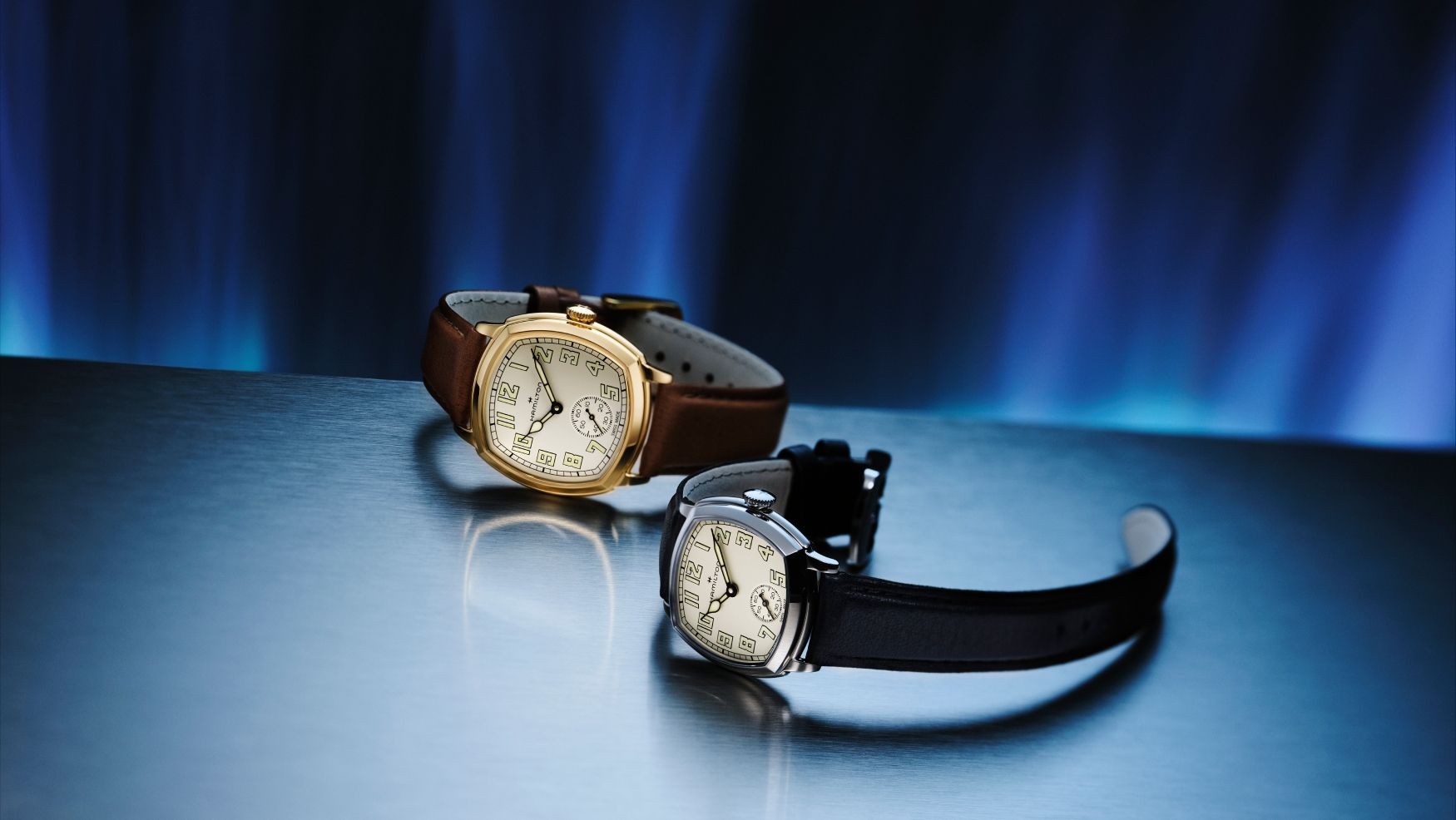
Hamilton's American Classic Cushion Mechanical revives its 1926 Art Deco cushion watches, seen in Oppenheimer, in 30mm and 34mm with the new hand-wound…
Doxa SUB 200: The Accessible Everyday Diver
By Zach Charles • October 10, 2026
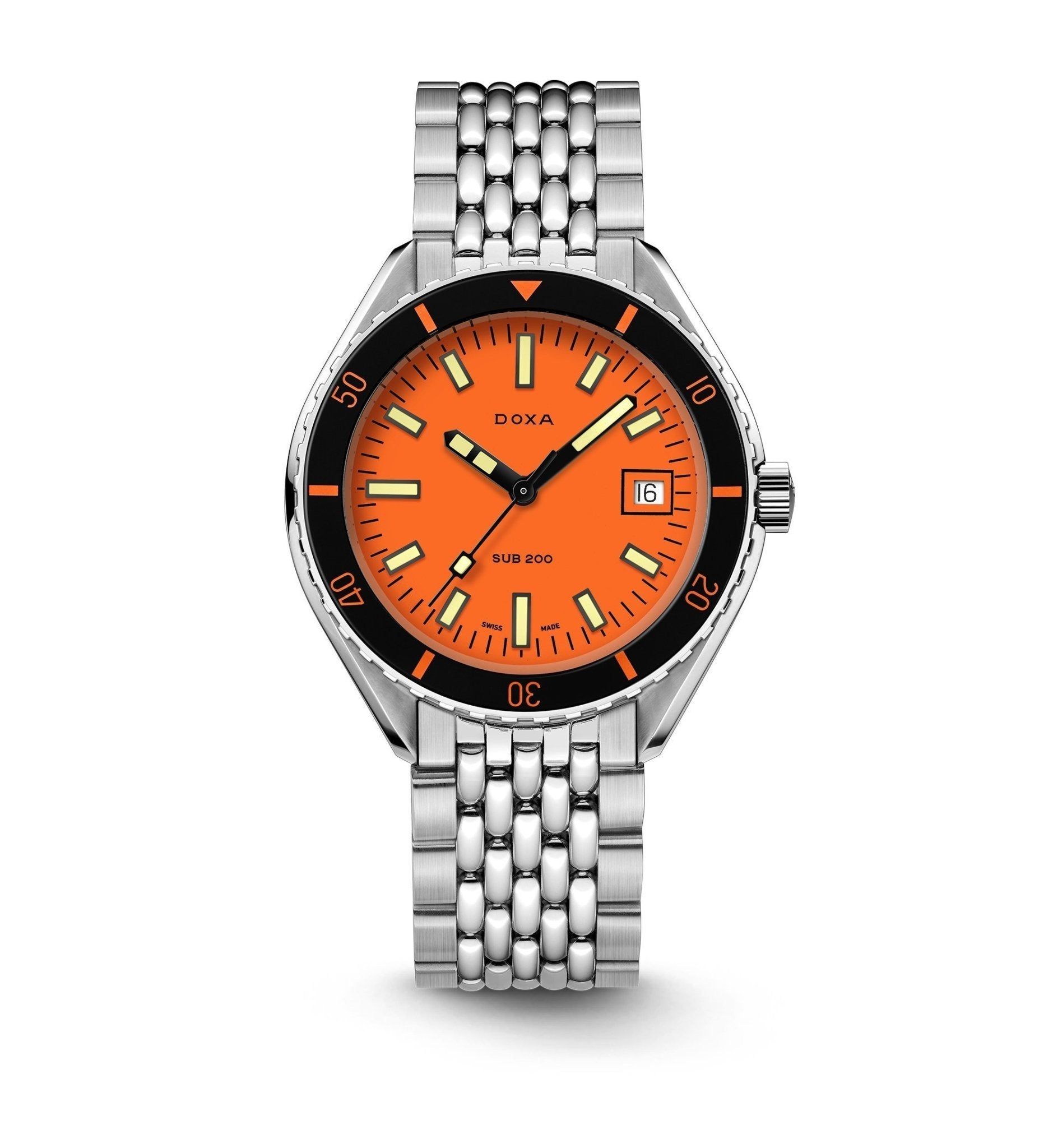
Complete guide to the Doxa SUB 200 — 42mm, 200m, four colorways, Sellita SW200-1. The accessible entry to the Doxa SUB family with the full…
By Zach Charles • October 10, 2026
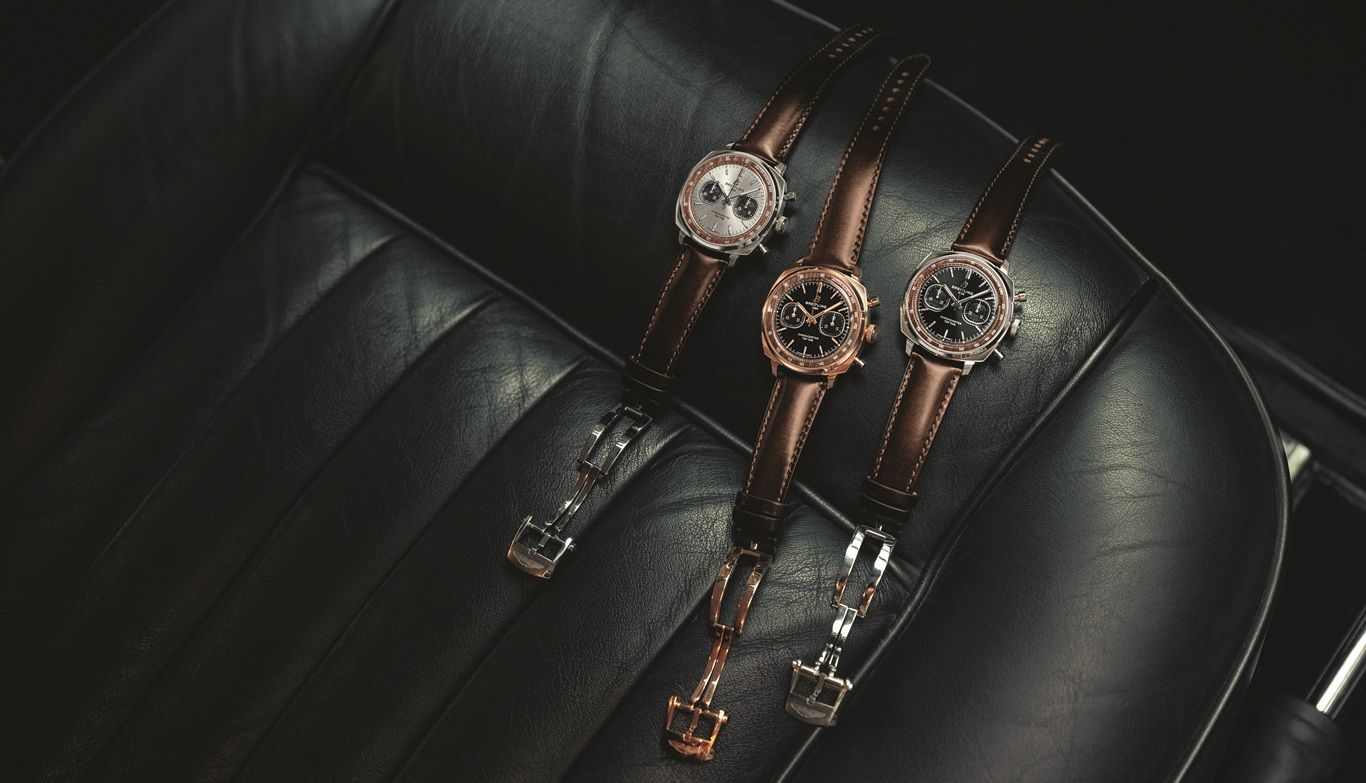
The Breitling Top Time B01 Aston Martin DB5 pairs a cushion-shaped 41mm case, a wooden inner ring and the in-house Caliber 01 across three limited…
By Zach Charles • October 10, 2026
TAG Heuer developed the Mikrograph (2011, 1/100th second), Mikrotimer Flying 1000 (2011, 1/1000th second), and Mikrogirder (2012, 1/2000th second).
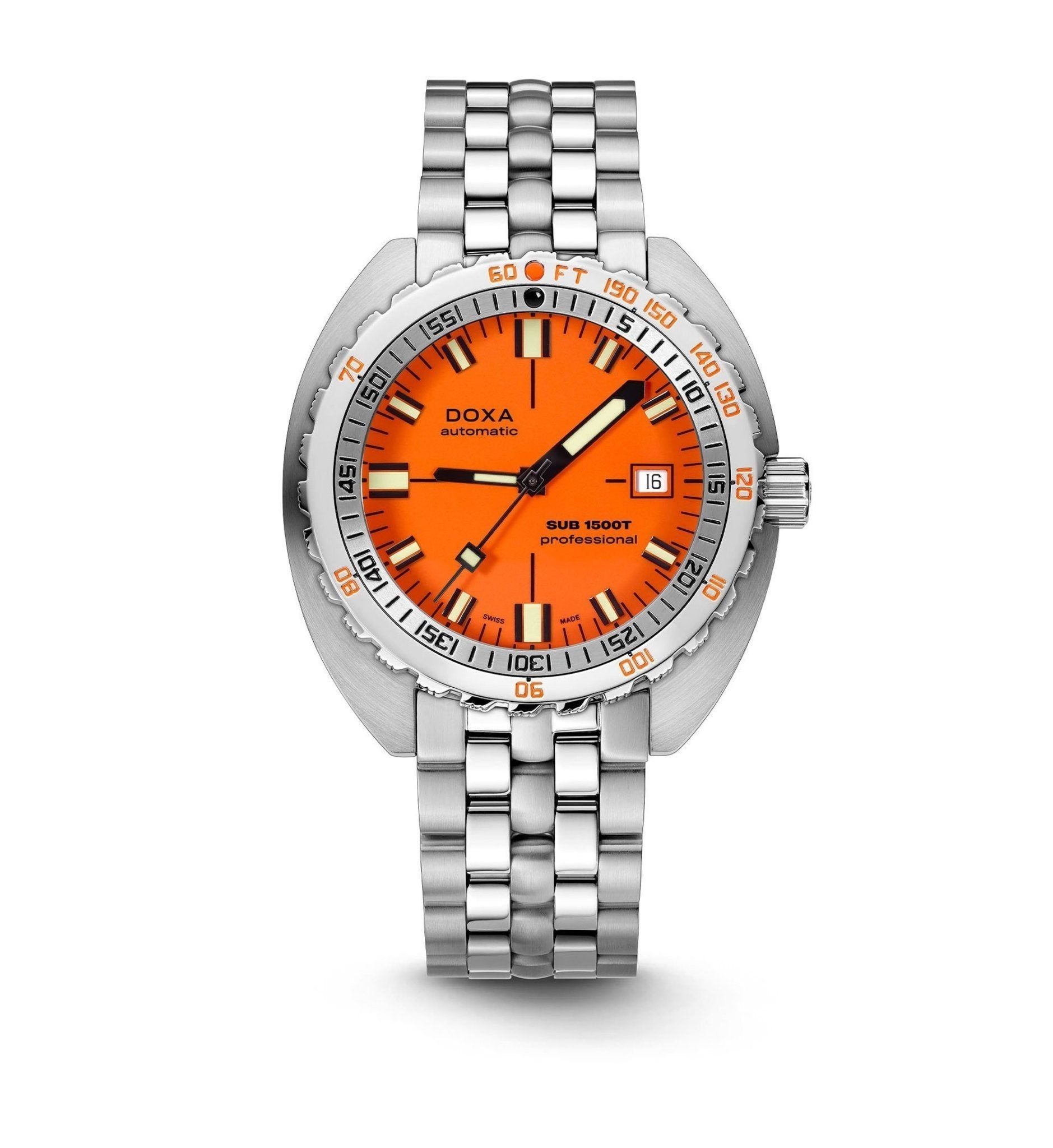
Doxa SUB 1500T: The 1,500-Metre Depth-Rating Flagship
By Zach Charles • October 10, 2026
Complete guide to the Doxa SUB 1500T — 45mm, 1,500m depth rating, helium escape valve, ETA 2892-2 movement, USD 2,690.
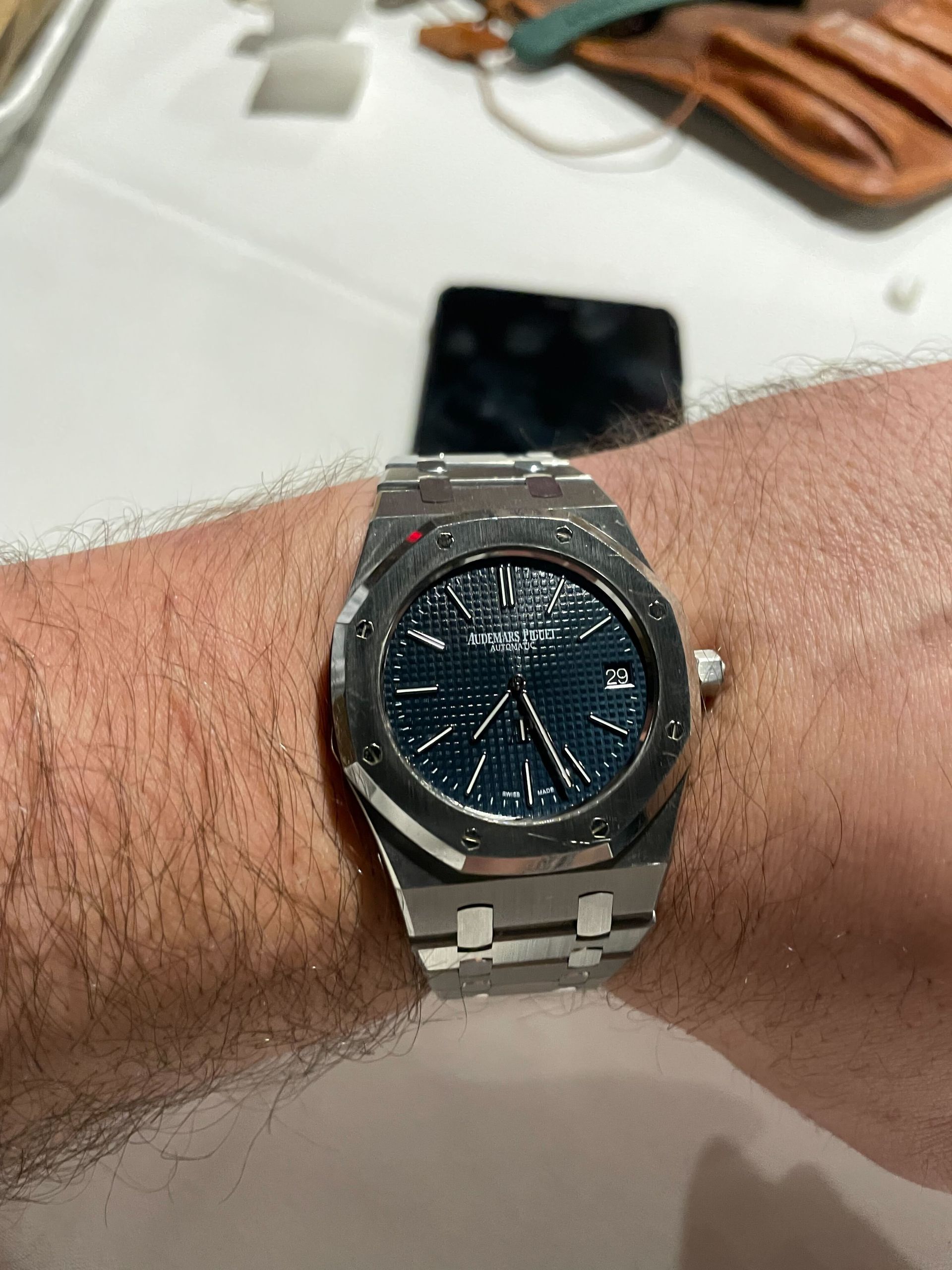
Audemars Piguet Royal Oak 'Jumbo' ref. 15202 with blue tapisserie dial and integrated steel bracelet
By Zach Charles • October 10, 2026
The Audemars Piguet × Swatch Royal Pop is a $400 bioceramic pocket watch in 8 colourways, powered by a new hand-wound SISTEM51 with 90+ hour power…

Time on the Move logo
By Zach Charles • October 10, 2026
Zach Charles is the editor of Time on the Move, an independent watch reference covering brand and model histories, buying guides and release news…
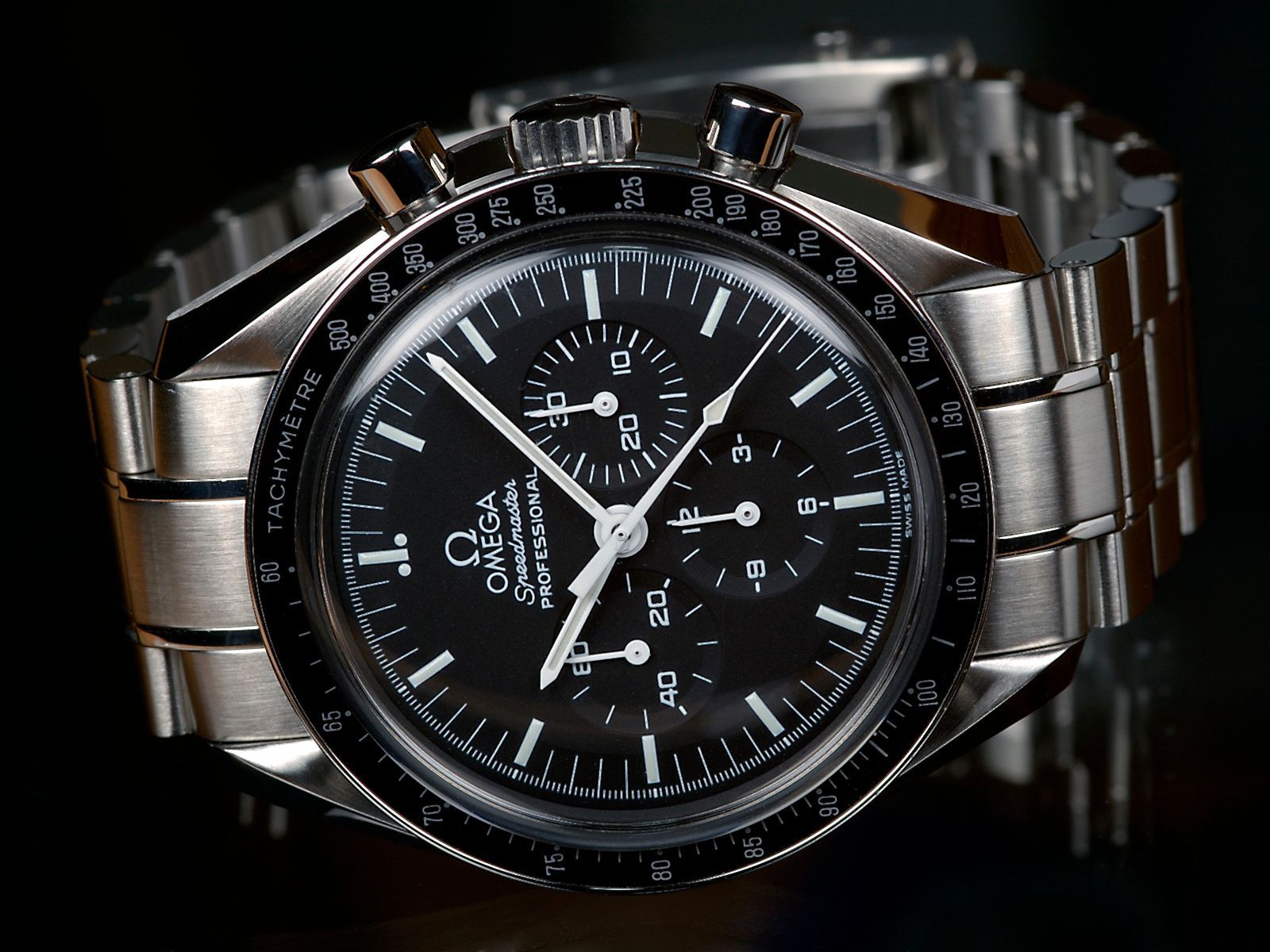
Omega Speedmaster Professional 'Moonwatch' chronograph, front view on steel bracelet
By Zach Charles • October 9, 2026
Find the best watches at every price point from $500 to $15,000 — new and pre-owned. Covers every budget tier with specific reference picks, brand…
By Zach Charles • October 9, 2026
The latest watch news: new releases, Watches and Wonders coverage, discontinuations, industry analysis, and market trends. Currently 1 article.
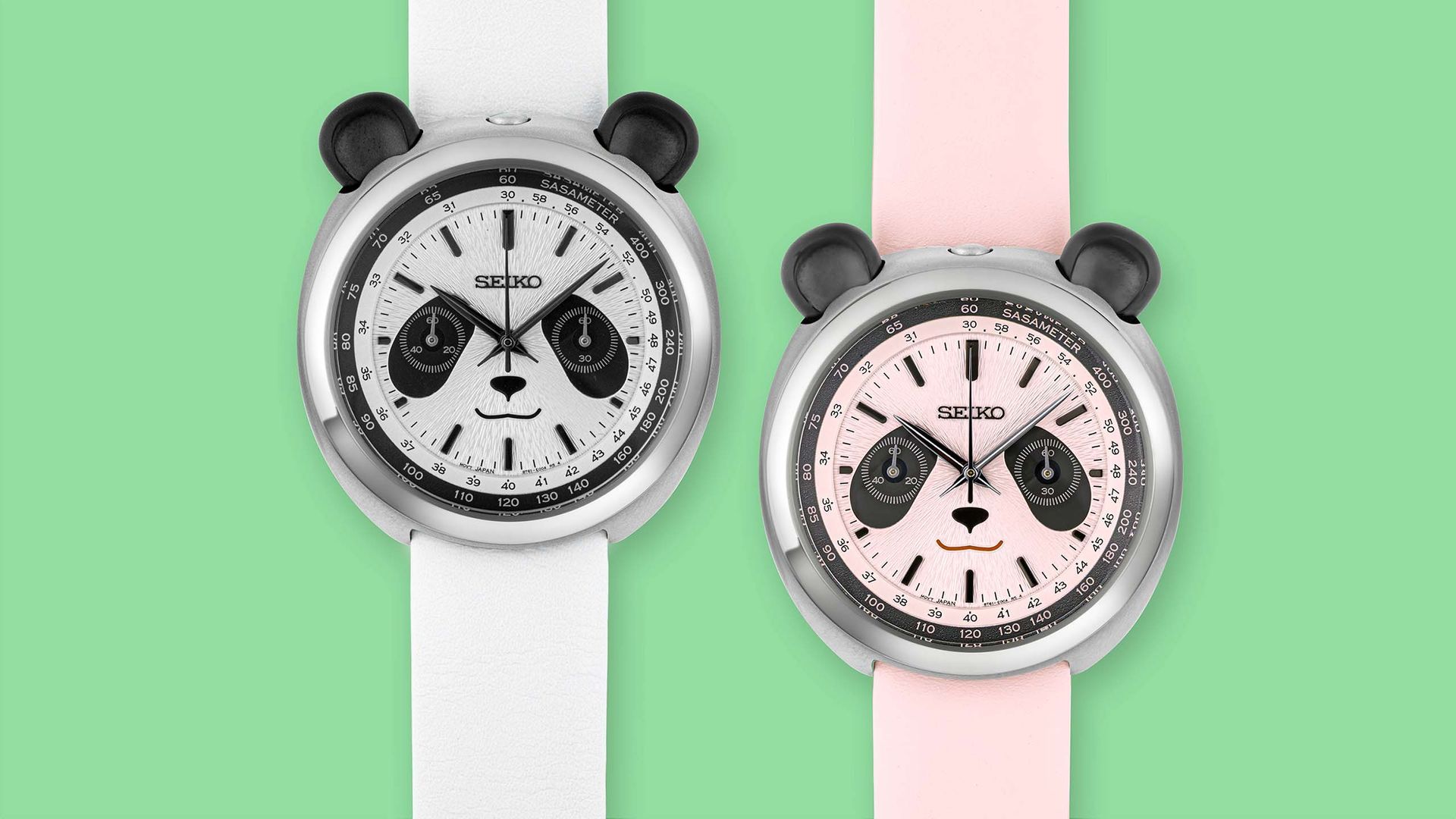
Seiko's New Panda Chronograph Is Literally a Panda: The Power Design Project HHK001 and HHK002
By Zach Charles • October 8, 2026
Seiko's Power Design Project panda chronograph (HHK001, HHK002) turns the panda dial into an actual panda face, with ear pushers, a 'Sasameter' and a 3D…
Show More