A. Lange & Söhne Grand Complications: The Tourbograph and Pour le Mérite
A. Lange & Söhne Grand Complications: Tourbograph and Beyond
A. Lange & Söhne's re-launch on 24 October 1994 included, alongside the Lange 1 and the Saxonia, a Tourbograph — a flyback chronograph with tourbillon. The message was unambiguous: this was not a manufacture beginning modestly and building toward complexity. Grand complications were in scope from the first day.
In the thirty years since, A. Lange & Söhne has produced some of the most architecturally ambitious movements in the history of fine watchmaking — including the only wristwatch to combine four of the most demanding complications simultaneously, and a pocket watch movement whose 876 parts operate six distinct grand complications in concert.
Photo: Ventus55 — CC BY-SA 4.0 — Wikimedia Commons
The 1994 Tourbograph — The First Statement
The Tourbograph presented at the 1994 Dresden launch combined a flyback chronograph with a tourbillon in a single manually wound movement — a combination that had no precedent at that time in the modern Lange catalogue, and that immediately positioned the re-founded manufacture as capable of the highest level of complication development.
The 1994 Tourbograph established the design language of the grand complication pieces: the three-quarter plate visible through the caseback, the hand-engraved balance cock adjacent to the tourbillon cage, the Glashütte stripe decoration, all serving a movement that expressed technical mastery rather than visual restraint.
Tourbograph Perpetual "Pour le Mérite" — 2017
The Tourbograph Perpetual "Pour le Mérite" (2017, reference 706.025 , 50 pieces in platinum) represents the summit of the Tourbograph line and the most technically ambitious combination ever achieved in a single wristwatch movement at its introduction.
Calibre L133.1:
- Diameter: 32.0 mm
- Parts: 684
- Jewels: 52
- Frequency: 21,600 vph
- Power reserve: 36 hours
- Case: 43 mm
, thickness 16.6 mm
Four simultaneous complications, each a grand complication in isolation:
-
Fusée-and-chain (Pour le Mérite): The chain of 636 parts, 152 mm long, 0.5 mm wide, 0.12 grams — transmitting constant torque from mainspring to gear train throughout the unwinding. The first complication in the L133.1 is the energy delivery mechanism itself.
-
Tourbillon: Rotating cage correcting for gravitational error in the escapement by continuously rotating the entire balance-wheel/escape-wheel/pallet fork assembly. The tourbillon completes one revolution per minute.
-
Split-seconds rattrapante chronograph: A flyback chronograph with a second split-seconds hand — requiring an additional column wheel and clutch spring coaxial with the primary chronograph mechanism.
-
Perpetual calendar: Automatically distinguishing all months of different lengths and leap years, correct until 1 March 2100 without manual correction.
No previous wristwatch had combined all four of these complications in a single movement. The architectural challenge: each complication individually places demands on the movement's energy budget and space. The fusée compensates for the first issue by equalising force; the 16.6 mm case thickness accommodates the vertical stacking required for the second.
Fifty pieces. The Tourbograph Perpetual Pour le Mérite is among the most consequential complication achievements in post-re-launch Lange history.
Grand Complication — 2013
Photo: Derbrauni — CC BY 4.0 — Wikimedia Commons
The Grand Complication (2013) is the most complex piece A. Lange & Söhne has produced in pocket watch format.
Calibre L1902:
- Parts: 876
- Frequency: 21,600 vph
- Power reserve: 30 hours
(timekeeping) / 24 hours
(sonnerie)
- Case: 50 mm × 20 mm
, pink gold
- Production: 6 pieces total
The name L1902 references not the standard Lange calibre numbering format but the year 1902 — evoking the era of the great pocket watch complications that the Grand Complication is designed to equal. Six complications in one movement:
- Grande Sonnerie: Automatically strikes the hours and quarter-hours in passing, without any pusher action — the highest ranking striking complication, requiring a separate power reserve (24 hours) from the timekeeping train
- Petite Sonnerie: Strikes hours only in passing (a selectable alternative to Grande Sonnerie)
- Minute Repeater: Strikes hours, quarter-hours, and minutes on demand via pusher
- Rattrapante (split-seconds) with foudroyante: A split-seconds chronograph with an additional high-frequency foudroyante hand — a seconds hand making multiple beats per second to indicate fraction-of-second elapsed time
- Perpetual Calendar: Day, date, month, leap year, correct until 1 March 2100
- Moon Phase: Lunar display
The grande sonnerie and petite sonnerie require a separate energy supply — two separate mainspring barrels in the L1902, one for the timekeeping train and one for the striking train, with separate power reserve indicators for each. The complication of managing two independent energy systems within the same 876-part movement while the striking, rattrapante, and calendar mechanisms also interact is the specific challenge that the L1902 addresses.
Six pieces were produced. The Grand Complication's limited production is not a marketing decision — it reflects the complexity of producing and regulating 876-part movements to Lange standards.
Handwerkskunst Editions
Photo: Ventus55 — CC BY-SA 4.0 — Wikimedia Commons
A. Lange & Söhne periodically produces Handwerkskunst (artisan craftsmanship) editions of existing references — pieces that add exceptional decorative work to an already complex movement. These include:
- Black enamel dials produced in grand feu enamel technique
- Engravings extending to movement bridges and plates beyond the standard balance cock
- Special case metals and finishing treatments not available in the standard production
Handwerkskunst editions apply to various collections — the Lange 1, the 1815, the Datograph — and are produced in very limited numbers (sometimes single figures).
The "Homage to F. A. Lange" — 175th Anniversary 2020
For the manufacture's 175th anniversary in 2020 , A. Lange & Söhne produced three special editions in Honeygold — an exclusive Lange alloy with a distinctly warm yellow-gold tone — under the "Homage to F. A. Lange" designation:
- 1815 Thin Honeygold — the simplest piece, the purest statement
- 1815 Rattrapante Honeygold (Calibre L101.2, black dial, 41.2 mm case)
- Tourbograph Perpetual Honeygold (Calibre L133.1) — the most complex, directly connecting the anniversary to the grand complication
The three watches together traced the range of Lange's capability from time-only to grand complication — each in the same anniversary metal, each in a limited edition.
The Grand Complication Record
Photo: Werneuchen — Public Domain — Wikimedia Commons
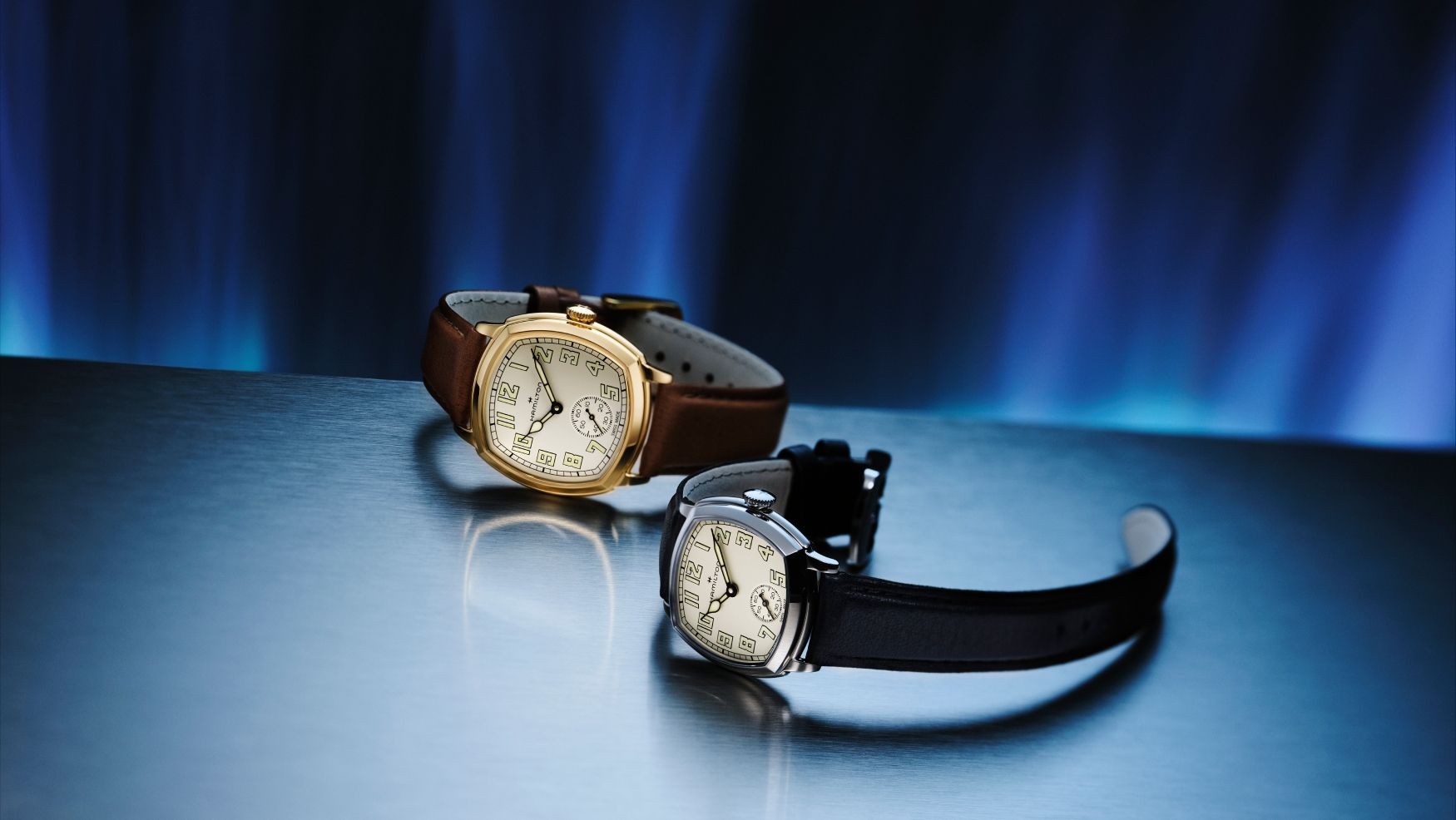
Across its thirty years, A. Lange & Söhne has produced 72 calibres . The grand complications represent a specific subset: movements that combine multiple major complications — repeaters, perpetual calendars, rattrapantes, tourbillons, fusée-and-chain — in configurations that had not previously been achieved. Each represents a distinct engineering problem requiring years of development.
The record is not one of quantity — A. Lange & Söhne produces 5,000–5,500 watches per year in total, a fraction of the volume of any major Swiss manufacturer — but of quality and novelty: each grand complication in the catalogue represents a first, or a standard-setting achievement in its category.
Frequently Asked Questions
What is the Tourbograph Perpetual Pour le Mérite?
A 2017 wristwatch combining four grand complications in one movement: fusée-and-chain, tourbillon, split-seconds rattrapante chronograph, and perpetual calendar. Calibre L133.1: 684 parts, 52 jewels, 21,600 vph, 36-hour power reserve. 50 pieces in platinum (ref. 706.025). World's first watch to combine all four complications.
What is the Grand Complication of 2013?
A pocket watch combining grande sonnerie, petite sonnerie, minute repeater, rattrapante with foudroyante, perpetual calendar, and moon phase — Calibre L1902, 876 parts, 6 pieces total. The sonnerie and timekeeping trains have separate power reserves (24 and 30 hours respectively).
What is the 1994 Tourbograph?
The flyback chronograph with tourbillon presented at A. Lange & Söhne's 1994 Dresden re-launch — one of the four inaugural watches that announced the manufacture's grand complication capability from day one.
What is a Handwerkskunst edition?
A Lange production variant adding exceptional decorative artisan work — grand feu enamel dials, extended engravings, special finishes — to an existing movement. Produced in very limited numbers, sometimes single figures.
What is the Pour le Mérite fusée-and-chain?
636 individual parts, 152mm long, 0.5mm wide, 0.12 grams — a chain transmitting constant torque from mainspring to gear train as the spring unwinds. Used in the Richard Lange Tourbillon and the Tourbograph Perpetual Pour le Mérite.