Ulysse Nardin Watch Brand History: 180 Years from Marine Chronometer to Silicon Revolution
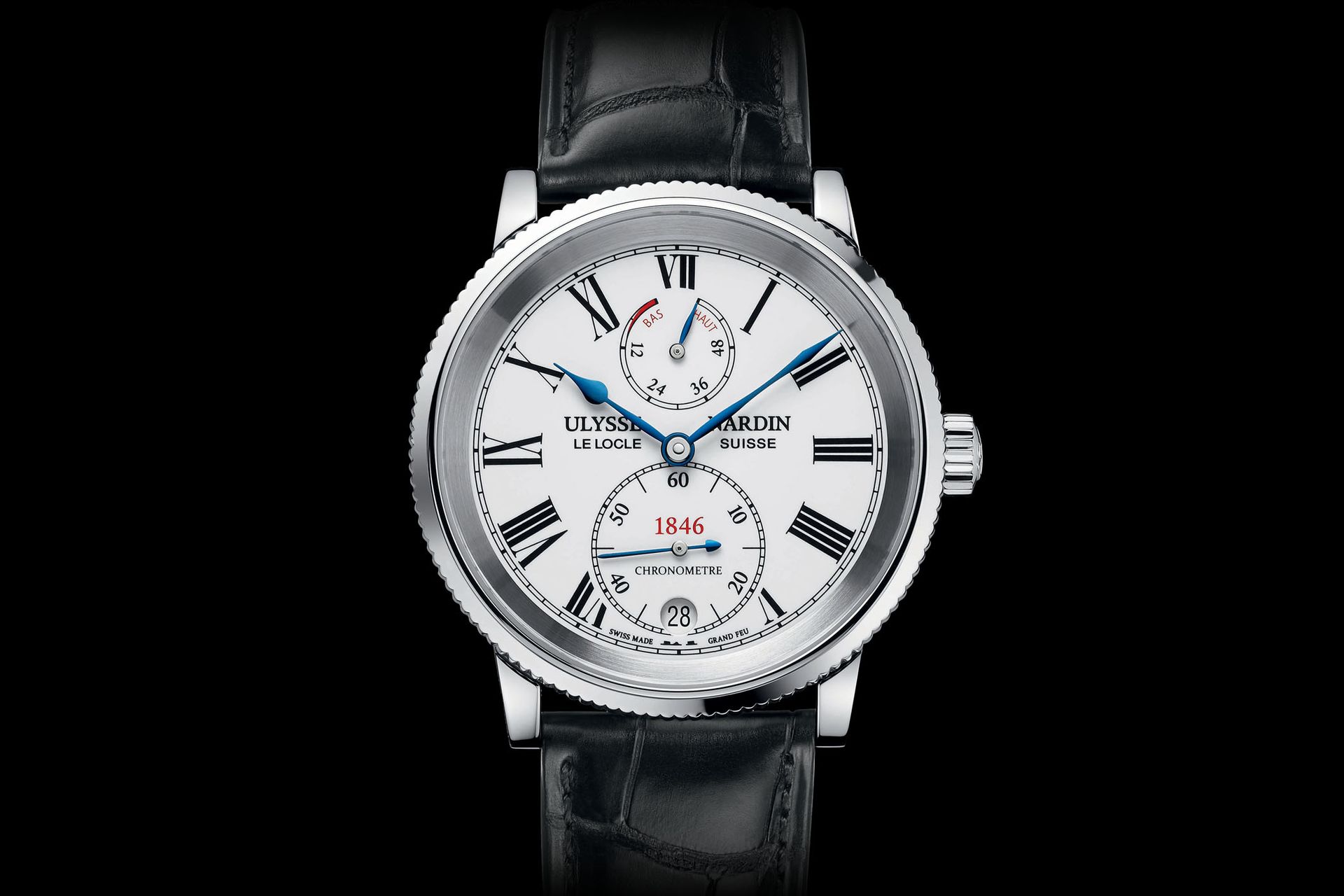
Ulysse Nardin (pronounced "Oo-LEES Nar-DAN") is a Swiss watch manufacturer founded on October 1, 1846, in Le Locle, Switzerland. For its first century, the brand was the world's most trusted maker of marine chronometers — the precision navigation instruments that navies and merchant fleets depended on to determine longitude at sea. From 1846 to 1958, Ulysse Nardin won 4,324 first prizes in international precision trials at observatories in Geneva, Neuchâtel, Kew, Paris, and Brussels. At its peak, the brand was the preferred chronometer supplier for the navies of 50 nations . Then came the quartz crisis, a near-bankruptcy, and one of the most remarkable brand revivals in watchmaking history — culminating in 2001 with the Freak, the first wristwatch to use silicon in its escapement and a watch that rewrote the rules of what a mechanical timepiece could be.
Founding: Le Locle, 1846
Ulysse Nardin founded his company at age 23, having apprenticed under his father Leonard-Frédéric Nardin in the watchmaking culture of the Vallée de Joux. Le Locle was already an established watchmaking centre; the young Nardin positioned his workshop specifically around marine chronometers — a technically demanding product that served an urgent practical need. Ships of the era navigated by comparing local noon against Greenwich Mean Time on a precision chronometer. An error of just four seconds translated to one nautical mile of positional error at the equator. An error of a minute could mean shipwreck.
The young company earned its first international recognition almost immediately. By the 1860s, UN chronometers were winning observatory trials across Europe, and the business expanded under Ulysse Nardin's son, Paul-David Nardin , who inherited the company after the founder's death in 1876. A third generation under Paul-Marie Nardin carried the brand through the early twentieth century, supplying the US Navy, the Royal Navy, the French Navy, the Italian Navy, and the Japanese Imperial Navy, among dozens of others. The Grand Prix at the 1900 Paris World's Fair confirmed Ulysse Nardin's position as the leading precision timekeeping manufacturer in the world.
The Quartz Crisis and Rolf Schnyder's Revival: 1983
The arrival of quartz movements in the 1970s devastated Swiss mechanical watchmakers, and Ulysse Nardin was among the hardest hit. Marine chronometer demand collapsed as GPS navigation became viable for military and commercial vessels. The brand neared bankruptcy. In 1983 , Rolf Schnyder — a Swiss businessman with no watchmaking background — purchased the company and initiated one of the most audacious revivals in the industry. His key move: hiring Ludwig Oechslin , an independent Swiss watchmaker and director of the International Museum of Horology (MIH) in La Chaux-de-Fonds, as chief movement designer.
Schnyder's vision was not to restore Ulysse Nardin to its 19th-century identity but to use the brand's precision credentials as the foundation for the most technically ambitious mechanical watch collection in the industry. Oechslin would provide the intellectual architecture for everything that followed.
The Trilogy of Time: 1985–1992
The Schnyder-Oechslin partnership produced three landmark timepieces that established Ulysse Nardin as a serious haute horlogerie brand:
Astrolabium Galileo Galilei — A watch displaying sunrise and sunset, moonrise and moonset, lunar phase, zodiac position, sun position, and sidereal time, based on a medieval astronomical instrument. Required five years of development. Considered the most complicated watch in production at launch.
Planetarium Copernicus — Displayed the positions of the planets in the solar system in real time on the dial. Named for the astronomer whose heliocentric model Oechslin used as the mechanical blueprint.
Tellurium Johannes Kepler — Showed the relationship between Earth, Moon, and Sun, including eclipse and equinox predictions. The three watches together established the brand's credibility in high complication watchmaking and attracted the serious collector attention that would sustain the brand into the next century.
The Silicon Revolution: The 2001 Freak
In 2001 at the Basel World Watch Fair, Ulysse Nardin unveiled the Freak — a watch that had no hands, no crown, and a movement that rotated on its own axis to indicate the time. More consequentially, the Freak was the first wristwatch in the world to use silicon components in its escapement . Silicon's properties — self-lubricating, non-magnetic, extremely low coefficient of friction — eliminated the need for lubrication at the escapement entirely, which had been a maintenance requirement of every mechanical watch since the invention of the lever escapement in the 18th century.
The industry's response was immediate. LVMH-controlled brands began silicon research programs. Patek Philippe announced silicon development. Rolex developed its Syloxi silicon hairspring, introduced commercially in 2014. Ulysse Nardin had a minimum five-to-seven year head start on the entire Swiss industry. The silicon technology developed for the Freak eventually migrated into UN's DIAMonSIL (diamond-silicon composite) escapement, which now appears in the brand's mainstream Marine and Executive collections, not just its avant-garde flagship.
Kering Acquisition and Independence: 2014–2022
Rolf Schnyder died in 2011; his wife Cynthia Schnyder managed the brand's transition. In 2014 , French luxury conglomerate Kering SA — owner of Gucci, Girard-Perregaux, Boucheron, and others — acquired Ulysse Nardin for a reported €230 million (approximately USD 316 million at 2014 exchange rates). Ludwig Oechslin departed around the same period, founding his independent brand Ochs und Junior. Under Kering, the brand expanded its Marine dive watch line, increased retail presence, and continued development of the Freak platform.
In 2022 , Kering divested all of its watchmaking activities, and Patrick Pruniaux — then CEO of both Ulysse Nardin and Girard-Perregaux — led a management buyout that returned the brand to independence. The newly formed Sowind Group SA became the holding entity for both manufactures, restoring a degree of operational independence that had been absent since the Schnyder era. This made Ulysse Nardin one of the first brands in modern Swiss watchmaking to achieve a management-led buyout from a major luxury conglomerate.
Founded: October 1, 1846 | Founder: Ulysse Nardin (1823–1876)
Headquarters: Le Locle, Switzerland | Current ownership: Sowind Group SA (independent since 2022 MBO)
Key heritage: 4,324 precision trial victories, 1846–1958 | Supplier to 50 navies
Silicon milestone: 2001 Freak — first silicon escapement in a production wristwatch
The Ulysse Nardin Model Guide
Marine Chronometer
The brand's foundation. Heritage navigation design, in-house UN-118 movement with DIAMonSIL, COSC certified. From ~$8,500.
Freak
The 2001 silicon revolution. No hands, no crown — the movement itself rotates to tell time. From $60,000 to $200,000+.
Freak X
The accessible Freak. Automatic movement, 41mm case, DIAMonSIL. From ~$18,000. Second generation launched 2025.
Marine Diver
300m professional dive watch with in-house UN-118. Shark Conservation Series limited editions. From ~$5,000.
El Toro / Black Toro
Ludwig Oechslin's perpetual calendar masterwork. Forward/backward setting via single crown. Discontinued; secondary market.
Blast
Sport skeleton with integrated crown guard. UN-172 automatic, DIAMonSIL. Blue lacquer variant is the signature piece. From ~$14,500.
Executive Skeleton Tourbillon
Flying tourbillon in a dress watch format. Rose gold, manual winding. The haute horlogerie flagship. From ~$35,000.
Frequently Asked Questions
Where is Ulysse Nardin made?
Ulysse Nardin is manufactured in Le Locle, Switzerland — the same Vallée de Joux location where the brand has operated since its 1846 founding. The brand is owned by Kering SA since 2014.
Who founded Ulysse Nardin?
Ulysse Nardin (1823–1876) founded the brand on October 1, 1846, at age 23. He had trained under his father Leonard-Frédéric Nardin and specialized in marine chronometers for naval navigation.
What was Ulysse Nardin's marine chronometer legacy?
From 1846 to 1958, Ulysse Nardin won 4,324 first prizes in international precision trials at observatories including Geneva, Neuchâtel, and Kew. At its peak, the brand supplied marine chronometers to the navies of 50 nations, including the US Navy, Royal Navy, French Navy, and Japanese Imperial Navy.
What made the Ulysse Nardin Freak historically significant?
The 2001 Freak was the first wristwatch in the world to use silicon components in its escapement. It was also the first production watch with no crown (wound by bezel rotation) and no hands (the rotating movement serves as the time indicator). This silicon innovation gave UN a five-to-seven year technological head start over Rolex, Patek Philippe, and other major Swiss manufacturers.
Who owns Ulysse Nardin today?
Kering SA, the French luxury conglomerate (Gucci, Girard-Perregaux, Boucheron), acquired Ulysse Nardin in 2014 for approximately €230 million. The brand continues to operate from Le Locle under Kering ownership.
Sources: Ulysse Nardin (ulysse-nardin.com), SJX Watches, Fratello Watches, Quill & Pad, Wikipedia, Teddy Baldassarre, WatchTime.
Latest News