
Panerai Materials: Carbotech, Fibratech, Goldtech, BMG-Tech, and eSteel
Panerai Materials: Carbotech, Goldtech and Innovation
Watch cases have traditionally been made from steel, gold, platinum, or titanium. Panerai's material innovation programme — accelerated from 2015 — has added five new case materials to the Panerai catalogue, each with distinct manufacturing processes, mechanical properties, and visual characteristics. The programme reflects a specific strategic position: a dive watch brand whose collectors respond to technical innovation should lead on materials science, not follow it.
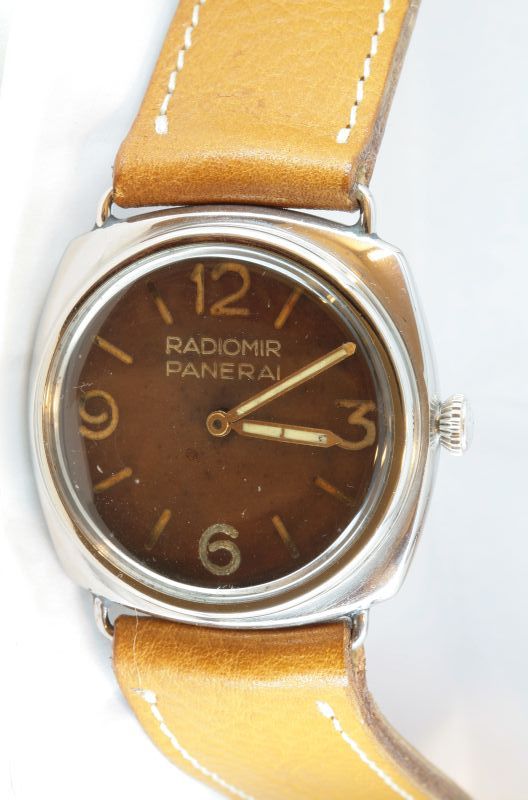
Photo: Historical photograph — Public Domain — Wikimedia Commons
Carbotech — 2015
Photo: Piero7 — Public Domain — Wikimedia Commons
First used : PAM00616 (Luminor Submersible 1950 Carbotech 47mm), 2015.
What it is : Thin layers of PEEK (polyether ether ketone) carbon fibre composite , stacked and compressed under controlled temperature and pressure. PEEK is an engineering thermoplastic polymer used in aerospace components and medical implants — it provides the binding matrix for the carbon fibre layers.
Why PEEK, not epoxy? Standard carbon fibre composites use epoxy resins as the binder. Epoxy-carbon composites are strong but brittle at impact and have limited heat tolerance. PEEK-based composites (which Carbotech uses) have superior impact resistance and significantly higher temperature tolerance — properties that originate in the aerospace applications that developed them.
Manufacturing : Individual layers of PEEK carbon fibre are stacked at slightly varying orientations, then compressed under elevated temperature and pressure. The compression process bonds the layers and expels air. The varying layer orientations create the distinctive irregular grain pattern visible on the surface — a consequence of the manufacturing process rather than a decorative treatment. No two Carbotech pieces have identical surface patterns.
Properties
:
- 64% lighter than titanium
- 80% lighter than steel
- Extremely high tensile strength
- Corrosion-resistant (PEEK is chemically inert to most substances)
- Non-magnetic
— no interference with the movement
- Non-allergenic
Fibratech — 2020
Photo: Piero7 — Public Domain — Wikimedia Commons
First used : PAM01119 and PAM01663 (Luminor Marina Fibratech 44mm), introduced at Watches & Wonders 2020.
What it is : Unidirectional basalt mineral fibres — fibres derived from basalt volcanic rock , fused at high temperature into fibre form, then bonded with a polymer binder and compressed in layers under controlled temperature and pressure. The same laminar compression process used for Carbotech, applied to a different fibre source material.
The distinction from Carbotech : Both use the same manufacturing process. The difference is the fibre source: Carbotech uses carbon fibres (petroleum-derived, with a sharp black appearance). Fibratech uses basalt mineral fibres (stone-derived, with a warmer brown/grey mottled appearance). Basalt is a volcanic rock — it is abundant, naturally occurring, and produces fibres with excellent mechanical properties when processed correctly.
Properties
:
- 60% lighter than steel
- Highly resilient and impact-resistant
- Corrosion-resistant
- The earthy, warm brown/grey mottled visual tone
distinguishes it from Carbotech's sharp black at a glance
Why Fibratech? Carbotech's black is versatile but singular in appearance. Fibratech offers a material with similar structural properties but a visually warmer character — expanding the range of case aesthetics available within the composite material category.
Goldtech — from 2019
Photo: Piero7 — Public Domain — Wikimedia Commons
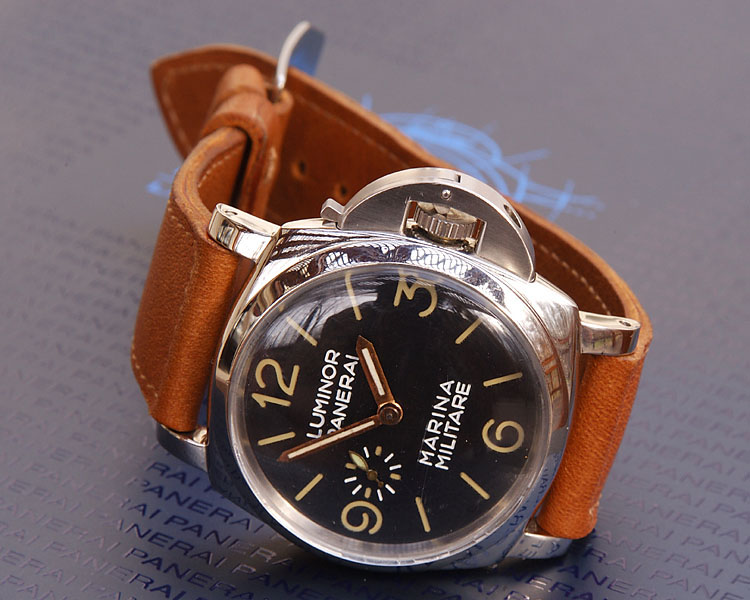
First used : PAM01070 (Submersible Goldtech Orocarbo) and PAM01112 (Luminor Marina Goldtech), Watches & Wonders 2020.
What it is : A proprietary 18-carat red gold alloy developed by Panerai to achieve two properties simultaneously: a deeper, more intense red colour than standard rose gold, and resistance to oxidation over time.
Composition
:
- ~ 75% gold
(18 carats)
- ~ 24% copper
(higher copper content than standard 18k rose gold, which typically uses 20–22% copper)
- ~ 0.4% platinum
(acts as a chemical stabiliser)
Why does the copper content matter? In gold alloys, copper is the primary component responsible for the red/rose tint. Standard 18k rose gold achieves its colour with approximately 20–22% copper. Goldtech's approximately 24% copper — at the upper boundary of what a stable 18k alloy can carry — produces a more intense, deeper red. The visual difference from standard rose gold is measurable: Goldtech reads as red in most lighting conditions rather than the softer pink-red of conventional rose gold.
Why the platinum? Standard high-copper rose gold alloys are prone to slow oxidation — the copper content causes the surface to darken over time (the same chemistry that patinates bronze). The ~0.4% platinum acts as a chemical stabiliser , inhibiting oxidation and maintaining the colour over the life of the watch. The result: a deeper red gold that holds its appearance rather than changing it.
BMG-Tech (Bulk Metallic Glass) — 2017
Photo: Jay Pulli — Copyrighted Free Use — Wikimedia Commons
First used : PAM00692 (Luminor Submersible 1950 BMG-TECH 47mm), introduced at SIHH 2017 .
What it is : A bulk metallic glass — a special class of metal alloy cooled so rapidly after high-pressure injection that the atoms do not have time to arrange into a regular crystalline structure. The result is an amorphous (disordered) atomic structure , which is the fundamental characteristic of metallic glass.
Historical context : The first bulk metallic glass samples (a gold-silicon alloy) were produced at Caltech in 1960 . For decades, metallic glasses could only be produced as thin films — the cooling rates required for glass formation could not be achieved through thick sections. Advances in alloy chemistry through the 1990s produced compositions that could be cooled into glass form in bulk sections (millimetre to centimetre scale), enabling the watch case application.
Composition : An alloy of zirconium, copper, aluminium, titanium, and nickel .
Manufacturing : High-pressure injection of the alloy in liquid form into a mould, followed by extremely rapid cooling — completing in seconds. The rapid cooling prevents crystallisation and locks the amorphous structure in place.
Properties
:
- Harder and more durable than stainless steel
- Lighter than titanium
- Corrosion-resistant
- Non-magnetic
- Crack propagation resistance
: In crystalline metals, cracks propagate along grain boundaries — a path of lesser resistance. In an amorphous structure with no grain boundaries, crack propagation is inhibited. BMG-Tech is significantly more resistant to crack propagation than conventional steel or titanium.
Panerai claims to have been the first watchmaker to use bulk metallic glass in a commercial watch case .
EcoTitanium and eSteel — Sustainable Materials
Photo: Historical photograph — Public Domain — Wikimedia Commons

From approximately 2019, Panerai introduced materials positioned around sustainability credentials:
EcoTitanium : A titanium alloy with more than 80% recycled content — derived from post-consumer and industrial titanium scrap rather than virgin mining. First used in the Submersible Mike Horn Edition (PAM00984) . Mechanically equivalent to standard Grade 5 titanium (Ti-6Al-4V) — the recycled origin does not compromise material properties.
eSteel : Recycled steel with high post-consumer content. Used in Luminor Marina eSteel references. Like EcoTitanium, eSteel is mechanically equivalent to standard stainless steel.
These materials do not offer new mechanical performance beyond standard titanium and steel — their value is in provenance and carbon footprint reduction in the production chain.
Material Comparison
| Material | First Panerai Use | Weight vs Steel | Key Property | Visual Character |
|---|---|---|---|---|
| Carbotech | 2015 (PAM00616) | 80% lighter | PEEK + carbon fibre, non-magnetic | Sharp black, irregular grain |
| Fibratech | 2020 (PAM01119) | 60% lighter | Basalt fibre composite | Earthy brown/grey |
| Goldtech | 2019/2020 | — | Deep red, oxidation-resistant | Intense red gold |
| BMG-Tech | 2017 (PAM00692) | Lighter than Ti | Amorphous metal, crack-resistant | Smooth, satin-like |
| EcoTitanium | 2019 (PAM00984) | ~45% lighter | 80%+ recycled content | Standard titanium grey |
| eSteel | 2020+ | — | High recycled content | Standard steel finish |
Frequently Asked Questions
What is Carbotech?
Thin layers of PEEK (polyether ether ketone) carbon fibre composite compressed under heat and pressure. First used by Panerai in 2015 (PAM00616). 64% lighter than titanium, 80% lighter than steel. Non-magnetic, corrosion-resistant, with a distinctive irregular surface grain pattern on every piece.
What is Fibratech?
Basalt volcanic rock mineral fibres compressed with a polymer binder — same manufacturing process as Carbotech. Introduced 2020. 60% lighter than steel. Distinguished from Carbotech by its warmer earthy brown/grey appearance.
What is Goldtech?
Panerai's proprietary 18-carat gold alloy: approximately 75% gold, 24% copper, 0.4% platinum. The high copper content produces a deeper red than standard rose gold; the platinum inhibits oxidation, maintaining the colour over time.
What is BMG-Tech?
Bulk metallic glass — a zirconium-copper-aluminium-titanium-nickel alloy cooled so rapidly after injection that it solidifies in an amorphous (non-crystalline) structure. First used in a commercial watch case by Panerai in 2017 (PAM00692). Harder than steel, lighter than titanium, and resistant to crack propagation.
Is EcoTitanium mechanically different from standard titanium?
No. EcoTitanium has more than 80% recycled content but is mechanically equivalent to standard Grade 5 titanium. Its value is in provenance and reduced mining impact, not in altered mechanical performance.