
Tudor Ranger: The Field Watch

Zach Charles • September 12, 2026

Share this article

Tudor Ranger: The Field Watch

The Ranger is Tudor's most legible watch. Not most technically sophisticated, not most historically documented, not most militarily significant — most legible. The dial of a Ranger, from the original 1960s references through the 2022 revival, is designed to answer a single question — what time is it? — as quickly as possible, in any light condition, by anyone wearing the watch. Arabic numerals at 12, 3, 6, and 9 o'clock. Large luminous plots at the remaining hours. A minute track around the perimeter. No complications to read, no information to parse, no subscribed context required.

This simplicity is harder to achieve than it looks, and the best field watches are harder to design well than most dress watches. The Ranger, in both its original and revived forms, gets the fundamentals right. That is the case for the watch and, in a market full of watches competing on specifications, it is more than enough.


A Tudor Heritage Ranger — the field/explorer watch reviving Tudor's mid-century Ranger line.
Photo: Manuel Rebic from London, England / Croatia / Germany / France — CC BY 2.0 — Wikimedia Commons
Origins: The 1960s Ranger and Field Watch Context

The original Tudor Ranger — references 7808 and 9008, produced from approximately 1963 through the 1970s — arrived in an era when the field watch brief was well-established but not yet commodified. Military-spec field watches needed to meet specific requirements: high legibility in low light, robust case construction resistant to shock and moisture, reliable movement, and a case size appropriate for reading at a glance under operational conditions.

The Ranger was a commercial rather than military watch — unlike the Tudor Submariner, which had formal procurement relationships with the French and Canadian navies, the original Ranger was sold through civilian retail channels. Its design reflected the field watch aesthetic that military specifications had established: an Explorer-adjacent dial layout (Arabic numerals at the key positions, luminous indices elsewhere), round Oyster case, conservative case diameter (approximately 37mm in the reference 7808), no complications beyond time display.

The movement inside the original Ranger was calibre 2483 or, in later examples, ETA-supplied calibres of the period — reliable automatic movements appropriate for the watch's brief. The Oyster case gave it 100-metre water resistance, which was more than required for a field watch but welcome.

Reference 7808 is the earlier and slightly rarer variant; reference 9008 represents later production with updated movement and refinements to the case and dial. Both are available in the secondary market at modest prices — $1,000–$3,000 for clean examples — and both are more interesting as vintage objects than their obscurity suggests. The dial layout directly anticipates the Explorer II's legibility design language (though the Explorer had preceded the Ranger by a decade), and the unpretentious purposefulness of the watch reads well against the background of 1960s Swiss watchmaking.


The Gap: Between the Original and the Revival

Between the discontinuation of the original Ranger (approximately the mid-1970s) and the revival in 2022, Tudor did not produce a watch under the Ranger name. The gap spans roughly forty-five years.

This is worth noting because the 2022 revival is not a direct continuation of a production line but a deliberate heritage invocation — Tudor looking back at a reference it made when its design DNA was being established and asking what that reference would look like built with contemporary manufacture capability. The answer is the current Ranger: same fundamental brief, same dial philosophy, substantially upgraded execution.

During the intervening decades, Tudor's catalogue covered field watch adjacents — the Black Bay's sporting versatility, the Heritage Advisor's more formal proposition — but nothing specifically positioned as a legible, unpretentious everyday field watch until 2022.


The 2022 Ranger: In-House Movement, Modern Execution

The 2022 Ranger — reference M79950-0001 — is built around Tudor's MT5402 calibre, an in-house automatic movement developed specifically for the watch. The MT5402 runs at 28,800 vph, offers a 70-hour power reserve, uses a silicon hairspring (LIGA-manufactured, providing anti-magnetic resistance and temperature stability without the positional sensitivity of metal springs), and is COSC chronometer-certified.

The 70-hour power reserve is the most commercially significant specification: a field watch left on the nightstand Friday evening is still running Monday morning. This matters more for a field watch than for a dive watch or dress watch, because field watches are often stripped off the wrist and stored during activities where wearing a watch is impractical. The extended power reserve means the watch doesn't need to be reset after every weekend away from the wrist.

The MT5402 is a genuinely manufacture movement — designed and produced by Tudor, not assembled from third-party components. It represents the same commitment to movement independence that Tudor made with the MT5612 in 2015, extended now to the Ranger. The silicon hairspring eliminates the need for demagnetisation in the movement's most vibration-sensitive component and reduces service frequency by removing the magnetic susceptibility of a steel spring.

Case specifications:
- Diameter: 39mm
- Case material: Oystersteel (904L stainless)
- Water resistance: 100m (screw-down Oyster crown)
- Crystal: Domed sapphire with anti-reflective coating
- Lug width: 19mm

The 39mm diameter is the Ranger's most deliberate specification. As the broader watch market had pushed toward 40–42mm and beyond through the 2000s and 2010s, 39mm emerged by the early 2020s as the preferred size for buyers who wanted a watch that wore with equal comfort under a shirt cuff as on an outdoor strap. The Ranger's 39mm case is large enough to read clearly at arm's length and small enough to disappear under a jacket sleeve — the definition of the correct size for an everyday watch.


Dial Design: Legibility as the Only Brief

The 2022 Ranger dial presents the field watch formula with clarity and care. Black dial. Applied Arabic numerals in luminous-filled steel at 12, 3, 6, and 9. Applied baton markers at the remaining hours, also luminous-filled. Large central hands — hour and minute in luminous-filled steel; seconds in slim steel with a luminous tip. Minute track around the perimeter. Tudor shield logo at 12. "TUDOR" in clean typeface. "RANGER" identification below centre. No date complication.

The absence of a date is a design choice, not an oversight. A date window requires a compromise: either the window is at 3 o'clock (where it interrupts the Arabic numeral), at 6 o'clock (where it creates dial asymmetry), or at another position (where it reads as an afterthought). For a legibility-first watch, any of these compromises is worse than the clean dial that omits the date entirely. Tudor made the correct call.

Luminous material on the 2022 Ranger is SuperLuminova BGW9 (blue-toned) on the dial markers and hands — a photoluminescent compound that charges under ambient light and emits a blue-green glow in darkness for several hours. For a field watch, adequate luminous duration is a functional specification: the whole point of a large, clear field watch dial is that you can read it quickly and confidently, including at night.


Tudor Ranger vs. Rolex Explorer: The Comparison That Matters

The Ranger and the Rolex Explorer are the natural comparison within the Hans Wilsdorf Foundation family. Both are 39-ish mm round watches with Explorer-derived dial layouts, no date complications (on the current base references), and Oyster cases. Both are positioned as versatile everyday watches with outdoors/field heritage.

Criterion Tudor Ranger 79950 Rolex Explorer 224270
Case diameter 39mm 40mm
Case material Oystersteel (904L) Oystersteel (904L)
Water resistance 100m 100m
Movement MT5402 (in-house) Cal. 3230 (in-house)
Power reserve 70 hours 70 hours
Silicon hairspring Yes Yes (Syloxi)
COSC certified Yes Yes
Retail price ~$3,250 ~$7,350
Secondary market Near/at retail 20–40% above retail

The specifications are remarkably close — the same power reserve, the same silicon hairspring technology, the same COSC certification, Oystersteel cases of essentially identical diameter. The price difference (approximately 2.3x) reflects Rolex's brand equity, the Explorer's seventy-year heritage, and its secondary market behaviour — not a technical capability gap between the movements.

For a buyer who wants a 39mm Oystersteel field watch with manufacture movement and 70-hour power reserve, and who is honest about whether the Rolex name on the dial is part of their motivation, the Ranger makes an unusually compelling argument.


Collecting and Buying the Ranger

Original 1960s–1970s Ranger (7808/9008): Available on Chrono24 for $1,000–$3,000 depending on dial condition and case preservation. Less commonly encountered than Tudor Submariners of the same era because the Ranger attracted less collector attention historically. Clean unpolished examples with original dials are the priority; replacement hands and dials are not uncommon on service pieces and are detectable under ultraviolet light.

2022 Ranger (79950): Available from authorised Tudor retailers without waitlists at approximately $3,250. The watch trades near retail on the secondary market — unlike Rolex equivalents, there is no meaningful premium for a new-in-box Tudor Ranger. This is either a purchasing advantage (buy from a retailer at retail, no premium required) or an investment caution (no secondary market appreciation expected at current pricing).

For a buyer who wants to wear the watch rather than collect it, the 2022 Ranger's availability without premiums is a straightforward advantage. The case for buying it is entirely about the object: 39mm, manufacture movement, 70-hour power reserve, legible dial, Oyster case, ~$3,250. That is a coherent and well-executed proposition.


Related Articles

Tudor Collection

Field & Adventure Watches

Recent Posts

By Zach Charles • October 10, 2026
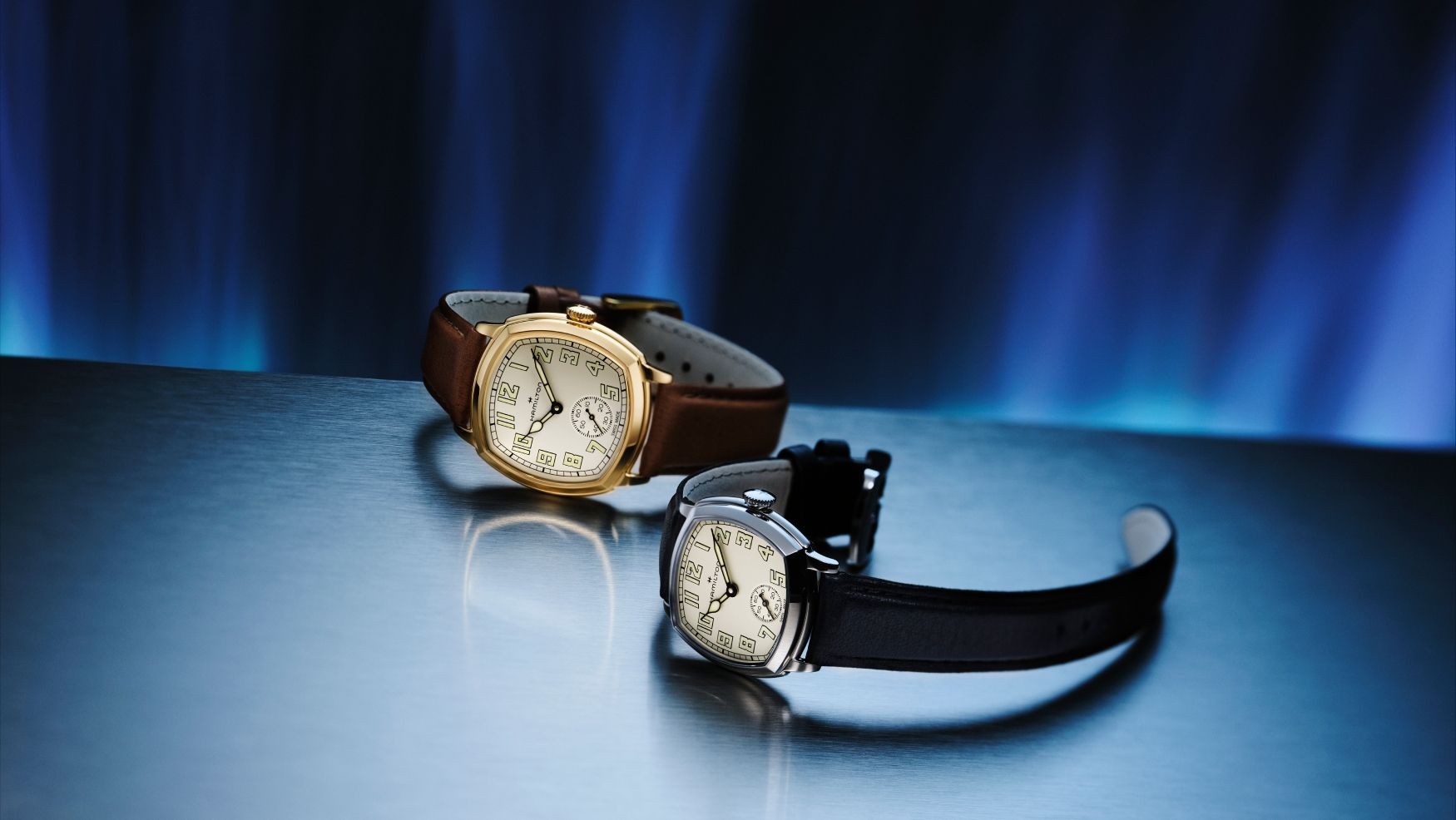
Hamilton's American Classic Cushion Mechanical revives its 1926 Art Deco cushion watches, seen in Oppenheimer, in 30mm and 34mm with the new hand-wound…
Doxa SUB 200: The Accessible Everyday Diver
By Zach Charles • October 10, 2026
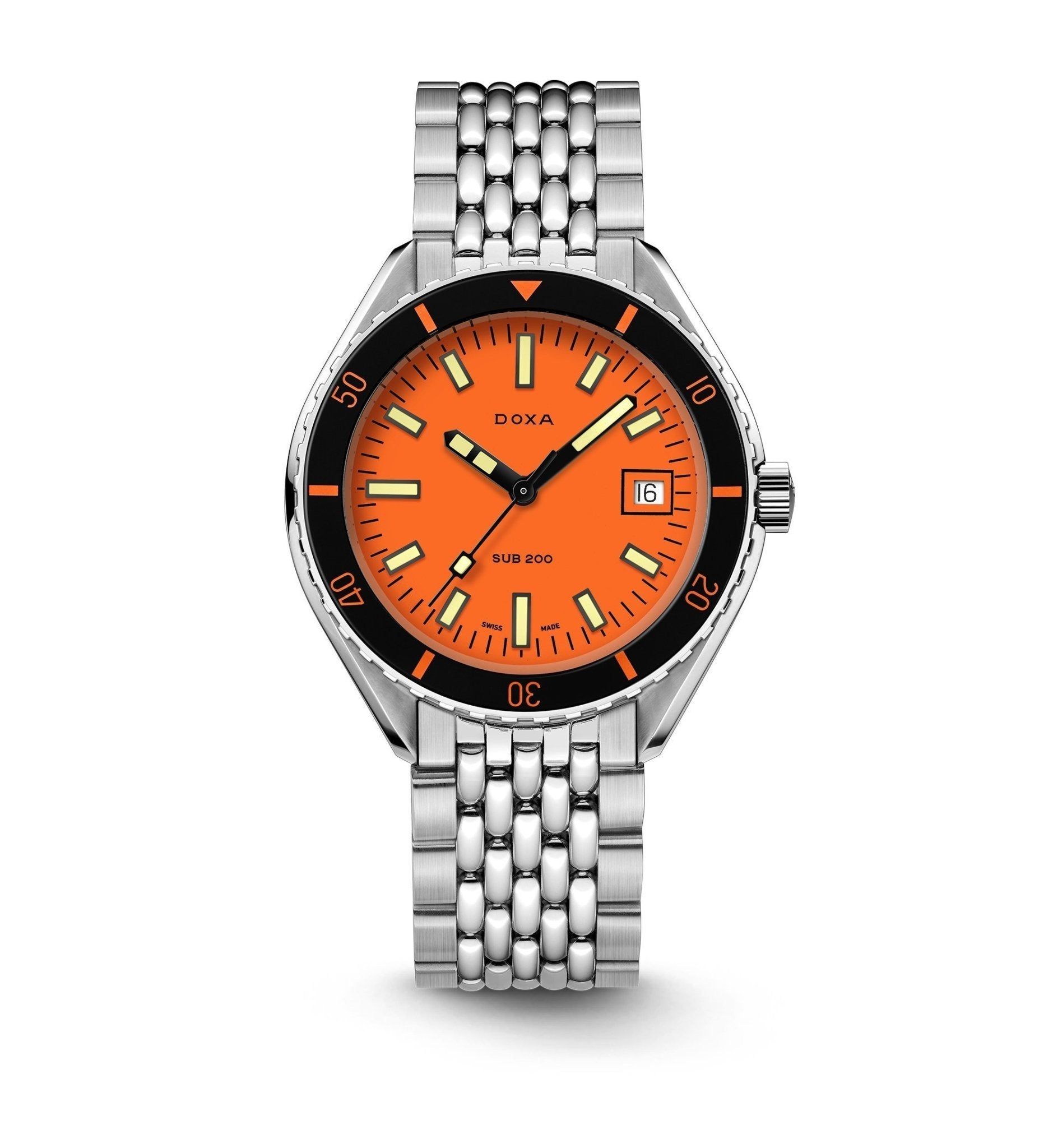
Complete guide to the Doxa SUB 200 — 42mm, 200m, four colorways, Sellita SW200-1. The accessible entry to the Doxa SUB family with the full…
By Zach Charles • October 10, 2026
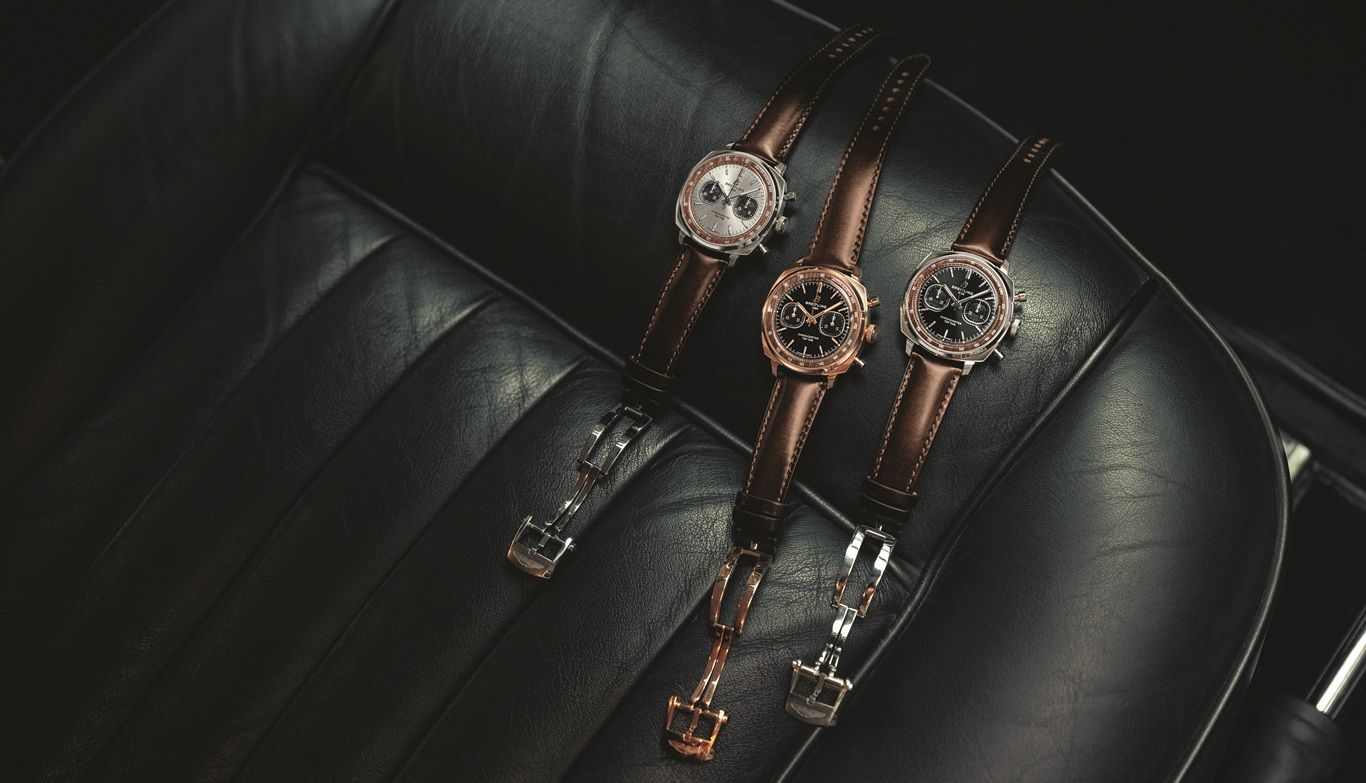
The Breitling Top Time B01 Aston Martin DB5 pairs a cushion-shaped 41mm case, a wooden inner ring and the in-house Caliber 01 across three limited…
By Zach Charles • October 10, 2026
TAG Heuer developed the Mikrograph (2011, 1/100th second), Mikrotimer Flying 1000 (2011, 1/1000th second), and Mikrogirder (2012, 1/2000th second).
Doxa SUB 1500T: The 1,500-Metre Depth-Rating Flagship
By Zach Charles • October 10, 2026
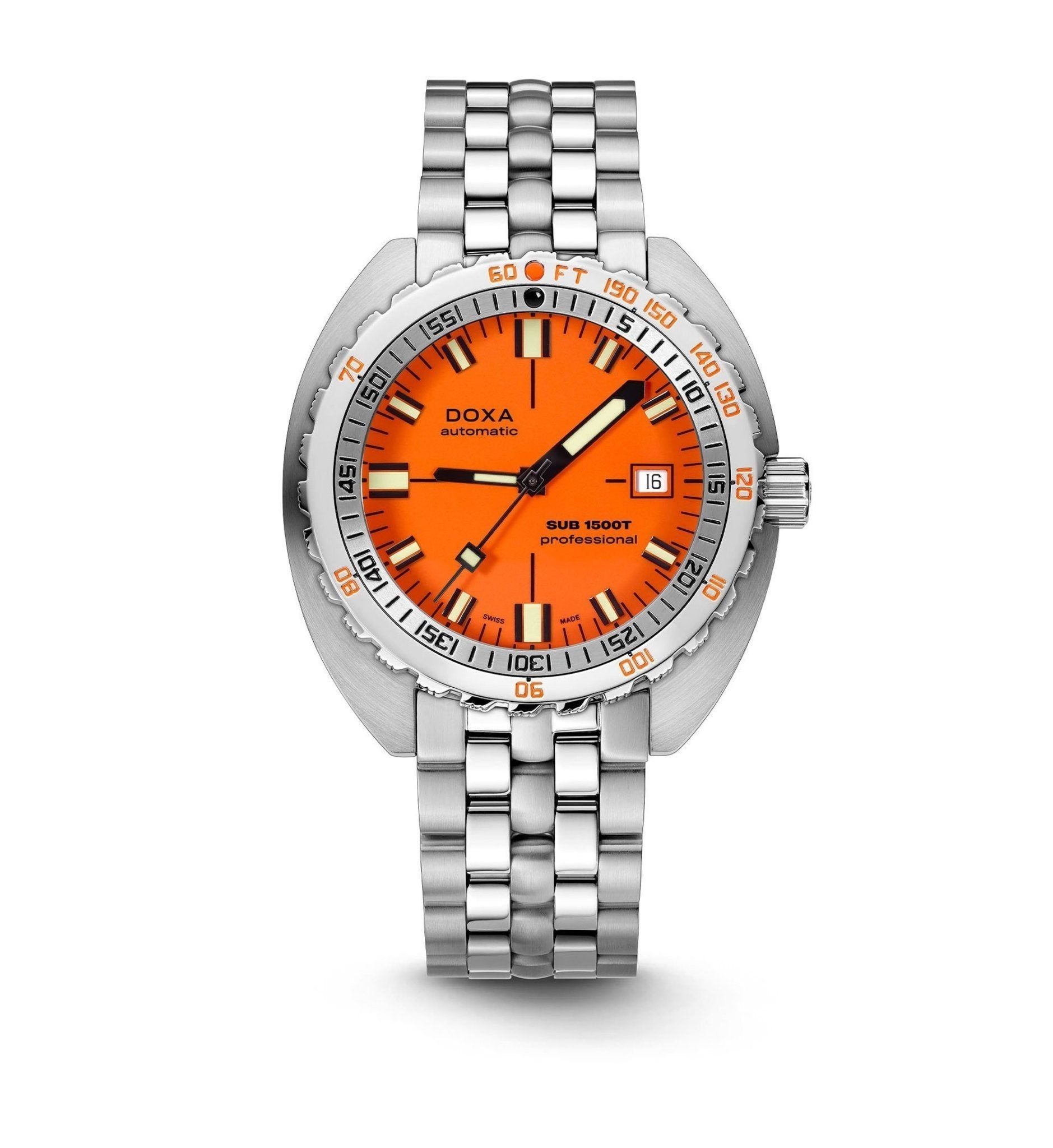
Complete guide to the Doxa SUB 1500T — 45mm, 1,500m depth rating, helium escape valve, ETA 2892-2 movement, USD 2,690.
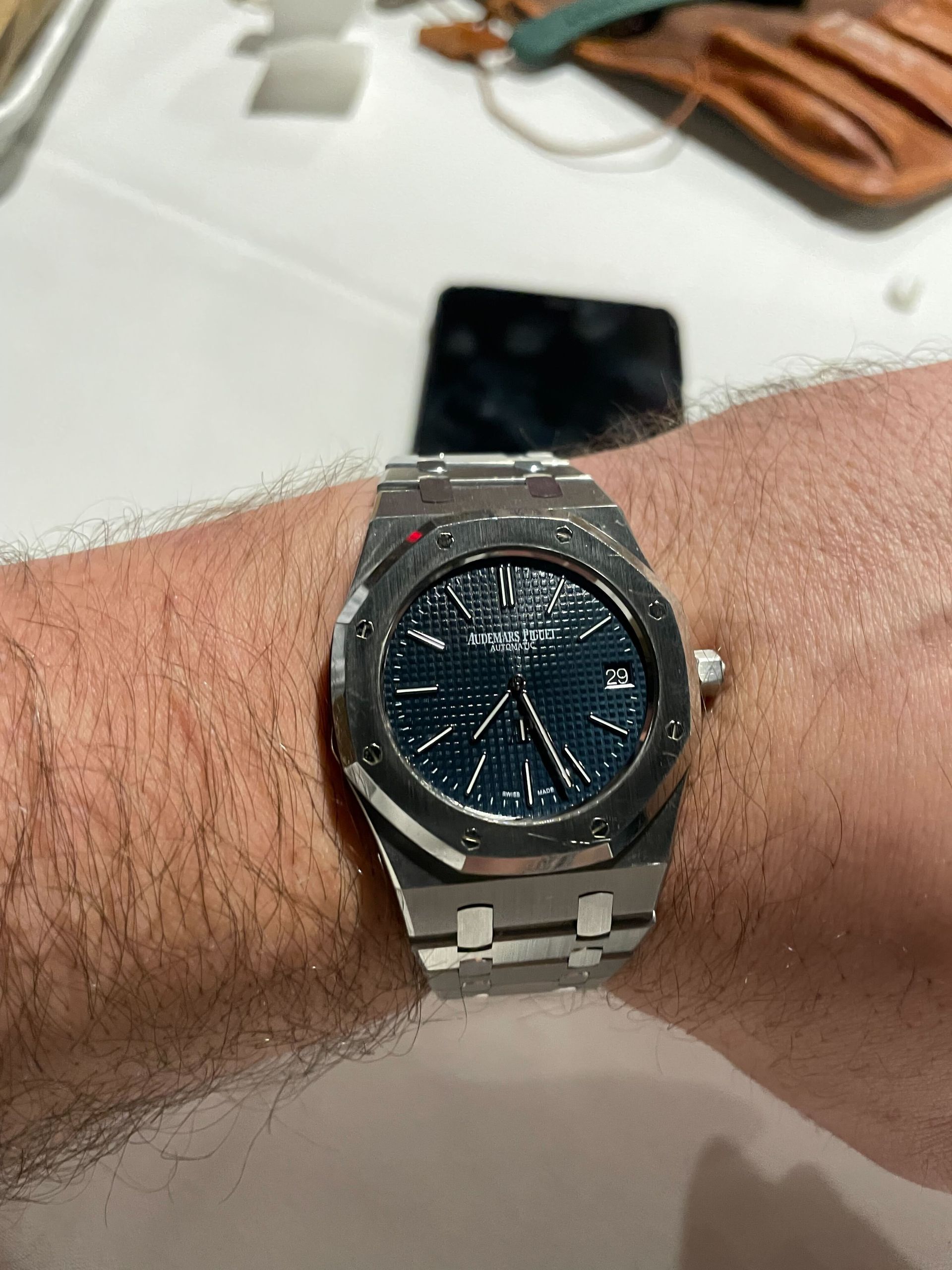
Audemars Piguet Royal Oak 'Jumbo' ref. 15202 with blue tapisserie dial and integrated steel bracelet
By Zach Charles • October 10, 2026
The Audemars Piguet × Swatch Royal Pop is a $400 bioceramic pocket watch in 8 colourways, powered by a new hand-wound SISTEM51 with 90+ hour power…

Time on the Move logo
By Zach Charles • October 10, 2026
Zach Charles is the editor of Time on the Move, an independent watch reference covering brand and model histories, buying guides and release news…
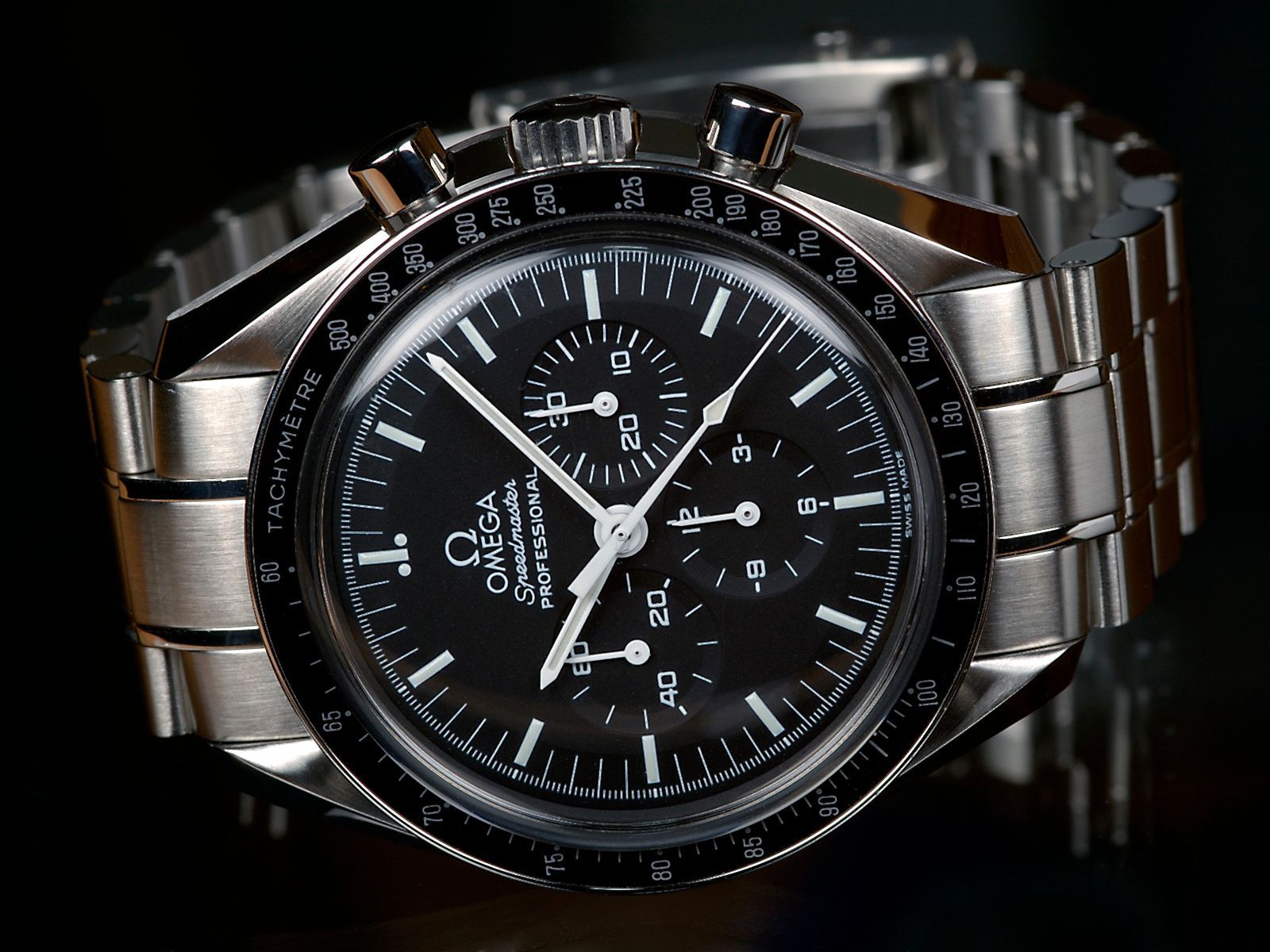
Omega Speedmaster Professional 'Moonwatch' chronograph, front view on steel bracelet
By Zach Charles • October 9, 2026
Find the best watches at every price point from $500 to $15,000 — new and pre-owned. Covers every budget tier with specific reference picks, brand…
By Zach Charles • October 9, 2026
The latest watch news: new releases, Watches and Wonders coverage, discontinuations, industry analysis, and market trends. Currently 1 article.
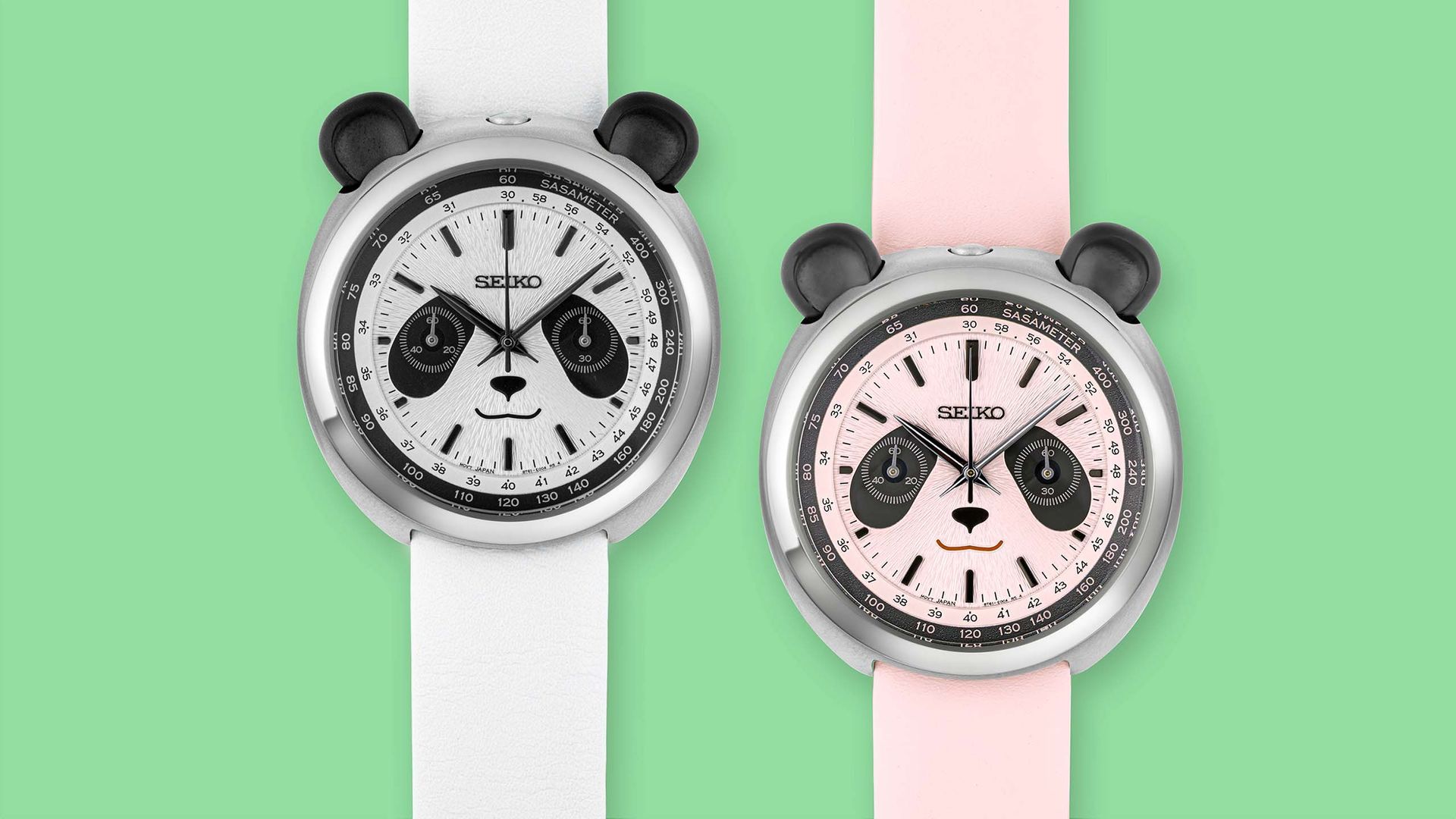
Seiko's New Panda Chronograph Is Literally a Panda: The Power Design Project HHK001 and HHK002
By Zach Charles • October 8, 2026
Seiko's Power Design Project panda chronograph (HHK001, HHK002) turns the panda dial into an actual panda face, with ear pushers, a 'Sasameter' and a 3D…
Show More