
Tudor Black Bay 41: The Heritage Dive Watch

Zach Charles • September 12, 2026

Share this article

Tudor Black Bay 41: The Heritage Dive Watch

In January 2012, at Baselworld, Tudor introduced the Heritage Black Bay. It was the most consequential watch the brand had made in thirty years, and it achieved something that most heritage-revival watches fail to do: it looked like a genuine continuation of design history rather than a retro costume.

The reason it succeeded where most heritage watches fail is that the design elements it referenced were not borrowed from another manufacturer's archive — they were drawn from Tudor's own Submariner production of the 1950s and 1960s. The snowflake hour hand that had defined Tudor Submariners from approximately 1969 onward. The domed crystal that had covered the dials of early Submariner references before flat sapphire became standard. The gilt text on the dial. The large, almost exaggerated luminous plots. The angular crown guards. Every element of the Heritage Black Bay had a specific reference point in Tudor's own production history, and that specificity gave the watch an authenticity that heritage revivals assembled from generic vintage cues cannot manufacture.


Why 2012: The Commercial and Brand Context

To understand why the Heritage Black Bay was the right watch at the right moment, the context of Tudor's position in 2012 is essential. The brand had withdrawn from the US market in 2004. Its catalogue was dominated by the Prince dress watch line and the Hydronaut dive watch — competent watches that told no particular story. The Tudor Submariner line, the brand's most historically significant product, had been discontinued circa 1999. Tudor's identity had become hazy: it was neither a credible alternative to Breitling and TAG Heuer at sport watch price points nor a compelling choice against Omega's Seamaster at the same pricing tier.

The Black Bay changed the conversation. By returning explicitly to the 1950s and 1960s design language of the original Submariner — the watches that French Navy divers had trusted and collectors were beginning to appreciate — Tudor asserted that it had a genuine heritage worth referencing. Not borrowed prestige, but earned provenance: the military dive watch contracts, the snowflake hand, the operational history. The Heritage Black Bay made that history visible on the wrist.

Simultaneously, the Pelagos launched at Baselworld 2012 demonstrated that Tudor could innovate forward: a titanium case, helium escape valve, self-adjusting clasp, and serious depth rating established Tudor's technical credibility alongside the heritage positioning. The two watches together defined what Tudor could be — a brand with real historical roots and genuine engineering ambition.


Design: A Specific Heritage, Not a Generic Vintage Aesthetic

The Heritage Black Bay's design elements are traceable to specific Tudor Submariner references, not to a generalised vintage aesthetic.

The snowflake hand — the broad, rectangular-tipped hour hand that is the Black Bay's most immediately recognisable feature — was introduced on the Tudor Submariner reference 7016 circa 1969. The snowflake's broader luminous fill was a functional improvement on the Mercedes hand's narrower tip; it improved low-light legibility at depth. Its reappearance on the Black Bay was not arbitrary nostalgia — it was Tudor reclaiming the design element most distinctively its own.

The domed sapphire crystal was another deliberate throwback. Early Tudor and Rolex Submariners used domed acrylic (plexi) crystals before flat sapphire became standard in the late 1970s. The dome catches light differently from a flat crystal, creating the warm, slightly distorted reflection that collectors associate with vintage watches. The Heritage Black Bay used domed sapphire — maintaining the vintage visual effect while providing the scratch resistance of modern material.

The "Big Crown" — the oversized winding crown — references the big-crown Tudor Submariner references of the late 1950s (7924 and related), where enlarged crowns allowed operation with gloved hands. On the Black Bay it is a design signature rather than a functional requirement, but it reads correctly in context.

The bezel: The original 2012 Heritage Black Bay launched with a burgundy/rose red bezel insert — referencing a brief production run of red-bezelled Tudor Submariners from the 1950s. The black bezel variant followed, then blue. The colour sequence tracked the discovery of colour in Tudor's own vintage archive.


Reference History and Colour Variants

The Black Bay has accumulated variants across its production that require distinguishing.

2012 — Red (Burgundy) Bezel, Black Dial: The launch reference. Burgundy aluminium bezel insert over a black dial with gilt text and a snowflake hand. ETA 2824-2 movement. The original launch colour remains sought after.

2013/2014 — Black Bezel, Black Dial: The second colour introduced, offering a more classic all-black dive watch aesthetic.

2014/2015 — Blue Bezel, Blue Dial: The most visually distinctive Black Bay colour in its first generation — deep blue dial paired with deep blue bezel, gilt indices, snowflake hand. The blue-on-blue configuration has become the reference many collectors consider the definitive Black Bay.

2015 — MT5612 Movement: The in-house movement transition was the most significant technical change in the Black Bay's history. The ETA 2824-2 (42-hour power reserve) was replaced by Tudor's MT5612: 70-hour power reserve, COSC chronometer certification, silicon hairspring. From this point, Tudor's marketing could legitimately claim manufacture status.

2016 and onward — Steel and Gold (S&G) variants: Two-tone configurations with yellow gold accents — bezel, crown, indices — were added, extending the Black Bay into the dress-sport category occupied by two-tone Rolex Submariners.

Naming evolution: The "Heritage" qualifier was progressively dropped. By the late 2010s, Tudor marketed the watch simply as the "Black Bay" — the 41mm variant distinguished from the Black Bay 58(38mm) by diameter rather than by a separate model name.


The MT5612: Why the Movement Transition Mattered

When Tudor introduced the MT5612 in 2015, it transformed the Black Bay's commercial narrative. Before the MT5612, the Black Bay's strongest selling point was its design and heritage positioning. After the MT5612, Tudor could add a manufacture movement story to the same price point.

The MT5612 is 26mm in diameter, runs at 28,800 vph, and uses a silicon hairspring produced using LIGA (Lithographie, Galvanoformung, Abformung) microfabrication — the same manufacturing process used for high-specification silicon components across Swiss fine watchmaking. The silicon hairspring eliminates the metal spring's susceptibility to magnetic fields and its temperature-driven rate changes, improving both accuracy consistency and long-term reliability. COSC certification to -4/+6 seconds per day (Tudor claims actual performance of -2/+4).

Most significantly: 70 hours of power reserve from a mainspring barrel designed to deliver consistent torque across the full running period. The extended power reserve was immediately visible in daily life — a Black Bay removed Friday evening was still running Monday morning. The ETA 2824's 42-hour reserve required weekend winding for anyone who didn't wear the watch continuously; the MT5612 eliminated that requirement.


Black Bay 41 vs. Rolex Submariner: The Comparison

The comparison is inevitable and worth addressing directly.

Criterion Tudor Black Bay 41 Rolex Submariner Date 126610LN
Case diameter 41mm 41mm
Case material Oystersteel (904L) Oystersteel (904L)
Water resistance 200m 300m
Movement MT5612 (in-house) Cal. 3235 (in-house)
Power reserve 70 hours 70 hours
Silicon hairspring Yes Yes (Syloxi)
Bezel Unidirectional aluminium Unidirectional Cerachrom ceramic
Retail price ~$3,775 ~$11,350
Secondary market Near/at retail 25–40% above retail

The specification gap is narrower than the price gap suggests. The 100m water resistance difference (200m vs. 300m) is practically irrelevant for non-professional use — both watches can be worn diving recreationally. The meaningful differences are the Rolex's Cerachrom ceramic bezel (which doesn't fade, unlike the Black Bay's aluminium insert) and the Rolex Calibre 3235's more refined finishing and tighter accuracy tolerance. Against a price multiple of approximately 3x, those differences are clearly positioned as brand equity rather than proportional capability.

The aluminium bezel on the Black Bay, often cited as a limitation, is by many collectors considered a feature: aluminium bezels age and develop character in ways that ceramic cannot. The Black Bay's bezel will fade; the Submariner's will not. Which outcome you prefer depends on whether you want a watch that shows its history or one that defies it.


Current Specifications and Pricing

Reference: M79230N (black bezel), M79230B (blue bezel), M79230DK (black bezel, black dial)
Case: 41mm Oystersteel, screw-down crown
Bezel: Unidirectional rotating aluminium insert (black, blue, or burgundy)
Crystal: Domed sapphire with anti-reflective coating
Water resistance: 200m
Movement: MT5612 (no date) or MT5601 with date
Power reserve: 70 hours
Retail price (April 2026): ~$3,775–$3,975 depending on configuration


Collecting and Secondary Market

The Black Bay trades near retail with modest secondary market premiums on most configurations. Early ETA-powered examples (pre-2015) trade at a slight discount to current MT5612 versions, reflecting the movement upgrade. The original burgundy-bezel reference from 2012 commands a collector premium of 15–25% above comparable later configurations as the launch reference.

Full sets (box, papers, hang tags) add modest but consistent premiums. The Black Bay is bought primarily as a wear piece rather than a collector investment — its secondary market behaviour reflects that positioning. Unlike the Rolex Submariner, which appreciates reliably above retail, the Black Bay offers accessible entry and reasonable liquidity without investment characteristics.


Related Articles

Black Bay Family

Heritage and Foundation

Recent Posts

By Zach Charles • October 10, 2026
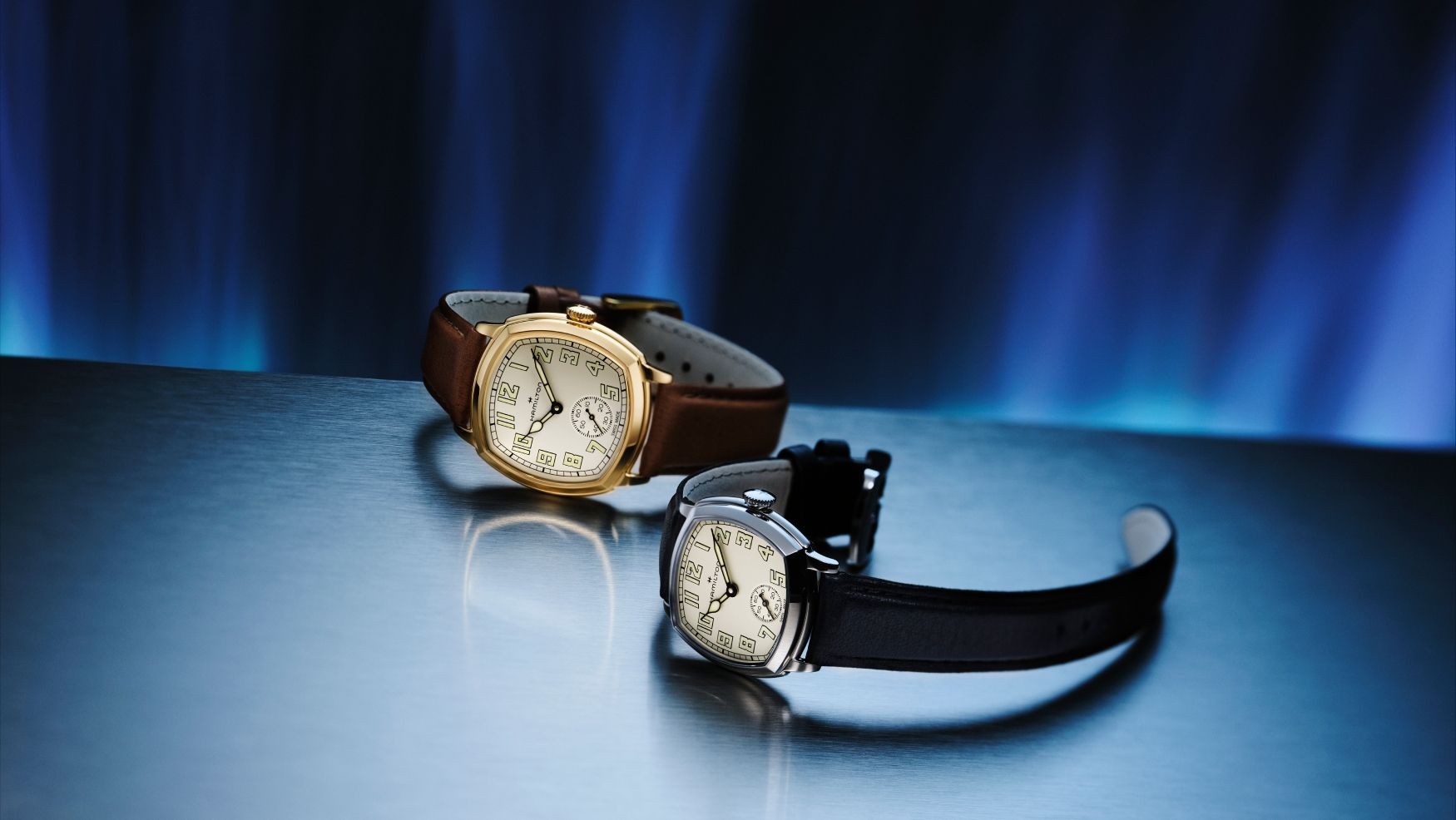
Hamilton's American Classic Cushion Mechanical revives its 1926 Art Deco cushion watches, seen in Oppenheimer, in 30mm and 34mm with the new hand-wound…
Doxa SUB 200: The Accessible Everyday Diver
By Zach Charles • October 10, 2026
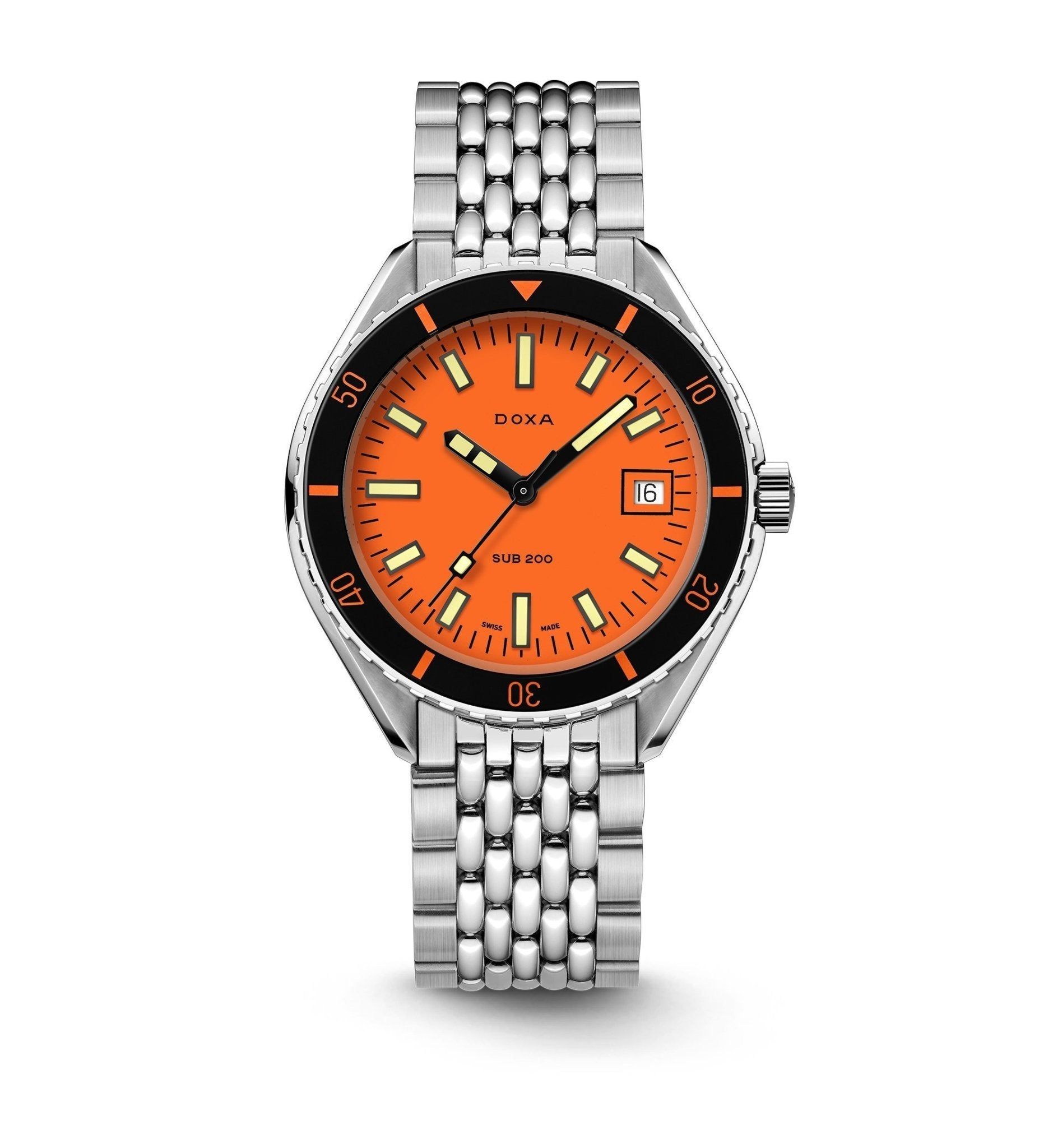
Complete guide to the Doxa SUB 200 — 42mm, 200m, four colorways, Sellita SW200-1. The accessible entry to the Doxa SUB family with the full…
By Zach Charles • October 10, 2026
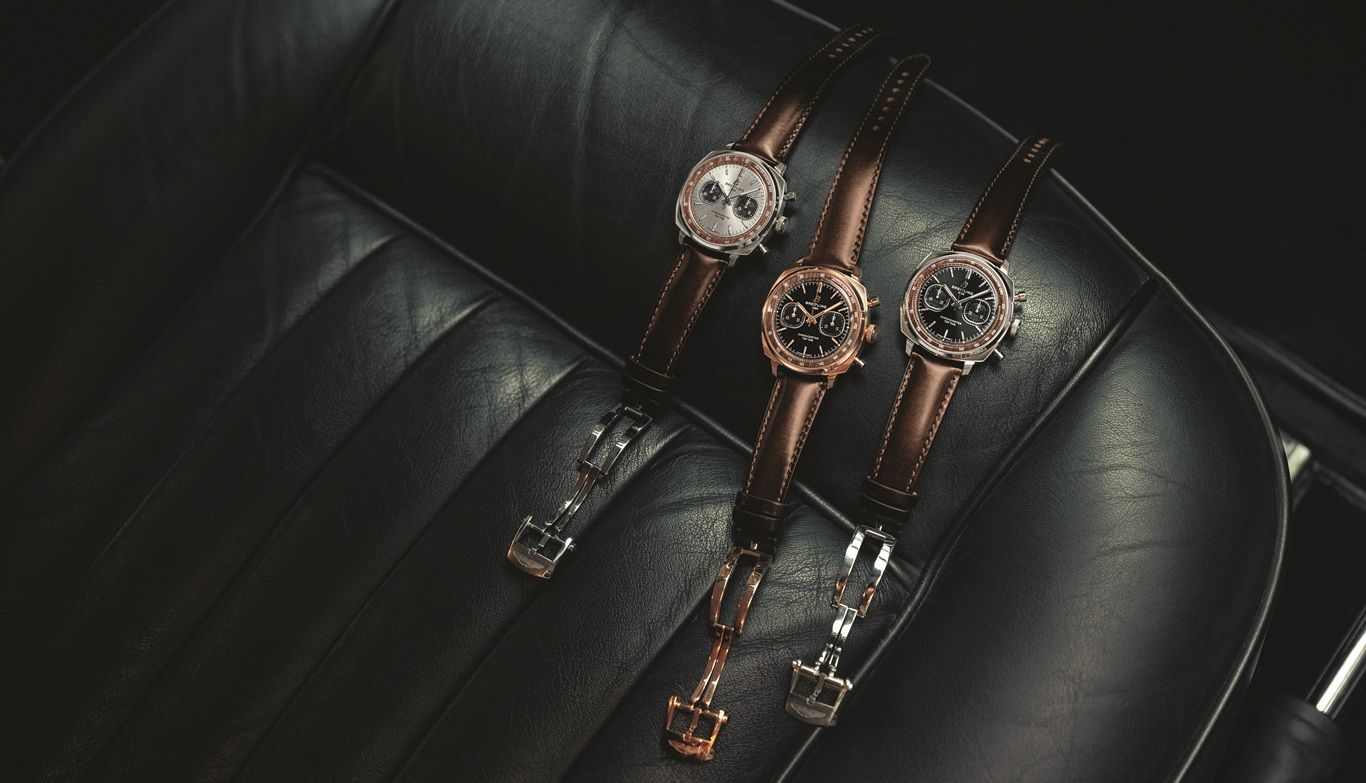
The Breitling Top Time B01 Aston Martin DB5 pairs a cushion-shaped 41mm case, a wooden inner ring and the in-house Caliber 01 across three limited…
By Zach Charles • October 10, 2026
TAG Heuer developed the Mikrograph (2011, 1/100th second), Mikrotimer Flying 1000 (2011, 1/1000th second), and Mikrogirder (2012, 1/2000th second).
Doxa SUB 1500T: The 1,500-Metre Depth-Rating Flagship
By Zach Charles • October 10, 2026
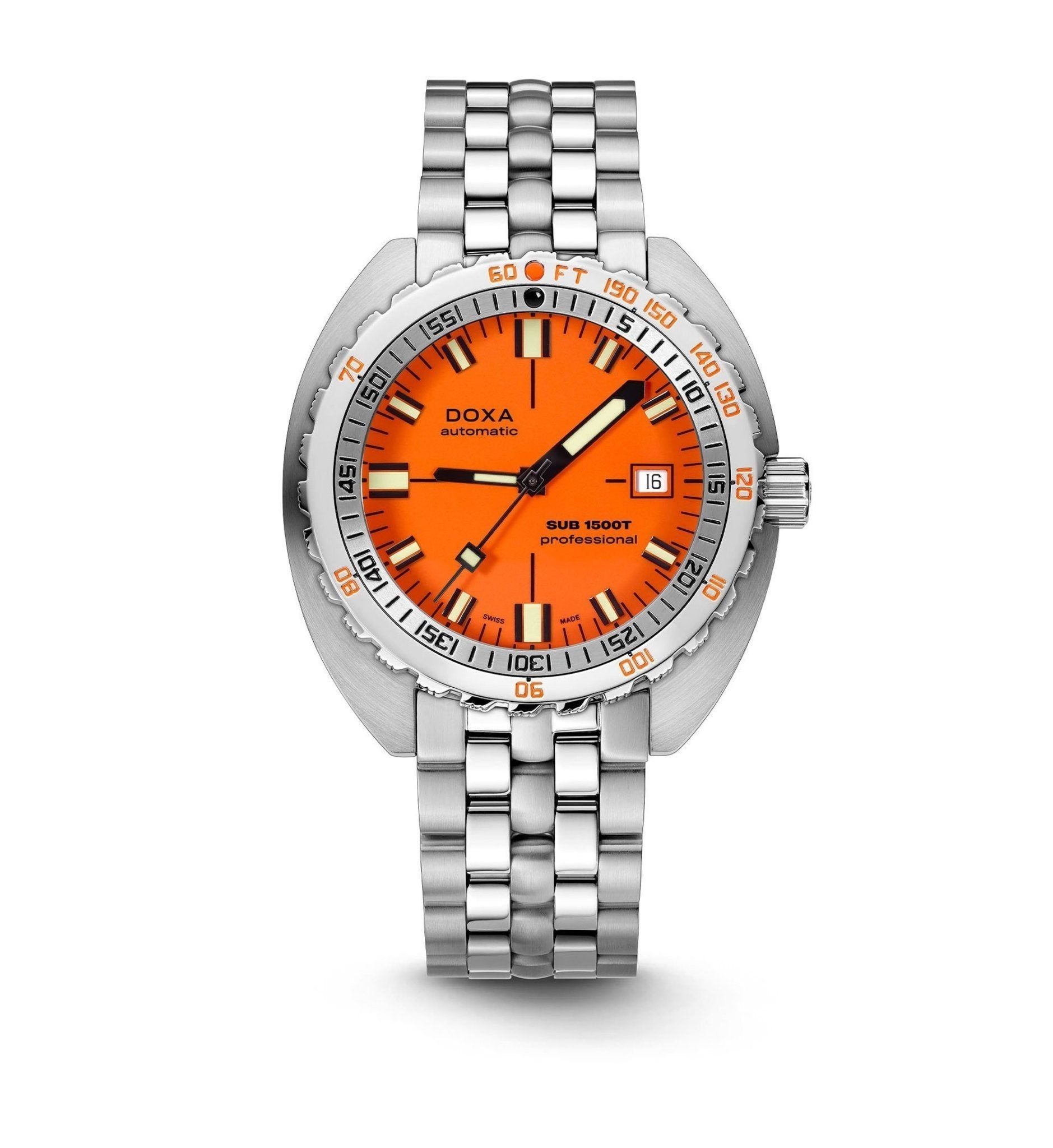
Complete guide to the Doxa SUB 1500T — 45mm, 1,500m depth rating, helium escape valve, ETA 2892-2 movement, USD 2,690.
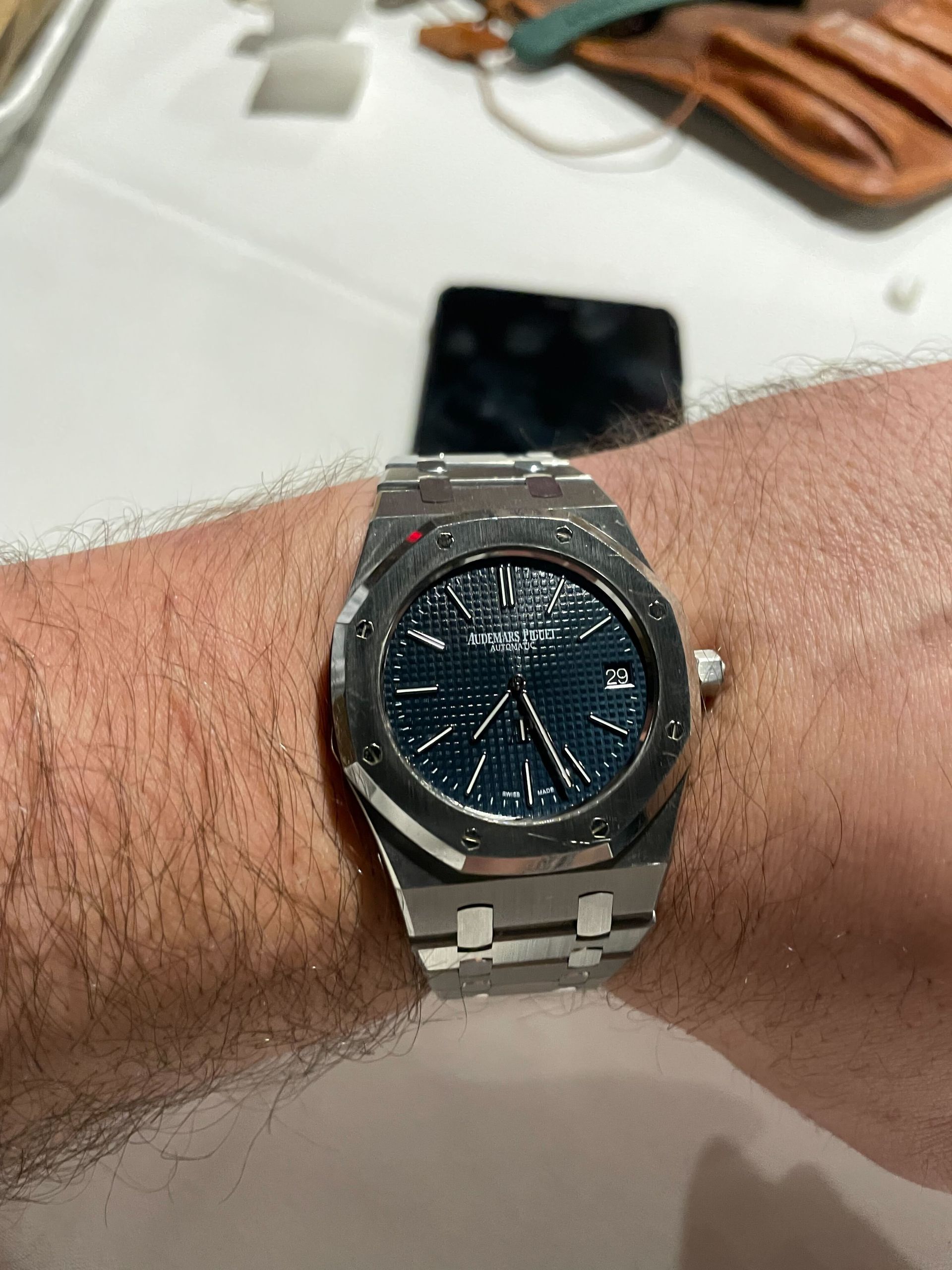
Audemars Piguet Royal Oak 'Jumbo' ref. 15202 with blue tapisserie dial and integrated steel bracelet
By Zach Charles • October 10, 2026
The Audemars Piguet × Swatch Royal Pop is a $400 bioceramic pocket watch in 8 colourways, powered by a new hand-wound SISTEM51 with 90+ hour power…

Time on the Move logo
By Zach Charles • October 10, 2026
Zach Charles is the editor of Time on the Move, an independent watch reference covering brand and model histories, buying guides and release news…
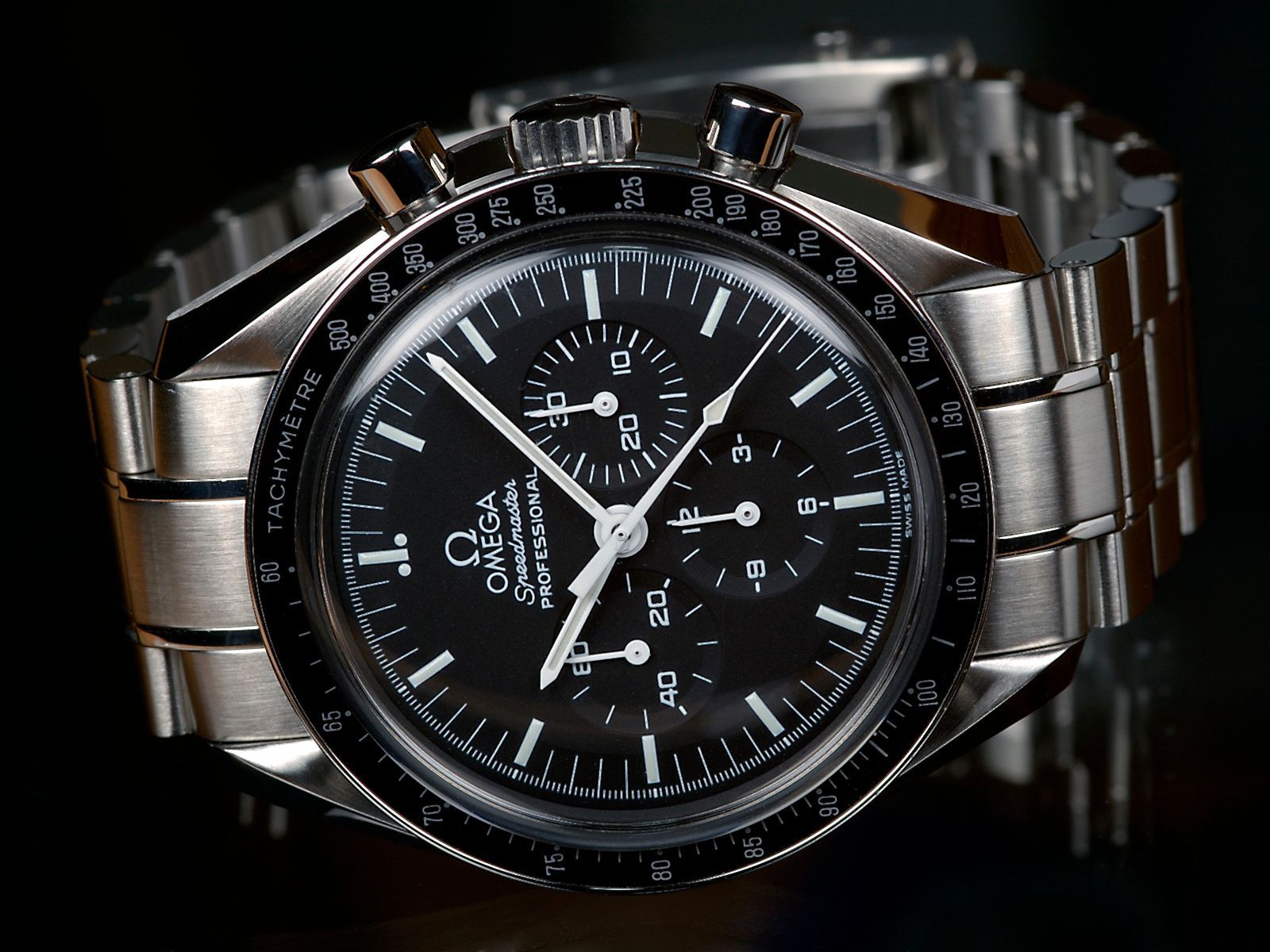
Omega Speedmaster Professional 'Moonwatch' chronograph, front view on steel bracelet
By Zach Charles • October 9, 2026
Find the best watches at every price point from $500 to $15,000 — new and pre-owned. Covers every budget tier with specific reference picks, brand…
By Zach Charles • October 9, 2026
The latest watch news: new releases, Watches and Wonders coverage, discontinuations, industry analysis, and market trends. Currently 1 article.
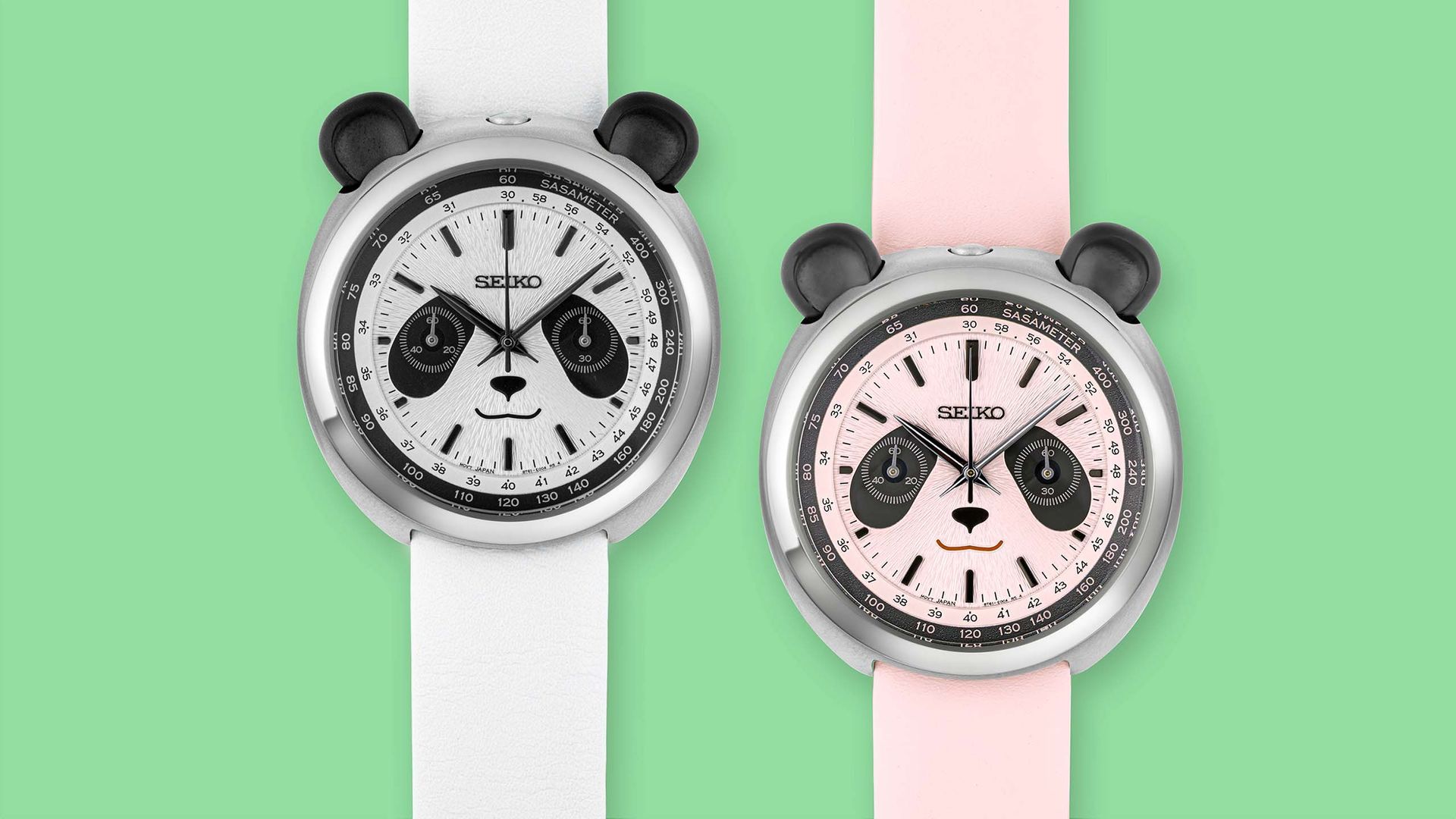
Seiko's New Panda Chronograph Is Literally a Panda: The Power Design Project HHK001 and HHK002
By Zach Charles • October 8, 2026
Seiko's Power Design Project panda chronograph (HHK001, HHK002) turns the panda dial into an actual panda face, with ear pushers, a 'Sasameter' and a 3D…
Show More