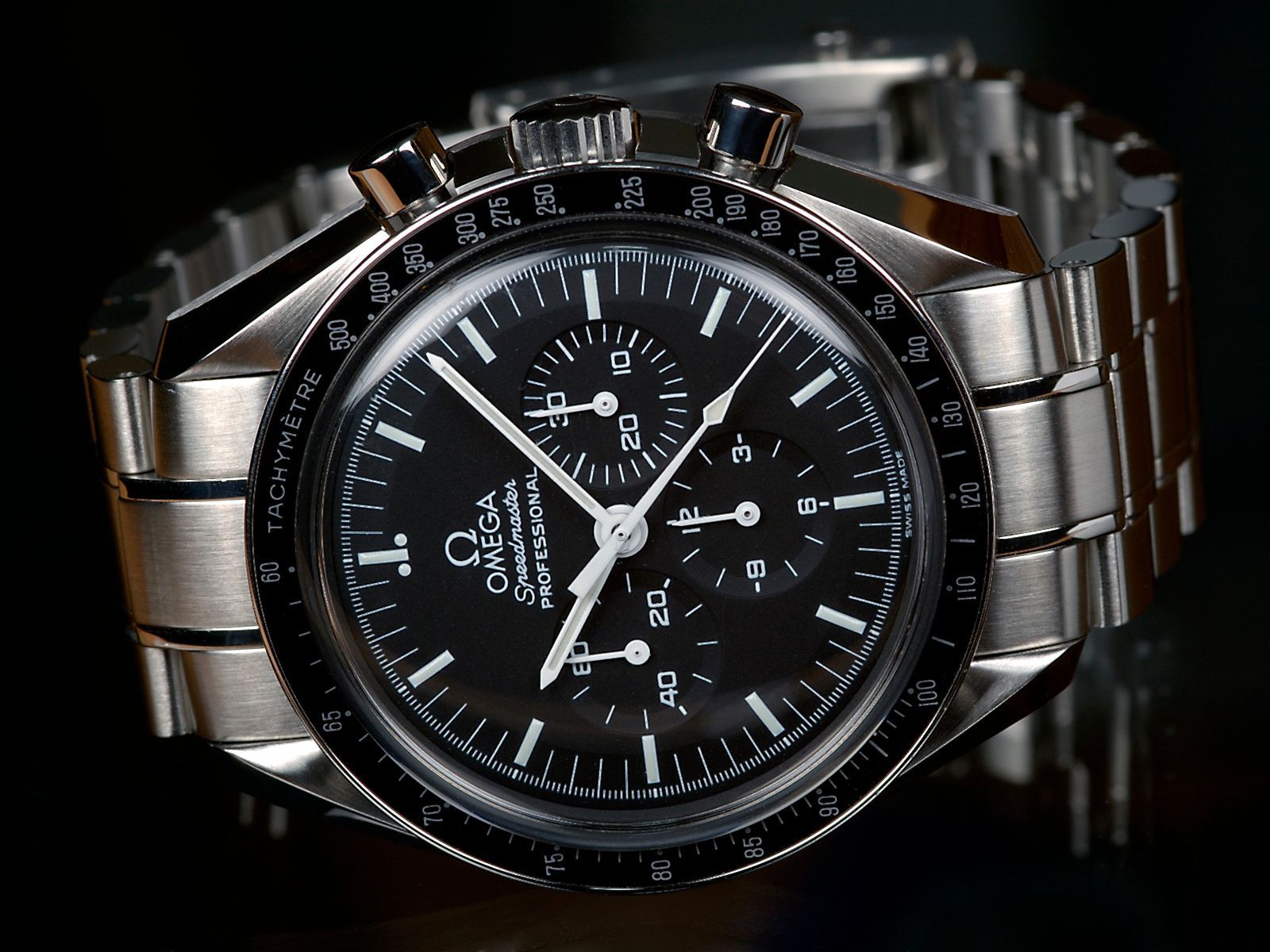
Tudor Submariner: The Military Dive Watch
The Tudor Submariner is the most historically significant watch Tudor ever made, and its significance has almost nothing to do with the retail market. From the early 1950s through the 1980s, the French Marine Nationale — the French Navy — issued Tudor Submariners to its combat divers. The Royal Canadian Navy did the same. These were working instruments used by professional military divers at depth, not watches sold through jewellers to civilians who wanted a dive aesthetic. That operational history gives the Tudor Submariner a provenance that most vintage watches cannot claim: it was trusted with human lives in conditions where it could not fail.
The watch's relationship to the Rolex Submariner is structural rather than merely aspirational. Both are built on the Oyster case — screw-down crown, screw-down caseback, identical sealing architecture — from the same Geneva manufacture. The difference, from 1954 through approximately 1999 when the Tudor Submariner was discontinued, was the movement inside: Rolex sourced its calibres in-house; Tudor used ETA and other Swiss suppliers. The saving in movement cost was passed directly to the buyer. The case integrity was not compromised.
Photo: Thierry Mostra-store — CC BY-SA 4.0 — Wikimedia Commons
Origins: 1954 and the First Tudor Submariner
The Tudor Submariner arrived one year after the Rolex Submariner — the Rolex reference 6204 debuted at Basel in 1953; the first Tudor dive watch appeared in 1954. The commercial logic was immediate: the Rolex Submariner at launch was priced beyond the reach of most buyers who needed a serious dive watch. Tudor could offer the same Oyster case construction, the same 100-metre water resistance specification, and a functional ETA-based movement at a substantially lower price.
The earliest Tudor Submariners — reference 7922 — shared the broad visual language of the Rolex reference 6204 they were designed alongside: 37mm case, rotating bezel, Mercedes hands, no crown guards. The movement was calibre 390, an ETA-supplied automatic. Like the first-generation Rolex Submariners, the earliest Tudor examples are rare, condition-sensitive, and occupy a specialist collector niche.
What distinguished Tudor from Rolex immediately, and what would define Tudor Submariner collecting for the following seven decades, was the dial typography and hand design. Tudor dials of this era were visually distinct from Rolex — different typefaces, different layouts — establishing the Tudor Submariner as a separate watch rather than a Rolex clone with a different name.
The Big Crown Era: References 7923 and 7924
By the mid-1950s, the Tudor Submariner had evolved through references that paralleled Rolex's iterative refinement of the Submariner during the same period. The reference 7923 introduced a larger crown — the "big crown" variant that collectors specifically seek — paired with a 200-metre water resistance rating that exceeded the standard 100-metre specification.
Crown size matters operationally. A dive watch worn over a wetsuit requires a crown that can be operated with gloved hands. The 8mm crown fitted to these early big-crown Tudor references was a practical specification, not a stylistic choice. It allowed adjustment without removing gloves — a requirement that the French Navy, evaluating these watches for issue to its divers, would have weighted heavily.
Reference 7924, produced concurrently, was the formal big-crown variant with the 200-metre depth rating. These references laid the commercial and technical groundwork for the military procurement relationships that followed.
Military Issue: The Marine Nationale Relationship
The French Marine Nationale's relationship with Tudor began in earnest in the early 1950s and continued, through successive reference generations, into the 1980s — an approximately thirty-year procurement relationship that spanned at least six distinct Tudor Submariner references. No other watch brand maintained a continuous military dive watch supply relationship of comparable length with a major naval force during this period.
Marine Nationale-issued Tudor Submariners are identifiable by caseback stampings. "MN" identifies Marine Nationale ownership. An engraved number — typically four or five digits — is the individual diver's identification number assigned by the Navy for asset tracking. Some examples also carry a year of issue and a reference to the specific naval unit. These engravings were done by the French Navy, not by Tudor — they are logistics markings, not marketing. Their presence on a watch is evidence of genuine government procurement and operational issue.
The military supply relationship encompassed, at minimum, the following references:
Reference 7928 (c.1958–1966): One of the most significant Marine Nationale references. 38mm, ETA calibre 2448, 200-metre rating. Some examples carry the distinctive "pointed crown" guards — the protective horns flanking the crown that first appeared on the Rolex reference 5512 in 1959 and were adopted on Tudor shortly after. Marine Nationale examples of the 7928 with legible caseback stampings and original dials are among the most sought vintage Tudor watches.
Reference 7016 (c.1969–1976): This reference introduced what became the Tudor Submariner's most iconic design element: the snowflake hand. The snowflake is a sword-shaped hour hand with a broad, rectangular luminous fill at the tip rather than the narrower Mercedes hand used by Rolex. Tudor chose the snowflake for pragmatic reasons — a broader luminous block at the hour hand tip improves low-light legibility at depth. It is visually distinctive from the Rolex Submariner, establishing Tudor as a watch with its own identity rather than a Rolex copy. Marine Nationale-issued 7016 references are the most historically significant snowflake-hand Submariners, combining the new hand design with confirmed military provenance.
Reference 9401 (c.1976–1984): The later-production Marine Nationale reference, continuing into the 1980s as the French Navy's final sustained Tudor procurement. The 9401 is a larger reference — 40mm — reflecting the broader industry shift toward larger case diameters during this period. Still ETA-powered, still Oyster-case construction, now with the snowflake hands and the squared-off bezel profile that became standard.
The Royal Canadian Navy issued Tudor Submariners during overlapping periods, identifiable by different caseback stampings. Canadian military examples are rarer than Marine Nationale pieces in the collector market — the procurement quantities were smaller and survival rates lower.
The Snowflake Hand: Tudor's Most Distinctive Design Legacy
No design element defines the Tudor Submariner more than the snowflake hand, and no design element was more consequential for Tudor's subsequent brand identity. The snowflake appeared on the reference 7016 circa 1969 and remained on Tudor Submariner dials through the reference 79090's discontinuation circa 1999. When Tudor revived its heritage dive watch identity in 2012 with the Black Bay, the snowflake hand was the design element most prominently referenced — because it was the one element that was unmistakably Tudor rather than borrowed from Rolex.
The snowflake's commercial function was differentiation. By 1969, the Tudor Submariner and Rolex Submariner were close enough in external appearance that buyers — and the Navy procurement officers who evaluated them — might reasonably ask what distinguished them. The snowflake answered that question visibly: Tudor was not trying to replicate Rolex's dial design, it was pursuing its own. The hour hand's broader luminous block was a functional improvement on the Mercedes hand's narrower fill at depth; it was also a design signature that no other watch brand used.
On vintage examples, the snowflake hand's luminous material has aged alongside the dial plots and bezel insert. Original tritium plots — cream-coloured or warm beige with appropriate age patina — paired with a snowflake hand of matching age are the authentication standard for period-correct vintage Tudor Submariners. Replaced hands are immediately visible under ultraviolet light; original tritium fluoresces green-yellow, while modern lume replacements fluoresce blue-green.
Reference-by-Reference: The Complete Tudor Submariner Lineage
7922 (c.1954–1957): First Tudor Submariner. 37mm, no crown guards, calibre 390. 100m rating. Rare; collector-grade examples are five-figure acquisitions.
7923 / 7924 (c.1956–1960): Big-crown variants, 200m rating. The first Tudor Submariners with the enlarged crown that military procurement required.
7928 (c.1958–1966): Transitional reference with pointed crown guards and ETA 2448. The principal Marine Nationale reference of the 1960s. 38mm. Original unpolished examples with MN stampings: significant collector value.
9401 / 94010 (c.1981–1988): Later-production Marine Nationale Submariner. 40mm, snowflake hands, squared bezel, ETA 2824.
79090 / 79190 (c.1989–1999): The final Tudor Submariner generation. 40mm, ETA 2824-2, date variant (79190) and no-date (79090). More available on the secondary market than earlier references; condition-sensitive for bracelet integrity and bezel insert originality.
Tudor Submariner vs. Rolex Submariner: The Definitive Comparison
The question every serious buyer asks is why the Tudor Submariner exists alongside the Rolex Submariner rather than instead of it. The answer is in the construction and the movement.
The case: identical. The Oyster screw-down architecture, produced by the same manufacture, with the same sealing tolerances. A Tudor Submariner's water resistance integrity is not meaningfully different from a Rolex Submariner of the same era. The French Navy's decision to issue Tudors rather than Rolexes to its divers was not a compromise on case quality — it was a procurement cost decision.
The movement: different. Rolex developed its own calibres in-house. Tudor used ETA and other suppliers. ETA movements are reliable and straightforward to service — virtually every watchmaker in the world can competently service an ETA 2824 or 2846. But they carry no Rolex-level provenance, no proprietary escapement, no manufacture story. For a diver who needed a reliable timing instrument and valued the watch's case over its movement, Tudor was the rational choice. For a buyer who wanted the full Rolex manufacture proposition, Rolex was the only option.
The price gap between equivalent contemporary references was typically 40–60%, reflecting almost entirely the movement cost differential. The secondary market gap for vintage references is narrower in some cases — a clean, unpolished vintage Tudor Submariner with Marine Nationale stampings can command prices comparable to or exceeding equivalent civilian Rolex references of the same era, because the operational provenance is rare and specific in a way that civilian Rolex production is not.
| Criterion | Tudor Submariner 79090 | Rolex Submariner 16610 |
|---|---|---|
| Case diameter | 40mm | 40mm |
| Case material | Oystersteel | Oystersteel |
| Case construction | Oyster (screw-down crown/back) | Oyster (screw-down crown/back) |
| Water resistance | 200m | 300m |
| Movement | ETA 2824-2 | Cal. 3135 (in-house) |
| Power reserve | ~42 hours | ~48 hours |
| Bezel | Unidirectional, aluminium | Unidirectional, aluminium |
| Retail price (period) | ~$700–900 | ~$1,500–2,000 |
| Secondary market (clean example) | $2,500–5,000 | $8,000–14,000 |
Collecting the Tudor Submariner Today
The vintage Tudor Submariner market has three distinct tiers based on provenance and reference.
Military-issue references (7928, 7016, 9401 with MN stampings): The highest tier. Legible Marine Nationale caseback engravings on a watch with matching original dial, snowflake hands (where period-correct), and original bracelet represent the most significant Tudor Submariner collectibles. Phillips and Christie's have sold confirmed MN examples in the $15,000–$40,000 range depending on reference and condition. The value is in the provenance, not the metal.
Early civilian references (7922, 7923, 7924, 7928): Second tier. Pre-snowflake references in original, unpolished condition with period-correct dials and matching service history are increasingly rare. The big-crown variants (7923/7924) command premiums for the design distinction. Clean examples trade in the $4,000–$12,000 range on Chrono24 depending on configuration and dial condition.
Later production (79090 / 79190): Most accessible. The final-generation Tudor Submariners are available in usable condition for $2,000–$5,000, making them the most practical entry point for a collector who wants a vintage dive watch with genuine tool-watch heritage at manageable cost. Bracelet integrity (the Tudor bracelet of this era stretches and wears) and bezel insert condition (original aluminium, without fading from the wrong end) are the primary condition variables.
What to look for across all references: Unpolished cases (factory brushing on the case flanks, no wheel marks from polishing); original dial without moisture damage, refinishing, or replaced plots; original crown (Tudor-stamped, correct size for reference); matching serial numbers between case and caseback.
The Tudor Submariner is the entry point into serious military watch collecting and into the Tudor heritage narrative that the Black Bay has made commercially relevant again. Understanding what the original watch was — an operational dive instrument trusted by professional military divers for thirty years — gives the Black Bay's snowflake hands a meaning that goes beyond aesthetic nostalgia.