
Omega Seamaster Planet Ocean: History of the Professional Dive Watch

Zach Charles • July 15, 2026

Share this article

Omega Seamaster Planet Ocean: Complete History & Guide

The Omega Seamaster Planet Ocean is not a watch that makes compromises. Introduced in 2005, it occupies a specific and demanding position in the Omega catalogue: above the Seamaster 300M in technical specification and physical presence, closer in spirit to the Rolex Sea-Dweller than to any sports-elegant hybrid. Where the Aqua Terra bridges sport and formal wear, the Planet Ocean commits entirely to the former. Six hundred metres of water resistance, a helium escape valve, a ceramic bezel, and a case large enough to be legible through a diving mask — this is a professional instrument that happens to be worn on the wrist.

The name is worth considering. The "planet ocean" refers to Earth itself — the fact that water covers approximately 71 percent of the planet's surface means that, in the most literal sense, we live on an ocean world. Omega's choice of name signals the watch's fundamental orientation: this is not a watch for people who go near water. It is a watch for people who go into it, specifically into its deeper, more demanding reaches. The 600-metre rating far exceeds what recreational divers will ever require — recreational diving typically reaches 40 metres, and technical diving perhaps 200 — but it is meaningful for commercial saturation divers who work at extreme depths in the service of oil, gas, and marine infrastructure.

From its oversized 45.5mm debut to the refined lineup of current production, the Planet Ocean has evolved substantially while maintaining a consistent identity. It is the watch that went to the deepest point on Earth, the watch that Daniel Craig wore as James Bond, and the watch that Omega uses to demonstrate the outer limits of what a mechanical diving instrument can be.


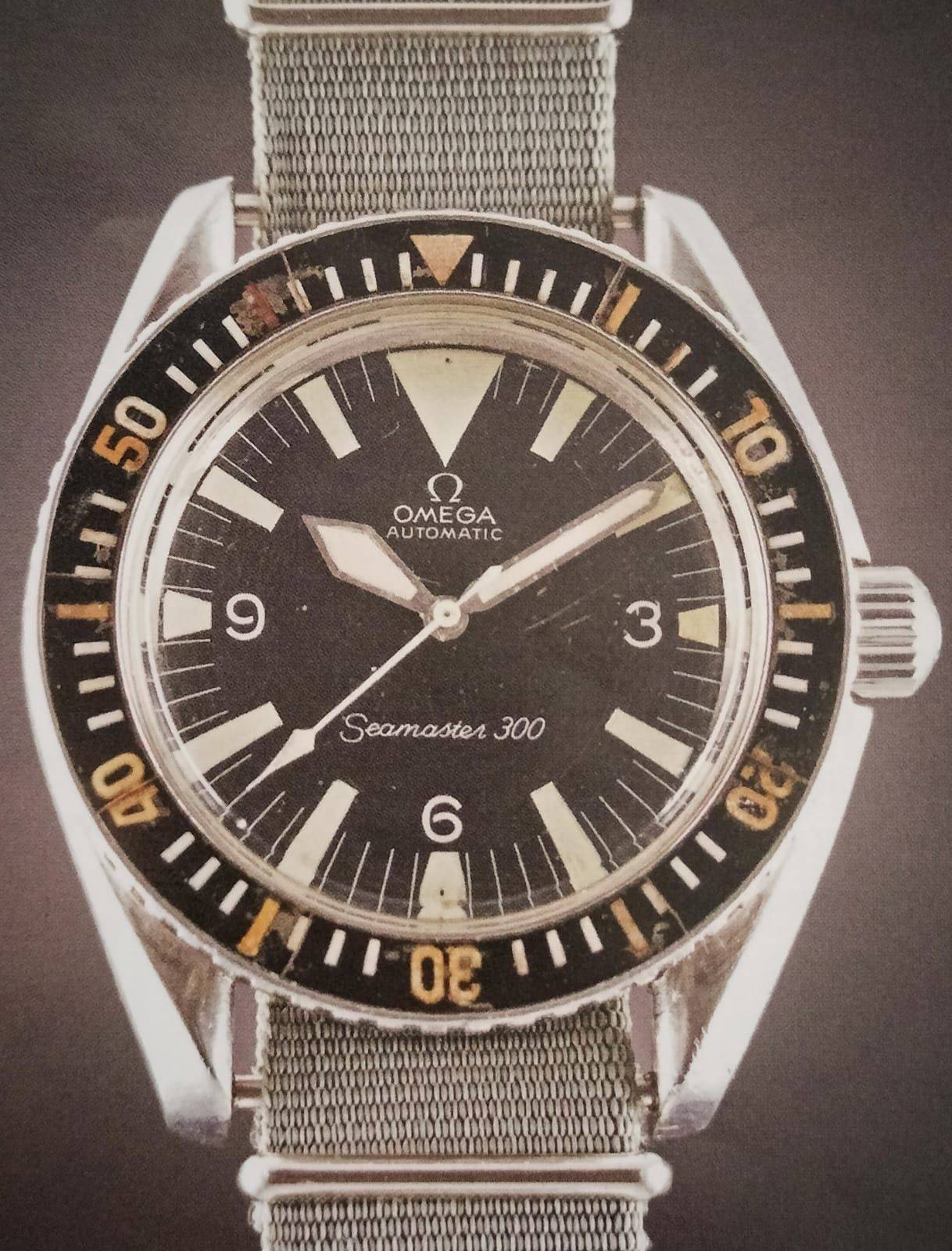
Omega Seamaster 300 — military-issue variant on NATO strap
An Omega Seamaster 300 military-issue variant on a NATO strap — representative of the dive watch specification that Omega established in 1957 as part of the Holy Trinity launch alongside the Speedmaster and Railmaster. The Seamaster 300’s 300m water resistance, rotating bezel, and luminous dial met the specification for professional diving instruments adopted by military diving units worldwide.
Photo: Clyde94 — CC BY-SA 4.0 — Wikimedia Commons
Origins (2005) — Bridging the 300M and Extreme Diving

Omega Seamaster 300 — military-issue variant on NATO strap
An Omega Seamaster 300 military-issue variant on a NATO strap — representative of the dive watch specification that Omega established in 1957 as part of the Holy Trinity launch alongside the Speedmaster and Railmaster. The Seamaster 300’s 300m water resistance, rotating bezel, and luminous dial met the specification for professional diving instruments adopted by military diving units worldwide.
Photo: Clyde94 — CC BY-SA 4.0 — Wikimedia Commons

The Planet Ocean's introduction in 2005 came at a particular moment in watch industry history. The trend toward larger cases was accelerating and Omega recognised an opportunity to create a properly professional diving instrument that could compete with the Rolex Sea-Dweller while occupying distinctly different aesthetic territory. The first reference, the 2900.50, arrived in 45.5mm stainless steel on a black rubber strap, with a black dial and an aluminium bezel insert.

The specification was deliberately ambitious. Six hundred metres of water resistance placed the Planet Ocean in genuine professional territory — well beyond the recreational threshold and beyond the 300M Seamaster's already-serious rating. The helium escape valve, positioned at 10 o'clock, marked the watch as designed for saturation diving operations, where divers live in pressurised environments for weeks at a time and the helium used in breathing gas mixtures permeates the seals of any watch not equipped with a means of controlled release. These were not marketing specifications; they were engineering choices with direct functional purpose.

The case size was a statement as much as a specification. At 45.5mm, the inaugural Planet Ocean was large even by the standards of 2005, and considerably larger than the 41mm Seamaster 300M it was positioned above. This served practical purposes — a larger dial is easier to read underwater, and a thicker case more easily accommodates the waterproofing requirements of deep diving — but it also communicated a clear message about character. The Planet Ocean was not trying to be a dress watch that could also go swimming. It was trying to be a dive watch first, last, and entirely.


Design DNA

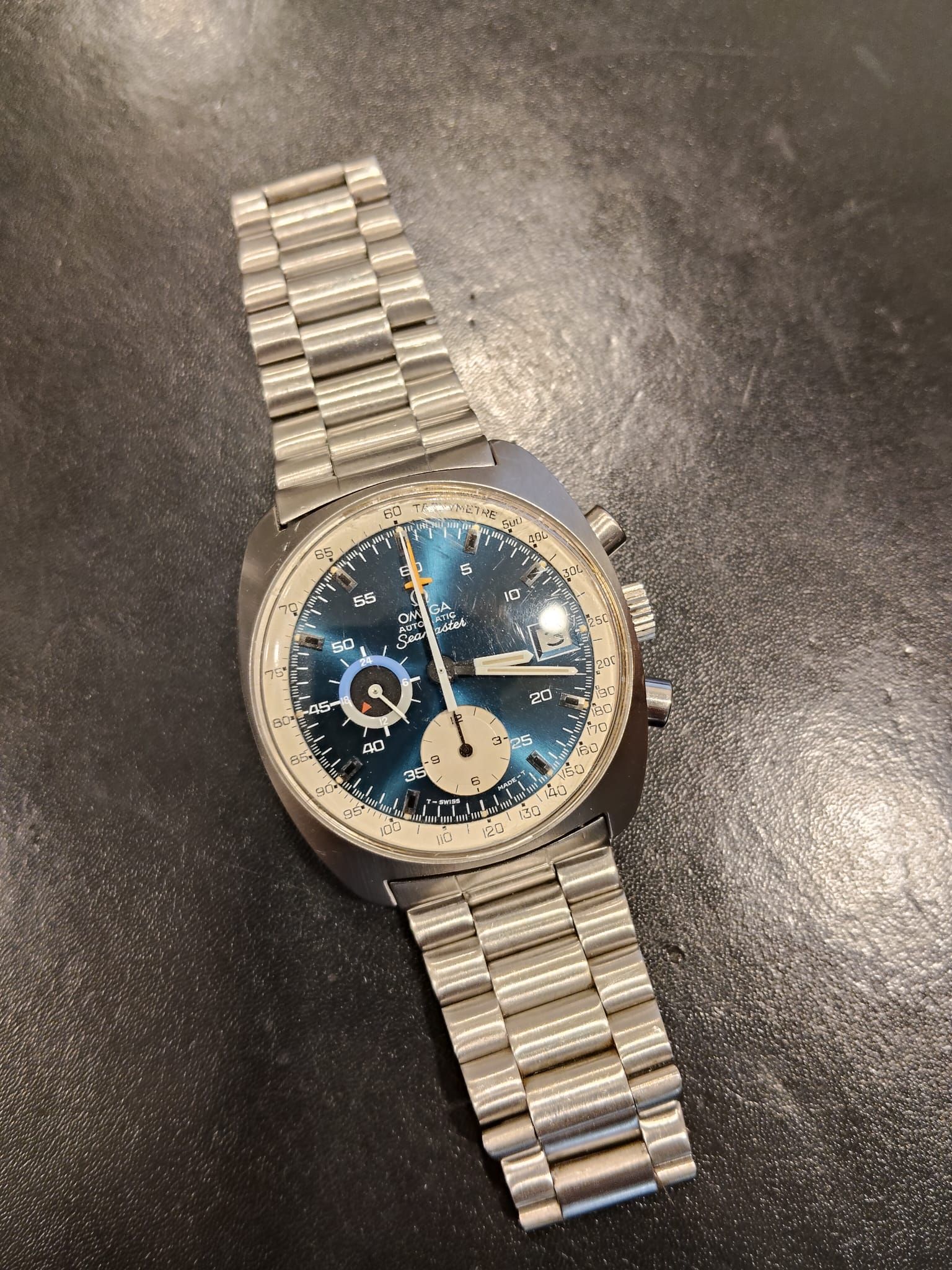
Omega Seamaster Chrono ref. 176.007, 1970s
An Omega Seamaster Chrono reference 176.007 from the 1970s — combining the Seamaster’s dive watch credentials with a chronograph complication. The Seamaster range has expanded across seven decades to encompass professional dive watches, formal dress references, and chronograph variants, united by water resistance specifications and the Seamaster name that Omega first used in 1948.
Photo: EMore98 — CC BY-SA 4.0 — Wikimedia Commons

The visual grammar of the Planet Ocean is, in its essentials, the grammar of the professional dive watch. A unidirectional rotating bezel — rotating in one direction only so that an accidental knock cannot extend an apparent dive time, only shorten it — carries timing graduations for measuring elapsed time underwater. The dial is highly legible, with large applied hour markers and hands carrying generous quantities of luminous material. The crown is protected by guards integrated into the case.

What distinguishes the Planet Ocean from the basic dive watch template is the quality and material sophistication of its components. The bezel insert, originally aluminium on early models, transitioned to ceramic on the Deep Black collection from 2016 and has since become standard across the lineup. Ceramic is significantly harder than aluminium or even anodised metal — rating approximately 9 on the Mohs hardness scale compared to steel's 5.5 — which means the bezel insert resists scratching that would visibly mark metal bezels after years of active use.

The numerals and indices on the ceramic bezel insert present their own manufacturing challenge: you cannot simply print on ceramic. Omega's solution is "Liquidmetal" — a proprietary amorphous metal alloy applied to the bezel in liquid form that bonds permanently to the ceramic surface as it cures. The result is raised, highly scratch-resistant numerals integral to the bezel rather than applied over it.


Movement Evolution

Omega De Ville manual-wind, late 1960s/early 1970s
An Omega De Ville manual-wind watch from the late 1960s or early 1970s — from the period when the De Ville existed as a formal sub-family of the Seamaster before gaining independence as a standalone collection. The De Ville became the platform for Omega’s most significant modern engineering contribution: the Co-Axial escapement developed by George Daniels, introduced to production in 1999.
Photo: Lindemann97 — CC BY-SA 4.0 — Wikimedia Commons

The Planet Ocean's movement history tracks Omega's broader calibre development program clearly. The watch has carried three meaningfully distinct movements across its production history.

The original 2005 Planet Ocean used the Calibre 2507 , a movement with ETA architecture modified with Omega's co-axial escapement. This was typical of the period — Omega had not yet developed a fully in-house co-axial calibre.

The 2011 upgrade to the Calibre 8500 was transformative. Designed from scratch at Omega's Biel facilities, the 8500 offered a 60-hour power reserve, a free-sprung balance delivering superior positional accuracy, and entirely in-house origin meaning Omega controlled every aspect of the movement's specification. The Planet Ocean with Cal. 8500 was a substantially more serious watch than its predecessor.

The current Calibre 8900 , introduced in 2016 with the Master Chronometer certification program, adds the anti-magnetic technology from the Aqua Terra >15,000 Gauss to the Planet Ocean's architecture. The 8900 uses a silicon Si14 balance spring, paramagnetic alloys in key escapement components, and achieves METAS certification including accuracy of ±0 to +5 seconds per day after exposure to a 15,000 gauss magnetic field — meaningful for a dive watch, where diving environments regularly involve magnetic equipment.


Deep Black Collection

Omega Seamaster 300 — military-issue variant on NATO strap
An Omega Seamaster 300 military-issue variant on a NATO strap — representative of the dive watch specification that Omega established in 1957 as part of the Holy Trinity launch alongside the Speedmaster and Railmaster. The Seamaster 300’s 300m water resistance, rotating bezel, and luminous dial met the specification for professional diving instruments adopted by military diving units worldwide.
Photo: Clyde94 — CC BY-SA 4.0 — Wikimedia Commons

In 2016, Omega introduced the Planet Ocean "Deep Black" — a collection pushing material boundaries to a new extreme. The Deep Black variants feature ceramic not just in the bezel insert but in the case itself and, on bracelet models, the bracelet links. Ceramic cases require entirely different manufacturing approaches: the material cannot be machined conventionally but must be ground using diamond-tipped tools — a time-consuming and expensive process.

Ceramic's hardness of approximately 9 on the Mohs scale means the case resists scratching that would visibly mark even high-quality stainless steel. A ceramic Planet Ocean Deep Black worn daily in demanding conditions will show substantially fewer surface marks than its steel equivalent. Deep Black variants were offered in three colour combinations: all-black, deep blue, and orange-and-black. All use the Cal. 8900 Master Chronometer and maintain the 600-metre water resistance. Pricing reflects the manufacturing complexity, typically $10,000 to $15,000 depending on configuration.


GMT Variant

The Planet Ocean GMT adds a fourth hand — typically in a contrasting colour — that completes one revolution every 24 hours, indicating a second time zone on either a 24-hour scale on the dial or a 24-hour-graduated bezel. The movement is the Calibre 8906 Co-Axial Master Chronometer GMT , a variant of the 8900 architecture carrying METAS certification and 15,000 gauss anti-magnetic resistance.

The Planet Ocean GMT occupies an interesting position relative to the Rolex GMT-Master II. The Planet Ocean GMT's movement technology is arguably superior in specification, but the GMT-Master II's cultural status, resale strength, and ceramic Cerachrom bezel with two-colour construction give it advantages on those particular terms.


Ultra Deep — To the Bottom of the Ocean

Omega Seamaster Chrono ref. 176.007, 1970s
An Omega Seamaster Chrono reference 176.007 from the 1970s — combining the Seamaster’s dive watch credentials with a chronograph complication. The Seamaster range has expanded across seven decades to encompass professional dive watches, formal dress references, and chronograph variants, united by water resistance specifications and the Seamaster name that Omega first used in 1948.
Photo: EMore98 — CC BY-SA 4.0 — Wikimedia Commons
The most remarkable chapter in the Planet Ocean's history is the Five Deeps Expedition of 2019. American explorer Victor Vescovo undertook an attempt to reach the deepest point in each of Earth's five oceans, and Omega partnered with the expedition to develop a watch capable of accompanying the dives.

The result was the Planet Ocean "Ultra Deep" prototype — rated to an extraordinary 15,000 metres, using a case constructed from grade of titanium typically used in submarine pressure hulls, with a domed sapphire crystal of unprecedented thickness. The watch was attached to the exterior of the submersible, exposed directly to water pressure.

In December 2019, Vescovo reached the bottom of the Challenger Deep in the Mariana Trench — the deepest point on Earth — at 10,928 metres below the surface. The Planet Ocean Ultra Deep prototype was attached to the exterior throughout the dive and returned to the surface functioning normally. It had survived pressure equivalent to approximately 1,092 atmospheres. No mechanical watch had ever been taken deeper. The record stands.

Omega subsequently developed a commercial version rated to 6,000 metres — the Planet Ocean Ultra Deep 6000M — using a 45.5mm Grade 5 titanium case, an orange dial, and the Cal. 8912 Master Chronometer.


James Bond Films

The Planet Ocean's cultural profile received a significant boost from its association with the Daniel Craig era of Bond films. In Casino Royale (2006), Craig's Bond wore the Planet Ocean 2900.50 as his primary timepiece — a deliberate recalibration. Where Brosnan's Bond had worn the more elegant Seamaster 300M, Craig's Bond wore a watch that communicated physical capability first and elegance not at all.

The Planet Ocean continued in Quantum of Solace (2008). By Skyfall (2012), Bond had shifted to the Seamaster 300M — a slightly more elegant choice consistent with a character who had been softened and complicated over three films. The Planet Ocean's Casino Royale association cemented it as a cultural object in a way that pure horological merit alone rarely achieves.


Planet Ocean vs. Rolex Sea-Dweller

Both are professional dive watches with helium escape valves, depth ratings far beyond recreational requirements, and heritage in actual professional diving applications.

The Sea-Dweller's fundamental advantage is its depth rating: 1,220 metres against the Planet Ocean's 600 metres. The Sea-Dweller also carries the Cyclops date magnifier and Rolex's brand prestige with attendant secondary market strength.

The Planet Ocean's advantages begin with movement technology: the Co-Axial Master Chronometer calibre is METAS certified and demonstrates 15,000 gauss anti-magnetic performance the Sea-Dweller cannot match. The Planet Ocean Deep Black's all-ceramic construction offers scratch resistance that steel cannot equal. The Ultra Deep variant's 6,000-metre rating reverses the depth comparison if considering the full Planet Ocean range. Retail prices are broadly comparable, ranging from approximately $8,000 for base steel references to $15,000 or more for premium material variants.


Current Lineup (2024)

The 2024 Planet Ocean collection is offered in 39.5mm and 43.5mm — a significant reduction from the original 45.5mm, reflecting the broader recognition that watches of that scale exceeded what the majority of buyers could comfortably wear. Both sizes carry the Cal. 8900 Master Chronometer in a stainless steel case with unidirectional ceramic bezel, in black, blue, and orange dial variants.

The Planet Ocean Deep Black continues to offer ceramic-case versions for buyers who prioritise scratch resistance. The Planet Ocean Ultra Deep stands apart as a specialised reference: its titanium case, 6,000-metre water resistance rating, and expedition heritage give it a character distinct from the core 600M collection. The GMT variants complete the current lineup.


Frequently Asked Questions

Does the Planet Ocean have a helium escape valve?
Yes — all Planet Ocean 600M variants have a helium escape valve at 10 o'clock. The HEV is essential for saturation diving operations, where helium used in breathing gas mixtures permeates watch seals during extended pressurised exposure. Without a controlled release mechanism, helium trapped inside the case during a dive can shatter the crystal during decompression.

What is the Planet Ocean "Ultra Deep"?
A Planet Ocean variant rated to 6,000 metres in production form. The expedition prototype that accompanied Victor Vescovo's Five Deeps Expedition survived the Mariana Trench at 10,928 metres in December 2019, setting a world record for the deepest dive ever survived by a mechanical watch.

Planet Ocean vs. Seamaster 300M — what is the difference?
The Planet Ocean is the professional-specification version: 600M water resistance versus 300M, ceramic bezel rather than metal, a larger case profile designed for legibility underwater, and a helium escape valve configuration suited to saturation rather than recreational diving. The 300M is the versatile sports watch; the Planet Ocean is the dedicated professional dive instrument.


Related Articles

Recent Posts

By Zach Charles • October 10, 2026
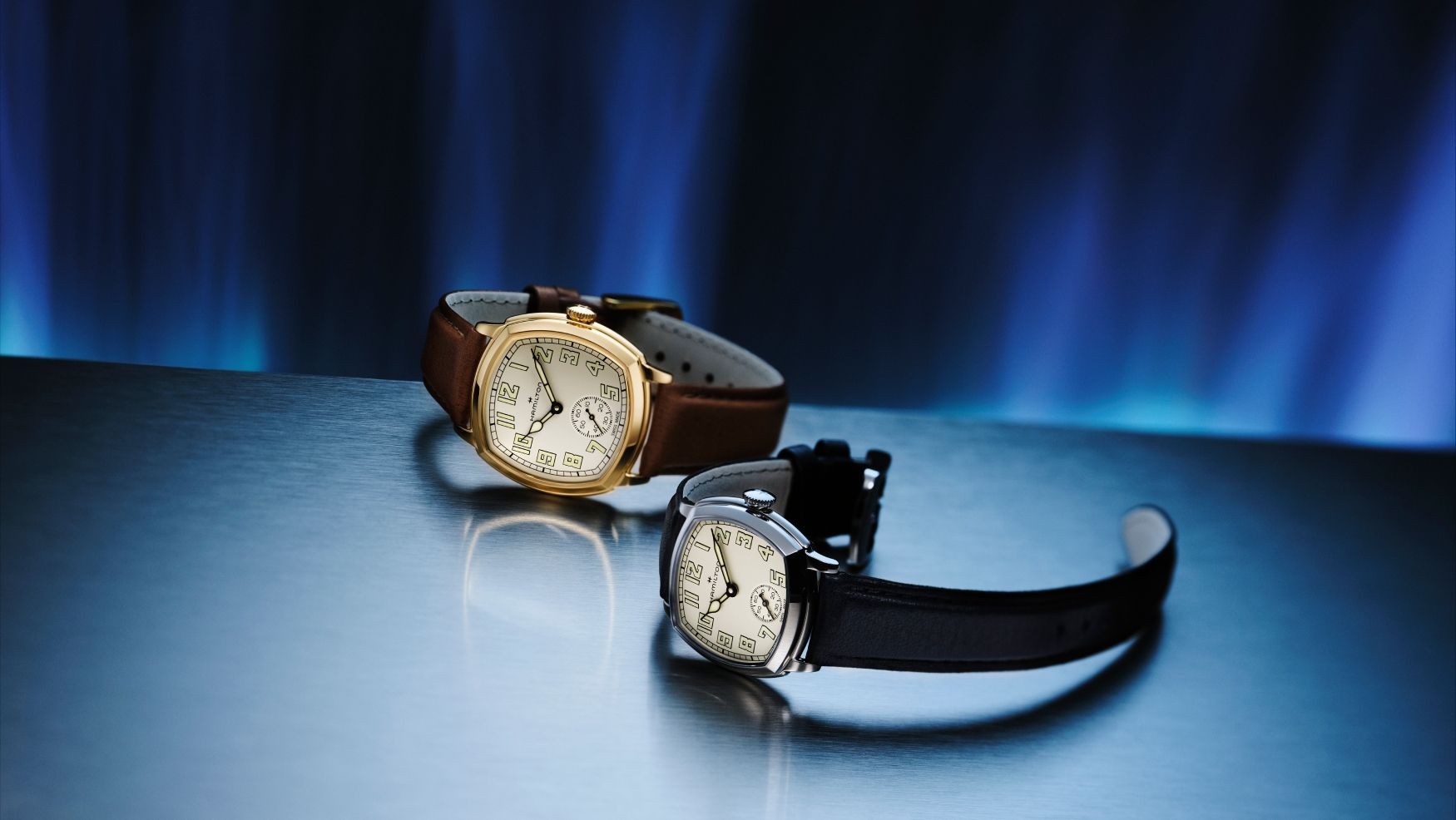
Hamilton's American Classic Cushion Mechanical revives its 1926 Art Deco cushion watches, seen in Oppenheimer, in 30mm and 34mm with the new hand-wound…
Doxa SUB 200: The Accessible Everyday Diver
By Zach Charles • October 10, 2026
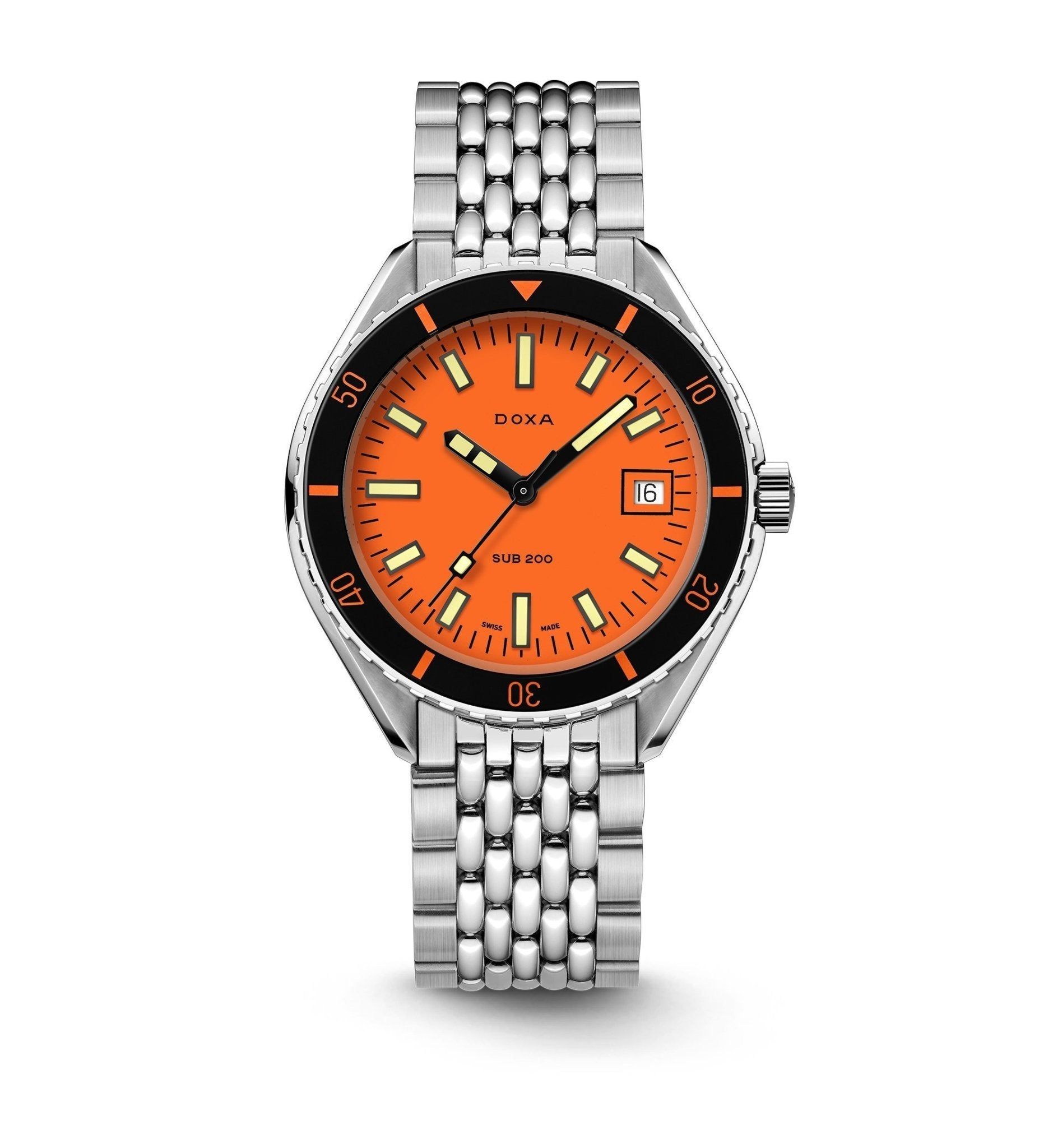
Complete guide to the Doxa SUB 200 — 42mm, 200m, four colorways, Sellita SW200-1. The accessible entry to the Doxa SUB family with the full…
By Zach Charles • October 10, 2026
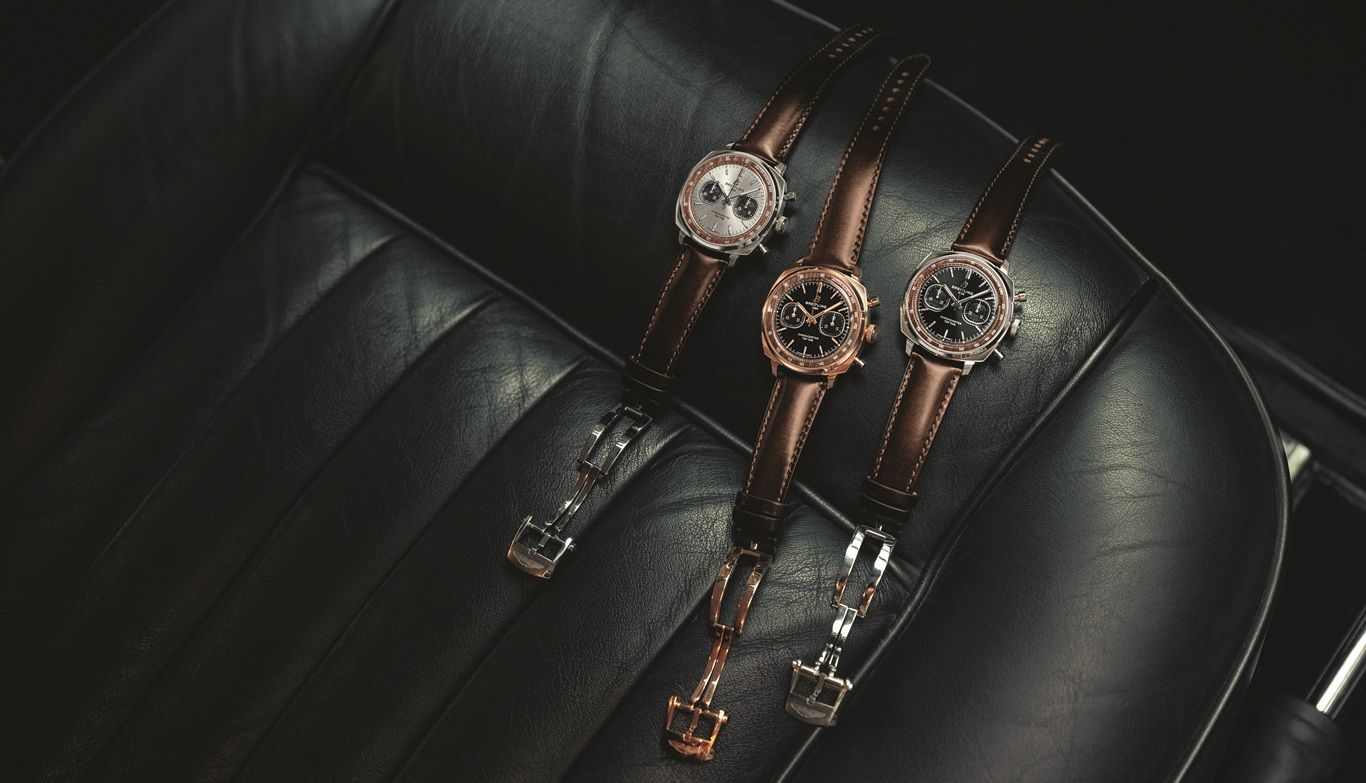
The Breitling Top Time B01 Aston Martin DB5 pairs a cushion-shaped 41mm case, a wooden inner ring and the in-house Caliber 01 across three limited…
By Zach Charles • October 10, 2026
TAG Heuer developed the Mikrograph (2011, 1/100th second), Mikrotimer Flying 1000 (2011, 1/1000th second), and Mikrogirder (2012, 1/2000th second).
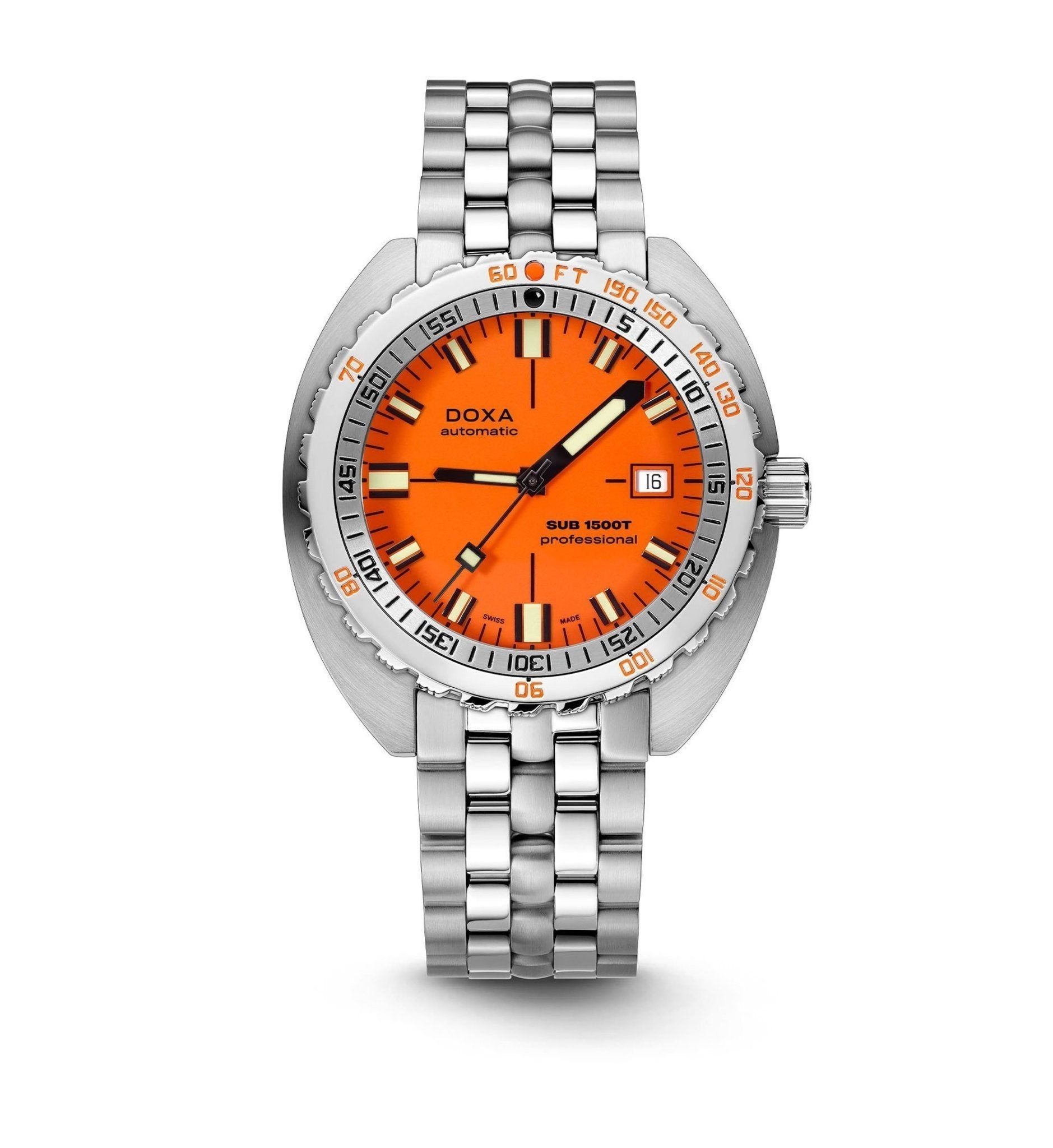
Doxa SUB 1500T: The 1,500-Metre Depth-Rating Flagship
By Zach Charles • October 10, 2026
Complete guide to the Doxa SUB 1500T — 45mm, 1,500m depth rating, helium escape valve, ETA 2892-2 movement, USD 2,690.
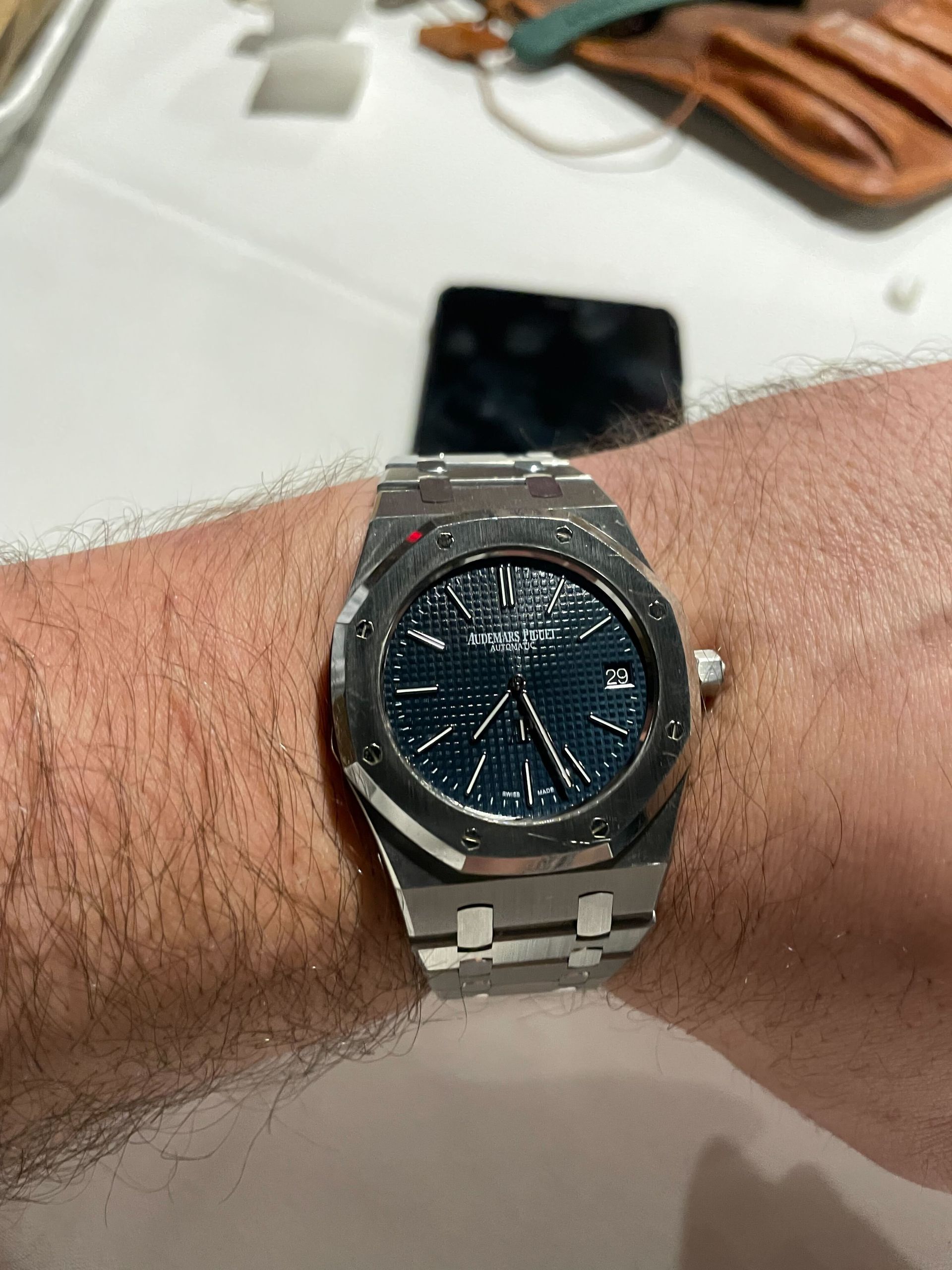
Audemars Piguet Royal Oak 'Jumbo' ref. 15202 with blue tapisserie dial and integrated steel bracelet
By Zach Charles • October 10, 2026
The Audemars Piguet × Swatch Royal Pop is a $400 bioceramic pocket watch in 8 colourways, powered by a new hand-wound SISTEM51 with 90+ hour power…

Time on the Move logo
By Zach Charles • October 10, 2026
Zach Charles is the editor of Time on the Move, an independent watch reference covering brand and model histories, buying guides and release news…
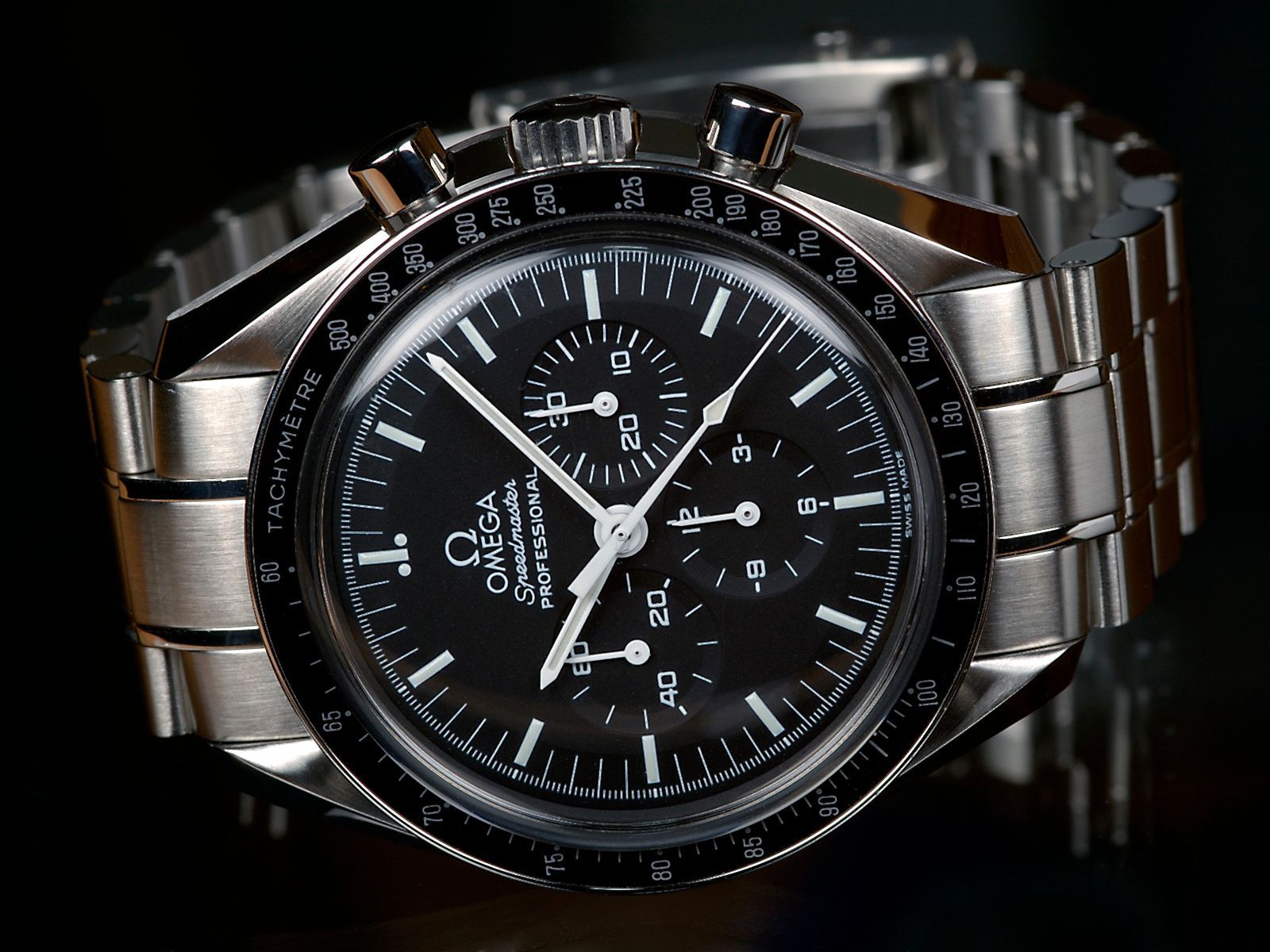
Omega Speedmaster Professional 'Moonwatch' chronograph, front view on steel bracelet
By Zach Charles • October 9, 2026
Find the best watches at every price point from $500 to $15,000 — new and pre-owned. Covers every budget tier with specific reference picks, brand…
By Zach Charles • October 9, 2026
The latest watch news: new releases, Watches and Wonders coverage, discontinuations, industry analysis, and market trends. Currently 1 article.
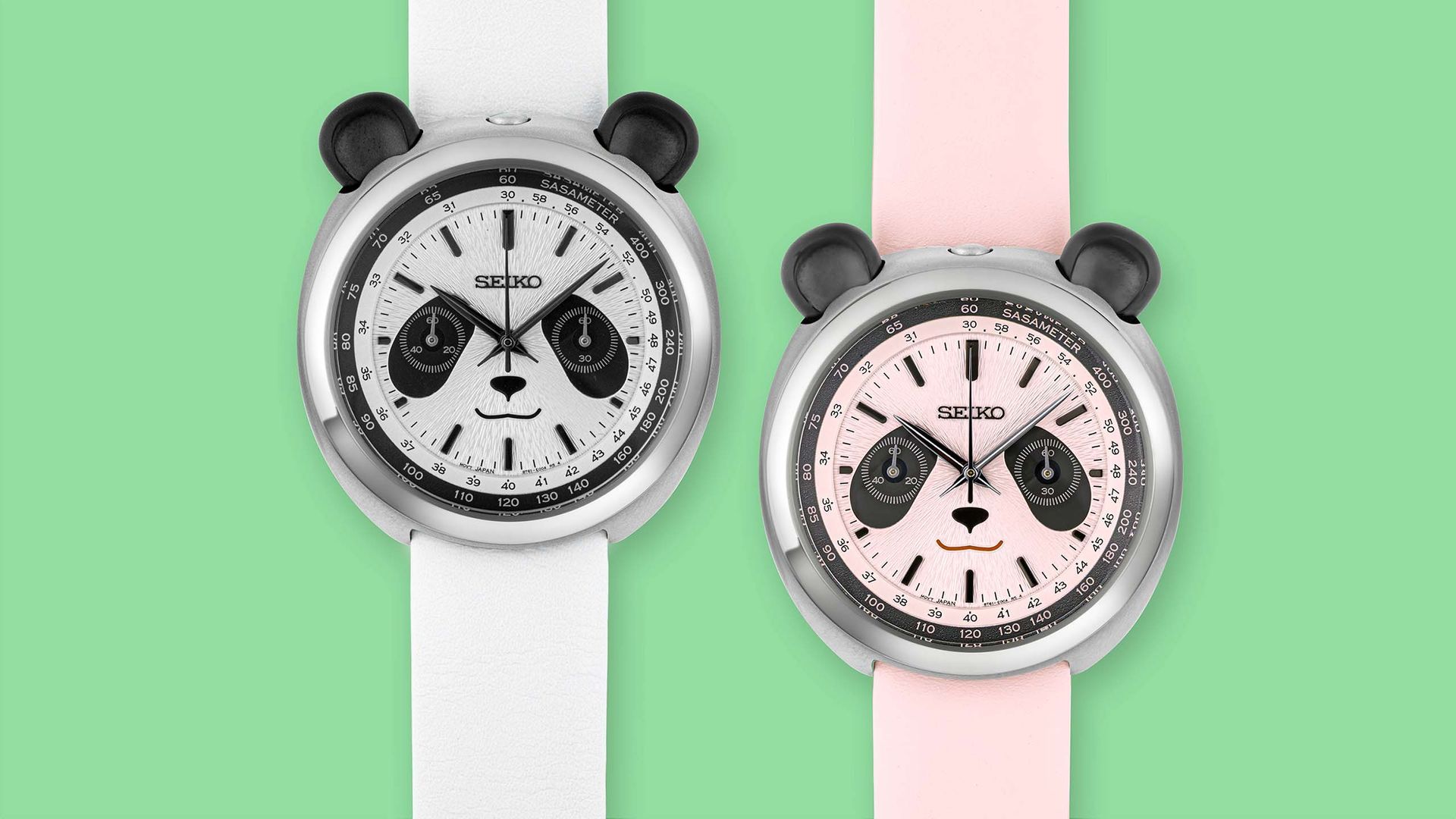
Seiko's New Panda Chronograph Is Literally a Panda: The Power Design Project HHK001 and HHK002
By Zach Charles • October 8, 2026
Seiko's Power Design Project panda chronograph (HHK001, HHK002) turns the panda dial into an actual panda face, with ear pushers, a 'Sasameter' and a 3D…
Show More