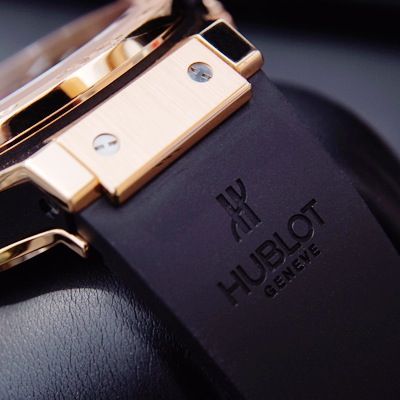
Hublot Big Bang Integral: The Integrated Bracelet Sport Watch
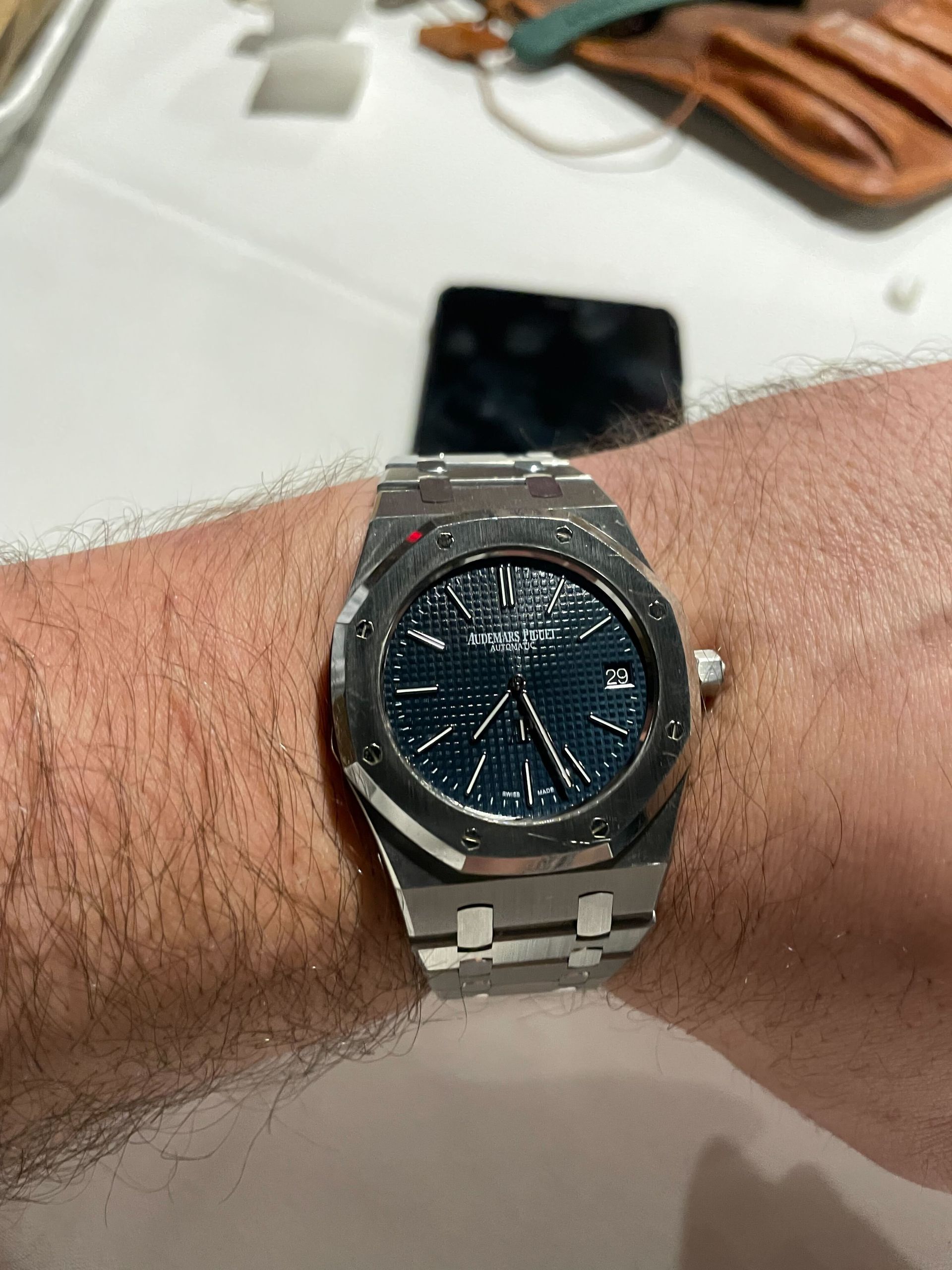
The Big Bang Integral is Hublot's answer to a market category that the brand had previously not addressed: the integrated-bracelet luxury sport watch. Since the Audemars Piguet Royal Oak (1972) defined the format — a sport watch in stainless steel with a bracelet that flowed continuously from the case without visible lugs — the category has attracted buyers seeking luxury watches appropriate for active wear. Hublot's entry, the Big Bang Integral, applies the Art of Fusion material philosophy to this format for the first time.
The Integrated Bracelet Category
Photo: Yorqulov Husan — CC BY 4.0 — Wikimedia Commons
An integrated bracelet watch is defined by the continuous visual line from case to clasp: the bracelet links flow directly from the case's lug area without the traditional gap between case and bracelet that appears on conventionally lugged watches. The visual effect is a unified object — the watch appears to be a single designed element rather than a case with a bracelet attached.
The category is defined by three references:
- Audemars Piguet Royal Oak
(1972, Gerald Genta design): The original luxury integrated-bracelet sport watch, now retailing at €25,000+ for steel references
- Patek Philippe Nautilus
(1976, Gerald Genta design): The most demanded watch in secondary market trading, with grey-market prices often exceeding €100,000
- IWC Ingenieur
(1976): The technically-focused competitor
By 2021, several other brands had entered the category — Girard-Perregaux Laureato, Longines Conquest Heritage — but no brand had matched the AP and Patek references' prestige. Hublot's entry added the Art of Fusion material differentiation to the format.
Big Bang Integral Design
The Big Bang Integral's defining element is the three-link titanium bracelet — a continuous brushed and polished titanium construction that connects directly to the case without traditional lugs:
| Specification | Detail |
|---|---|
| Case diameter | 42mm |
| Case + bracelet material | Grade 5 titanium |
| Bracelet construction | Three-link, brushed/polished alternating |
| Movement | UNICO 2 (HUB1280) flyback chronograph |
| Power reserve | 72 hours |
| Water resistance | 100 metres |
The three-link bracelet design echoes the Royal Oak's three-link bracelet structure while maintaining Hublot's visual vocabulary — the H-shaped screws appear at the bracelet-case junction, and the bracelet links reference the Big Bang's surface treatment contrasts (brushed flanks, polished edges).
Material Options
Photo: Clyde94 — CC BY-SA 4.0 — Wikimedia Commons
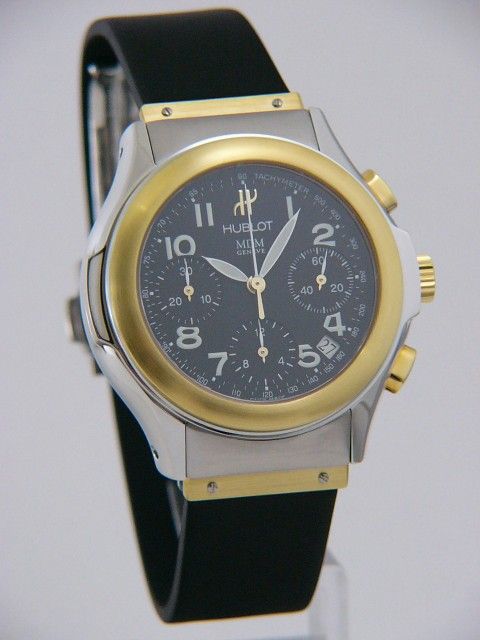
In addition to the standard Grade 5 titanium, the Big Bang Integral is available in:
Black Ceramic: The ceramic case and bracelet variant requires ceramic links capable of withstanding the flexing and impact stresses of bracelet construction — a technical challenge distinct from making a ceramic case. Hublot's ceramic bracelet uses a sintering process adapted to produce bracelet link dimensions to required tolerances.
King Gold: The scratch-resistant 18-carat Magic Gold alloy applied to the Integral's case and bracelet — the most expensive material variant, demonstrating Hublot's proprietary gold technology in the integrated bracelet format.
Two-Tone (Titanium/King Gold): A combination of titanium case elements with King Gold bracelet elements — the Art of Fusion material combination applied to the bracelet format directly.
UNICO 2 in the Integral
Photo: Uhrenhandel.de — CC BY-SA 3.0 — Wikimedia Commons
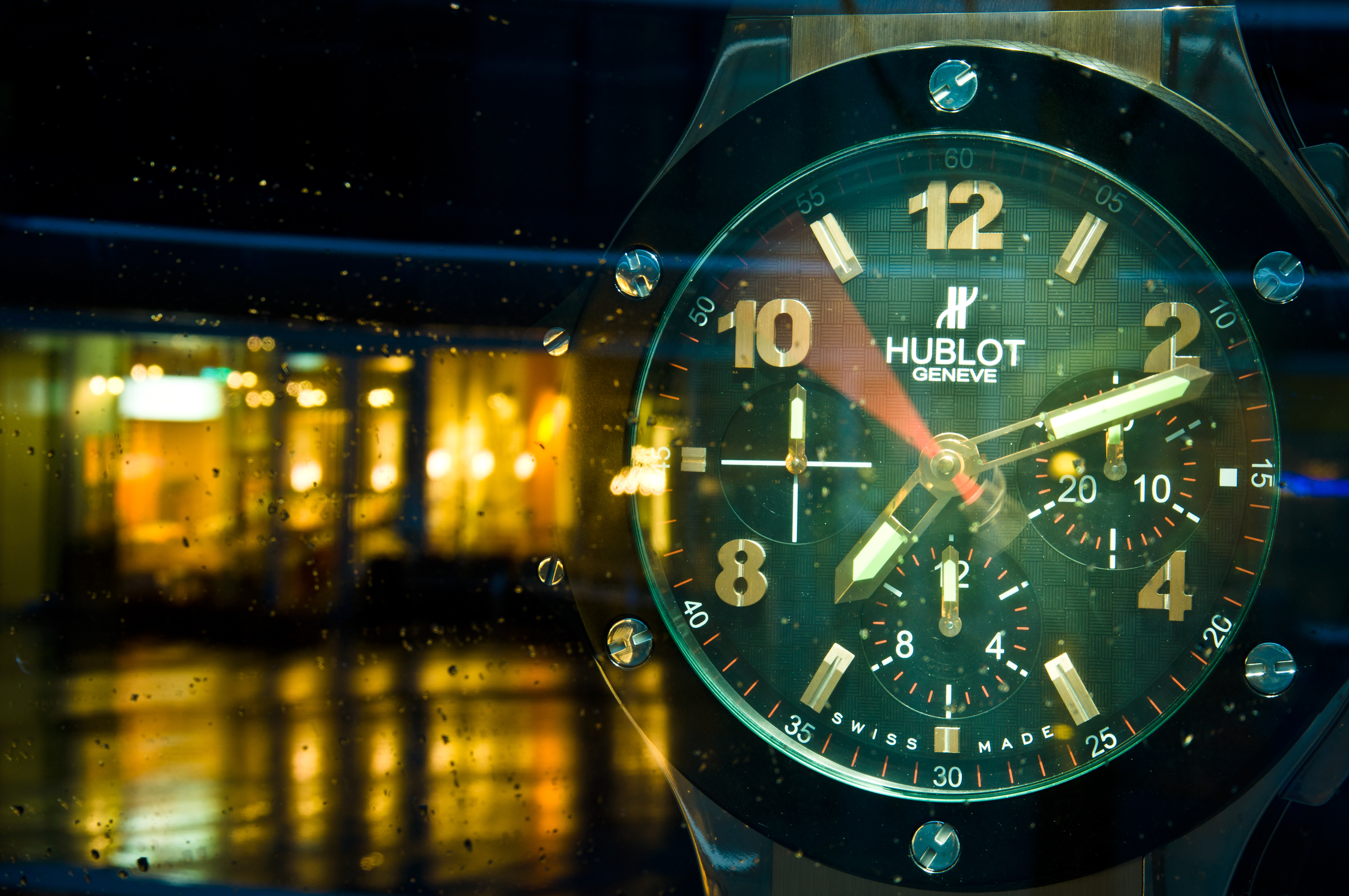
The Big Bang Integral uses the UNICO 2 (HUB1280) — the second generation of Hublot's in-house flyback chronograph movement. The UNICO 2 improvements over the original UNICO include:
- Redesigned bidirectional rotor for improved winding efficiency
- Revised column wheel geometry for more consistent chronograph feel
- Reduced total component count (simplification without function reduction)
- Updated lubrication specifications for longer service intervals
In the Integral's case, the UNICO 2 is visible through the sapphire caseback — the integrated bracelet design does not compromise the exhibition caseback feature of the Big Bang family.
Market Context and Pricing
Photo: Adam Kliczek — CC BY-SA 3.0 PL — Wikimedia Commons
The Big Bang Integral was introduced at approximately €18,500 for the titanium reference — significantly below the AP Royal Oak steel price (€25,000+) and far below the Nautilus grey-market premium. This positioning was deliberate: Hublot offered an integrated bracelet luxury sport watch with an in-house chronograph movement at a price point where the AP and Patek references could not compete.
The pricing strategy reflects Hublot's consistent approach: more specification for lower price than the established references, justified by the Art of Fusion material innovation and UNICO movement credentials rather than heritage prestige.
Secondary market reception has been positive — the Integral trades at or above retail for titanium and ceramic references, suggesting demand exceeds allocated supply.
The Integral and Hublot's Collection Architecture
The Big Bang Integral completes Hublot's collection architecture:
- Classic Fusion: Versatile dress-sport in multiple materials
- Big Bang Unico: The original complex sport watch with rubber strap
- Big Bang Integral: Integrated bracelet sport watch for formal-sport contexts
- Spirit of Big Bang: Tonneau case for design-forward buyers
- MP Collection: Mechanical extremes for collectors
The Integral fills the specific gap for buyers who want a Hublot appropriate for business settings — the integrated bracelet reads as more formal than a rubber-strapped Big Bang while maintaining the same movement and material credentials.