Charles Vermot and the El Primero Attic: How Zenith Saved Its Own History

Zach Charles • July 29, 2026

Share this article

Zenith and the Quartz Crisis: Charles Vermot's Attic

In watchmaking history, the quartz crisis of the 1970s is the event against which survival is measured. Swiss mechanical watch production collapsed — from tens of thousands of employees to a fraction. Dozens of manufactures closed. The conventional wisdom, coming from American management at companies that had acquired Swiss firms, was that mechanical watches were finished.

One man at Zenith decided not to comply with that assessment. He moved more than a tonne of equipment up to an attic. He didn't tell anyone. And he saved one of the most important movements in the history of the wristwatch.


Zenith El Primero 36000 VpH — Tribute to Charles Vermot
The Zenith El Primero 36,000 VpH Tribute to Charles Vermot — honouring the watchmaker who hid the El Primero tooling in the Le Locle attic in 1975 against orders, allowing Zenith to restart El Primero production when Rolex requested it in 1984.
Photo: Zenith El Primero (user) — CC BY-SA 3.0 — Wikimedia Commons

Context — The Order to Destroy

Zenith El Primero chronograph wristwatch
A Zenith El Primero chronograph — the high-frequency automatic chronograph calibre developed in secret from 1962 and launched on 10 January 1969, running at 36,000 vph (5 Hz) for a 1/10th-second chronograph resolution.
Photo: jcw — CC BY 3.0 — Wikimedia Commons

Zenith had been acquired by the American Zenith Radio Corporation — a television and electronics company — with the deal completed by 1972. The acquisition brought American management to a Swiss mechanical watchmaking firm at the precise moment the quartz watch threatened to make mechanical watchmaking commercially irrelevant.

The management conclusion was commercially logical, if historically wrong: the quartz movement was more accurate, cheaper to produce, and cheaper to buy. Mechanical watches had no competitive future. Around 1975 , the order came down from the American owners: cease all mechanical watch production. Destroy the El Primero tooling — the presses, the dies, the technical drawings, the calibration equipment. All of it.


Charles Vermot Acts

Sub-dial of the Zenith El Primero 36,000 VpH Tribute to Charles Vermot
One of the three sub-dials of the Zenith El Primero 36,000 VpH Tribute to Charles Vermot — the coloured sub-dials (blue, silver, and red) are a hallmark of El Primero design, derived from the tri-colour layout of the 1969 original.
Photo: Zenith El Primero (user) — CC BY-SA 3.0 — Wikimedia Commons

Charles Vermot was the head of the chronograph ébauches department at the Le Locle manufacture. He had been part of the team that made the El Primero work. He received the order to destroy the tooling.

He did not comply.

Over approximately six months — working at night, without management's knowledge, in direct defiance of an explicit instruction — Vermot and his brother moved equipment to a walled-off section in the attic of the Le Locle manufacture. The attic was sealed behind a false wall; the cache was invisible from outside.

What he preserved:
- Approximately 150 stamping presses
- Cams and cutting tools for every El Primero component
- Technical drawings and specifications
- Movement components, dials, and screws
- More than one tonne of material in total

The action was taken entirely without authorisation. Vermot had no guarantee anyone would ever look for it, no certainty that mechanical watches would return, and no protection if management discovered what he had done. He preserved it because he believed the movement was worth preserving.


Rediscovery — 1984

Zenith Chronomaster T Open — El Primero 36,000 vph
The Zenith Chronomaster T Open, featuring an open-worked dial to reveal the El Primero calibre oscillating at 36,000 vph — the high-frequency movement that enables 1/10th-second chronograph measurement with a conventional column-wheel mechanism.
Photo: Hiroaki Kikuchi (Torajiro) — CC BY-SA 3.0 — Wikimedia Commons

In 1984 , a change in management brought new priorities. The new leadership decided to investigate what the manufacture had. They searched the building.

The attic cache was found exactly as Vermot had left it. Every press, every drawing, every component — intact. The El Primero could be restarted.

The timing proved significant beyond Zenith's own requirements. In that same year, Rolex was searching for a movement for the Cosmograph Daytona. The Daytona had been using a Valjoux 727 (later 7750 base), but Rolex wanted an automatic chronograph with a higher frequency for better timing precision. The El Primero — at 36,000 vph — was the only high-frequency automatic chronograph movement available. Rolex and Zenith entered into a supply agreement.


The Rolex Daytona Connection

Detail of Zenith El Primero chronograph — dial and sub-dials
A close detail of the Zenith El Primero chronograph dial, showing the three coloured sub-dials (60-minute, 30-minute, and running seconds) that have distinguished El Primero references since the 1969 original.
Photo: Rama — CC BY-SA 2.0 FR — Wikimedia Commons

The commercial relationship between Zenith and Rolex following the 1984 rediscovery is one of watchmaking's more unusual collaborations: the most expensive Swiss brand using an ébauche from another manufacture, then extensively modifying it.

Timeline:
- 1984: Zenith and Rolex reach a supply agreement; Zenith restarts El Primero production
- 1987: Updated El Primero Calibre 400 introduced (redesignated from 3019 PHC); full production restored
- 1988: First Rolex Cosmograph Daytona with the Zenith-based movement goes on sale — reference 16520 , powered by Rolex's internal designation Calibre 4030
- 1988–2000: The "Zenith Daytona" era — 12 years of production
- 2000: Rolex discontinues the El Primero-based movement; introduces its fully in-house Calibre 4130

The modifications Rolex made:
Rolex made more than 200 modifications to the base Zenith El Primero Cal. 400 before approving the Calibre 4030 for production. Fewer than half of the original Zenith components remained in the finished movement. Changes included:
- The oscillation frequency was maintained at 36,000 vph — Rolex kept this El Primero specification
- Modification of the rotor architecture
- Revision of the date mechanism
- Adjustment of the power reserve
- Extensive changes to the bridges and plates to meet Rolex's internal standards

The ref. 16520 is now among the most collected Rolex references from the period. Its Zenith-movement provenance — the "Zenith Daytona" designation — is part of its collector identity.


Legacy — The Attic Today

Zenith El Primero 36000 VpH — Tribute to Charles Vermot
The Zenith El Primero 36,000 VpH Tribute to Charles Vermot — honouring the watchmaker who hid the El Primero tooling in the Le Locle attic in 1975 against orders, allowing Zenith to restart El Primero production when Rolex requested it in 1984.
Photo: Zenith El Primero (user) — CC BY-SA 3.0 — Wikimedia Commons

Zenith has not merely acknowledged Vermot's role; it has celebrated it. In 2014 , at Baselworld, Zenith released a limited-edition Chronomaster "Tribute to Charles Vermot." The watch was a direct acknowledgement that without one engineer's defiance of a management order, the El Primero would not exist.

The attic itself is now part of the Le Locle manufacture's visitor experience. Tours of the building include the walled-off section where Vermot stored the cache. The presses are no longer there — production returned to the main floors — but the space is preserved as a record of what happened.

The broader lesson is specific to watchmaking but has a wider application: the most consequential act of preservation in 20th-century Swiss watchmaking was not performed by a museum, a foundation, or a corporation. It was performed by one person, without authorisation, at professional risk, because he judged the movement worth saving.


Frequently Asked Questions

Who is Charles Vermot?
The head of Zenith's chronograph ébauches department at the Le Locle manufacture. When American management ordered the destruction of all El Primero tooling circa 1975, he secretly preserved over a tonne of equipment in the manufacture's attic — working at night, without authorisation. The cache was rediscovered in 1984.

Why was the El Primero tooling ordered destroyed?
Zenith's American owners (Zenith Radio Corporation, which acquired the brand by 1972) concluded that mechanical watches had no commercial future in the quartz era and ordered cessation of mechanical production. Destroying the tooling was to make the shutdown permanent.

When was the attic cache rediscovered?
1984, when new management searched the Le Locle manufacture premises. The recovery directly enabled Zenith's supply agreement with Rolex that same year.

What is the Rolex Daytona connection?
Rolex used the El Primero Cal. 400 as the base for its Calibre 4030, fitted in the Cosmograph Daytona ref. 16520 from 1988 to 2000. Rolex made over 200 modifications; the 36,000 vph frequency was retained. The 12-year relationship ended when Rolex introduced its in-house Calibre 4130 in 2000.

Can visitors see the attic today?
Yes. Zenith manufacture tours in Le Locle include the attic section where Vermot hid the cache. The space is preserved as part of the manufacture's history, though the tooling has returned to production floors.


Related Articles

Recent Posts

By Zach Charles • October 10, 2026
Hamilton's American Classic Cushion Mechanical revives its 1926 Art Deco cushion watches, seen in Oppenheimer, in 30mm and 34mm with the new hand-wound…
Doxa SUB 200: The Accessible Everyday Diver
By Zach Charles • October 10, 2026
Complete guide to the Doxa SUB 200 — 42mm, 200m, four colorways, Sellita SW200-1. The accessible entry to the Doxa SUB family with the full…
By Zach Charles • October 10, 2026
The Breitling Top Time B01 Aston Martin DB5 pairs a cushion-shaped 41mm case, a wooden inner ring and the in-house Caliber 01 across three limited…
By Zach Charles • October 10, 2026
TAG Heuer developed the Mikrograph (2011, 1/100th second), Mikrotimer Flying 1000 (2011, 1/1000th second), and Mikrogirder (2012, 1/2000th second).
Doxa SUB 1500T: The 1,500-Metre Depth-Rating Flagship
By Zach Charles • October 10, 2026
Complete guide to the Doxa SUB 1500T — 45mm, 1,500m depth rating, helium escape valve, ETA 2892-2 movement, USD 2,690.
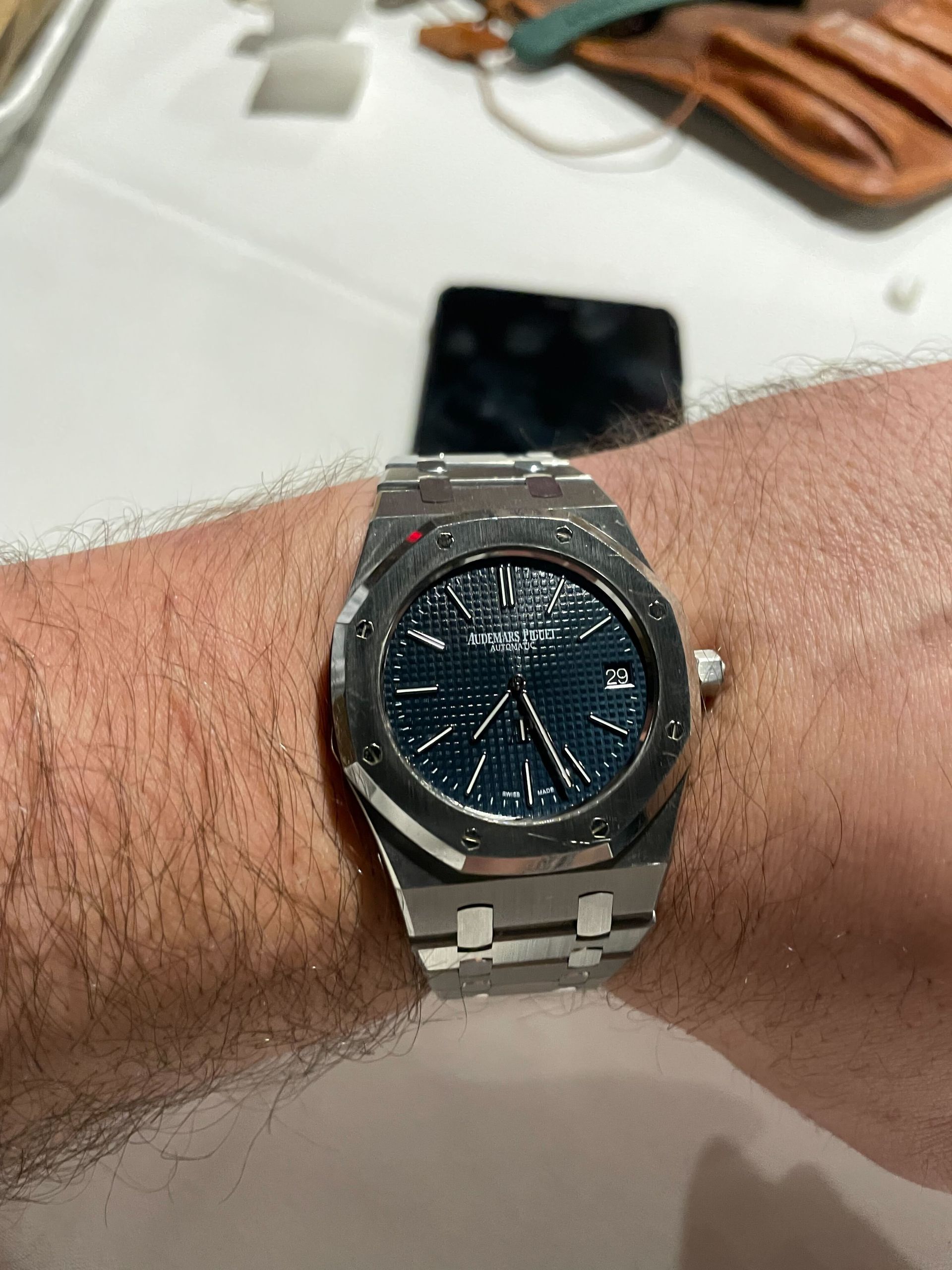
Audemars Piguet Royal Oak 'Jumbo' ref. 15202 with blue tapisserie dial and integrated steel bracelet
By Zach Charles • October 10, 2026
The Audemars Piguet × Swatch Royal Pop is a $400 bioceramic pocket watch in 8 colourways, powered by a new hand-wound SISTEM51 with 90+ hour power…

Time on the Move logo
By Zach Charles • October 10, 2026
Zach Charles is the editor of Time on the Move, an independent watch reference covering brand and model histories, buying guides and release news…
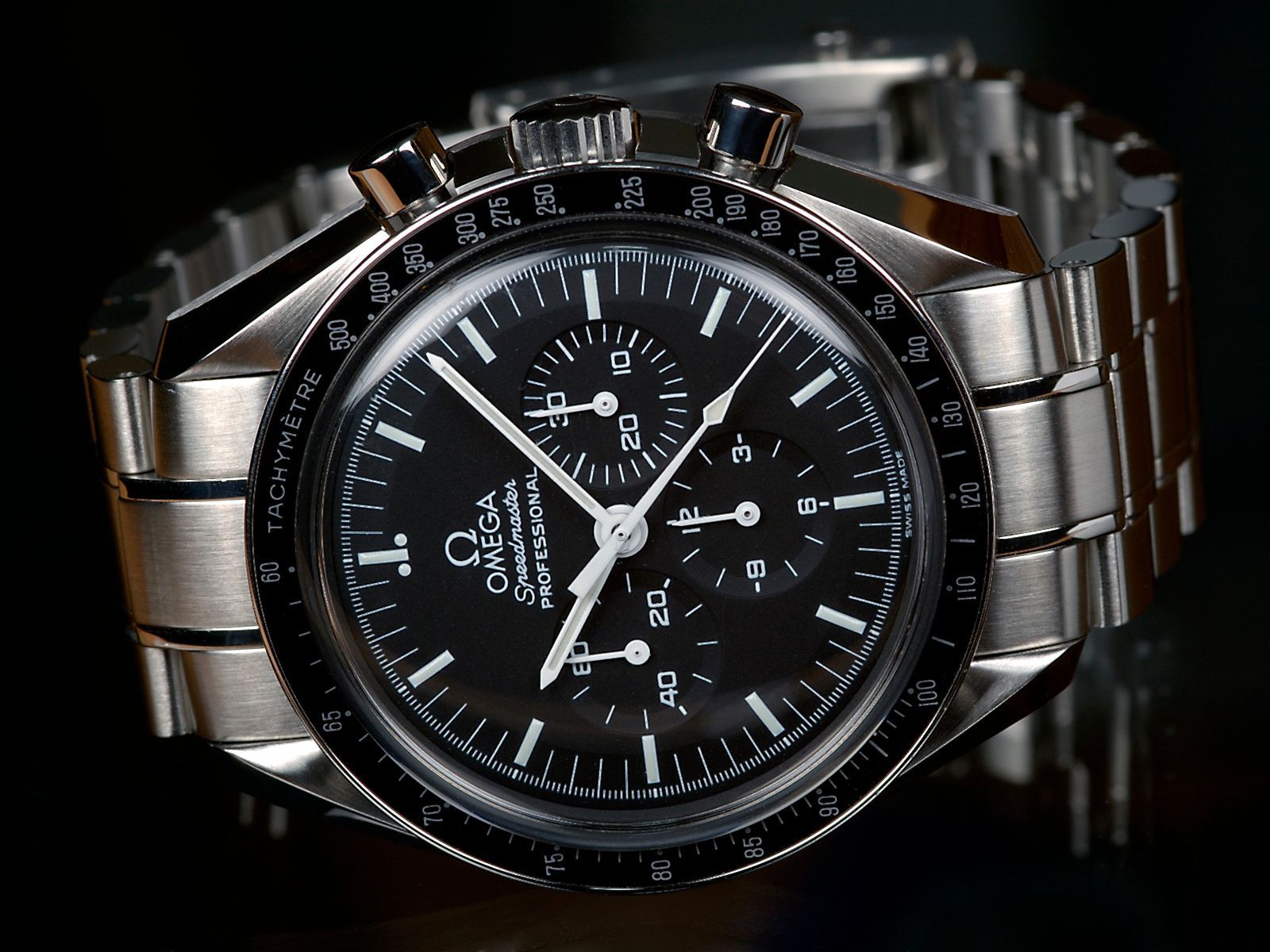
Omega Speedmaster Professional 'Moonwatch' chronograph, front view on steel bracelet
By Zach Charles • October 9, 2026
Find the best watches at every price point from $500 to $15,000 — new and pre-owned. Covers every budget tier with specific reference picks, brand…
By Zach Charles • October 9, 2026
The latest watch news: new releases, Watches and Wonders coverage, discontinuations, industry analysis, and market trends. Currently 1 article.
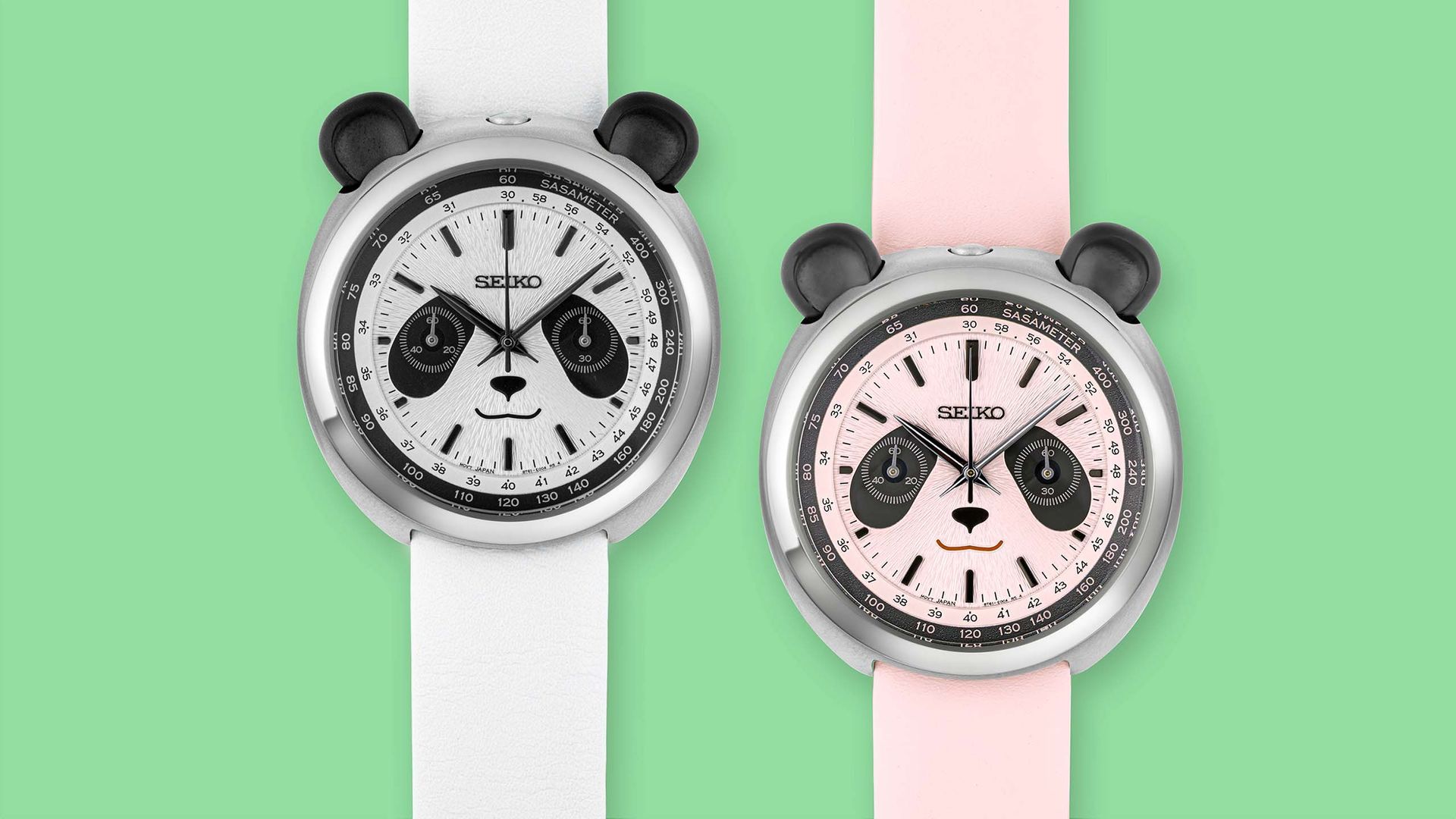
Seiko's New Panda Chronograph Is Literally a Panda: The Power Design Project HHK001 and HHK002
By Zach Charles • October 8, 2026
Seiko's Power Design Project panda chronograph (HHK001, HHK002) turns the panda dial into an actual panda face, with ear pushers, a 'Sasameter' and a 3D…
Show More