
IWC Portugieser: History of the Elegant Large-Dial Watch

Zach Charles • May 31, 2026

Share this article

IWC Portugieser: History of the Elegant Large-Dial Watch

The origin story that almost every watch publication tells about the Portugieser is wrong in its most compelling detail. The version you encounter most frequently: two Portuguese watch merchants commissioned IWC Schaffhausen in 1939 to produce a wristwatch housing a large-calibre pocket watch movement, for sale to navigators and commercial mariners on the Iberian peninsula and beyond. It is a satisfying story. It is partially correct. The part about the commission is essentially right; the part about who received the first watches is wrong.

The first delivery of the Portugieser — 22 February 1939, to the client who had specified and ordered the first reference — went to L. Schwarcz, a Ukrainian watch wholesaler operating in Odessa. Not Portugal. Not the Iberian peninsula. Odessa. The first delivery to an actual Portuguese customer occurred on 2 February 1942 — three years later.

The Portuguese wholesalers did place the commission and did take delivery of a substantial portion of early production. The name is not mislabelled. But the mythology of the Portugieser as a watch born for Iberian nautical precision is a retrospective construction, and collectors who pride themselves on accurate historical knowledge should understand the first delivery's geography before retelling the founding story.


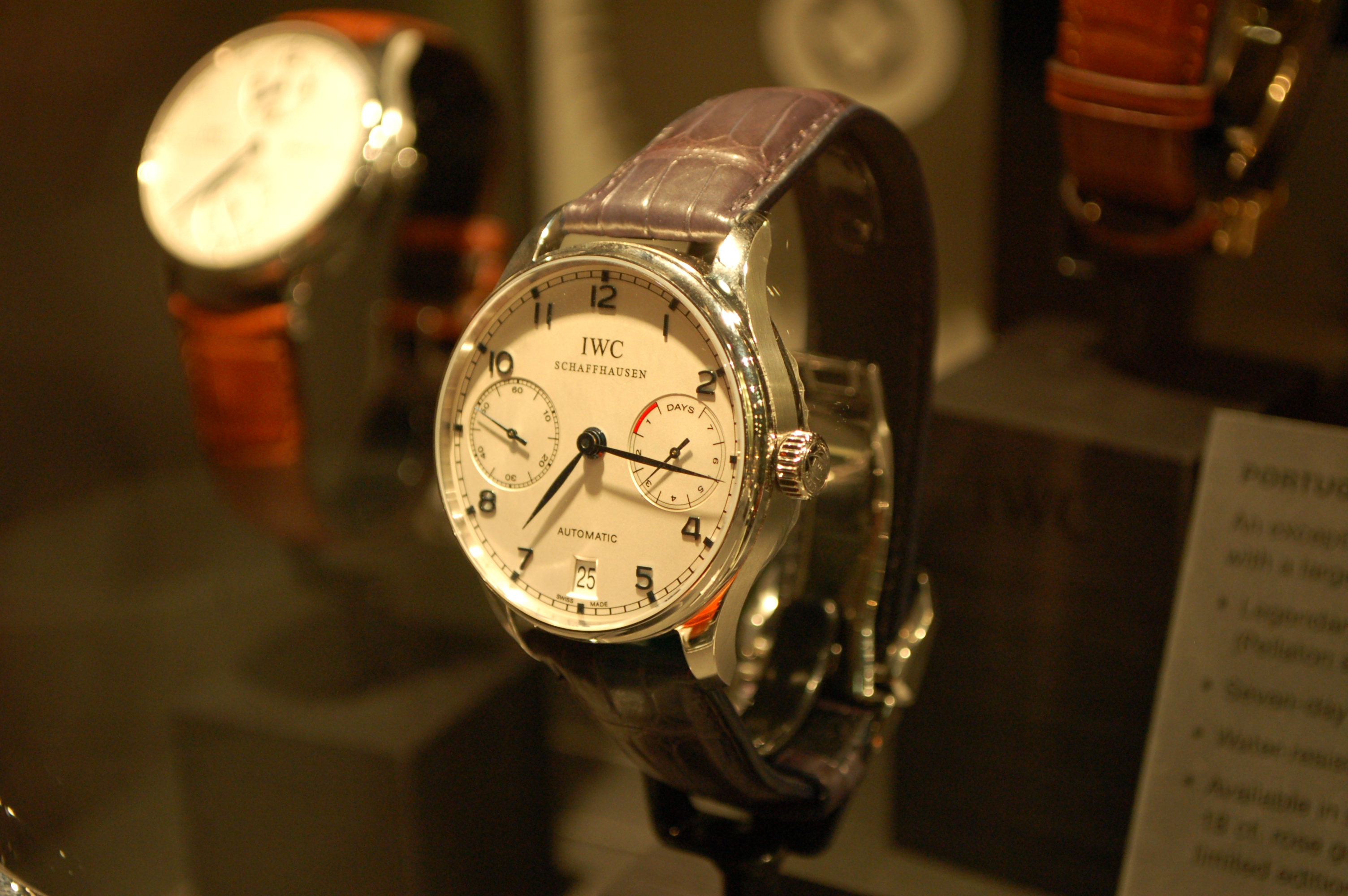
IWC Portugieser Automatic chronograph
An IWC Portugieser Automatic chronograph — photographed at the Athina Fair 2009. The large-dial format, clean bicompax layout, and applied baton indices illustrate the Portugieser’s combination of pocket-watch-calibre precision heritage and understated formal elegance, rooted in the 1939 commission for wristwatch-housed pocket watch movements.
Photo: Ferengi — CC BY-SA 3.0 — Wikimedia Commons

The 1939 Original — Pocket Watch Precision in a Wristwatch

IWC calibre 98300 — pocket watch movement used in wristwatch references
IWC calibre 98300 — a high-precision pocket watch movement housed by IWC in certain wristwatch cases. The use of large-diameter pocket watch calibres in wristwatch cases was the technical premise of the 1939 Portugieser commission: the greater calibre diameter permitted superior balance-wheel finishing and more accurate rate adjustment than contemporary wristwatch movements could achieve.
Photo: EMore98 — CC BY-SA 4.0 — Wikimedia Commons

The brief that generated the Portugieser was technically specific: produce a wristwatch of extraordinary accuracy by housing a large-calibre pocket watch movement in a wrist-worn case. In 1939, wristwatch movements were smaller than pocket watch calibres and, consequently, less capable of the precision finishing and balance wheel construction that large calibres permitted. A merchant who needed a genuinely precise timekeeping instrument on his wrist was not well served by the wristwatch movements of the era.

Reference 325 — the original:
- Case: 43mm — enormous for a wristwatch in 1939, deliberate in rationale
- Calibres: 74, 98, 982 (pocket watch calibres, depending on production period)
- Total production: approximately 690 pieces, 1939–1981
- Dial: Clean two-hand or three-hand design, thin applied indexes, thin hands — the aesthetic vocabulary of a precision instrument

The resulting watch was too large for conventional wristwatch use but not designed for convention. The Portugieser's large case made the pocket watch calibre's size a visible feature rather than an invisible constraint. The clean, uncluttered dial — no complications competing for space, no subsidiary functions fragmenting the dial layout — produced a legibility and aesthetic authority that the small wristwatch movements of the period could not match.

Production of approximately 690 pieces over forty-two years (1939–1981) tells its own story: this was a specialist reference, not a commercial flagship, produced in low volumes for buyers who understood what they were acquiring.


The Long Dormancy — 1981 to 1993

IWC Portugieser Automatic chronograph
An IWC Portugieser Automatic chronograph — photographed at the Athina Fair 2009. The large-dial format, clean bicompax layout, and applied baton indices illustrate the Portugieser’s combination of pocket-watch-calibre precision heritage and understated formal elegance, rooted in the 1939 commission for wristwatch-housed pocket watch movements.
Photo: Ferengi — CC BY-SA 3.0 — Wikimedia Commons
When production of the original ref. 325 ended around 1981, there was no announcement, no special edition to mark the conclusion, no commercial ceremony. The Portugieser simply stopped being made — a consequence of the pocket watch calibres it required becoming difficult to source and service, and of the quartz crisis's disruption of the commercial case for expensive, low-volume mechanical references.

The twelve-year gap between the ref. 325's end and the 1993 Jubilee revival is the period during which the Portugieser became a collector's reference rather than a production watch. Examples of the original circulated through specialist dealers; prices began to reflect the rarity. The watch's combination of 43mm case, pocket-watch precision heritage, and clean aesthetic placed it in a category that no production watch of the 1980s occupied.

Günter Blümlein, in his systematic assessment of IWC's underexploited heritage, identified the Portugieser as a priority revival — a reference with documented history, genuine technical interest, and a collector following that demonstrated market demand.


The 1993 Jubilee Revival — The Collectors' Portugieser

The revival came in 1993 as a direct consequence of Blümlein's heritage programme, timed to the IWC company anniversary. Reference 5441 (later variants: 5441J, 5441G) was produced in 1,750 pieces divided across three materials:

  • 1,000 pieces in steel
  • 500 pieces in rose gold
  • 250 pieces in platinum

Movement: Cal. 9828 — a base movement of high quality appropriate for the flagship collector reference. The Jubilee Portugieser re-established the watch's visual identity: the same fundamental dial clarity as the original, the same large case proportions, updated for modern manufacture quality and movement technology.

The 1993 Jubilee revival is itself now a collector reference: 1,750-piece production across three materials, clear documentation of a historically significant moment in IWC's heritage programme, and the reference that established the modern Portugieser's collector status. Steel examples trade well above retail; platinum examples, with their 250-piece production total, are genuinely rare.


The Modern Portugieser Family

IWC Portugieser Automatic chronograph
An IWC Portugieser Automatic chronograph — photographed at the Athina Fair 2009. The large-dial format, clean bicompax layout, and applied baton indices illustrate the Portugieser’s combination of pocket-watch-calibre precision heritage and understated formal elegance, rooted in the 1939 commission for wristwatch-housed pocket watch movements.
Photo: Ferengi — CC BY-SA 3.0 — Wikimedia Commons

Following the 1993 revival, the Portugieser developed into a full family with multiple complications and references, each anchored in the same large-dial, clean-aesthetic DNA of the 1939 original.

Portugieser Automatic:
The accessible entry point to the family. Currently in 40mm and 42mm, with the in-house Cal. 52010 (Pellaton winding, 60-hour power reserve) — the same bidirectional Pellaton system used in the Big Pilot. The Automatic is the everyday Portugieser: formal enough for professional dress contexts, robust enough for regular wear, priced at approximately $6,000–$8,000 in steel.

Portugieser Chronograph:
The most technically significant reference in the modern family. The current Portugieser Chronograph houses the in-house Cal. 69000 — IWC's own column-wheel chronograph calibre, introduced in 2020 as part of the manufacture rollout. The column-wheel is the premium chronograph architecture: it governs the chronograph functions through a rotating column wheel with positive engagement, producing a distinctive tactile quality to the pusher operation and greater long-term durability than lever-based alternatives.

The Cal. 69000's introduction replaced the long-serving Valjoux 7750 base that had powered the Portugieser Chronograph for years. The 7750 is a fine movement; the Cal. 69000 is IWC's own, and its presence establishes the Portugieser Chronograph as a manufacture-calibre watch.

Portugieser Perpetual Calendar:
IWC's perpetual calendar mechanism — the tradition established by Kurt Klaus's Da Vinci perpetual in 1985 — in the Portugieser case. The Portugieser Perpetual Calendar is among the most important references in the family: the large dial provides space for the perpetual calendar's day, date, month, and moon phase displays without the crowding that afflicts smaller perpetual calendar watches. References from the collector era — particularly ref. 3541 — are sought after at significant premiums.

Portugieser Tourbillon:
The ultimate complication reference. The tourbillon, developed by Abraham-Louis Breguet in 1801 to address positional errors in pocket watch movements, is now produced by IWC as a statement of manufacture competence. The Portugieser Tourbillon is priced accordingly: current references start above $50,000.


The Portugieser's Aesthetic Logic

The Portugieser's design principles are so consistent that they require specific articulation to appreciate fully. The large case (historically 43mm, now 40–42mm for most references) exists not for aesthetic impact but because the original spec required a large movement. The thin dial furniture — thin applied indexes, thin hands — exists because the designers understood that a large dial with assertive furniture is visually busy, and the Portugieser's character is visual repose. The absence of a seconds hand on many references (or its relegation to a subdial) exists because a sweeping centre seconds hand crossing a large clean dial is optically disruptive.

These are not arbitrary design choices applied for luxury positioning. They are functional decisions that emerged from the technical brief of 1939 and have been maintained because they are correct. The Portugieser looks the way it looks because the alternative would be worse.


Secondary Market and Collector Position

The Portugieser occupies the upper tier of the IWC collector market. Several reference categories command premium attention:

Ref. 3541 Perpetual Calendar — The collector's Portugieser perpetual, produced from the 1990s through the early 2000s. Clean perpetual calendar display, manageable case size, proven calibre. Now trades significantly above its original retail.

1993 Jubilee (ref. 5441) — Limited production (1,750 pieces), clear historical significance, three-material split that ensures platinum examples are genuinely rare. Steel examples are accessible; platinum requires patience.

Early modern Chronograph (pre-2020 7750-base) — An interesting secondary market position: well-regarded movement, thoroughly proven reliability, available at prices that reflect the newer Cal. 69000's cachet. For buyers who want the Portugieser Chronograph's aesthetic without paying for the current in-house movement.

Current production references in steel range from approximately $6,000 (Automatic) to $12,000 (Chronograph) to $25,000+ (Perpetual Calendar) depending on configuration.


Frequently Asked Questions

Who commissioned the original Portugieser?
Two Portuguese watch wholesalers placed the commission with IWC in the late 1930s for a wristwatch housing a large-format pocket watch calibre. However, the first delivery was made not to Portugal but to L. Schwarcz, a Ukrainian wholesaler in Odessa, on 22 February 1939. The first Portuguese customer received delivery on 2 February 1942.

Why is the Portugieser's case so large?
The original brief required a large-calibre pocket watch movement for precision reasons — the larger calibre permitted better finishing and more accurate rate adjustment than the wristwatch calibres of 1939. The 43mm case was a functional requirement of housing that calibre, not an aesthetic choice. The clean, understated dial was designed to complement rather than fight the case size.

What is the difference between the Portugieser Chronograph and the Perpetual Calendar?
The Chronograph measures elapsed time using the in-house Cal. 69000 column-wheel movement. The Perpetual Calendar displays the complete date — day, date, month, and moon phase — automatically accounting for varying month lengths and leap years without requiring adjustment until 2100. The two complications serve entirely different purposes.

Is the Portugieser Chronograph now in-house?
Yes. Since 2020, the Portugieser Chronograph uses IWC's own Cal. 69000, a column-wheel chronograph calibre manufactured in Schaffhausen. Previous generations used the Valjoux 7750 base, which is a reliable movement but not an IWC manufacture calibre.

What is the Pellaton winding system in the Portugieser Automatic?
The Pellaton system uses two spring-loaded pawls engaging a toothed ratchet wheel in both directions of rotor rotation, approximately doubling winding efficiency compared to conventional unidirectional systems. This allows the Cal. 52010 to achieve a 60-hour power reserve in the Portugieser Automatic.


Related Articles

Recent Posts

By Zach Charles • October 10, 2026
Hamilton's American Classic Cushion Mechanical revives its 1926 Art Deco cushion watches, seen in Oppenheimer, in 30mm and 34mm with the new hand-wound…
Doxa SUB 200: The Accessible Everyday Diver
By Zach Charles • October 10, 2026
Complete guide to the Doxa SUB 200 — 42mm, 200m, four colorways, Sellita SW200-1. The accessible entry to the Doxa SUB family with the full…
By Zach Charles • October 10, 2026
The Breitling Top Time B01 Aston Martin DB5 pairs a cushion-shaped 41mm case, a wooden inner ring and the in-house Caliber 01 across three limited…
By Zach Charles • October 10, 2026
TAG Heuer developed the Mikrograph (2011, 1/100th second), Mikrotimer Flying 1000 (2011, 1/1000th second), and Mikrogirder (2012, 1/2000th second).
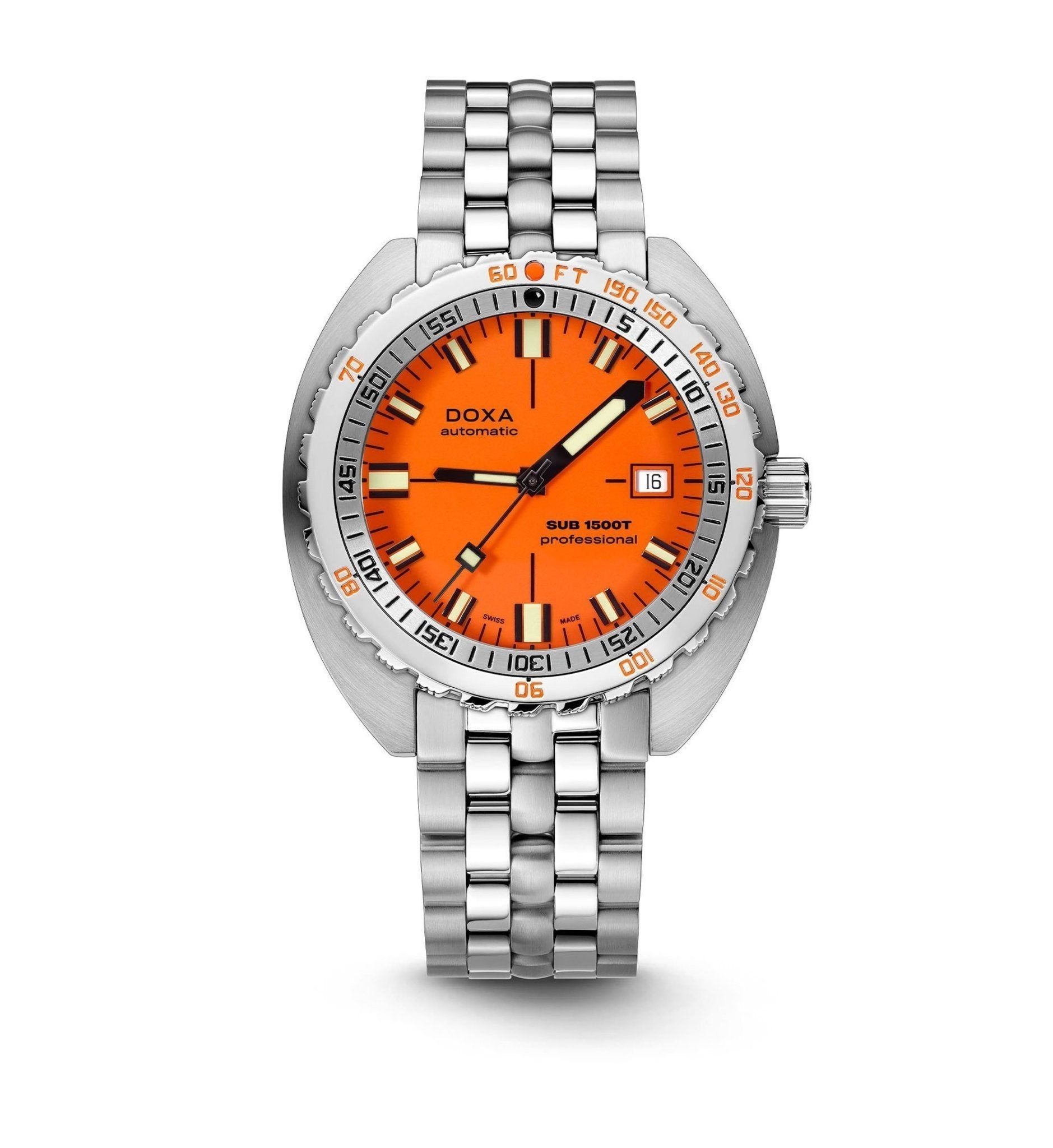
Doxa SUB 1500T: The 1,500-Metre Depth-Rating Flagship
By Zach Charles • October 10, 2026
Complete guide to the Doxa SUB 1500T — 45mm, 1,500m depth rating, helium escape valve, ETA 2892-2 movement, USD 2,690.
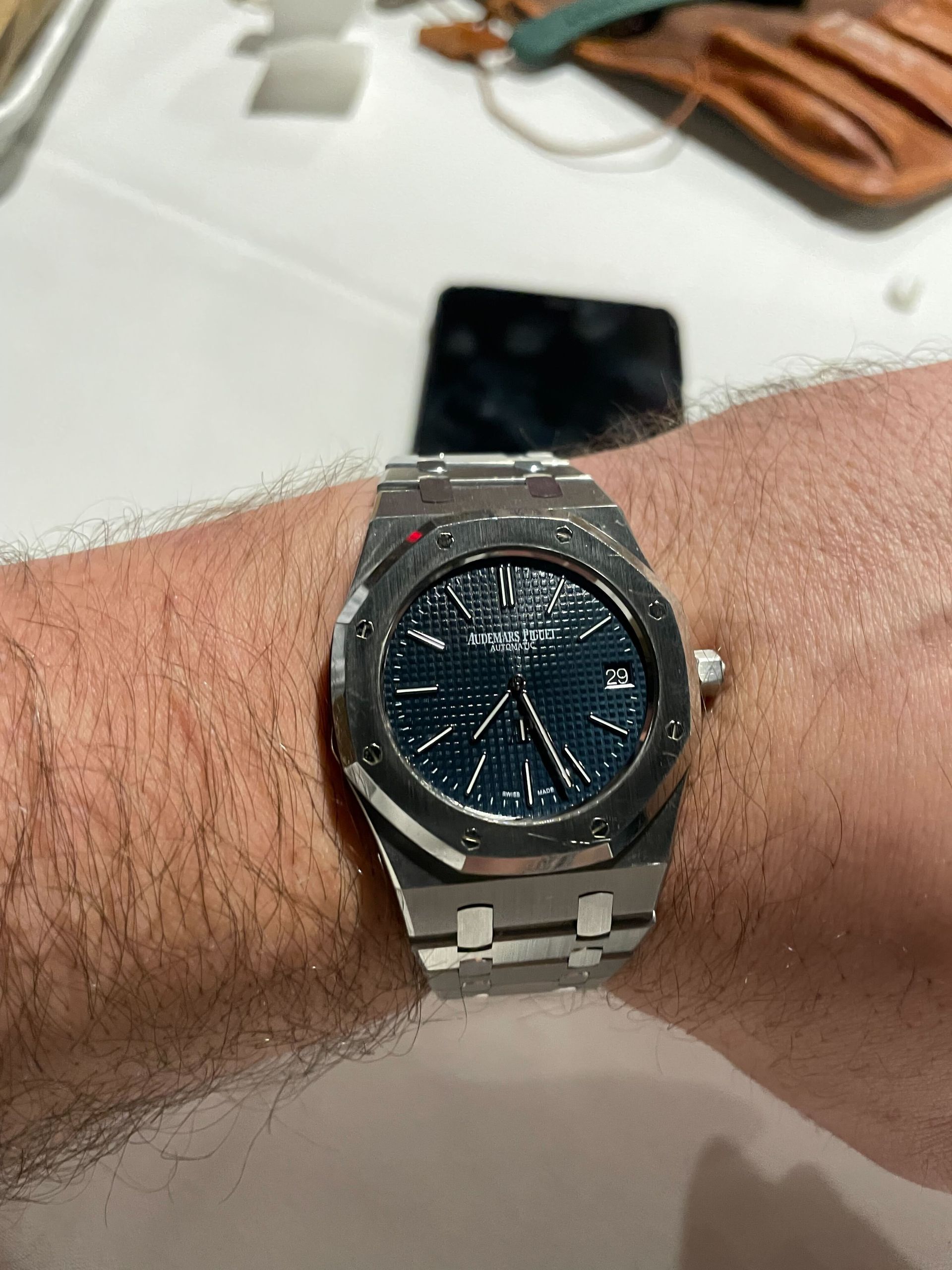
Audemars Piguet Royal Oak 'Jumbo' ref. 15202 with blue tapisserie dial and integrated steel bracelet
By Zach Charles • October 10, 2026
The Audemars Piguet × Swatch Royal Pop is a $400 bioceramic pocket watch in 8 colourways, powered by a new hand-wound SISTEM51 with 90+ hour power…

Time on the Move logo
By Zach Charles • October 10, 2026
Zach Charles is the editor of Time on the Move, an independent watch reference covering brand and model histories, buying guides and release news…
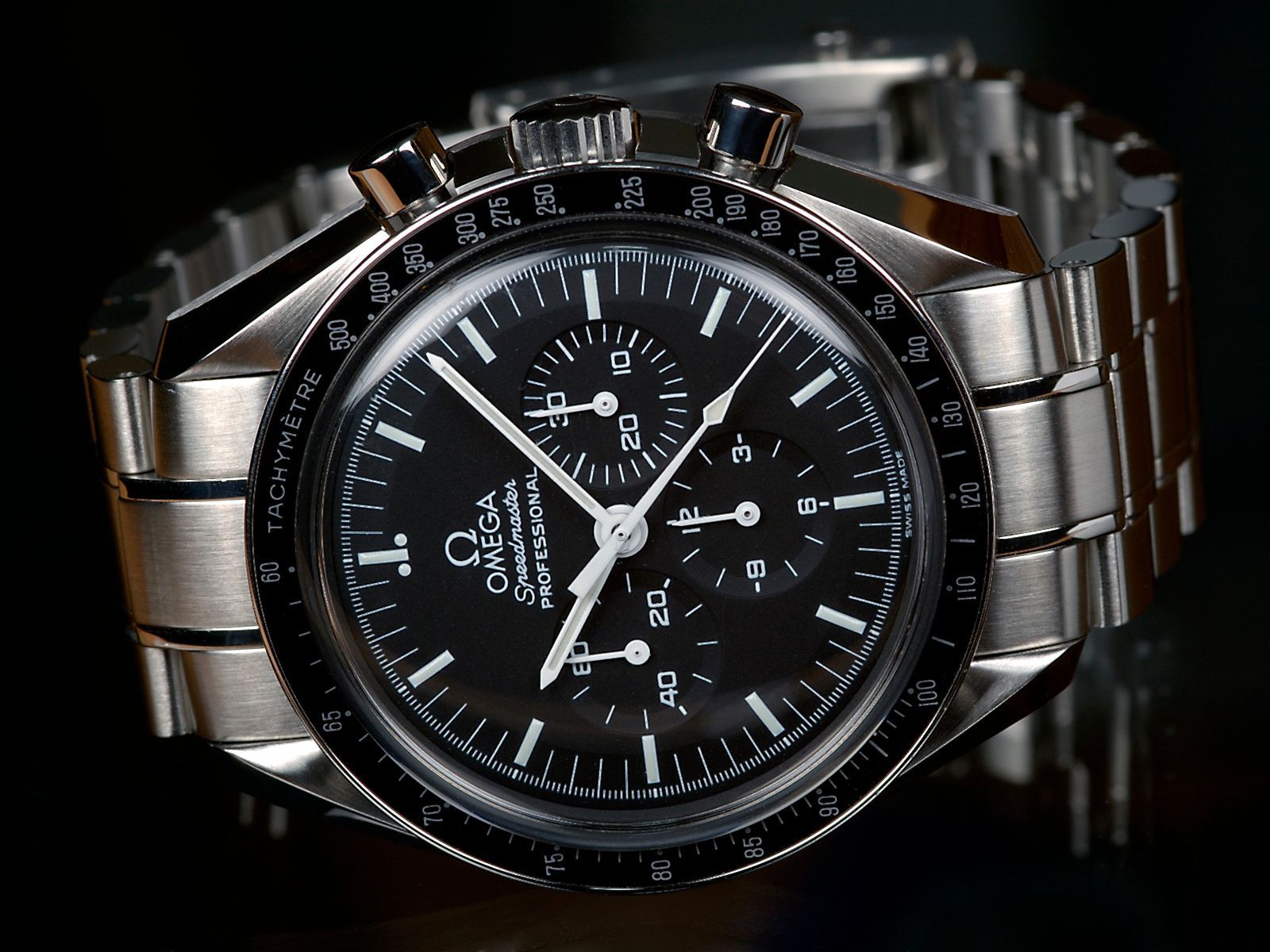
Omega Speedmaster Professional 'Moonwatch' chronograph, front view on steel bracelet
By Zach Charles • October 9, 2026
Find the best watches at every price point from $500 to $15,000 — new and pre-owned. Covers every budget tier with specific reference picks, brand…
By Zach Charles • October 9, 2026
The latest watch news: new releases, Watches and Wonders coverage, discontinuations, industry analysis, and market trends. Currently 1 article.

Seiko's New Panda Chronograph Is Literally a Panda: The Power Design Project HHK001 and HHK002
By Zach Charles • October 8, 2026
Seiko's Power Design Project panda chronograph (HHK001, HHK002) turns the panda dial into an actual panda face, with ear pushers, a 'Sasameter' and a 3D…
Show More