Tudor Monarch Watch: A Century of Ambition Distilled Into Tudor’s Most Important Release
By Time on the Move Editorial · April 14, 2026
The Tudor Monarch watch is here, and it changes everything the brand has stood for — in the best possible way. Unveiled at Watches & Wonders 2026 in Geneva, the Monarch is Tudor’s centenary statement: a clean-sheet, integrated-bracelet sport-luxury watch certified to METAS Master Chronometer standards, powered by a new in-house manufacture calibre, and designed to signal — without ambiguity — that Tudor is nobody’s footnote. After one hundred years, the brand is writing its own story.
For those who have followed Tudor’s horological history, the Monarch represents a genuine inflection point. Tudor was founded in 1926 by Hans Wilsdorf — the same visionary behind Rolex — as a more accessible vehicle for quality Swiss watchmaking under Crown Group ownership. For most of its century-long existence, Tudor operated comfortably in Rolex’s shadow, producing tool watches of real merit without demanding attention on their own design terms. The Monarch demands that attention.
Tudor Monarch — Key Specifications
| Case Design | Integrated, faceted case — first of its kind for Tudor |
| Bracelet | Faceted two-link integrated bracelet with T-fit clasp |
| Dial | Dark champagne, brushed finish |
| Movement | New in-house manufacture calibre |
| Certification | METAS Master Chronometer |
| Anti-Magnetic | 15,000 gauss |
| Rate Accuracy | 0 to +5 seconds per day (METAS certified) |
| Power Reserve | 65 hours |
| Announced | April 14, 2026 — Watches & Wonders, Geneva |
| Price | To be confirmed at retail launch |
A Tudor Monarch Watch Design Language the Brand Has Never Spoken Before
The Monarch’s defining characteristic is its fully integrated case-and-bracelet architecture — a design philosophy that flows the watch’s case imperceptibly into the bracelet’s links, eliminating any visual gap between the two. Tudor has produced integrated-bracelet pieces before: the Tudor Royal introduced an integrated concept to the mid-range of the lineup. But the Monarch elevates that ambition to an entirely different register.
The case is faceted — meaning its surfaces are cut to create defined geometric planes that catch and redirect light — and the bracelet follows suit with a “faceted two-link” construction. Each link repeats the case’s angular geometry at miniature scale, so the watch reads as a single, unified object when worn. The T-fit clasp secures it all without interrupting the design’s visual continuity. The dark champagne brushed dial plays off this architectural language with quiet warmth: it rewards close attention.
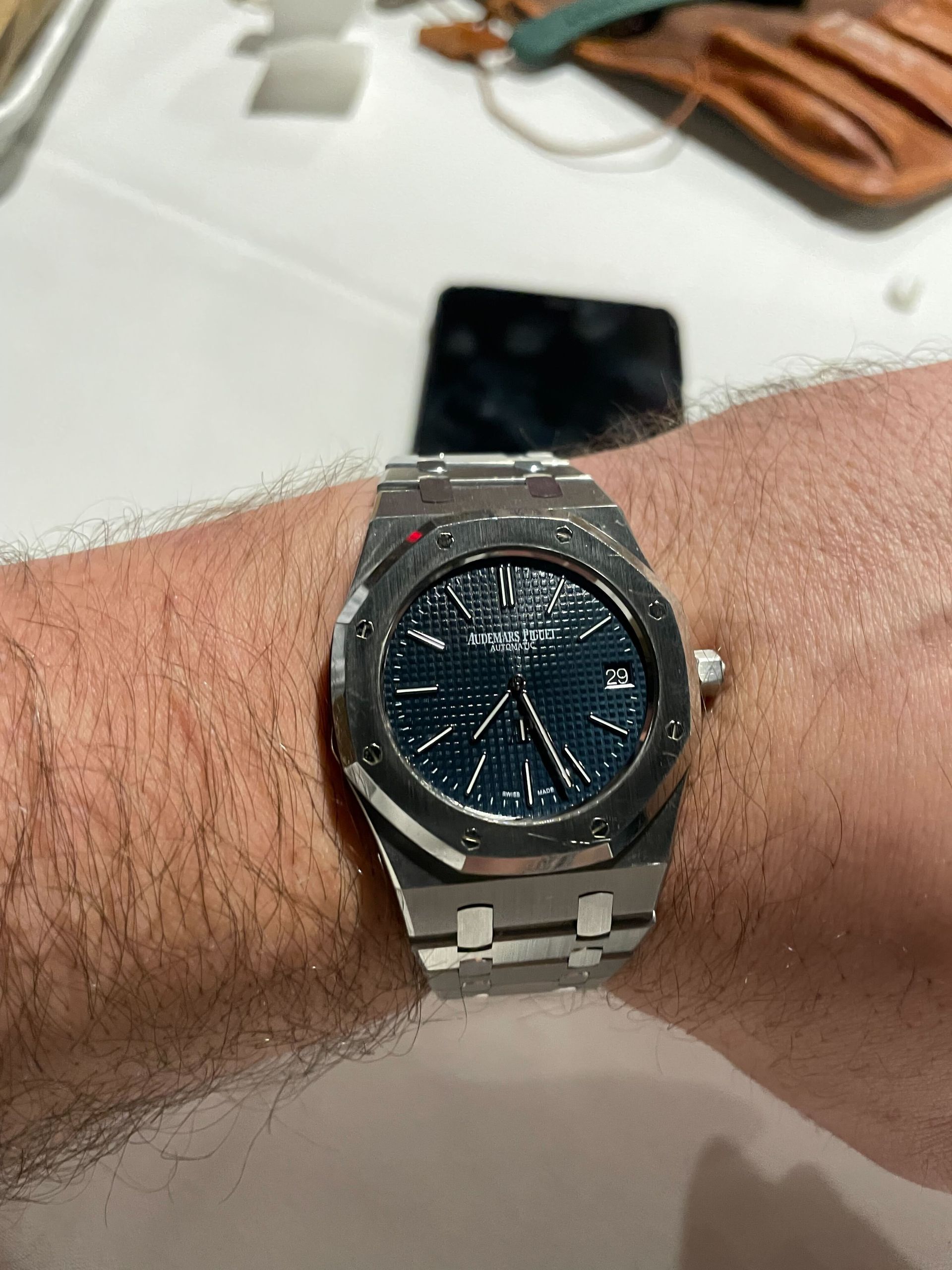
Horologically literate readers will notice this design language echoes the work of Gerald Genta — the Swiss designer responsible for both the Royal Oak(1972) and the Nautilus(1976), the two watches that established integrated-bracelet sport-luxury as a genre. Tudor is not copying Genta’s vocabulary so much as writing a new sentence in a language he originated. The Monarch’s two-link bracelet structure and proportions are entirely Tudor’s own.
What Movement Does the Tudor Monarch Use — and Why Master Chronometer Matters
The Tudor Monarch runs on a new in-house manufacture calibre certified to METAS Master Chronometer standard. METAS — the Swiss Federal Institute of Metrology — administers testing independently of the manufacturer. To earn certification, a movement must demonstrate anti-magnetic resistance to 15,000 gauss (sufficient to withstand proximity to MRI machines), rate accuracy between 0 and +5 seconds per day across multiple positions and power states, and sustained water resistance. Testing is conducted on the complete watch, not just the movement.
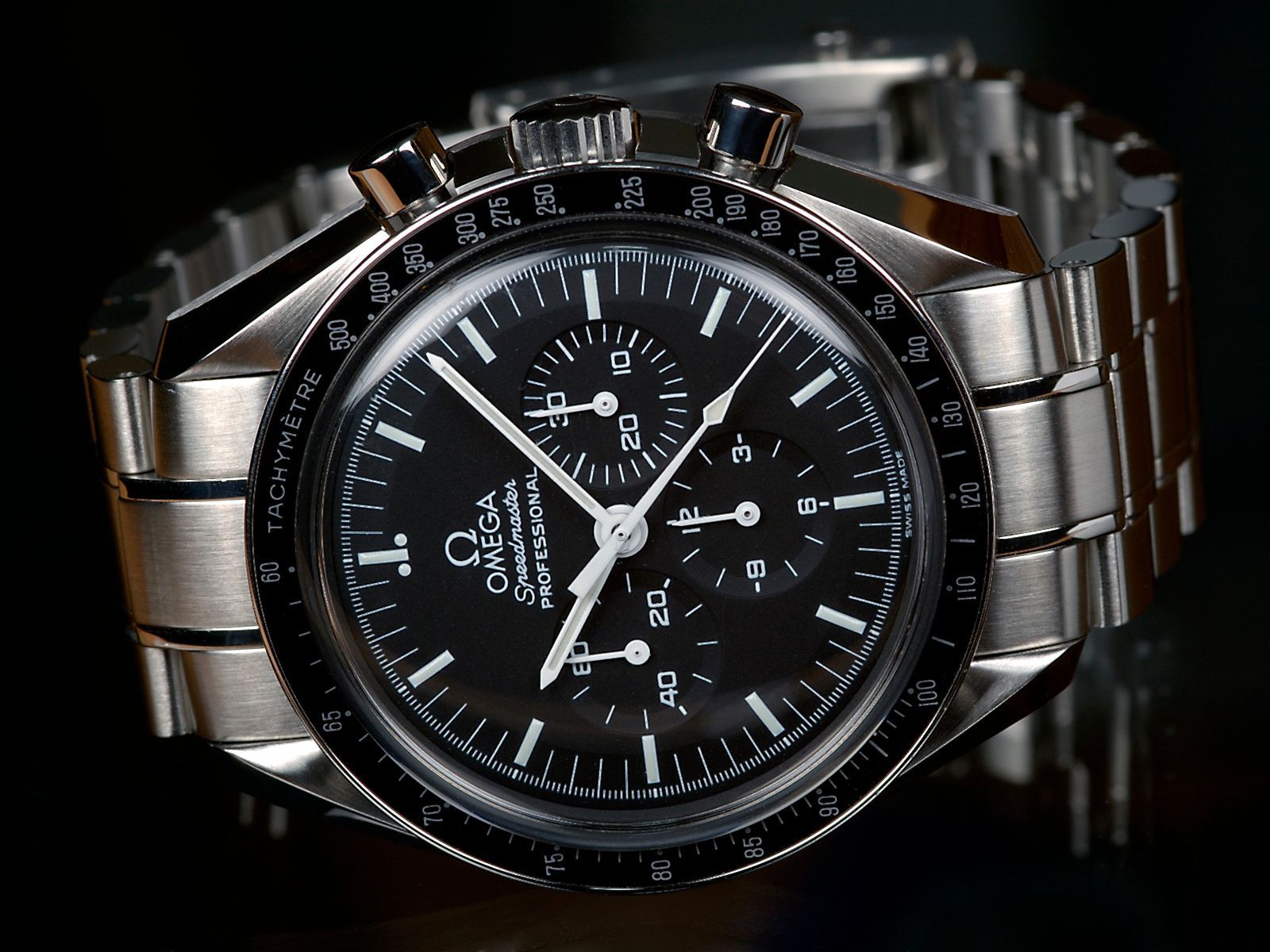
Omega introduced Master Chronometer certification for commercial watchmaking in 2015, applying it to the Seamaster and Speedmaster lines. Tudor is now certified to the same standard — because it gives the brand a pointed argument in two directions simultaneously: against Rolex, which certifies movements to COSC standards (independently tested, but not by METAS), and against Omega, which holds the same METAS standard but at a higher price point for comparable complications. The Monarch’s 65-hour power reserve — nearly three full days — adds practical credibility to the technical story.
The Tudor 100th Anniversary Watch: Why 2026, and Why This
Tudor was registered by Hans Wilsdorf in 1926 — the same year his Rolex brand was already well established — as a mechanism for delivering robust Swiss watchmaking at a lower price point. For much of its history, Tudor operated as a complement to Rolex’s prestige, sharing certain technical resources while maintaining a separate and more accessible market identity. Its entry price today sits in the $2,000–$4,000 range against Rolex’s $6,500-plus threshold.
The centenary is the right moment for this statement. The Monarch is not a commemorative limited edition — it is a permanent addition to the catalog, the inauguration of a new design family. Tudor is using its hundredth birthday not to look backward with nostalgia, but to stake a claim on what the brand will look like in its next century. For the full context on how Tudor arrived at this moment, explore our horological history archive.
How the Monarch Compares to the Black Bay — and Why That Gap Is the Point
Tudor’s commercial backbone for the past decade has been the Black Bay family: the Black Bay 58 with its vintage-correct 39mm case and gilt dial variants, the Black Bay GMT with its two-tone bezel and travel functionality, and the broader range that anchors Tudor’s identity as the thinking person’s alternative to entry-level Rolex.
The Black Bay draws explicitly on Tudor’s 1950s and 1960s dive watch heritage — its snowflake hands, gilt printing, and domed dials are deliberate callbacks to specific historical references. The Monarch has no such memory to invoke. It is not descended from anything Tudor has made before. Where the Black Bay says “remember where we came from,” the Monarch says “watch where we are going.” That gap is not a contradiction — it is a portfolio strategy.
Tudor Monarch vs Royal Oak, Nautilus, and the Integrated-Bracelet Segment
The integrated-bracelet sport-luxury category is one of the most coveted in Swiss watchmaking. The Audemars Piguet Royal Oak commands waitlists and grey-market premiums that dwarf its retail price. The Patek Philippe Nautilus is similarly inaccessible in practice despite being nominally in production. Tudor’s Monarch enters this company with a specific value proposition: genuine design ambition, manufacture movement credentials, and METAS certification — at a price expected to be substantially lower than either AP or Patek.
The Monarch is not trying to be a Royal Oak at a lower price. It is trying to make the argument that in 2026, a watch certified to the highest independent movement standard, built on a fully original integrated design, does not have to cost twenty or thirty thousand dollars.
Tudor Monarch Price and Release Date: What We Know
Tudor announced the Monarch on April 14, 2026, at Watches & Wonders 2026 in Geneva, alongside Rolex’s Watches & Wonders 2026 reveal from the Crown Group. Retail pricing has not been officially disclosed. Based on Tudor’s pricing architecture and the Monarch’s positioning, observers anticipate a price above the current top of the Tudor range — whether in the $5,000–$8,000 corridor or higher will define how the market receives it. We will update this article as official pricing is confirmed.
Is the Tudor Monarch Worth Buying? An Early Assessment
It is too early to deliver a full verdict — pricing is unconfirmed and no independent wrist time has been logged. But based on what Tudor has revealed, the Monarch presents a genuinely compelling case on paper. METAS Master Chronometer certification is not marketing language: it represents independent, documented verification of performance across real-world conditions. The 65-hour power reserve is practically excellent. The integrated design is executed with coherence and originality that distinguishes it from watch-industry trend-following. The central question is pricing — and if Tudor prices the Monarch correctly, it could be one of the most significant value propositions in the sport-luxury segment.
Frequently Asked Questions
What is the Tudor Monarch watch?
What is METAS Master Chronometer certification?
How does the Tudor Monarch compare to the Black Bay 58?
Is Tudor an independent brand or part of Rolex?
When will the Tudor Monarch be available and how much will it cost?
How does the Tudor Monarch compare to the Royal Oak and Nautilus?
Why does the Tudor Monarch matter for the watch industry?
Related Reading
- Tudor’s Full Brand Story: A Century of Crown Group Watchmaking Horological History → Tudor
- Watches & Wonders 2026: Every Major Release Covered News → Watches & Wonders 2026
- Rolex at Watches & Wonders 2026: The Crown Group’s Other Reveals News → Rolex 2026
- Black Bay 58: The Watch That Redefined Tudor’s Modern Identity Horological History → Tudor → Black Bay 58
- Royal Oak: How Gerald Genta’s 1972 Design Still Defines a Genre Horological History → Audemars Piguet → Royal Oak
- Explore the Full Horological History Archive Horological History → All Brands & Models