
Tudor Black Bay Chrono: The Manufacture Chronograph

Zach Charles • September 12, 2026

Share this article

Tudor Black Bay Chrono: The Manufacture Chronograph

The Tudor Black Bay Chrono arrived at Baselworld 2017 with a specification that required some recalibration of expectations at its price point: a column-wheel chronograph movement, manufactured by Kenissi SA (the Le Locle movement manufacture in which Tudor holds a majority stake), with 70 hours of power reserve and COSC chronometer certification, in a 41mm Black Bay case, at approximately $4,950 retail.

At that price, the Black Bay Chrono competed against — and in movement terms outspecified — chronographs from brands whose manufacture credentials were far more established. The Valjoux 7750 that had powered the Tudor Tiger chronograph was gone. In its place was a purpose-developed movement with a vertical clutch, column-wheel control, and a rotor winding system delivering nearly twice the power reserve of the Tiger's movement. For Tudor, the Black Bay Chrono was the clearest possible statement that the brand's ETA era was finished.


Context: The Tiger to Chrono Transition

The Tudor Tiger, produced from 1999 to approximately 2004, had used the Valjoux 7750 — a reliable, widely used Swiss chronograph movement that powered hundreds of references from dozens of brands. The 7750 was an honest, competent choice: it worked, it was serviceable everywhere, and it cost less to source than a proprietary calibre.

The thirteen-year gap between the Tiger's discontinuation and the Black Bay Chrono's introduction was not a gap in which Tudor was idle. It was the period in which Tudor developed the MT5612 platform, established manufacture credentials with the base Black Bay, and — in parallel with those developments — worked with Kenissi SA on the chronograph calibre that would become the MT5813.

The MT5813 is the watch that proves Tudor's manufacture ambitions were not limited to simple time-only and date movements. A chronograph adds substantial complexity to movement architecture: the start/stop/reset sequence requires a precise mechanical switching system, the chronograph seconds hand must reset perfectly to zero, and the running seconds and chronograph seconds must be visually and mechanically separated. Getting these functions right — reliably, across thousands of movements — is what distinguishes a genuine manufacture chronograph from a modified ébauche.


The MT5813: Column Wheel and Vertical Clutch

The MT5813 uses two design choices that define modern high-quality chronograph architecture: a column wheel for start/stop/reset control, and a vertical clutch for chronograph engagement.

Column wheel: The column wheel is a rotating disc with raised columns around its perimeter that control the chronograph's switching levers. Each press of the start/stop pusher rotates the column wheel one step, and the position of the columns determines whether the chronograph is running or stopped. The column wheel provides more consistent pusher feel — lighter actuation, more positive mechanical feedback — than the cam-and-lever systems used in lower-cost chronograph movements. The Valjoux 7750 uses a column wheel; the MT5813 continues this advantage.

Vertical clutch: When the chronograph is engaged, the MT5813's vertical clutch brings the chronograph seconds wheel into contact with the fourth wheel (which drives the seconds hand) through a face-to-face disc coupling rather than through gear teeth meeting at their sides (horizontal coupling). The practical effect: the chronograph seconds hand starts from exactly zero without "jumping" — the small bounce that horizontal clutch chronographs exhibit when the seconds hand engages a gear already in motion. The vertical clutch produces a cleaner, more precise chronograph start.

Specifications:
- Frequency: 28,800 vph
- Jewels: 25
- Power reserve: 70 hours (substantially more than the Valjoux 7750's ~42 hours)
- Chronograph function: 30-minute counter at 12 o'clock, running seconds at 9, 12-hour counter at 6
- Date: yes, at 4:30 o'clock position (integrated between chronograph subdials)
- COSC certified: yes

The 70-hour power reserve in a chronograph movement is notable. Chronograph mechanisms consume additional energy when running — the extra gear train and switching mechanism draw from the mainspring. Achieving 70 hours with the chronograph engaged periodically requires careful mainspring specification and efficient escapement design. The MT5813 manages this through the same efficiency principles applied to Tudor's base calibres.


Design: Three Registers, Balanced Dial

The Black Bay Chrono's three-register dial layout — subdials at 9, 12, and 6 o'clock — is the traditional chronograph architecture established by the earliest Swiss stopwatch movements. It is not the bicompax (two-subdial) layout used by the Rolex Daytona, but it is balanced and legible.

Dial configurations:

Black dial / white subdials: The most formally versatile configuration. The contrast between the black main dial and white subsidiary dials creates the "panda" pattern that collectors have associated with high-quality sporting chronographs since the Heuer Carrera of the 1960s.

White dial / black subdials: The inverse — "reverse panda" — equally traditional and slightly more rare in Tudor's catalogue.

Black dial / black subdials: The most monochromatic option, requiring closer attention to read the subdials in lower light but offering the most restrained aesthetic for a sports chronograph.

Tachymeter scale: A tachymeter — the scale printed on the bezel that enables speed-over-distance calculation using the chronograph — is fitted to all Black Bay Chrono configurations. The tachymeter is on the bezel rather than on the dial itself, keeping the dial clean.

Pulsation scale: Some configurations include a pulsation scale on the bezel — a physician's tool for measuring heart rate against the 60-second chronograph. The pulsation bezel configuration connects the Black Bay Chrono to the tradition of medical profession chronographs and gives it an additional visual reference point beyond pure sports watch.


Black Bay Chrono vs. Rolex Daytona: The Honest Comparison

Criterion Tudor BB Chrono Rolex Daytona 126500LN
Case diameter 41mm 40mm
Movement MT5813 (Kenissi) Cal. 4130 (Rolex in-house)
Chronograph architecture Column wheel, vertical clutch Column wheel, vertical clutch
Power reserve 70 hours 72 hours
Bezel Tachymeter aluminium Tachymeter Cerachrom ceramic
Water resistance 100m 100m
Retail price ~$4,950 ~$16,100
Secondary market Near retail 60–120% above retail

Both watches use column-wheel vertical clutch architecture. The Daytona's Cal. 4130 is a more finely finished movement with tighter tolerances and Rolex's full manufacture pedigree. The Daytona's Cerachrom bezel does not fade; the Black Bay Chrono's aluminium does. The Daytona's secondary market behaviour — it is one of the most appreciating watches in any price range — is unmatched.

The Black Bay Chrono cannot and does not claim to be the Daytona at a lower price. It is a different watch with different heritage, a different (and commercially available) retail dynamic, and a movement that matches the Daytona's fundamental architecture at less than a third of the price. For the buyer who wants to wear a manufacture column-wheel chronograph without engaging with Daytona waitlists and secondary market premiums, the Black Bay Chrono is coherent and accessible.


Current Specifications and Pricing

Reference: M79360N (black), M79360B (blue bezel), M79360BR (pulsation bezel)
Case: 41mm Oystersteel, 100m water resistance
Movement: MT5813, 70-hour power reserve, COSC certified
Crystal: Flat sapphire with anti-reflective coating
Retail price (April 2026): ~$4,950


Latest News

Related Articles

Black Bay Family

Chronograph Heritage

Recent Posts

By Zach Charles • October 10, 2026
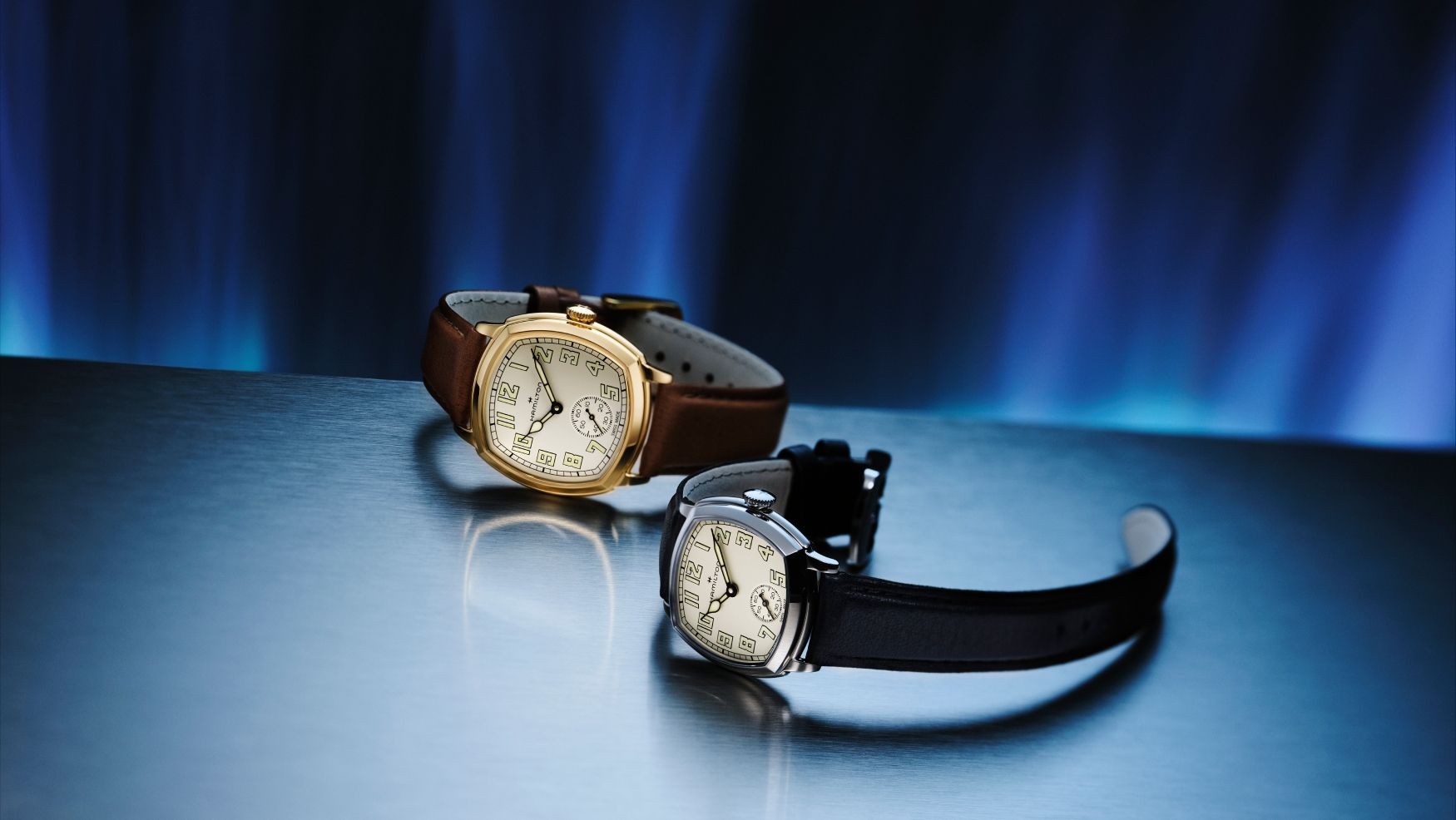
Hamilton's American Classic Cushion Mechanical revives its 1926 Art Deco cushion watches, seen in Oppenheimer, in 30mm and 34mm with the new hand-wound…
Doxa SUB 200: The Accessible Everyday Diver
By Zach Charles • October 10, 2026
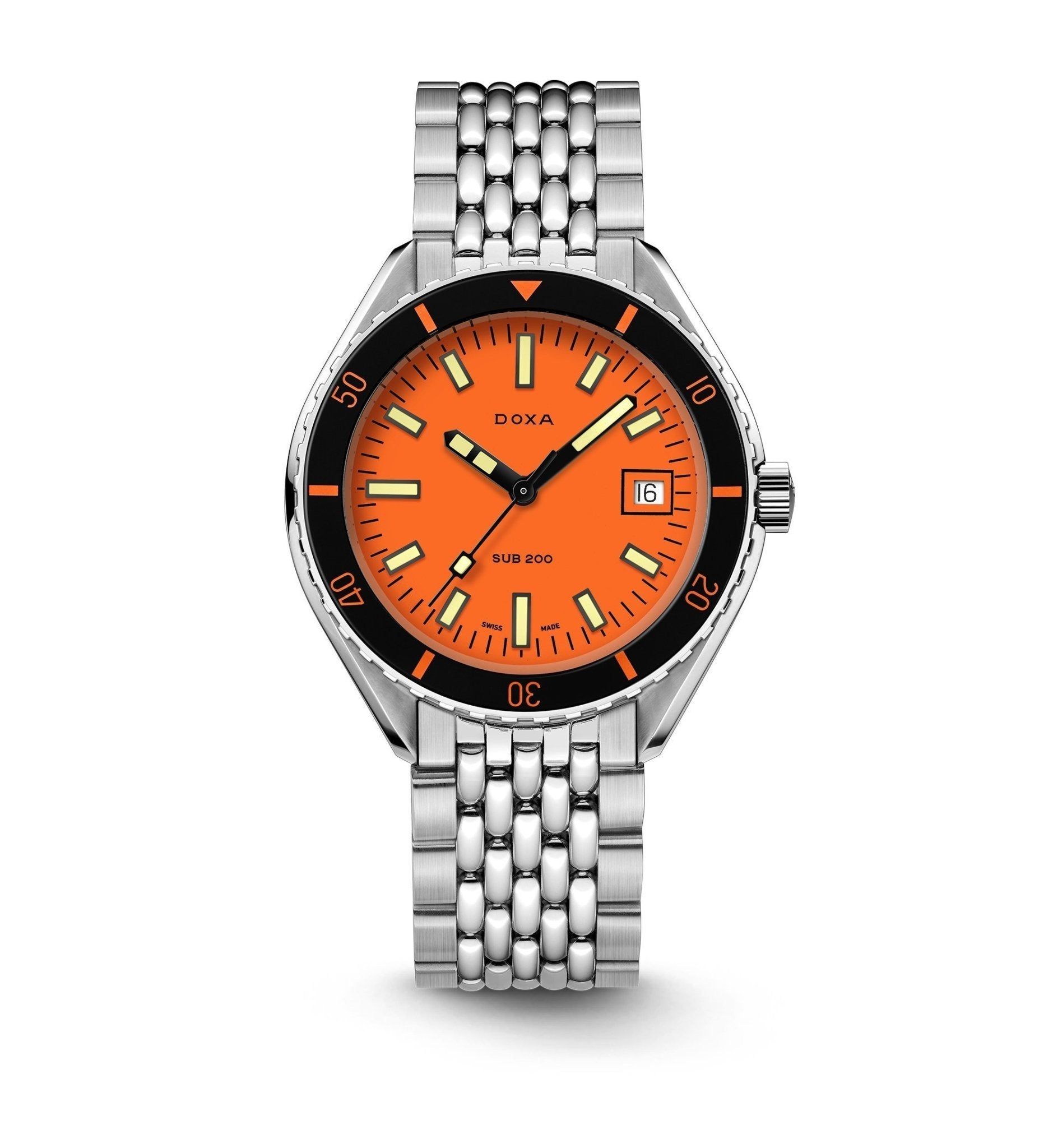
Complete guide to the Doxa SUB 200 — 42mm, 200m, four colorways, Sellita SW200-1. The accessible entry to the Doxa SUB family with the full…
By Zach Charles • October 10, 2026
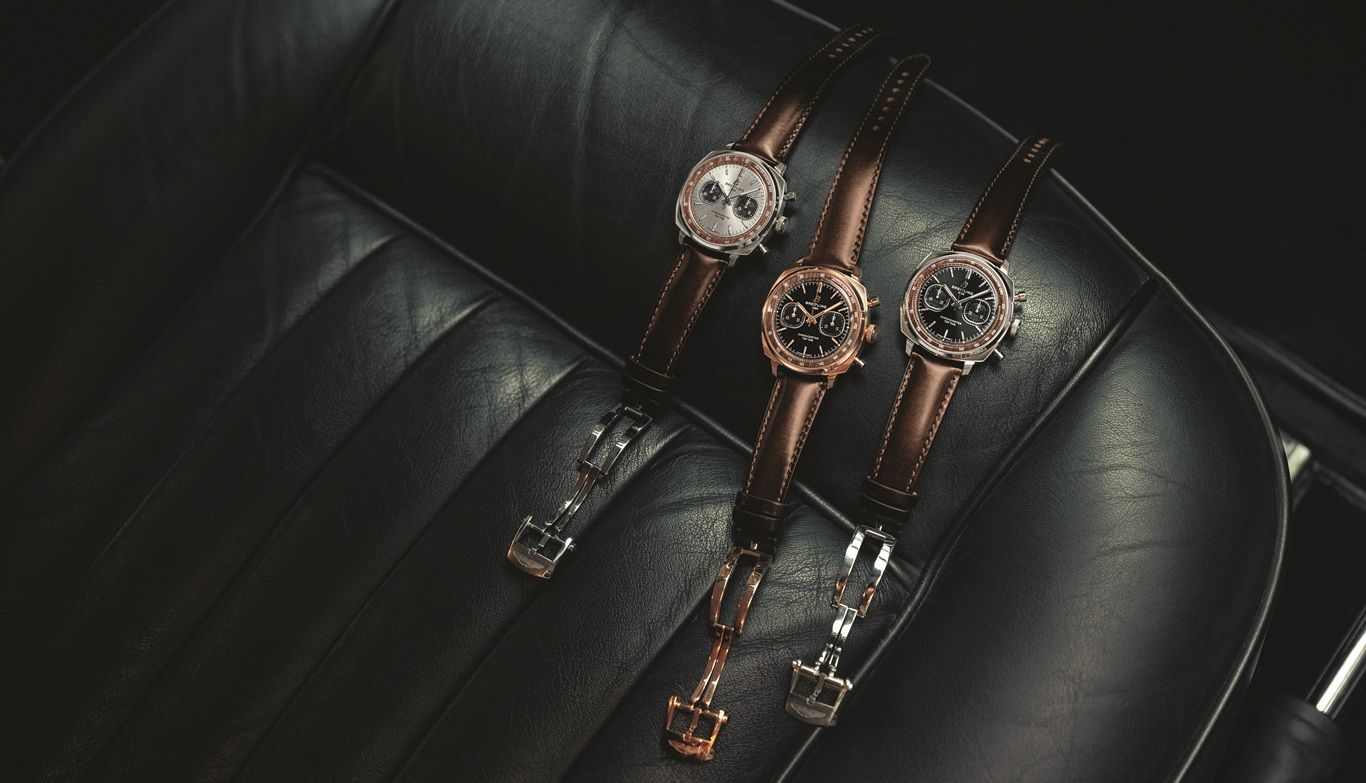
The Breitling Top Time B01 Aston Martin DB5 pairs a cushion-shaped 41mm case, a wooden inner ring and the in-house Caliber 01 across three limited…
By Zach Charles • October 10, 2026
TAG Heuer developed the Mikrograph (2011, 1/100th second), Mikrotimer Flying 1000 (2011, 1/1000th second), and Mikrogirder (2012, 1/2000th second).
Doxa SUB 1500T: The 1,500-Metre Depth-Rating Flagship
By Zach Charles • October 10, 2026
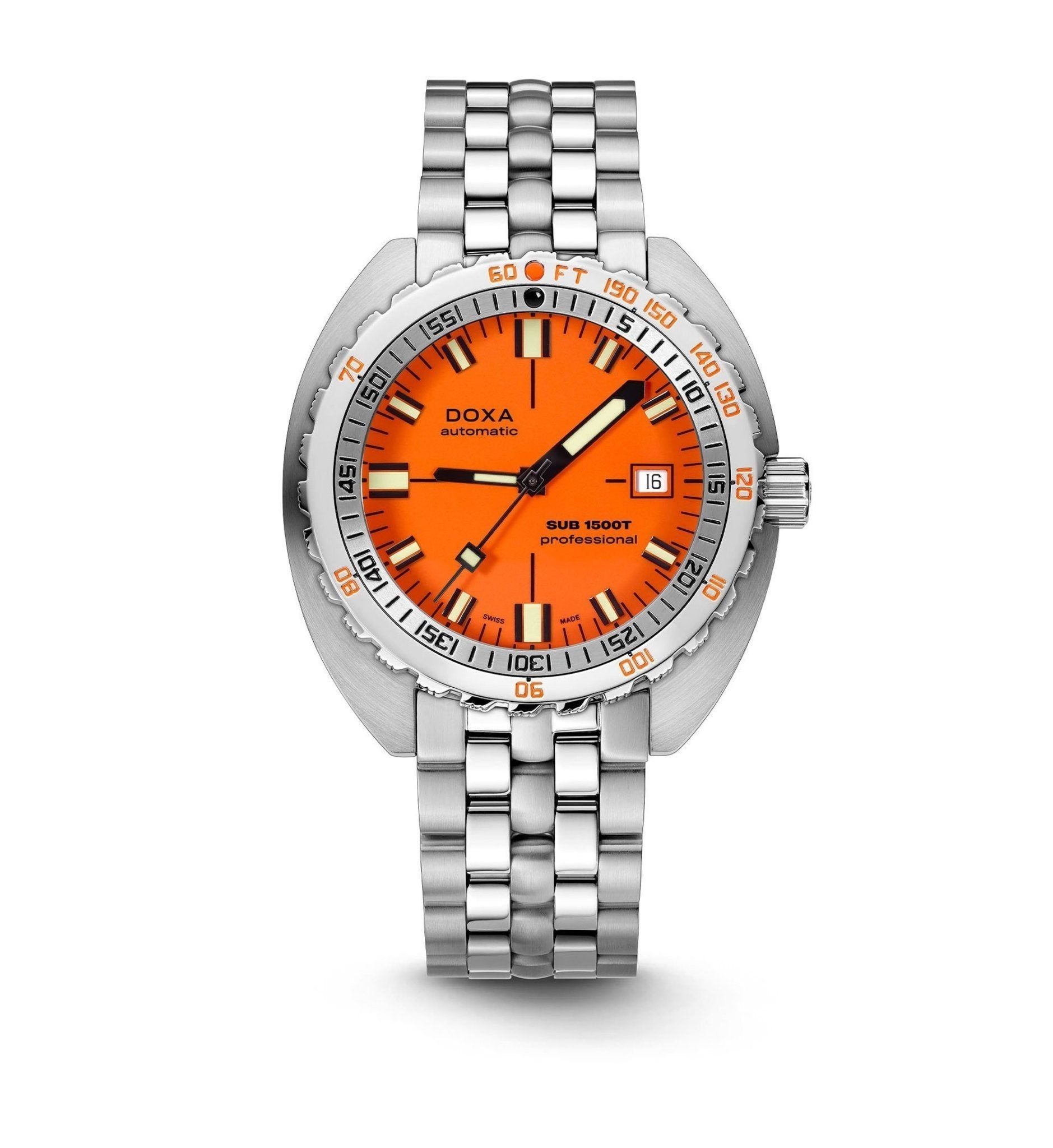
Complete guide to the Doxa SUB 1500T — 45mm, 1,500m depth rating, helium escape valve, ETA 2892-2 movement, USD 2,690.
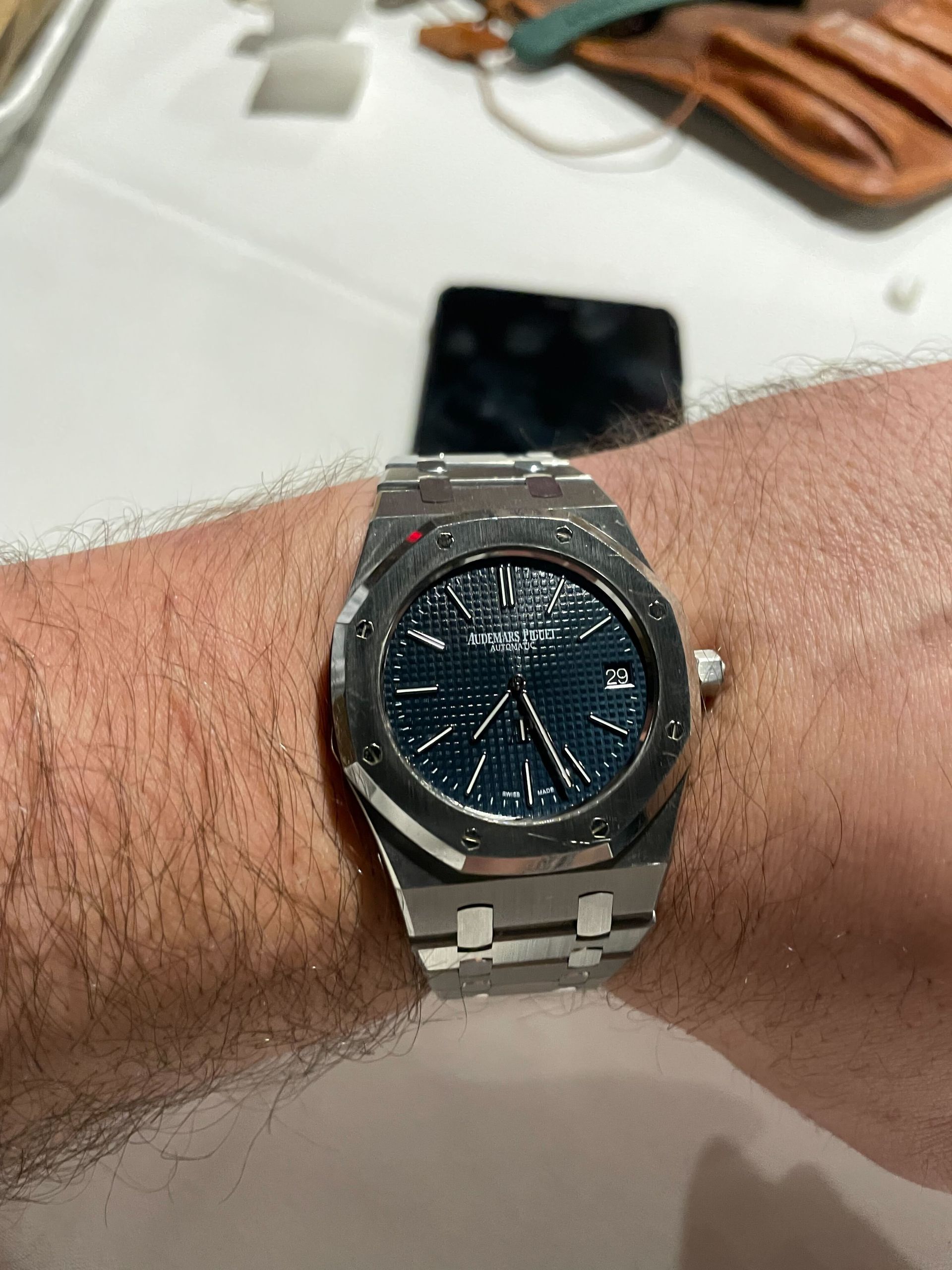
Audemars Piguet Royal Oak 'Jumbo' ref. 15202 with blue tapisserie dial and integrated steel bracelet
By Zach Charles • October 10, 2026
The Audemars Piguet × Swatch Royal Pop is a $400 bioceramic pocket watch in 8 colourways, powered by a new hand-wound SISTEM51 with 90+ hour power…

Time on the Move logo
By Zach Charles • October 10, 2026
Zach Charles is the editor of Time on the Move, an independent watch reference covering brand and model histories, buying guides and release news…
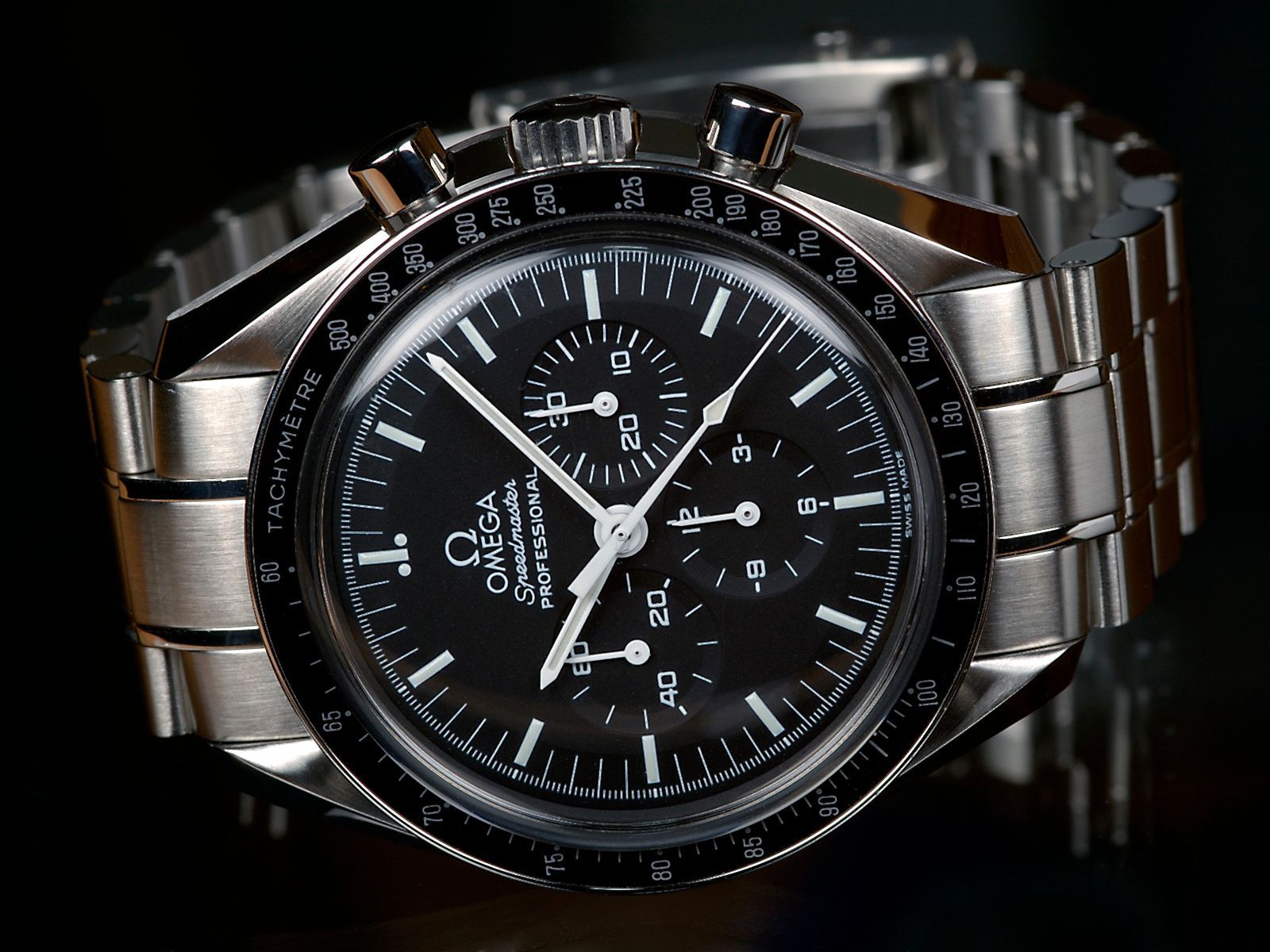
Omega Speedmaster Professional 'Moonwatch' chronograph, front view on steel bracelet
By Zach Charles • October 9, 2026
Find the best watches at every price point from $500 to $15,000 — new and pre-owned. Covers every budget tier with specific reference picks, brand…
By Zach Charles • October 9, 2026
The latest watch news: new releases, Watches and Wonders coverage, discontinuations, industry analysis, and market trends. Currently 1 article.

Seiko's New Panda Chronograph Is Literally a Panda: The Power Design Project HHK001 and HHK002
By Zach Charles • October 8, 2026
Seiko's Power Design Project panda chronograph (HHK001, HHK002) turns the panda dial into an actual panda face, with ear pushers, a 'Sasameter' and a 3D…
Show More