
Tudor Heritage Chrono: The Vintage Revival Chronograph

Zach Charles • September 12, 2026

Share this article

Tudor Heritage Chrono: The Vintage Revival Chronograph

In 2010, Tudor's design team made a decision that had no precedent in the brand's recent history: they looked backward. The Heritage Chrono — introduced at Baselworld 2010 — was the first Tudor reference explicitly described by the brand as a vintage-inspired watch, drawing its design vocabulary from the Big Block Chronographs and Monte Carlo chronograph references of the 1970s. The "Heritage" prefix, now applied retroactively as a category concept, began here.

The Heritage Chrono arrived three years before the Black Bay's debut and two years before Tudor's full strategic pivot to heritage positioning. In retrospect, it was the first indication of what Tudor was planning to become — a brand that took its own history seriously as a design resource rather than something to move beyond. It was produced from approximately 2010 through 2015, discontinued as the Black Bay family absorbed Tudor's narrative energy and the Black Bay Chrono made its purpose redundant with a manufacture movement.


A Tudor Heritage Chronograph — the 2010 reissue inspired by Tudor's 1970s 'Monte Carlo' Oysterdate chronographs.
Photo: S STEEL from Finland — CC BY 2.0 — Wikimedia Commons
Design: Reading the 1970s Reference

The Heritage Chrono's most immediately legible vintage reference is its dial. The standard reference (70330) used a bi-compax layout: two subdials, at 9 and 3 o'clock, with a date window between them. This arrangement echoes the Big Block Chronograph references of the 1970s, where the movement's large rotor necessitated thick case proportions and the dial layout was dictated by the Valjoux 7734 architecture underneath.

The colour palette was deliberately retro. The primary Heritage Chrono offering featured a dark body dial with white register surrounds — a configuration the 1970s called "reverse panda" — along with a version with a lighter base. The baton hour indices used a design idiom consistent with 1970s Swiss chronographs rather than the applied markers of contemporary luxury sports watches. The tachymeter scale printed on the outer chapter ring, the broad flanged bezel with its slightly domed profile, and the large push-piece crown guards all communicated 1970s function without reproducing any specific reference exactly.

The case was 42mm — large for a vintage-inspired watch in 2010, when the neo-vintage trend had not yet normalized 40mm+ diameters on heritage designs. The crown guards flanked the crown in the oversized style of the Big Block era. The case construction was Oystersteel, with the heavy brushing typical of dive and sport tools rather than the polish of a dress chronograph.

The fabric strap was the Heritage Chrono's most distinctive non-dial element. Tudor supplied the watch on a woven fabric strap with integrated rubber backing — a textile option that in 2010 was unusual for a mainstream production chronograph from a brand in Tudor's tier. This strap choice established a precedent that Tudor would extend to the Black Bay's fabric strap options and eventually the Pelagos FXD's NATO configuration.


Reference Variants

Ref. 70330 — the main production reference. Bi-compax dial. Available in dark body/white registers and light body/grey registers configurations. Fabric strap standard; leather and bracelet options available.

Ref. 70310 — the no-date variant with a simplified dial, occasionally listed in dealer inventories but less commonly encountered in secondary market records than the 70330. This variant's cleaner dial more directly referenced the Monte Carlo aesthetic — fewer elements, more visual space.

Blue/white and racing stripe variants: Within production, Tudor offered specific dial colour combinations that referenced 1970s motorsport chronograph aesthetics — the use of colour accents and striped fabric straps in racing livery colours (red/white, blue/white) was consistent with what brands like Heuer were doing in the 1970s, and what Tudor's own Monte Carlo had done with its multicolour disc treatment.


Movement: ETA Valjoux 7753

The Heritage Chrono used the ETA Valjoux 7753 — the right-hand seconds variant of the venerable 7750 architecture. This is a practical distinction: the 7750 itself has the seconds subdial at 9 o'clock and small seconds at 3 (which the 7753 mirrors), but the 7753's layout better accommodated the bi-compax dial design Tudor wanted.

The Valjoux 7750 family is one of the most widely used chronograph ebauches in Swiss watchmaking. It powers everything from Longines to IWC to several Breitling references. Its robustness, repairability, and service network make it an appropriate choice for a watch meant to be worn regularly rather than collected and stored. For the Heritage Chrono — positioned as a daily-wear vintage-inspired sport chronograph at approximately $3,000–$4,000 retail — it was entirely honest.

The Valjoux 7750's cam-actuated lateral clutch architecture (as opposed to the vertical clutch of the MT5813 that came later in the Black Bay Chrono) meant a brief hesitation on the seconds hand when the chronograph was started — a characteristic well-documented in 7750-based chronographs and familiar to buyers of that movement tier.


Context: Between Two Eras

The Heritage Chrono occupies a transitional position in Tudor's history that is worth understanding clearly. It was produced entirely before the brand's North American relaunch in 2013, before the in-house movement programme produced its first chronograph calibre (2017, in the Black Bay Chrono), and before the Heritage prefix became the explicit organizing principle it later appeared to be.

In 2010, Tudor was still largely the "other Wilsdorf brand" — respected but not actively collected, carried by Rolex dealers primarily, and lacking the narrative energy that the Black Bay would later provide. The Heritage Chrono's vintage aesthetic was ahead of its immediate market: the neo-vintage watch trend that would make references like the Black Bay 58 commercially dominant was still several years from peaking.

The Heritage Chrono also preceded Tudor's recovery of its own Big Block and Monte Carlo history as active marketing material. By the time Tudor was explicitly referencing these vintage references in press materials and the Black Bay lineage was established, the Heritage Chrono had been discontinued — replaced by the Black Bay Chrono with its manufacture movement and dive watch DNA.


Collecting the Heritage Chrono

Secondary market pricing for the Heritage Chrono is modest and stable — typically $1,800–$3,000 for examples in good condition with original strap and papers. The watch trades below its original retail price for most configurations, reflecting the general principle that ETA-movement Tudors from this era do not carry secondary market premiums.

What makes the Heritage Chrono interesting to a collector is its historical position: it is the first Tudor to say explicitly, through its design, that Tudor's own history was worth revisiting. The Black Bay 41's 2012 launch gets credited as the beginning of Tudor's heritage positioning, but the Heritage Chrono did it first — without the manufacture movement or the North American relaunch or the editorial coverage that made the Black Bay story legible. It is Tudor's first step in a direction the brand didn't fully commit to for another two years.

For buyers who want a 1970s-aesthetic Tudor chronograph without paying Monte Carlo or Big Block secondary market prices for originals, the Heritage Chrono is the accessible modern alternative — a functional, reliable, visually coherent watch that references that era without trying to replicate any single vintage reference exactly.


Related Articles

Tudor Chronograph Family

Tudor Foundation

Recent Posts

By Zach Charles • October 10, 2026
Hamilton's American Classic Cushion Mechanical revives its 1926 Art Deco cushion watches, seen in Oppenheimer, in 30mm and 34mm with the new hand-wound…
Doxa SUB 200: The Accessible Everyday Diver
By Zach Charles • October 10, 2026
Complete guide to the Doxa SUB 200 — 42mm, 200m, four colorways, Sellita SW200-1. The accessible entry to the Doxa SUB family with the full…
By Zach Charles • October 10, 2026
The Breitling Top Time B01 Aston Martin DB5 pairs a cushion-shaped 41mm case, a wooden inner ring and the in-house Caliber 01 across three limited…
By Zach Charles • October 10, 2026
TAG Heuer developed the Mikrograph (2011, 1/100th second), Mikrotimer Flying 1000 (2011, 1/1000th second), and Mikrogirder (2012, 1/2000th second).
Doxa SUB 1500T: The 1,500-Metre Depth-Rating Flagship
By Zach Charles • October 10, 2026
Complete guide to the Doxa SUB 1500T — 45mm, 1,500m depth rating, helium escape valve, ETA 2892-2 movement, USD 2,690.
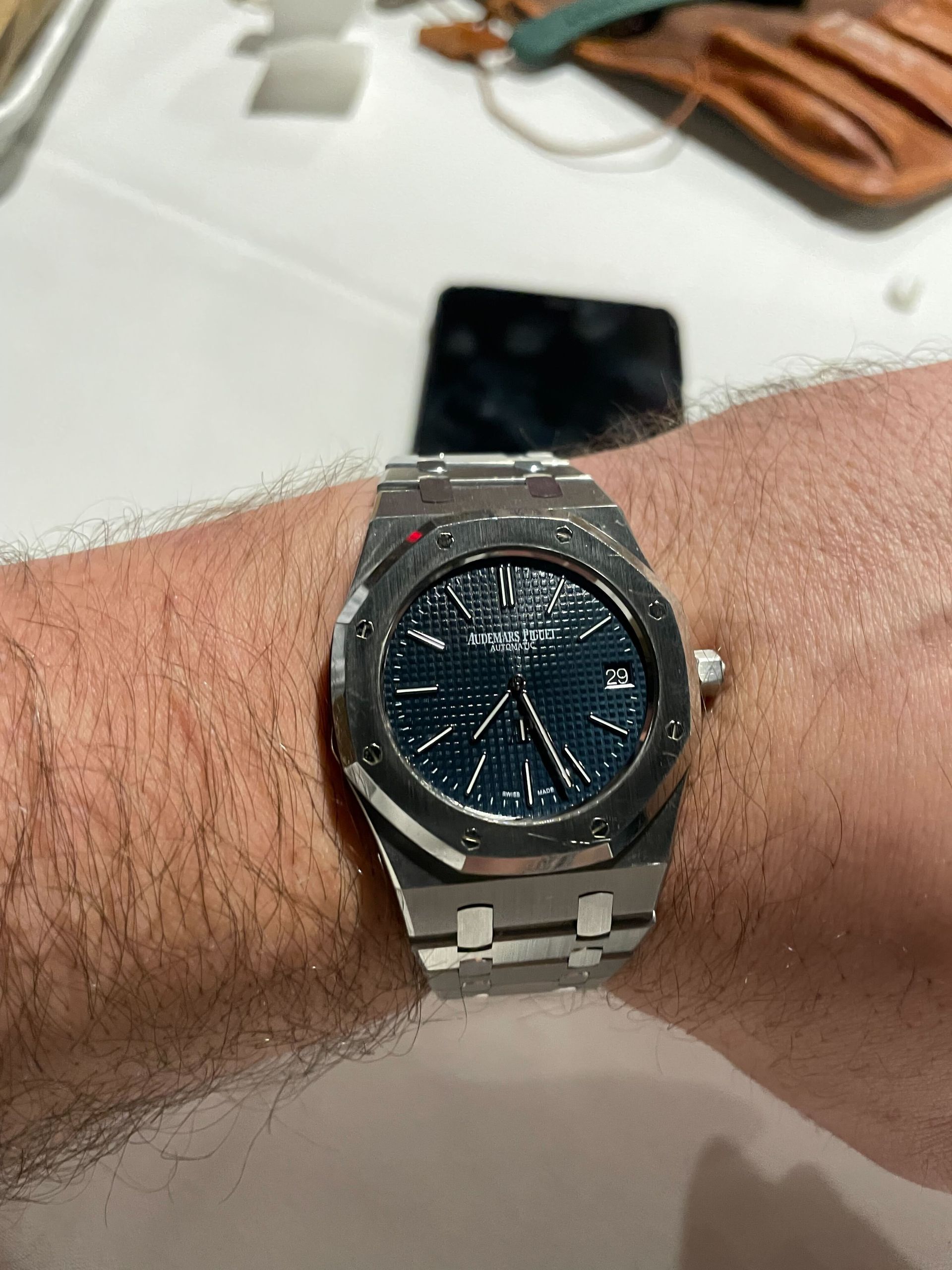
Audemars Piguet Royal Oak 'Jumbo' ref. 15202 with blue tapisserie dial and integrated steel bracelet
By Zach Charles • October 10, 2026
The Audemars Piguet × Swatch Royal Pop is a $400 bioceramic pocket watch in 8 colourways, powered by a new hand-wound SISTEM51 with 90+ hour power…

Time on the Move logo
By Zach Charles • October 10, 2026
Zach Charles is the editor of Time on the Move, an independent watch reference covering brand and model histories, buying guides and release news…
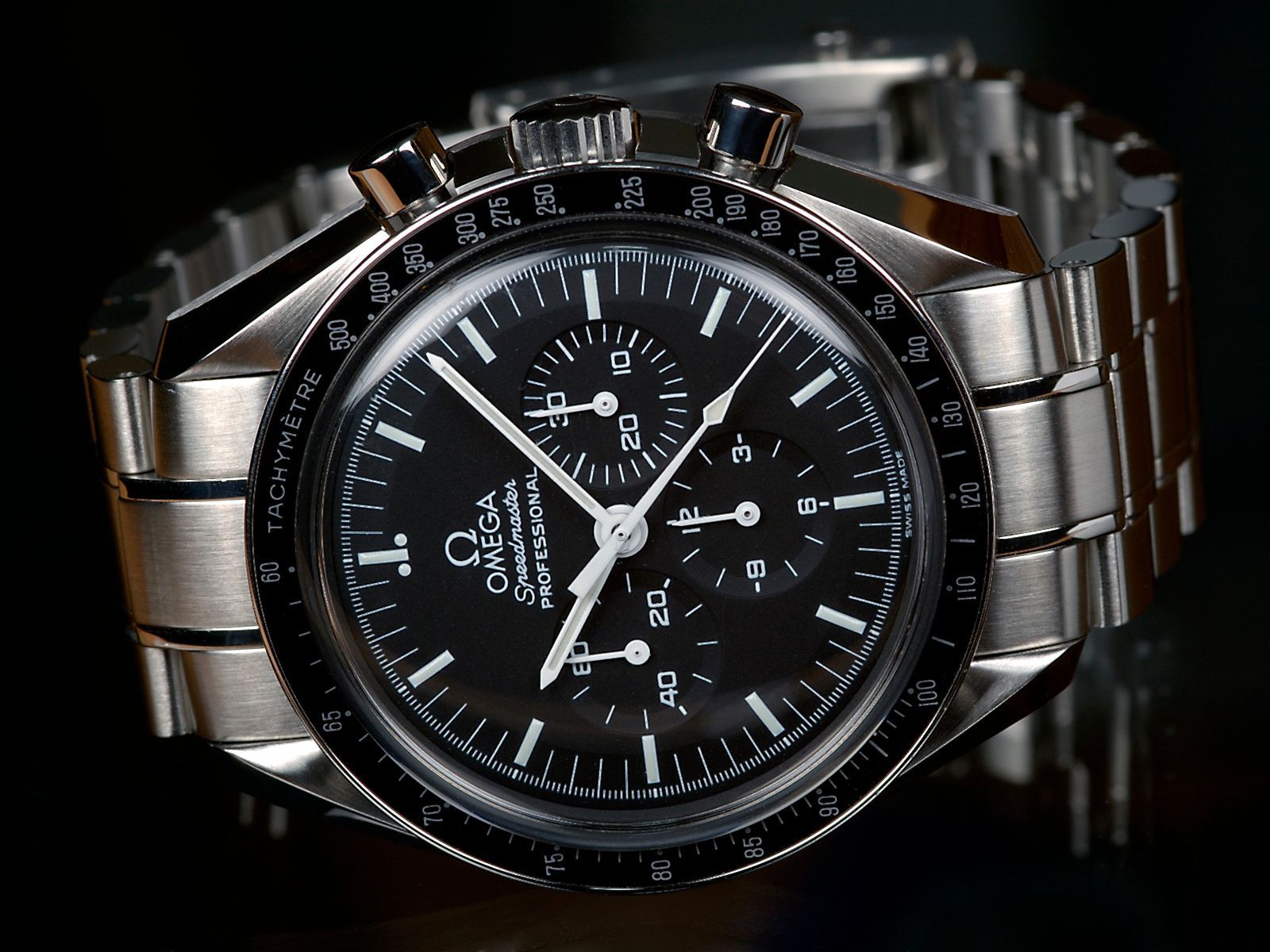
Omega Speedmaster Professional 'Moonwatch' chronograph, front view on steel bracelet
By Zach Charles • October 9, 2026
Find the best watches at every price point from $500 to $15,000 — new and pre-owned. Covers every budget tier with specific reference picks, brand…
By Zach Charles • October 9, 2026
The latest watch news: new releases, Watches and Wonders coverage, discontinuations, industry analysis, and market trends. Currently 1 article.
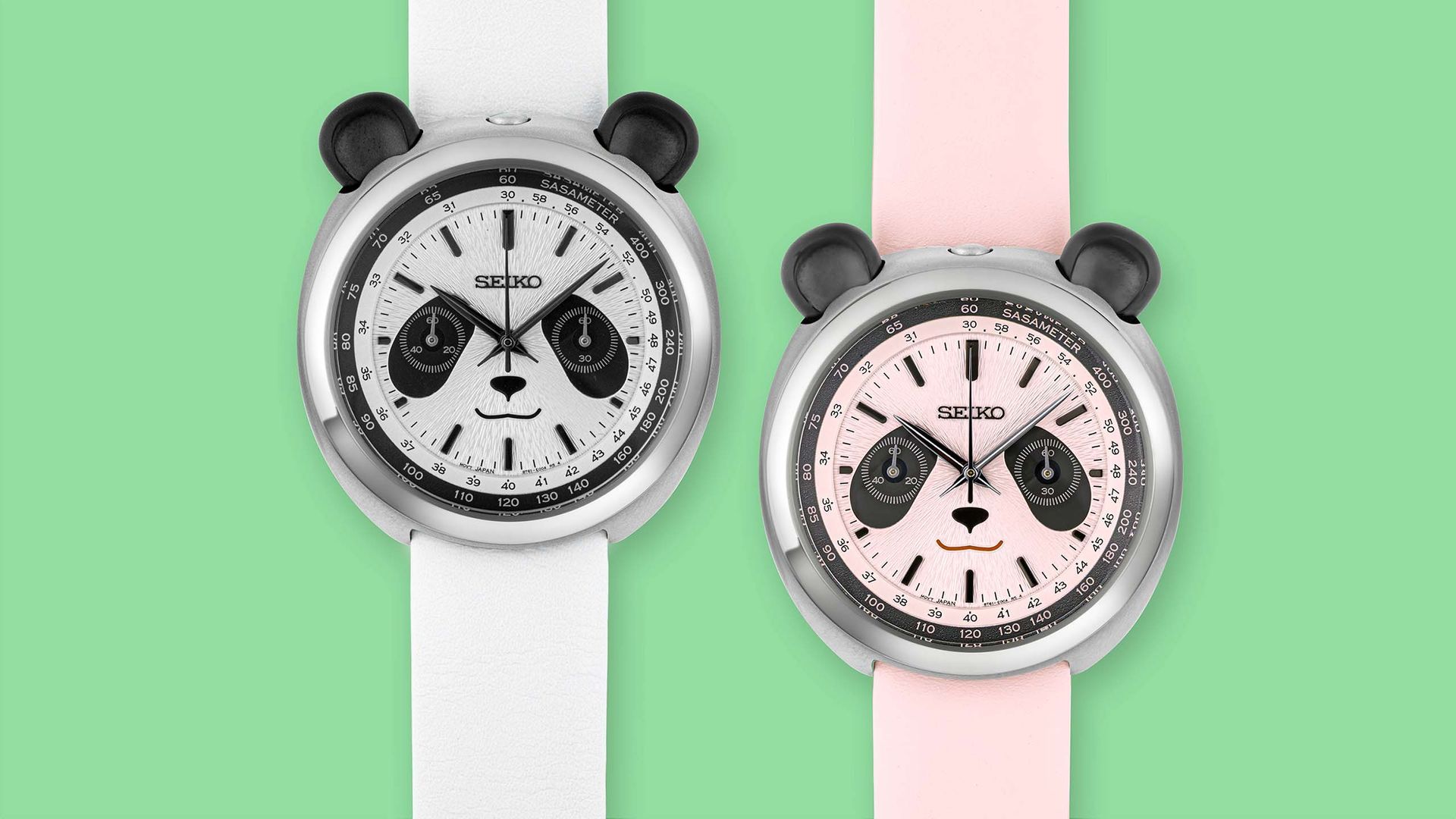
Seiko's New Panda Chronograph Is Literally a Panda: The Power Design Project HHK001 and HHK002
By Zach Charles • October 8, 2026
Seiko's Power Design Project panda chronograph (HHK001, HHK002) turns the panda dial into an actual panda face, with ear pushers, a 'Sasameter' and a 3D…
Show More