Timex Expedition & Camper: Field Watches From the Military to MacGyver
Timex's field watches come from two related families: the Camper , a civilian version of the watch Timex supplied to the US military, now reissued as the MK1 ; and the Expedition line, Timex's broader outdoor collection.
The Military Watch and the Camper
In the 1970s and 1980s Timex supplied watches to the US armed forces built to the MIL-W-46374 military specification — inexpensive, light, legible and effectively disposable. The Timex Camper was the civilian version: a plastic-cased field watch with a 12/24-hour dial, sold to the public and made famous on television by MacGyver.
The MK1 Reissue
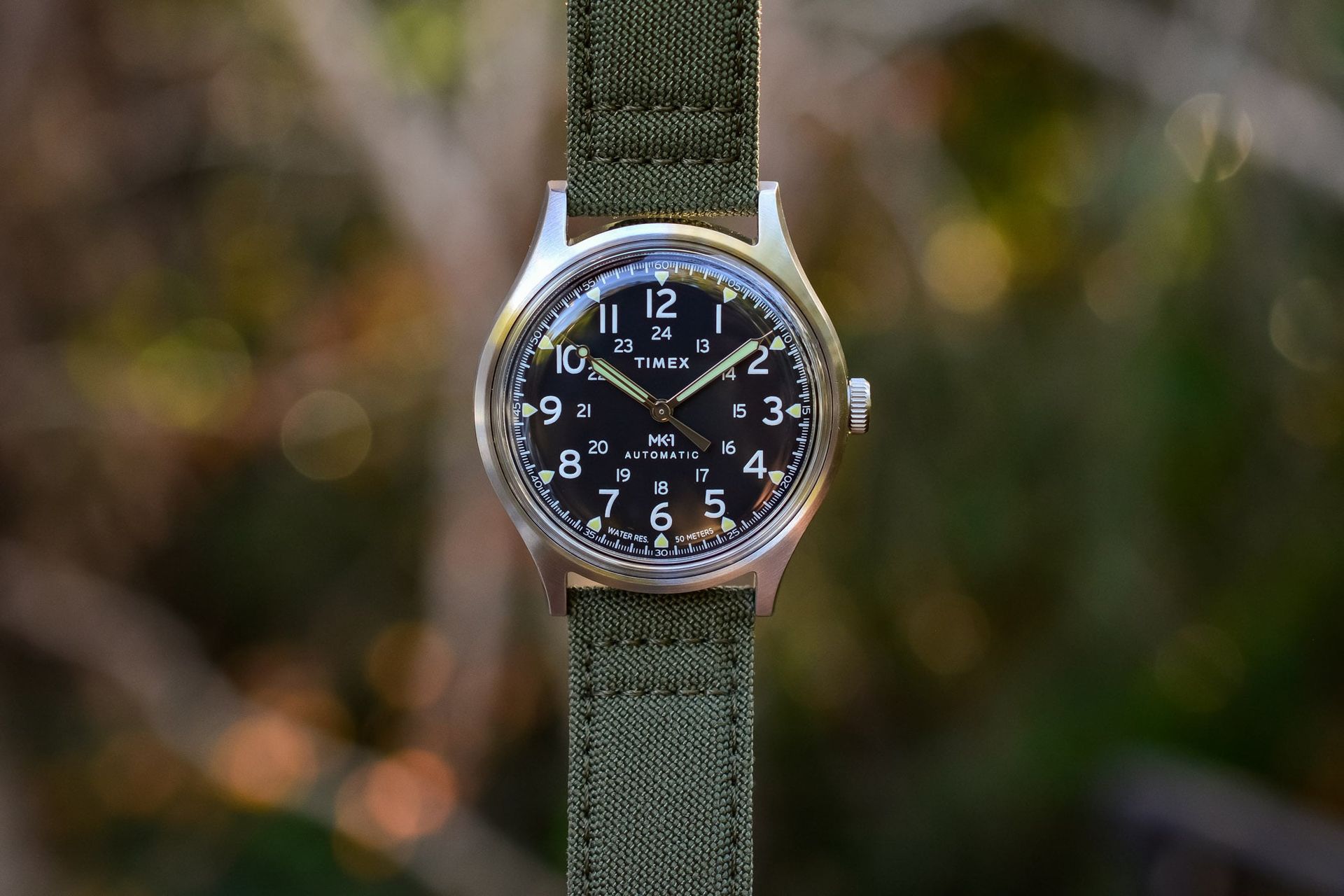
Timex revived the Camper in 2016 under the MK1 name, initially with a resin case, quartz movement and Indiglo, then in 2017 with a 40mm anodised aluminium case. Today the MK1 also comes as a 36mm mechanical and a 40mm MK1 Automatic in 316L steel (13.6mm thick, 47mm lug-to-lug) with a box acrylic crystal, 50m water resistance and the Miyota 8215 (21 jewels, 21,600 vph, 42-hour reserve), priced at about US$299.
The Expedition Line
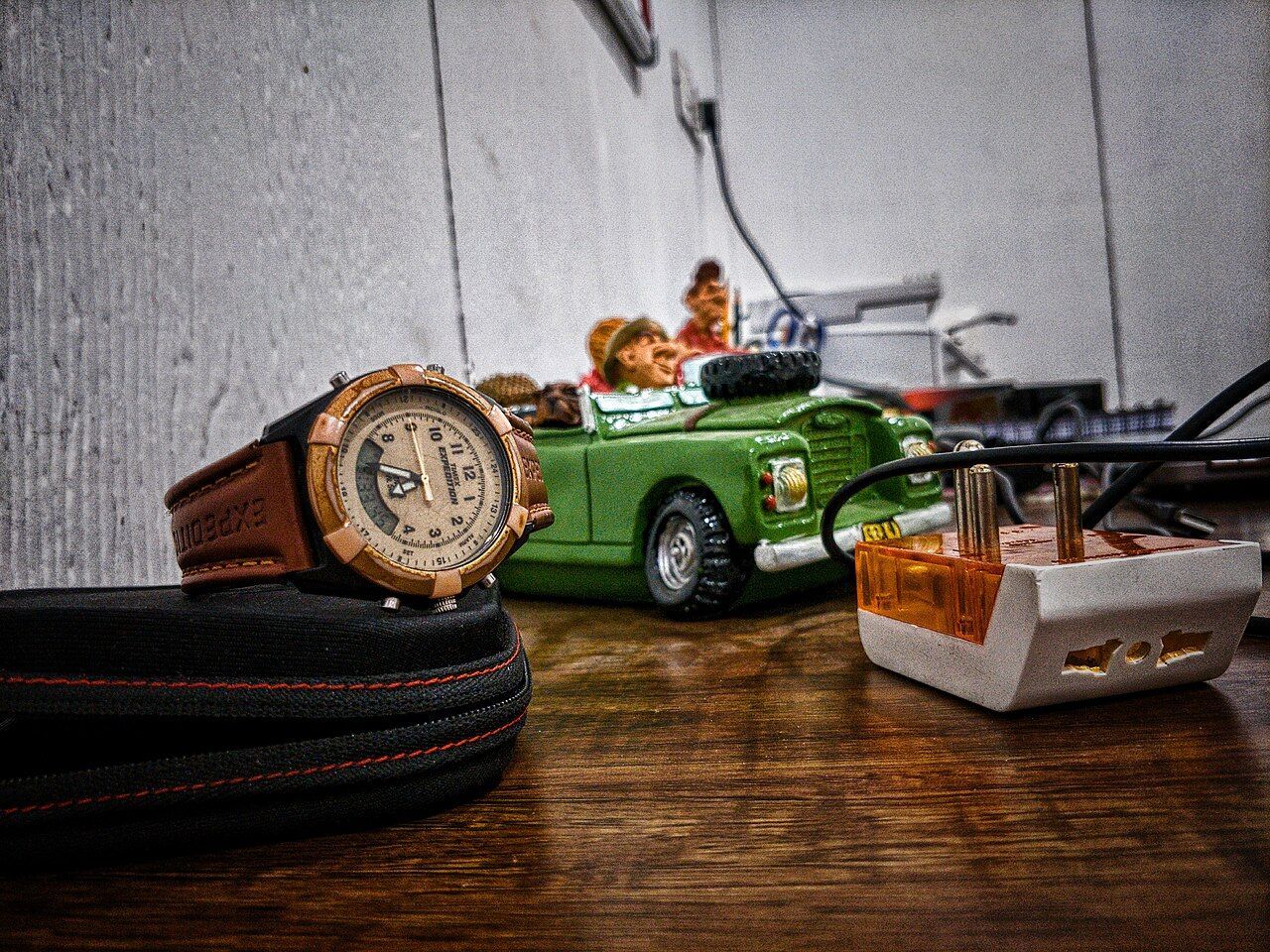
The Expedition collection, launched in the mid-1990s as successor to Timex's Atlantis sports line, is Timex's outdoor range: digital, analogue and analogue-digital watches built for hiking and camping, almost always with Indiglo. Modern highlights include the Expedition North models in steel and titanium, including solar-powered versions.
Photo: Aditya Oberai — CC BY-SA 4.0 — Wikimedia Commons
The Todd Snyder Collaborations
American menswear designer Todd Snyder has made Timex field watches a fashion staple through a long-running collaboration, from the Military Inspired field watch to the Blackout Expedition North , a solar-powered 41mm black-IP steel watch with 100m water resistance and a power reserve of around four months.
What Makes a Field Watch
A field watch prioritises legibility and toughness over everything else: a clear dial with large numerals, luminous hands, a robust case and a strap that can be replaced in the field. The Camper's 12/24-hour dial — standard hours on the outer ring, military hours on the inner track — is the defining feature of the type, letting soldiers read 24-hour time at a glance. The modern MK1 keeps that layout and the triangular lumed markers of the original.
Which MK1 Should You Buy?
The aluminium quartz MK1 is the lightest and most faithful to the throwaway spirit of the original, with Indiglo for night reading. The 36mm mechanical recreates vintage proportions with a slim 10mm case. The 40mm MK1 Automatic is the most substantial, with a steel case, a box acrylic crystal and a self-winding Miyota 8215 visible through the caseback.
Expedition vs. Camper
The Camper and MK1 are focused reissues of one historic military design. The Expedition line is a much broader outdoor collection, ranging from inexpensive digital watches to solar-powered and titanium Expedition North models, almost all with Indiglo. Choose the MK1 for vintage military style; choose an Expedition for modern outdoor features at the lowest prices.
How It Compares
The benchmark Swiss field watch is Hamilton's Khaki Field (see our coverage of the Hamilton Khaki Field Murph), which costs several times as much with a Swiss movement and sapphire crystal. Among Japanese options, the Seiko 5 Sports range includes field-style models. The MK1's strength is its direct link to a watch Timex actually built for the US military. For more options, see the best watches under $500.
Frequently Asked Questions
What is the Timex Camper?
A civilian version of the field watch Timex supplied to the US military in the 1970s and 1980s, made famous by the TV series MacGyver.
What is the Timex MK1?
The modern reissue of the Camper, introduced in 2016–2017 and now offered in quartz, 36mm mechanical and 40mm automatic versions.
What movement is in the Timex MK1 Automatic?
The Japanese Miyota 8215: 21 jewels, 21,600 vph and a 42-hour power reserve.
When did the Timex Expedition line start?
In the mid-1990s, as the successor to Timex's Atlantis line.