H. Moser & Cie.: The Provocative Independent
By Zach Charles, Editor, Time on the Move
H. Moser & Cie. is one of watchmaking's most characterful independents — a Schaffhausen-based manufacture known for minimalist fumé dials, in-house movements, and a willingness to provoke the industry with concept pieces and pointed marketing. Founded in 1828, dissolved in the twentieth century, and revived in the twenty-first, the brand today sits under the Meylan family's ownership and produces a few thousand watches a year at the high end of independent horology.
Heinrich Moser and the 1828 Founding
The house was founded by the Swiss watchmaker Heinrich Moser (born in Schaffhausen in 1805) in St. Petersburg, Russia, in 1828 . Moser built a substantial business supplying watches to the Russian market — his clients included Russian nobility and the Imperial Court — and in 1848 he returned to Schaffhausen and established a manufacturing operation to feed that trade. Moser was also an industrialist: the dam and hydroelectric works he built on the Rhine helped power Schaffhausen's industry, and he is a significant figure in the town's history quite apart from watchmaking.
Decline and Dormancy
After Heinrich Moser's death in 1874, the company passed out of family hands. Through the twentieth century the name faded, and in 1988 the H. Moser & Cie. brand — along with several others — was absorbed and then effectively abandoned. For years the name lay dormant, a piece of Schaffhausen horological heritage without a maker behind it.
The 2002 Revival and the Meylan Era
The modern H. Moser & Cie. began in 2002 , when Moser Schaffhausen AG was founded near Schaffhausen by Dr. Jürgen Lange and Roger Nicholas Balsiger , a great-grandson of Heinrich Moser, together with private investors. The turning point came in 2012 , when the brand was acquired by MELB Holding , the investment vehicle of the Meylan family . Under chairman Georges-Henri Meylan (formerly CEO of Audemars Piguet) and CEO Edouard Meylan , the brand found its modern voice.
A key asset is the sister company Precision Engineering AG , which manufactures hairsprings and regulating organs in-house — a rare capability that underpins Moser's claim to genuine manufacture status and supplies the escapements for its calibres.
Design Signatures: Fumé Dials and No Logo
Moser's aesthetic is defined by the fumé dial — a colour that darkens from a bright centre to a smoky edge — and by radical minimalism. The brand's most famous provocation is the Concept series: watches with no logo, no indices and no text on the dial at all. Moser has repeatedly used tongue-in-cheek concept pieces (a "Swiss Alp Watch" parodying the Apple Watch; a dial made of Vantablack; a "Swiss Mad" watch partly made of cheese) to comment on the industry, all while producing serious, finely finished mechanical watches.
The Modern Collections
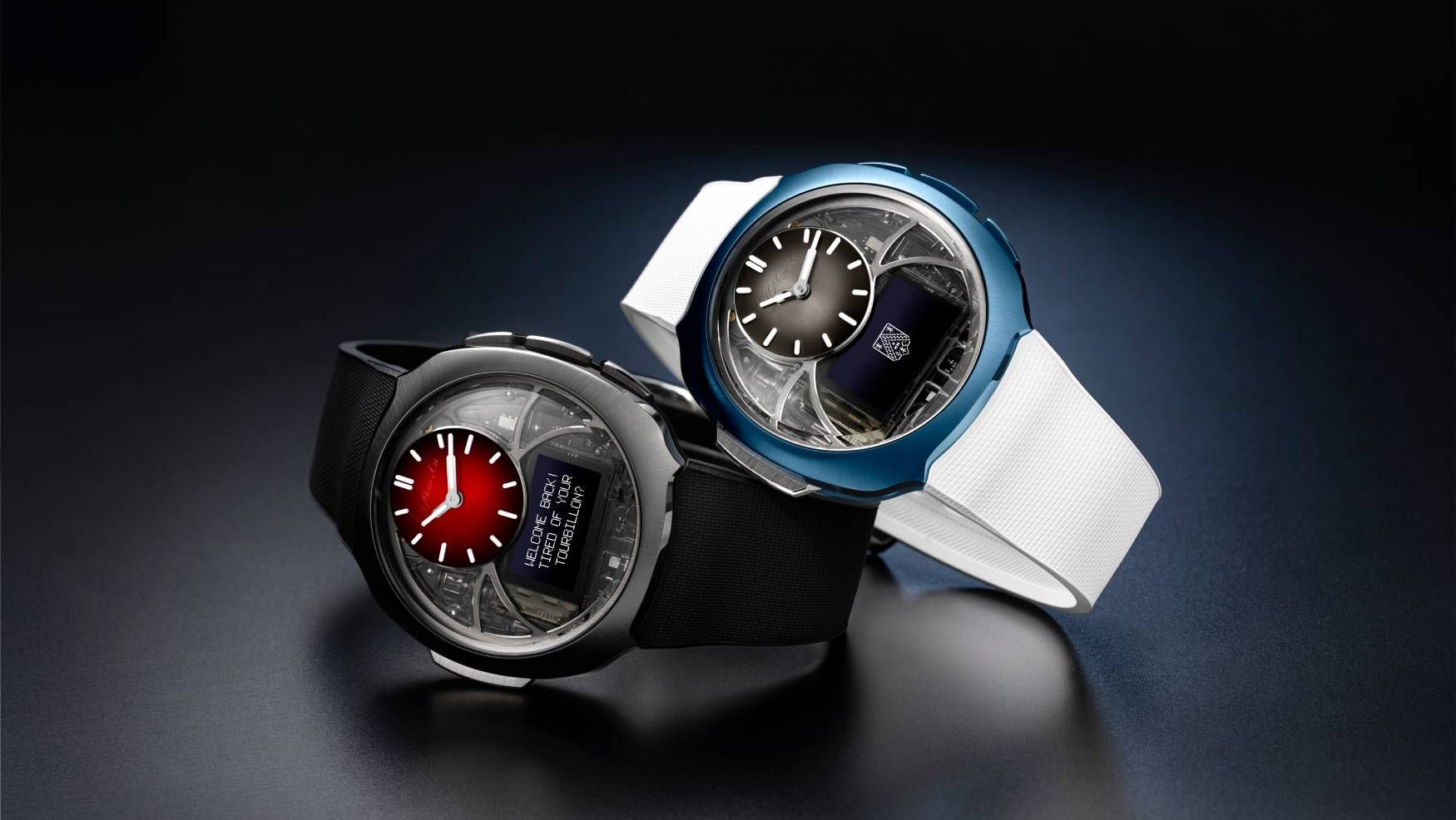
Today the range centres on a few pillars: the classic Endeavour round dress line; the cushion-shaped Heritage ; the tonneau Pioneer ; and, since 2020, the sporty, integrated-bracelet Streamliner. Complications span perpetual calendars (with Moser's clever single-aperture display), minute repeaters, tourbillons and the double-hairspring "Streamliner Tourbillon." In 2026 the brand even entered the digital arena with the Streamliner Off-Grid, its first digital watch and most accessible piece — a characteristically unexpected move from an independent that thrives on defying expectations.
Frequently Asked Questions
When was H. Moser & Cie. founded?
In 1828, by Heinrich Moser in St. Petersburg, Russia; he established manufacturing in Schaffhausen, Switzerland, in 1848.
Who owns H. Moser today?
The Meylan family, through MELB Holding, which acquired the brand in 2012. Edouard Meylan is CEO.
What is H. Moser known for?
Fumé dials, minimalist and logo-free "Concept" watches, in-house movements and hairsprings (via Precision Engineering AG), and provocative concept pieces.
Does H. Moser make its own movements?
Yes. Moser produces movements in-house and, unusually, makes its own hairsprings and regulating organs through sister company Precision Engineering AG.