
Vacheron Constantin Métiers d’Art: Enamel, Guilloché, and Miniature Painting

Zach Charles • July 3, 2026

Share this article

Vacheron Constantin Métiers d'Art: The Decorative Crafts Collection

The phrase métiers d'art translates from French as "artistic crafts" — a category that in the watchmaking context refers to the decorative techniques applied to watch dials and cases that require years of artisan training and produce results that cannot be replicated by machine. Vacheron Constantin's Métiers d'Art collection applies these techniques — grand feu enamel, guilloché engraving, gemstone marquetry, cloisonné, miniature painting — to watch dials in limited series that are as much art objects as timepieces.

The collection is rooted in a genuine historical connection. The Genevan cabinotier tradition — from which VC emerged in 1755 — encompassed both watchmaking and decorative arts. Master craftsmen in 18th and 19th century Geneva produced enamelled pocket watches with miniature portrait dials that were diplomatic gifts, personal commissions, and expressions of the highest available craft. The Métiers d'Art programme continues that tradition with contemporary themes and techniques.


Caseback decoration, Vacheron Constantin Overseas first generation, late 1990s
The caseback decoration of a first-generation Vacheron Constantin Overseas from the late 1990s — showing the Maltese cross motif and the engraved movement à guichet that distinguishes the Overseas from Vacheron’s dress output.
Photo: EMore98 — CC BY-SA 4.0 — Wikimedia Commons

Grand Feu Enamel

Vacheron Constantin Patrimony, ref. 33091-1, 18ct gold, c. 1990
Vacheron Constantin Patrimony reference 33091-1 in 18-carat gold, manual wind, circa 1990 — the ultra-thin movement, flush lugs, and absence of applied indices distil the Genevan tradition to its essentials.
Photo: Charles J. Sharp — CC BY-SA 4.0 — Wikimedia Commons

Grand feu enamel — literally "great fire enamel" — is the foundational technique of the Métiers d'Art collection. The process:

  1. Powdered glass (enamel) is applied to a metal surface (typically copper or gold)
  2. The piece is fired in a kiln at temperatures between 800°C and 900°C
  3. The enamel fuses to the metal surface
  4. The process is repeated multiple times — sometimes 8 to 12 firings — to build up the depth, translucency, and colour saturation of the finished dial
  5. Each firing carries risk: the enamel can crack, bubble, or fail to bond correctly, and there is no repair — a failed firing means starting again

The finished grand feu enamel surface has a depth and luminosity that printed or painted surfaces cannot replicate. The colour comes from within the glass layer, not from pigment applied to the surface. The technique has been used for pocket watch dials since the 17th century, and the best contemporary practitioners are a small number of specialists in Geneva and the surrounding cantons.


Guilloché

Vacheron Constantin dress watch, late 1980s
A Vacheron Constantin dress watch from the late 1980s — epitomising the understated round case and guilloché dial work that has defined the brand’s dress watch output since the mid-20th century.
Photo: Clyde94 — CC BY-SA 4.0 — Wikimedia Commons

Guilloché is a mechanical engraving technique that produces precise, repeating geometric patterns on a metal surface. The traditional engine-turning lathe — called a tour à guillocher — is a machine that has not materially changed since the 18th century. It produces patterns (Clous de Paris, barleycorn, hobnail, sunray, wave) by cutting into metal with a diamond-tipped tool while rotating and translating the workpiece on a precise mechanical path.

A guilloché dial for a Métiers d'Art watch may take a skilled artisan an entire day to produce. The pattern must be precisely spaced, consistently deep, and free of chatter marks. The finished surface — often covered with a thin layer of grand feu enamel to protect and enhance it — creates a play of light under the finished dial that changes with viewing angle.

Guilloché appears throughout the Métiers d'Art collection as a background technique and as the primary decorative element in certain series.


Miniature Painting

Caseback decoration, Vacheron Constantin Overseas first generation, late 1990s
The caseback decoration of a first-generation Vacheron Constantin Overseas from the late 1990s — showing the Maltese cross motif and the engraved movement à guichet that distinguishes the Overseas from Vacheron’s dress output.
Photo: EMore98 — CC BY-SA 4.0 — Wikimedia Commons

Some Métiers d'Art series use miniature painting on enamel — the technique used in 18th-century portrait watches. A miniature painter works on a white enamel ground with vitreous pigments (metal oxides that survive firing) at a scale of 30–40mm diameter, producing images with the fidelity and permanence of an enamel object rather than the fragility of pigment on paper or canvas.

The technique requires that the painter understand not just the image but the chemistry — colours shift on firing, and the painter must anticipate what the kiln will do to each pigment. This is knowledge accumulated over years of practice and failure.


Notable Métiers d'Art Series

Vacheron Constantin Patrimony, ref. 33091-1, 18ct gold, c. 1990
Vacheron Constantin Patrimony reference 33091-1 in 18-carat gold, manual wind, circa 1990 — the ultra-thin movement, flush lugs, and absence of applied indices distil the Genevan tradition to its essentials.
Photo: Charles J. Sharp — CC BY-SA 4.0 — Wikimedia Commons

Les Masques

Les Masques (The Masks) is one of the most visually striking Métiers d'Art series — a collection of watches whose dials recreate ceremonial masks from world cultures in relief. The masks are produced in gold, silver, or coloured materials at a scale that fits the watch dial, creating a three-dimensional sculptural object within the round case.

The series engages with the anthropological significance of masks — objects of ritual, identity, and transformation across cultures — in the format of a watch dial.

Chagall & L'Opéra de Paris

A series celebrating the ceiling of the Palais Garnier — the Paris Opéra house — painted by Marc Chagall in 1964. The Métiers d'Art series reproduced sections of Chagall's ceiling in miniature enamel, a project that required both exceptional miniature painting skill and a direct relationship with the Opéra de Paris institution.

Florilège

The Florilège series uses botanical subjects — flowers rendered in grand feu enamel or gem-set marquetry. The techniques vary across the series but the subject matter is consistent: the tradition of botanical illustration and the decorative use of natural forms.

L'Éloge de la Nature

A series of watches celebrating natural subjects — birds, insects, and flora — in techniques including grand feu enamel and engraving. The Éloge de la Nature series applies the same archival rigour to natural history subjects that other Métiers d'Art series apply to art history.

Escher

A collaboration with the M.C. Escher Foundation translating Escher's mathematical tessellations and impossible perspectives into watch dials. The Escher Métiers d'Art required artisans to reproduce imagery that is not merely decorative but mathematically structured — the tesselation must be precise, not approximate.


The Cal 2460 G4 — Movement as Canvas

Vacheron Constantin dress watch, late 1980s
A Vacheron Constantin dress watch from the late 1980s — epitomising the understated round case and guilloché dial work that has defined the brand’s dress watch output since the mid-20th century.
Photo: Clyde94 — CC BY-SA 4.0 — Wikimedia Commons

The Calibre 2460 G4 is a manufacture automatic movement developed specifically to support the Métiers d'Art collection's dial design. Rather than displaying time in a conventional arrangement (hours and minutes at centre, seconds subdial), the Cal 2460 G4 places all four indications — hours, minutes, seconds, date — in four corner subdials at the cardinal positions of the dial.

This arrangement leaves the centre of the dial completely free — an uninterrupted 30mm+ canvas for the artistic work. A miniature painting, an enamel scene, a guilloché design, or a gem-set marquetry can occupy the centre of the dial without any hands crossing it.

The Cal 2460 G4 is not a complication movement in the traditional sense — it does not add functions beyond the basic four indications. Its value is architectural: it relocates the display to maximise the creative space available to the dial artisan.


The Ateliers Artisanaux

The Métiers d'Art collection is made possible by VC's internal ateliers artisanaux — workshops staffed by specialists in each decorative technique. Grand feu enamel, guilloché engraving, miniature painting, and gem-setting are all practised in-house, by artisans whose skills are developed over years and whose work cannot be outsourced without loss of quality.

This is a specific aspect of VC's manufacture identity: the Holy Trinity position is not only about movement quality but about the complete range of craft skills that can be applied to a watch. The Métiers d'Art collection is the most complete expression of this: a movement by one set of craftspeople, a case by another, a dial by a third.


Collector Position

Métiers d'Art references are produced in very limited numbers — typically fewer than 20 pieces per series variant, sometimes as few as 2 to 5. They trade above retail for the most desirable series and in pre-owned condition reflect the scarcity, the irreplaceable artisan labour, and the appeal of specific themes. The Chagall series, the Escher series, and the Les Masques references are among the most consistently sought by collectors who approach watches as objects at the intersection of horology and art.


Frequently Asked Questions

What is the Vacheron Constantin Métiers d'Art collection?
A series of limited-edition watches applying Genevan decorative crafts — grand feu enamel, guilloché engraving, miniature painting, gem-set marquetry — to watch dials. Each series uses a specific technique and subject, produced in very limited numbers by in-house artisans.

What is grand feu enamel?
A technique where powdered glass is fused to metal in a high-temperature kiln (800–900°C), repeated 8–12 times to build depth and colour. The result has a luminosity and permanence that printed or painted surfaces cannot achieve. Used for miniature dial portraits since the 17th century.

What is guilloché?
A mechanical engraving technique using an engine-turning lathe to cut precise geometric patterns into metal. The process uses tools unchanged since the 18th century; a guilloché dial may take a full day's work. Often combined with grand feu enamel for depth.

What is the Calibre 2460 G4?
A manufacture automatic movement designed for the Métiers d'Art collection: all four indications (hours, minutes, seconds, date) are placed in subdials at the four cardinal positions, leaving the centre of the dial completely open for artisanal work.

What are the notable Métiers d'Art series?
Key series include Les Masques (world ceremonial masks in relief), the Chagall collaboration (Palais Garnier ceiling in miniature enamel), Escher (mathematical tessellations), Florilège (botanical subjects), and L'Éloge de la Nature (birds, insects, flora in enamel and engraving).


Related Articles

Recent Posts

By Zach Charles • October 10, 2026
Hamilton's American Classic Cushion Mechanical revives its 1926 Art Deco cushion watches, seen in Oppenheimer, in 30mm and 34mm with the new hand-wound…
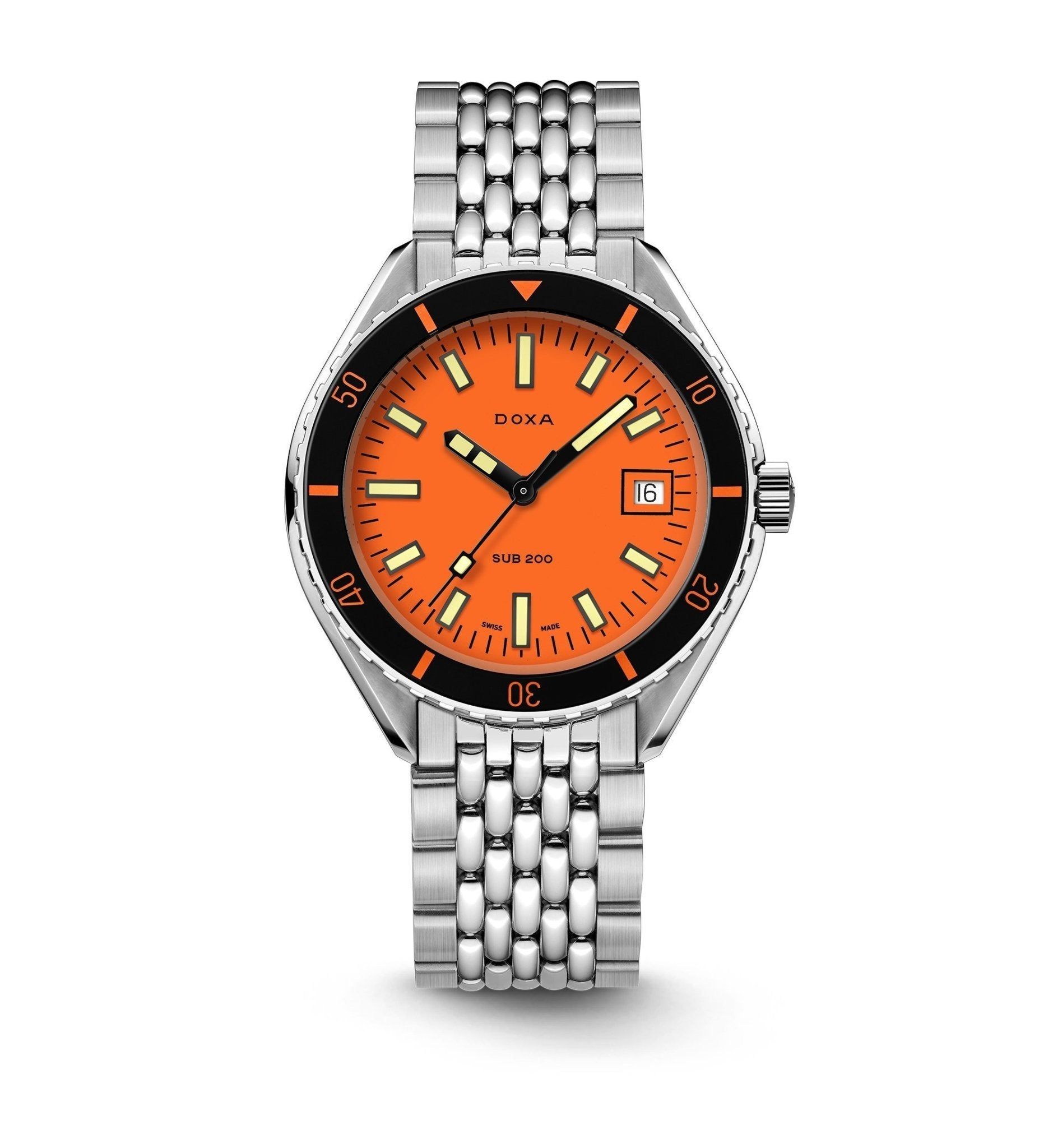
Doxa SUB 200: The Accessible Everyday Diver
By Zach Charles • October 10, 2026
Complete guide to the Doxa SUB 200 — 42mm, 200m, four colorways, Sellita SW200-1. The accessible entry to the Doxa SUB family with the full…
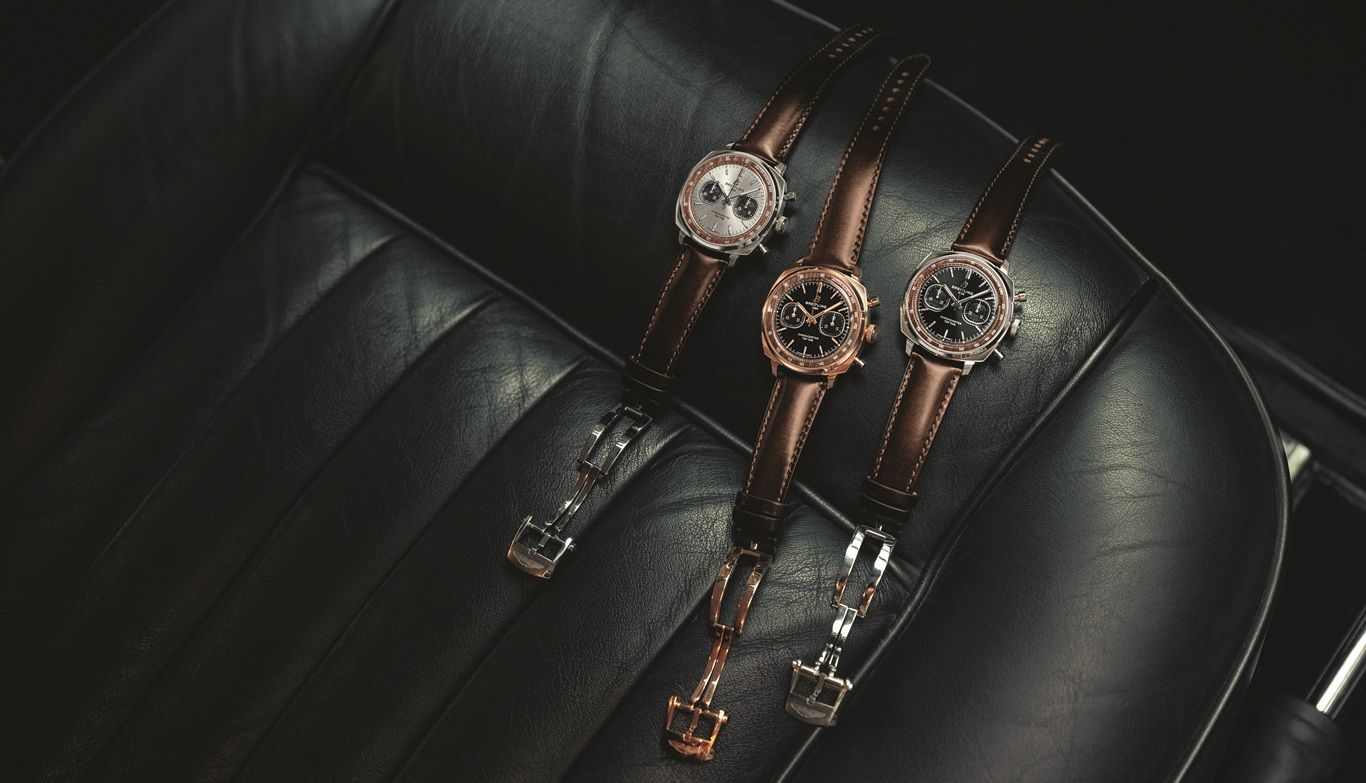
By Zach Charles • October 10, 2026
The Breitling Top Time B01 Aston Martin DB5 pairs a cushion-shaped 41mm case, a wooden inner ring and the in-house Caliber 01 across three limited…
By Zach Charles • October 10, 2026
TAG Heuer developed the Mikrograph (2011, 1/100th second), Mikrotimer Flying 1000 (2011, 1/1000th second), and Mikrogirder (2012, 1/2000th second).

Doxa SUB 1500T: The 1,500-Metre Depth-Rating Flagship
By Zach Charles • October 10, 2026
Complete guide to the Doxa SUB 1500T — 45mm, 1,500m depth rating, helium escape valve, ETA 2892-2 movement, USD 2,690.
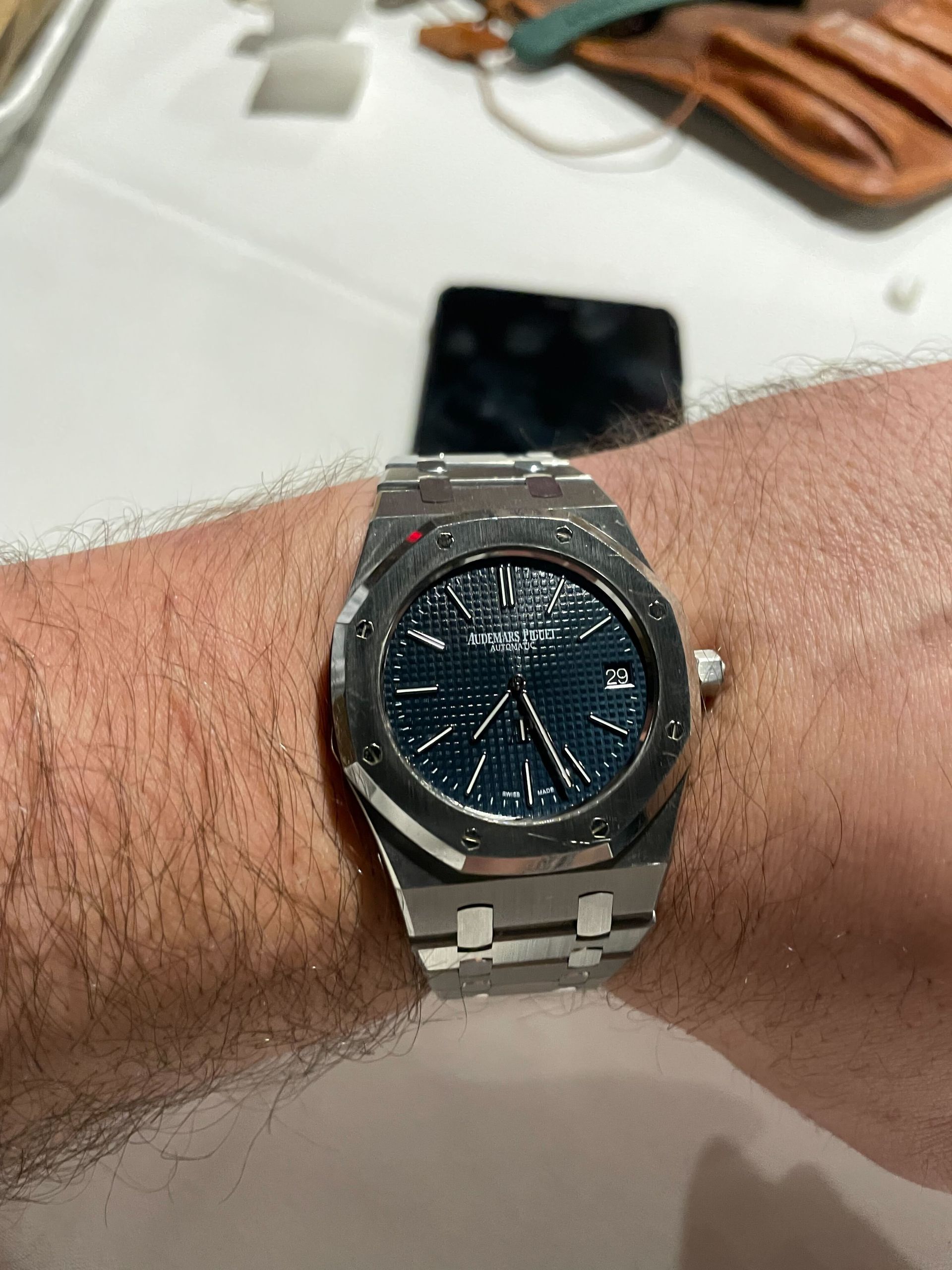
Audemars Piguet Royal Oak 'Jumbo' ref. 15202 with blue tapisserie dial and integrated steel bracelet
By Zach Charles • October 10, 2026
The Audemars Piguet × Swatch Royal Pop is a $400 bioceramic pocket watch in 8 colourways, powered by a new hand-wound SISTEM51 with 90+ hour power…

Time on the Move logo
By Zach Charles • October 10, 2026
Zach Charles is the editor of Time on the Move, an independent watch reference covering brand and model histories, buying guides and release news…
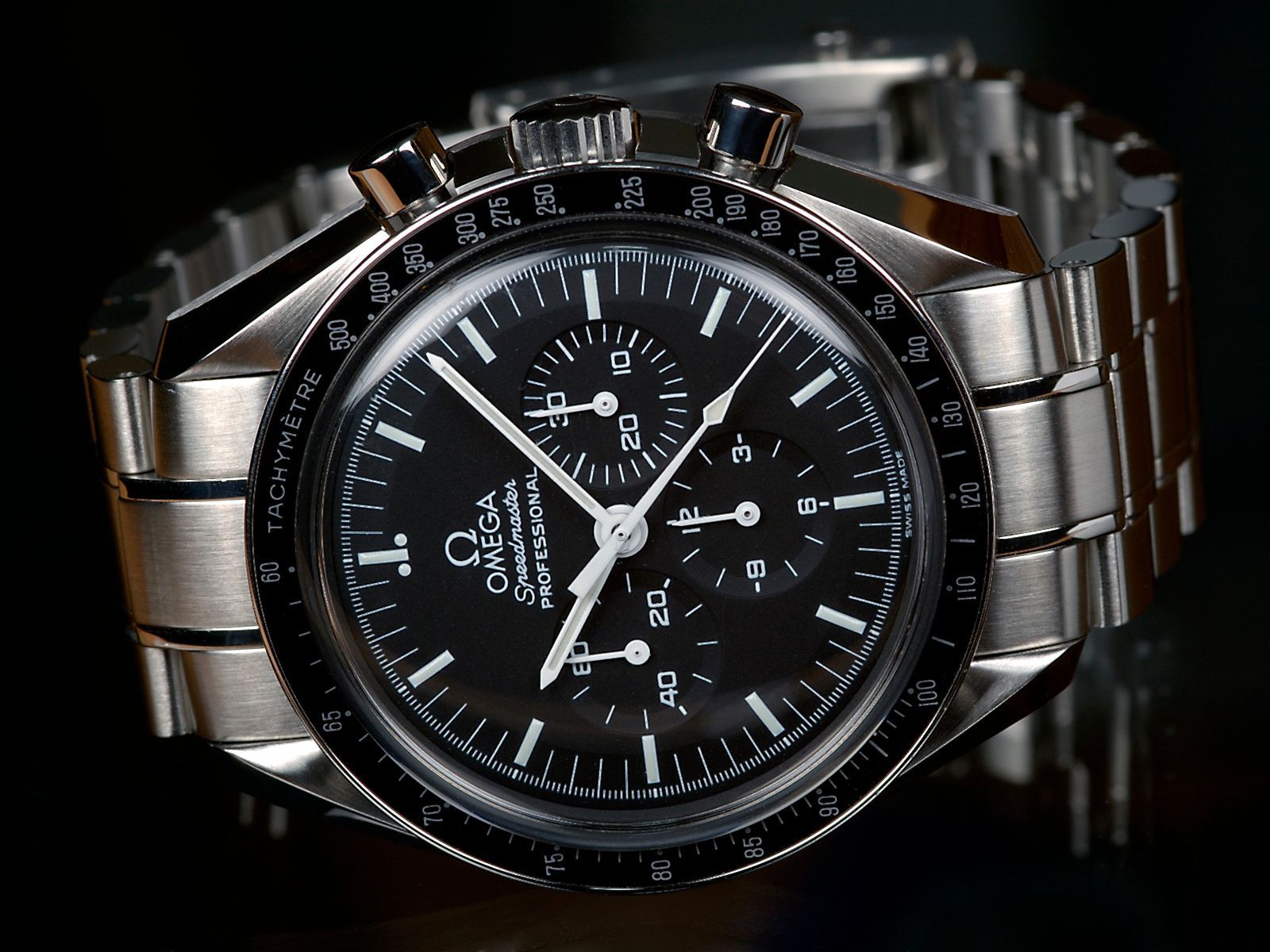
Omega Speedmaster Professional 'Moonwatch' chronograph, front view on steel bracelet
By Zach Charles • October 9, 2026
Find the best watches at every price point from $500 to $15,000 — new and pre-owned. Covers every budget tier with specific reference picks, brand…
By Zach Charles • October 9, 2026
The latest watch news: new releases, Watches and Wonders coverage, discontinuations, industry analysis, and market trends. Currently 1 article.

Seiko's New Panda Chronograph Is Literally a Panda: The Power Design Project HHK001 and HHK002
By Zach Charles • October 8, 2026
Seiko's Power Design Project panda chronograph (HHK001, HHK002) turns the panda dial into an actual panda face, with ear pushers, a 'Sasameter' and a 3D…
Show More