
Vacheron Constantin: The World’s Oldest Watch Manufacturer in Continuous Production

Zach Charles • May 24, 2026

Share this article

Vacheron Constantin: The Oldest Watchmaker in Continuous Operation

On 17 September 1755 , Jean-Marc Vacheron signed a notarial contract in Geneva hiring his first apprentice. That document — the oldest known written record of the maison — is the foundation of a continuous watchmaking tradition that has never been interrupted. Wars, economic crises, and the mechanical disruption of quartz have each passed through without stopping production. Vacheron Constantin claims, with good documentary support, to be the oldest watchmaker in the world in continuous operation.

The city in which Vacheron worked was one of the intellectual centres of the eighteenth century. He was a contemporary and acquaintance of Voltaire and Rousseau. The Geneva of 1755 was an Enlightenment city, and its master watchmakers — the cabinotiers, working in top-floor ateliers to maximise natural light — were practitioners of a craft that combined manual skill with scientific knowledge.


Vacheron Constantin Patrimony, ref. 33091-1, 18ct gold, c. 1990
Vacheron Constantin Patrimony reference 33091-1 in 18-carat gold, manual wind, circa 1990 — the ultra-thin movement, flush lugs, and absence of applied indices distil the Genevan tradition to its essentials.
Photo: Charles J. Sharp — CC BY-SA 4.0 — Wikimedia Commons

Jean-Marc Vacheron and the Founding

Vacheron Constantin dress watch, late 1980s
A Vacheron Constantin dress watch from the late 1980s — epitomising the understated round case and guilloché dial work that has defined the brand’s dress watch output since the mid-20th century.
Photo: Clyde94 — CC BY-SA 4.0 — Wikimedia Commons

Jean-Marc Vacheron was born in 1731. He established his workshop in Geneva in 1755 , in the tradition of the cabinotier — the Genevan master watchmaker who worked in a bright upper-floor cabinet, combining the technical demands of precision mechanics with the sensibility of a craftsman.

The September 1755 contract is not a romantic anniversary date but a documented commercial fact: a legal record of a craftsman establishing a professional relationship. Everything that follows — the 270 years of uninterrupted production — rests on that foundation.


François Constantin and the Motto

In April 1819 , François Constantin (1788–1854) became a partner to Jacques-Barthélemi Vacheron (1787–1864), the founder's grandson. Constantin was not a watchmaker; he was a businessman who opened new markets through extensive travel across Europe and North America. He transformed a Genevan atelier into an internationally connected commercial enterprise.

The motto — "Faire mieux si possible, ce qui est toujours possible" ("Do better if possible, and that is always possible") — first appeared in a letter written by François Constantin, dated 5 July 1819 , shortly after the partnership formed. It is not a retroactive marketing phrase; it is a statement of intent recorded in correspondence at the moment the firm began its commercial expansion.

The firm became "Vacheron & Constantin" in April 1819. The ampersand was dropped — the name simplified to "Vacheron Constantin" — in 1970 .


The Pantograph and Industrial Precision

Caseback decoration, Vacheron Constantin Overseas first generation, late 1990s
The caseback decoration of a first-generation Vacheron Constantin Overseas from the late 1990s — showing the Maltese cross motif and the engraved movement à guichet that distinguishes the Overseas from Vacheron’s dress output.
Photo: EMore98 — CC BY-SA 4.0 — Wikimedia Commons
In 1839 , Vacheron Constantin hired Georges-Auguste Leschot as Technical Director. Leschot invented the pantograph — a machine that could reproduce component shapes with consistent precision across multiple units. Before the pantograph, each watch part was produced individually by hand; dimensions varied between pieces and parts were not interchangeable. After Leschot's pantograph, consistent component production became possible at scale.

Leschot won the Prix de la Rive in 1844 for this contribution. The pantograph is widely credited as the technical foundation of modern industrial Swiss watchmaking — not merely for Vacheron Constantin, but for the industry as a whole.


The Maltese Cross and the Hallmark

The Maltese cross was adopted as Vacheron Constantin's emblem in approximately 1880–1887 — the precise date is documented inconsistently, with VC's own materials referencing "since 1880" while other records associate it with the 1887 Swiss National Exhibition. The cross appears in the case architecture of the Fiftysix, in the bezel notching of the Overseas, and as the tourbillon cage shape in the Traditionnelle 14-Day Tourbillon.

Vacheron Constantin received the Poinçon de Genève (Hallmark of Geneva) for the first time in 1901 — the first such certification awarded to the maison. The Hallmark, established in 1886, verifies that a movement has been made and regulated in the Canton of Geneva to specific standards of finish and accuracy. As of 2013, approximately 70% of VC's production carries the Hallmark under the expanded 2012 criteria, which extended the certification to the complete cased watch.


Ultra-Thin Milestones

Vacheron Constantin Patrimony, ref. 33091-1, 18ct gold, c. 1990
Vacheron Constantin Patrimony reference 33091-1 in 18-carat gold, manual wind, circa 1990 — the ultra-thin movement, flush lugs, and absence of applied indices distil the Genevan tradition to its essentials.
Photo: Charles J. Sharp — CC BY-SA 4.0 — Wikimedia Commons

Vacheron Constantin has contributed to the technical record for thin movements across multiple categories:

  • 1955 — Calibre 1003: At 1.64mm thick, the thinnest manually wound movement in the world at the time — introduced for the brand's 200th anniversary.
  • 1967 — Calibre 1120: At 2.45mm thick, the world's thinnest automatic movement with a full-sized rotor. The Calibre 1120 is based on the JLC Calibre 920 ébauche — an ultra-thin automatic designed at Jaeger-LeCoultre and supplied to three manufactures: Vacheron Constantin, Audemars Piguet (as Cal 2120/2121, used in the Royal Oak), and Patek Philippe (as Cal 28-255, used in the original Nautilus 3700/1A). Three of the most celebrated watches of the 1970s share this movement origin.
  • 1992 — Calibre 1755: At 3.28mm thick, the world's thinnest minute repeater movement at the time of its introduction.


The Holy Trinity and Richemont

Vacheron Constantin dress watch, late 1980s
A Vacheron Constantin dress watch from the late 1980s — epitomising the understated round case and guilloché dial work that has defined the brand’s dress watch output since the mid-20th century.
Photo: Clyde94 — CC BY-SA 4.0 — Wikimedia Commons

Vacheron Constantin occupies one position in the informal hierarchy known as the Holy Trinity — the three Geneva manufactures (alongside Patek Philippe and Audemars Piguet) that are understood to occupy the apex of Swiss watchmaking in terms of prestige, finishing standards, and complication capability. The term is industry shorthand rather than a formal designation, but it reflects a genuine market reality: buyers who reach for a Vacheron are generally considering the same alternatives.

In 1996 , Vacheron Constantin was acquired by Vendôme Luxury Group , a Richemont subsidiary. Richemont absorbed the Vendôme interests fully in 1997–1998, making VC a direct Richemont property. The manufacture relocated to modern facilities in Plan-les-Ouates , Geneva's watchmaking district, in 2004.


Complications Heritage

Caseback decoration, Vacheron Constantin Overseas first generation, late 1990s
The caseback decoration of a first-generation Vacheron Constantin Overseas from the late 1990s — showing the Maltese cross motif and the engraved movement à guichet that distinguishes the Overseas from Vacheron’s dress output.
Photo: EMore98 — CC BY-SA 4.0 — Wikimedia Commons

Vacheron Constantin's complications record spans nearly three centuries:

  • 1884: A pocket watch for a private client — perpetual calendar, miniature painting enamel dial.
  • 1929: A pocket watch for King Fuad I of Egypt — perpetual calendar, chronograph, minute repeater.
  • 2005: The Tour de l'Île — 16 complications, the most complicated wristwatch in the world at the time, 7 pieces, USD 1,500,000 list price.
  • 2015: The Reference 57260 — 57 complications, the most complicated pocket watch ever made, 1 unique piece.
  • 2024: The Les Cabinotiers Berkley Grand Complication — 63 complications, surpassing the 57260.

The bespoke Atelier Cabinotiers , launched in 2006, offers fully custom one-of-a-kind commissions that continue this tradition in the contemporary era.


Collections

Vacheron Constantin's current catalogue organises around several distinct families:

  • Overseas — the integrated-bracelet sports watch, successor to the 1977 reference 222
  • Patrimony — ultra-thin dress watches in the minimalist tradition of the 1950s
  • Traditionnelle — classical complications in a bolder architectural case
  • Historiques — modern reissues of historically significant references
  • Fiftysix — inspired by the 1956 reference 6073; the most accessible entry point
  • Égérie — the dedicated women's collection, launched 2020
  • Métiers d'Art — artistic craft dials using grand feu enamel, marquetry, guilloché, and engraving
  • Les Cabinotiers — bespoke and grand complications, including the Reference 57260
  • Les Complications — the full spectrum of Vacheron's complication history


Frequently Asked Questions

When was Vacheron Constantin founded?
17 September 1755, when Jean-Marc Vacheron signed a notarial contract hiring his first apprentice in Geneva — the oldest known written record of the maison. Vacheron Constantin claims the longest uninterrupted watchmaking history of any manufacture.

What does "Faire mieux si possible" mean?
"Do better if possible, and that is always possible" — the motto first appeared in a letter written by partner François Constantin on 5 July 1819, shortly after he joined the firm as Jacques-Barthélemi Vacheron's commercial partner.

What is the Holy Trinity?
An informal designation for the three Geneva manufactures — Vacheron Constantin, Patek Philippe, and Audemars Piguet — considered to represent the apex of Swiss watchmaking prestige, finishing standards, and complication capability.

What is the Calibre 1120?
Vacheron Constantin's ultra-thin automatic movement, at 2.45mm the world's thinnest full-rotor automatic when introduced in 1967. Based on the JLC Calibre 920 ébauche, the same movement was used by Audemars Piguet in the Royal Oak and Patek Philippe in the original Nautilus.

Who owns Vacheron Constantin?
Richemont, the Swiss luxury group. Vacheron Constantin was acquired by Vendôme Luxury Group (a Richemont subsidiary) in 1996; Richemont consolidated the ownership fully in 1997–1998.


Related Articles

Recent Posts

By Zach Charles • October 10, 2026
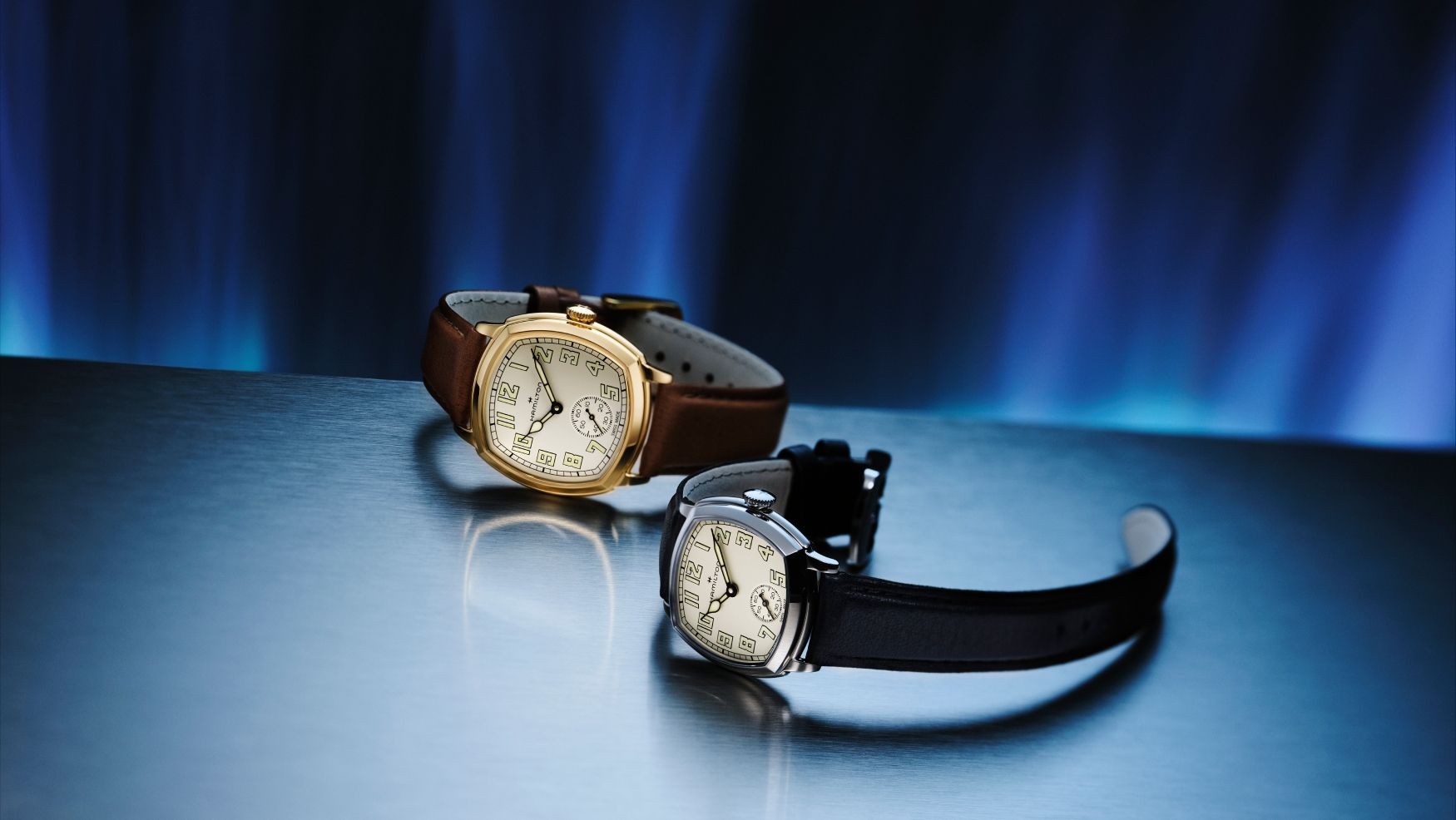
Hamilton's American Classic Cushion Mechanical revives its 1926 Art Deco cushion watches, seen in Oppenheimer, in 30mm and 34mm with the new hand-wound…
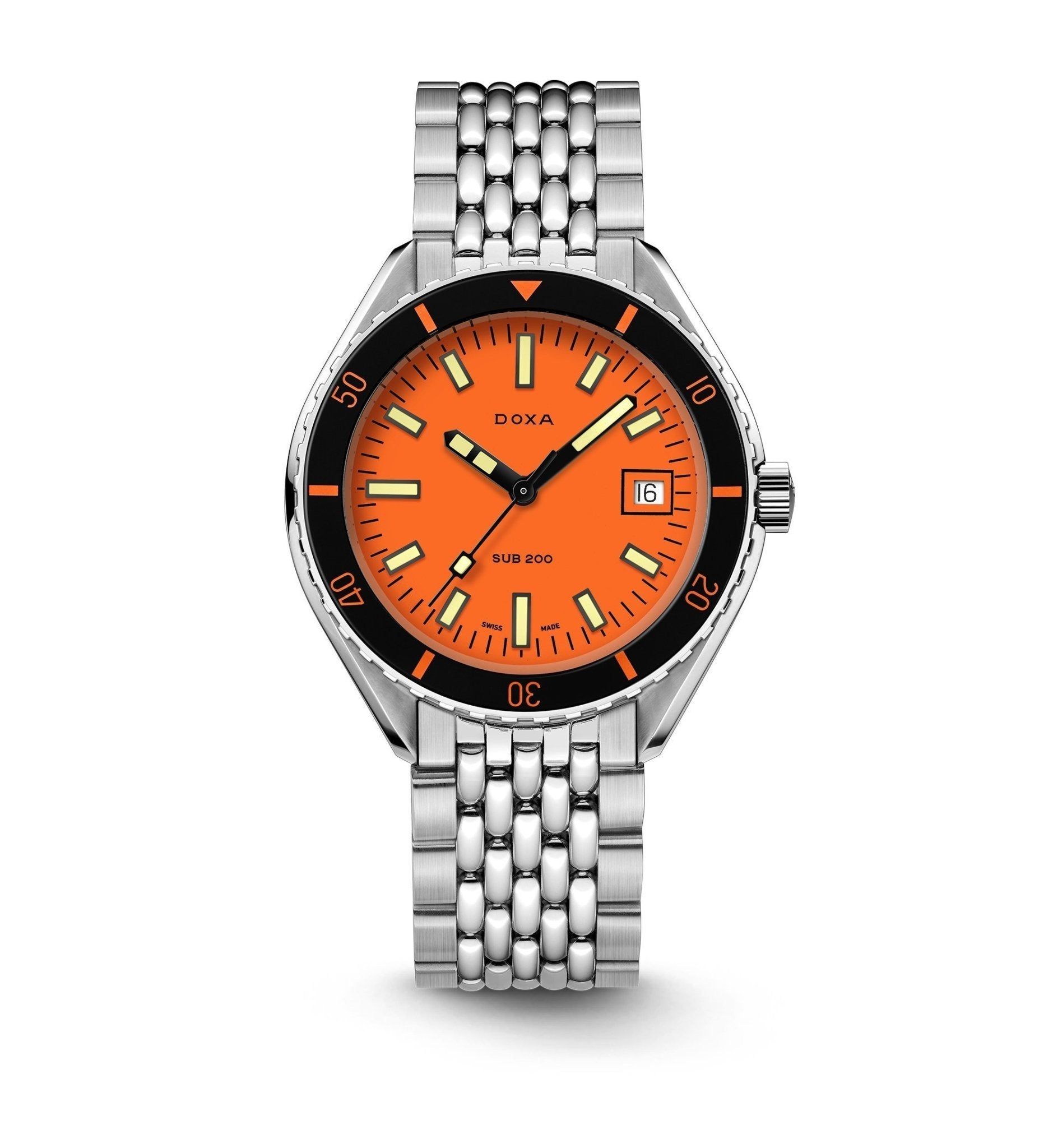
Doxa SUB 200: The Accessible Everyday Diver
By Zach Charles • October 10, 2026
Complete guide to the Doxa SUB 200 — 42mm, 200m, four colorways, Sellita SW200-1. The accessible entry to the Doxa SUB family with the full…
By Zach Charles • October 10, 2026
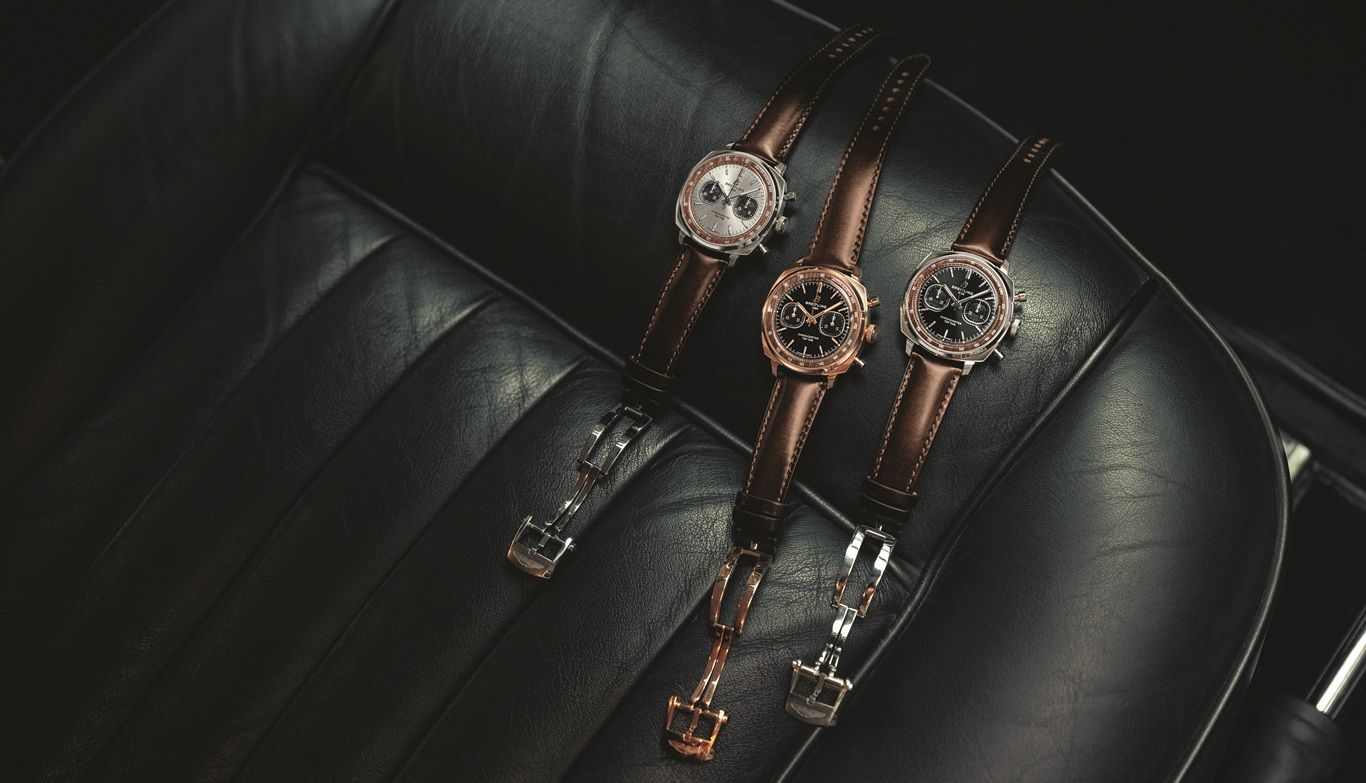
The Breitling Top Time B01 Aston Martin DB5 pairs a cushion-shaped 41mm case, a wooden inner ring and the in-house Caliber 01 across three limited…
By Zach Charles • October 10, 2026
TAG Heuer developed the Mikrograph (2011, 1/100th second), Mikrotimer Flying 1000 (2011, 1/1000th second), and Mikrogirder (2012, 1/2000th second).
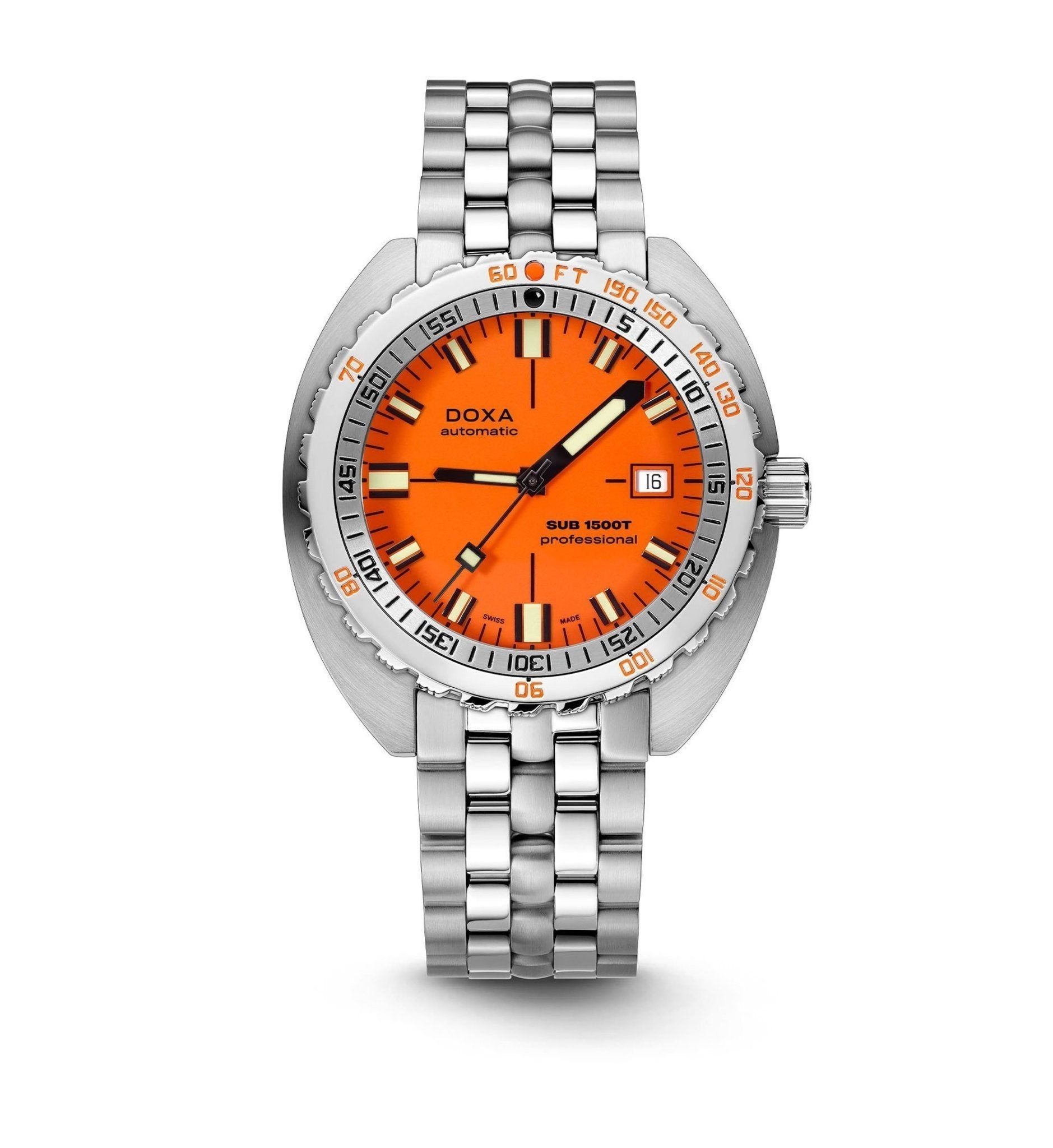
Doxa SUB 1500T: The 1,500-Metre Depth-Rating Flagship
By Zach Charles • October 10, 2026
Complete guide to the Doxa SUB 1500T — 45mm, 1,500m depth rating, helium escape valve, ETA 2892-2 movement, USD 2,690.
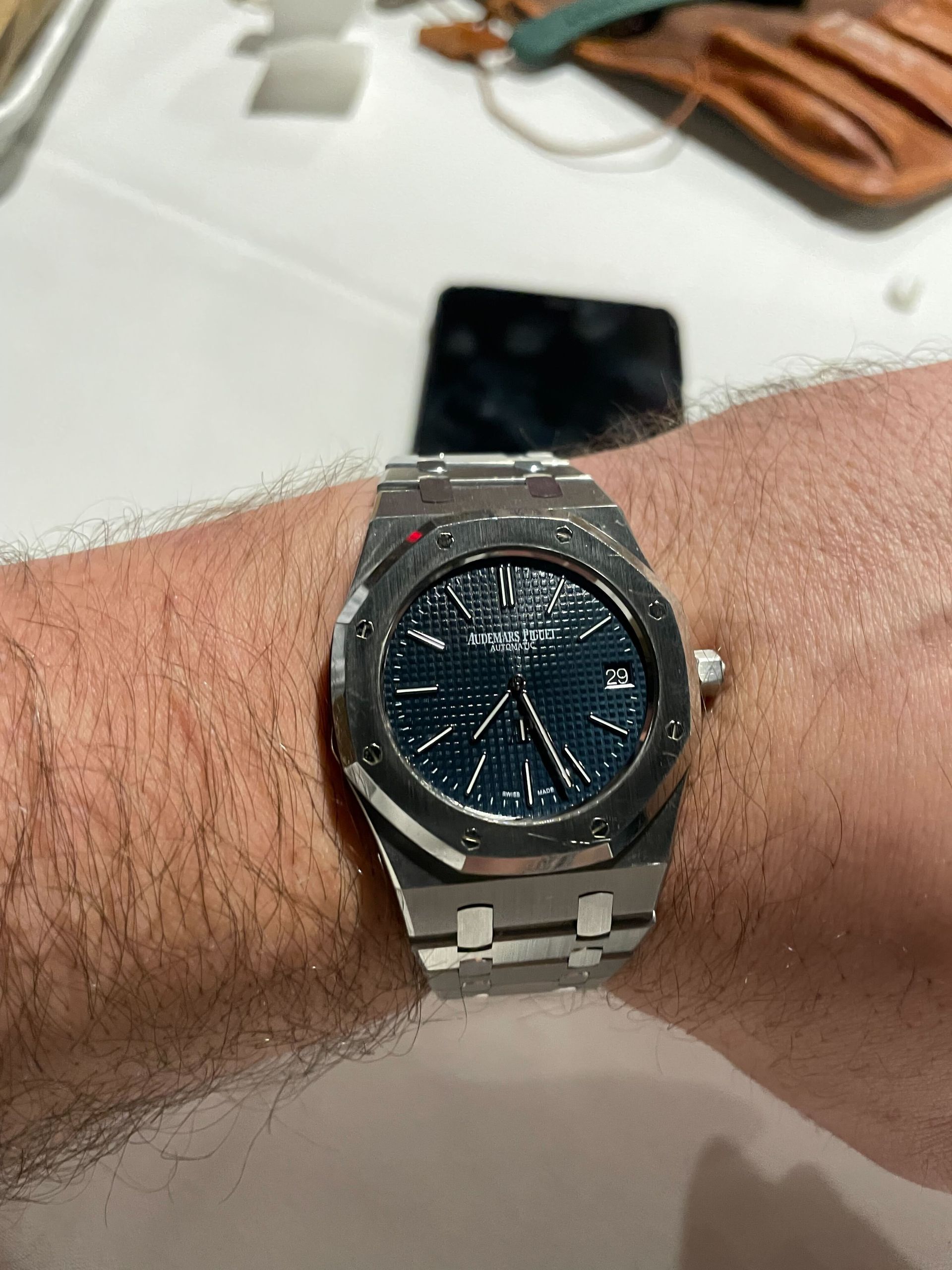
Audemars Piguet Royal Oak 'Jumbo' ref. 15202 with blue tapisserie dial and integrated steel bracelet
By Zach Charles • October 10, 2026
The Audemars Piguet × Swatch Royal Pop is a $400 bioceramic pocket watch in 8 colourways, powered by a new hand-wound SISTEM51 with 90+ hour power…

Time on the Move logo
By Zach Charles • October 10, 2026
Zach Charles is the editor of Time on the Move, an independent watch reference covering brand and model histories, buying guides and release news…
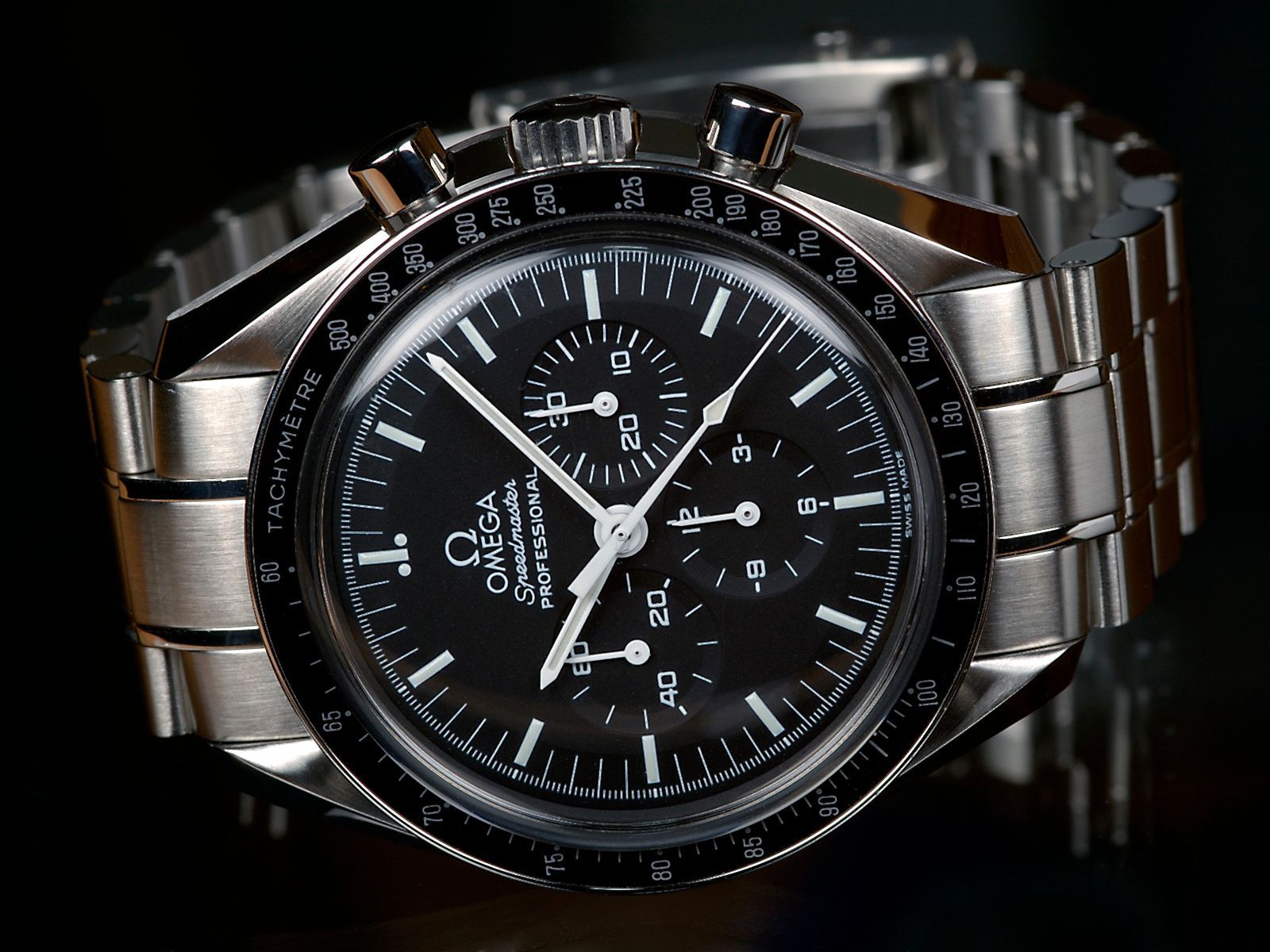
Omega Speedmaster Professional 'Moonwatch' chronograph, front view on steel bracelet
By Zach Charles • October 9, 2026
Find the best watches at every price point from $500 to $15,000 — new and pre-owned. Covers every budget tier with specific reference picks, brand…
By Zach Charles • October 9, 2026
The latest watch news: new releases, Watches and Wonders coverage, discontinuations, industry analysis, and market trends. Currently 1 article.
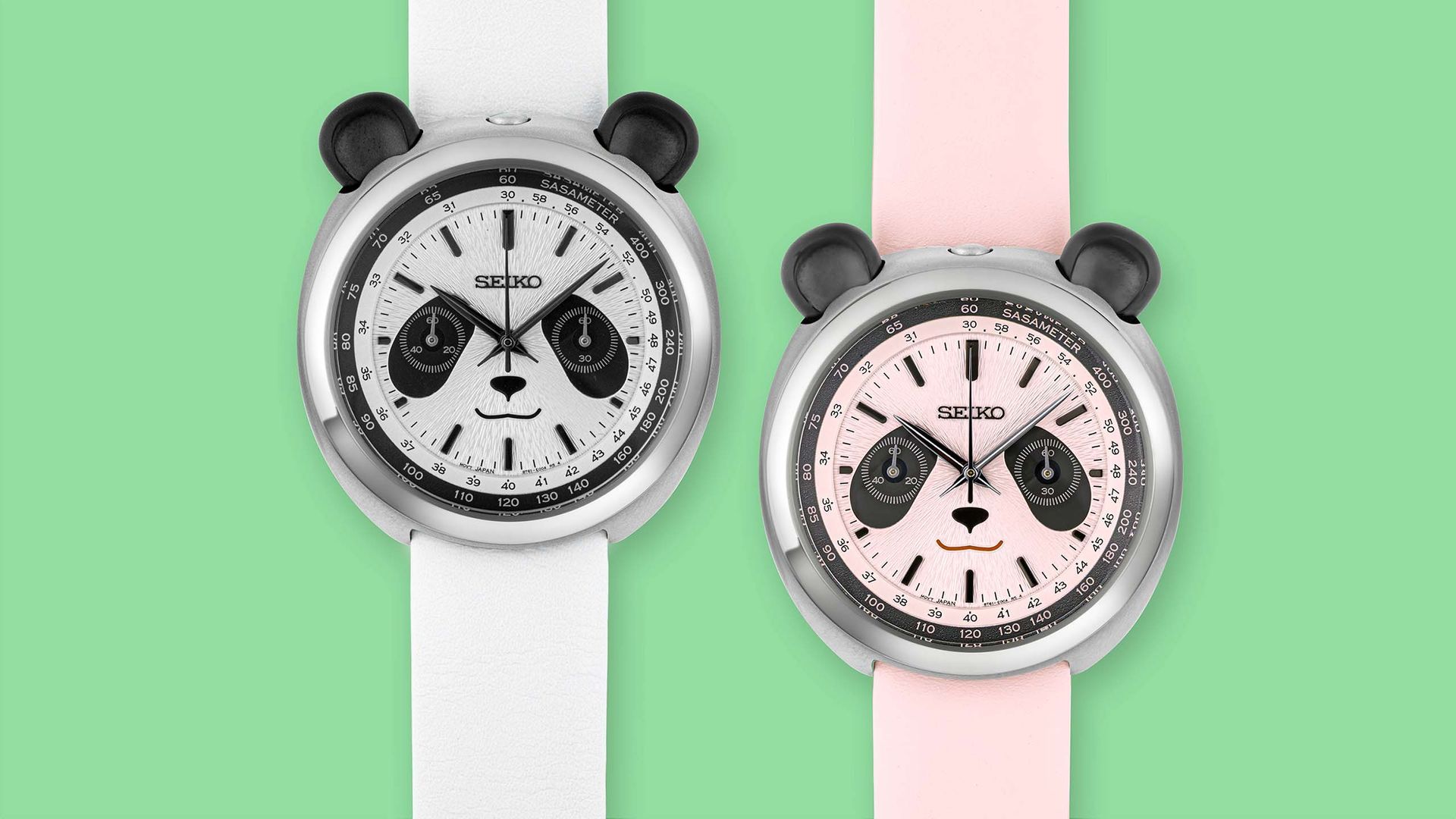
Seiko's New Panda Chronograph Is Literally a Panda: The Power Design Project HHK001 and HHK002
By Zach Charles • October 8, 2026
Seiko's Power Design Project panda chronograph (HHK001, HHK002) turns the panda dial into an actual panda face, with ear pushers, a 'Sasameter' and a 3D…
Show More