
Tudor Monte Carlo Chronograph: The Exotic Dial

Zach Charles • September 12, 2026

Share this article

Tudor Monte Carlo Chronograph: The Exotic Dial

Among all the watches Tudor has produced across nearly a century of manufacture, none is more immediately visually distinctive than the Monte Carlo chronograph. References 7032 and 7162 — produced from approximately 1972 through 1979 — feature a dial complication that was unusual in its era and has never been revived in any form: a multicolour calendar disc visible through a cut-out aperture in the lower portion of the dial, with day and date segments rendered in alternating colours.

The "Monte Carlo" name, like "Big Block," is a collector designation rather than an official Tudor marketing term. Tudor appears to have used it in some period dealer materials, but it was not a model name in the way that Submariner or Prince were. The name almost certainly references Monaco and the glamour associations of Monte Carlo as a destination — which is consistent with the watch's exotic aesthetic, even if the watch was simultaneously being worn by working professionals who simply wanted a legible chronograph with a calendar complication.

The Monte Carlo is Tudor's "exotic dial" — the reference that demonstrates the brand was capable of producing something genuinely unusual rather than simply competent.


The Calendar Disc: What Makes the Monte Carlo Unusual

Standard day-date chronographs of the 1970s used aperture windows at 3 and 12 o'clock (or similar positions) to display day and date through printed discs beneath the dial. The day disc showed the day name or abbreviation; the date disc showed a number. Both were visible but small, subordinate to the dial's primary function.

The Monte Carlo's approach was architecturally different. Rather than aperture windows, the lower portion of the dial — roughly the area from 4 to 8 o'clock — featured a cut-out through which a large, multicolour calendar disc was visible. This disc was divided into segments, with days of the week printed in alternating colours (typically red for Sunday, white or silver for weekdays, with variation across production) and date numerals in a coordinated colour scheme. The disc rotated to display the current day and date through the opening, creating a display that was more visually complex — and more legible from a distance — than a standard aperture treatment.

The effect is genuinely striking. Where most chronographs of the era read as functional objects with decoration, the Monte Carlo reads as a designed object where the calendar complication is part of the visual composition rather than an afterthought. Whether this was Tudor's intent or the result of practical decisions about how to display multiple calendar fields simultaneously in a 40mm case is unclear from historical record — but the result, regardless of intent, produced one of vintage watchmaking's most recognisable dials.


References 7032 and 7162

Ref. 7032: The earlier and more commonly referenced Monte Carlo designation, associated with production from approximately 1972 through 1977. The 7032 exists in multiple dial variations, primarily distinguished by the colour treatment of the calendar disc and the specific layout of the chronograph registers. Most 7032 examples feature a black body dial; the subdials at 9 and 3 o'clock are rendered in contrasting colours (white or silver) consistent with the bi-compax layout shared with the Big Block references of the same era.

Ref. 7162: The later Monte Carlo variant, associated with production from approximately 1975 through 1979. The 7162 shares the same fundamental architecture as the 7032 but incorporates dial and case refinements that reflect Tudor's production evolution during the period. The distinction between 7032 and 7162 examples requires careful examination of dial text, pusher geometry, and caseback markings — casual inspection does not reliably distinguish them.

Within both references, significant variation exists in the colour treatment of the calendar disc. Not all Monte Carlo examples use identical colour assignments for days; regional market variants and production batches appear to have introduced different colourway configurations. This variation is a collector variable: specific colour combinations are more desirable than others, and complete documentation of all legitimate Monte Carlo disc configurations does not exist in published references.


Movement: Valjoux 7734

Like the Big Block Chronograph produced in parallel, the Monte Carlo used the Valjoux 7734 automatic chronograph ebauche. The movement's column-wheel architecture, automatic winding, and robust construction were appropriate for a daily-wear chronograph at Tudor's price point. The 7734's characteristic large rotor contributed to the case profile, though the Monte Carlo's case geometry is somewhat different from the heavy-profile Big Block — the calendar disc display architecture required different case engineering to accommodate the lower dial cut-out.

The calendar mechanism itself — the multicolour disc complication — was integrated into the movement specification by Tudor's case and dial manufacturing, not supplied as a complete complication by Valjoux. This means the Monte Carlo represents Tudor's own engineering of the calendar display, using the 7734 as the base movement and building the distinctive complication around it.


The Monte Carlo in Context: Motorsport and Glamour

The Monte Carlo's 1972 introduction places it at the intersection of two major 1970s cultural currents affecting watch design: the motorsport chronograph wave and the general embrace of colour and decoration that characterized early-to-mid 1970s design aesthetics across consumer products.

The motorsport connection is direct. 1972 was two years after Heuer's introduction of the Monaco (ref. 1133) and Carrera references — watches that had been worn by Steve McQueen in Le Mans (1971) and had established the chronograph as the motorsport watch category. Tudor, producing for buyers who wanted function at accessible prices, was participating in the same market. The tachymeter scale, the crown guards, the thick case — all established tools-for-motorsport credentials. The Monte Carlo name reinforced the association.

The colour treatment of the calendar disc also connects to the 1970s embrace of vivid colour in design objects. Contemporaneous watches from this period — the Omega Flightmaster, various Heuer references, Breitling's coloured dial series — demonstrate that this was a moment when Swiss watchmakers across multiple tiers were willing to introduce colour as a design element rather than limiting it to functional applications. The Monte Carlo's multicolour disc was an extreme version of this tendency, and it has aged into exactly the kind of "exotic" status that collectors prize: distinctive enough to be immediately recognisable, unusual enough to remain genuinely scarce.


Comparison with the Big Block

The Monte Carlo and Big Block Chronograph were produced contemporaneously and share movement specification, so comparison is natural:

Feature Monte Carlo 7032/7162 Big Block 7159/7169
Production period c.1972–1979 c.1974–1988
Movement Valjoux 7734 Valjoux 7734
Calendar Multicolour day-date disc Date window (on date variants)
Dial character Exotic / decorative Tool / functional
Collector demand Higher (exotic premium) High (broader collector base)
Secondary market $4,000–$12,000+ $1,500–$7,000
Production volume Lower (estimated) Higher

The Monte Carlo's shorter production run and more complex dial construction resulted in lower production volumes than the Big Block — a scarcity factor that, combined with the exotic visual appeal, produces secondary market prices meaningfully above comparable Big Block examples.


Collecting the Monte Carlo

The Monte Carlo is among the more expensive vintage Tudor chronograph references, with collector-grade examples in original condition trading from approximately $4,000 for later 7162 examples in average condition to $12,000 and above for early 7032 references with original dials in strong condition, desirable colour configurations, correct hands, and accompanying documentation.

Authentication is significant and the stakes are proportionally higher than with more modestly priced vintage Tudors. Key authentication points:

Dial originality: The multicolour calendar disc is impossible to replicate convincingly with period-correct materials; replacements or restorations are detectable through examination of printing quality, disc material, and colour consistency against documented original examples.

Chronograph pusher geometry: The pushers' profile and finish characteristics were consistent within production batches; replacement pushers from donor movements do not match precisely.

Caseback markings: Tudor caseback engravings from this period have specific typographic characteristics; reproduction casebacks exist and are detectable by comparison to reference examples.

Complete calendar disc: All segments of the calendar disc must be present, correctly printed, and undamaged. Missing or damaged segments — or a disc from a different production batch — affect both authenticity and value.

The Monte Carlo is a watch that rewards specialist knowledge and benefits significantly from seller documentation and purchase from known-provenance sources.


Legacy: An Unrepeated Aesthetic

Tudor has never revived the Monte Carlo complication in any form. The Heritage Chrono referenced the Big Block aesthetic; the Black Bay Chrono extended the chronograph lineage with a manufacture movement. Neither referenced the Monte Carlo's specific calendar disc treatment.

This absence is interesting. The Black Bay family's commercial success has rested on heritage references that are legible and producible at scale — the domed crystal, the Snowflake hands, the Gilt dial — elements that translate into modern production without engineering complexity. The Monte Carlo's calendar disc would require significant engineering investment for a complication that has no obvious contemporary market parallel and would likely increase cost substantially. A Black Bay Chrono with a multicolour calendar disc would be an extraordinary object; it is also, apparently, not something Tudor's current product strategy requires.

For collectors, the Monte Carlo remains the most visually adventurous thing Tudor ever made — evidence that the brand, in one specific period, produced a watch that could not be mistaken for anything else.


Related Articles

Tudor Chronograph Family

Tudor Foundation

Recent Posts

By Zach Charles • October 10, 2026
Hamilton's American Classic Cushion Mechanical revives its 1926 Art Deco cushion watches, seen in Oppenheimer, in 30mm and 34mm with the new hand-wound…
Doxa SUB 200: The Accessible Everyday Diver
By Zach Charles • October 10, 2026
Complete guide to the Doxa SUB 200 — 42mm, 200m, four colorways, Sellita SW200-1. The accessible entry to the Doxa SUB family with the full…
By Zach Charles • October 10, 2026
The Breitling Top Time B01 Aston Martin DB5 pairs a cushion-shaped 41mm case, a wooden inner ring and the in-house Caliber 01 across three limited…
By Zach Charles • October 10, 2026
TAG Heuer developed the Mikrograph (2011, 1/100th second), Mikrotimer Flying 1000 (2011, 1/1000th second), and Mikrogirder (2012, 1/2000th second).
Doxa SUB 1500T: The 1,500-Metre Depth-Rating Flagship
By Zach Charles • October 10, 2026
Complete guide to the Doxa SUB 1500T — 45mm, 1,500m depth rating, helium escape valve, ETA 2892-2 movement, USD 2,690.
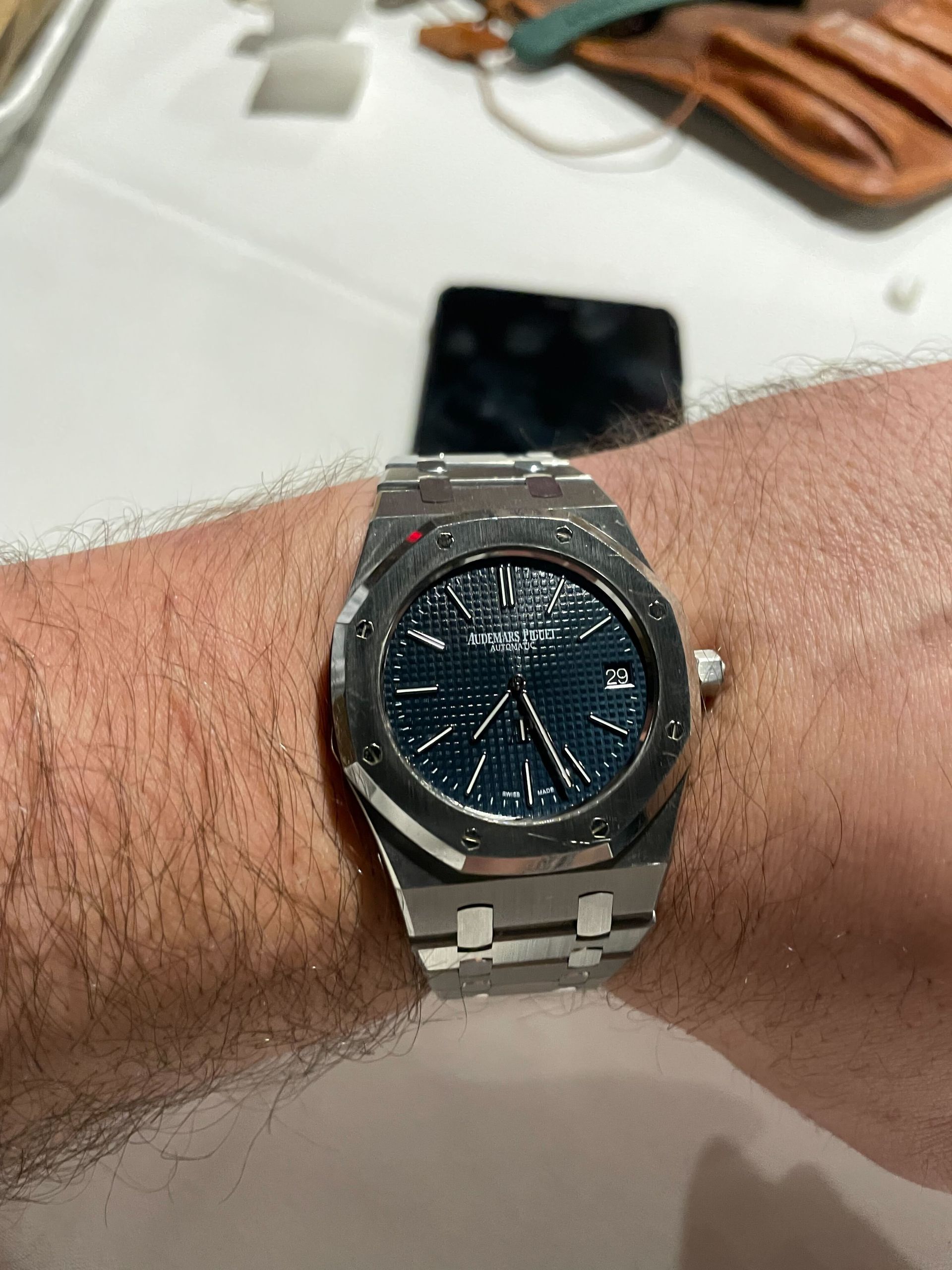
Audemars Piguet Royal Oak 'Jumbo' ref. 15202 with blue tapisserie dial and integrated steel bracelet
By Zach Charles • October 10, 2026
The Audemars Piguet × Swatch Royal Pop is a $400 bioceramic pocket watch in 8 colourways, powered by a new hand-wound SISTEM51 with 90+ hour power…

Time on the Move logo
By Zach Charles • October 10, 2026
Zach Charles is the editor of Time on the Move, an independent watch reference covering brand and model histories, buying guides and release news…
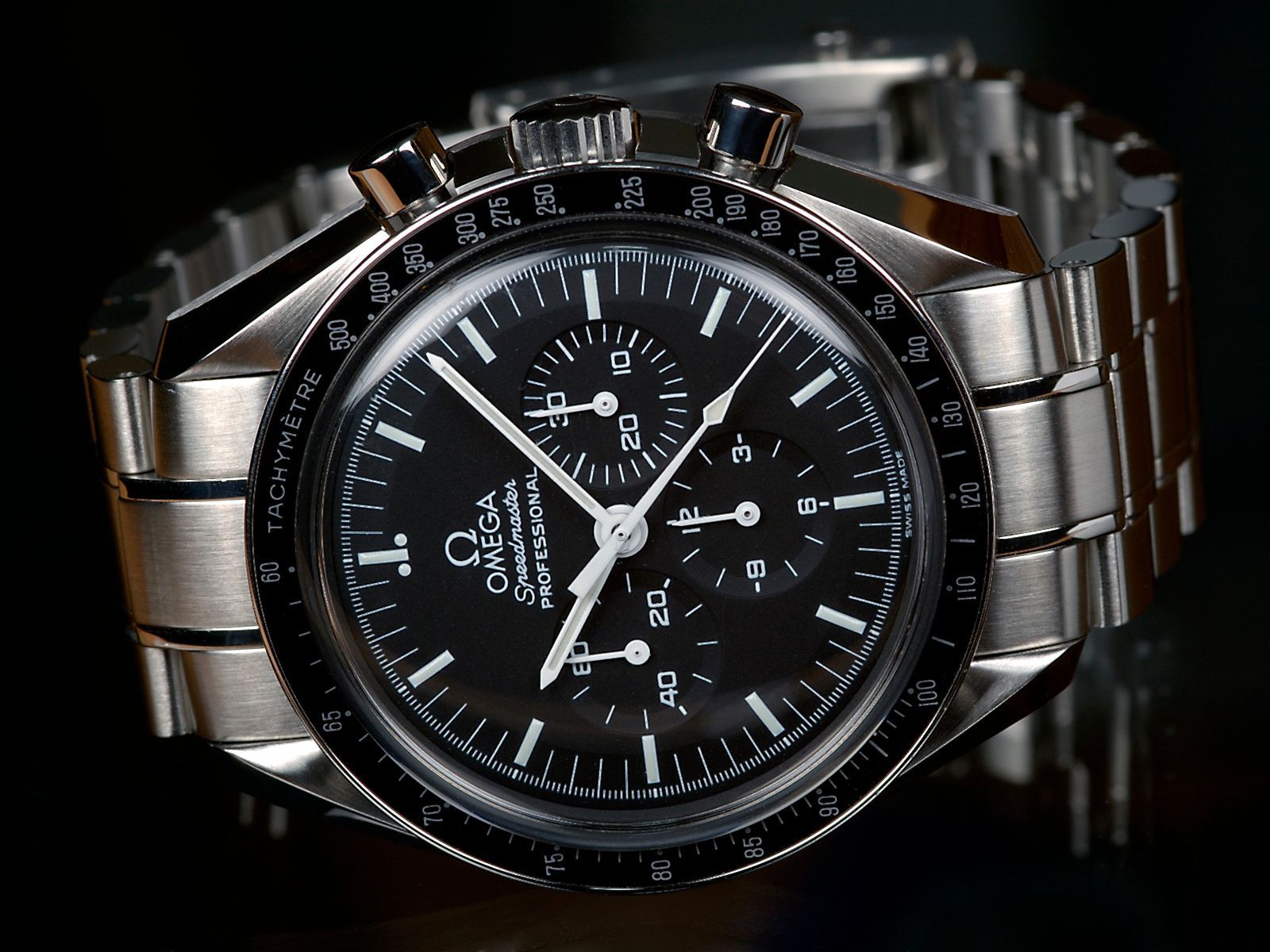
Omega Speedmaster Professional 'Moonwatch' chronograph, front view on steel bracelet
By Zach Charles • October 9, 2026
Find the best watches at every price point from $500 to $15,000 — new and pre-owned. Covers every budget tier with specific reference picks, brand…
By Zach Charles • October 9, 2026
The latest watch news: new releases, Watches and Wonders coverage, discontinuations, industry analysis, and market trends. Currently 1 article.
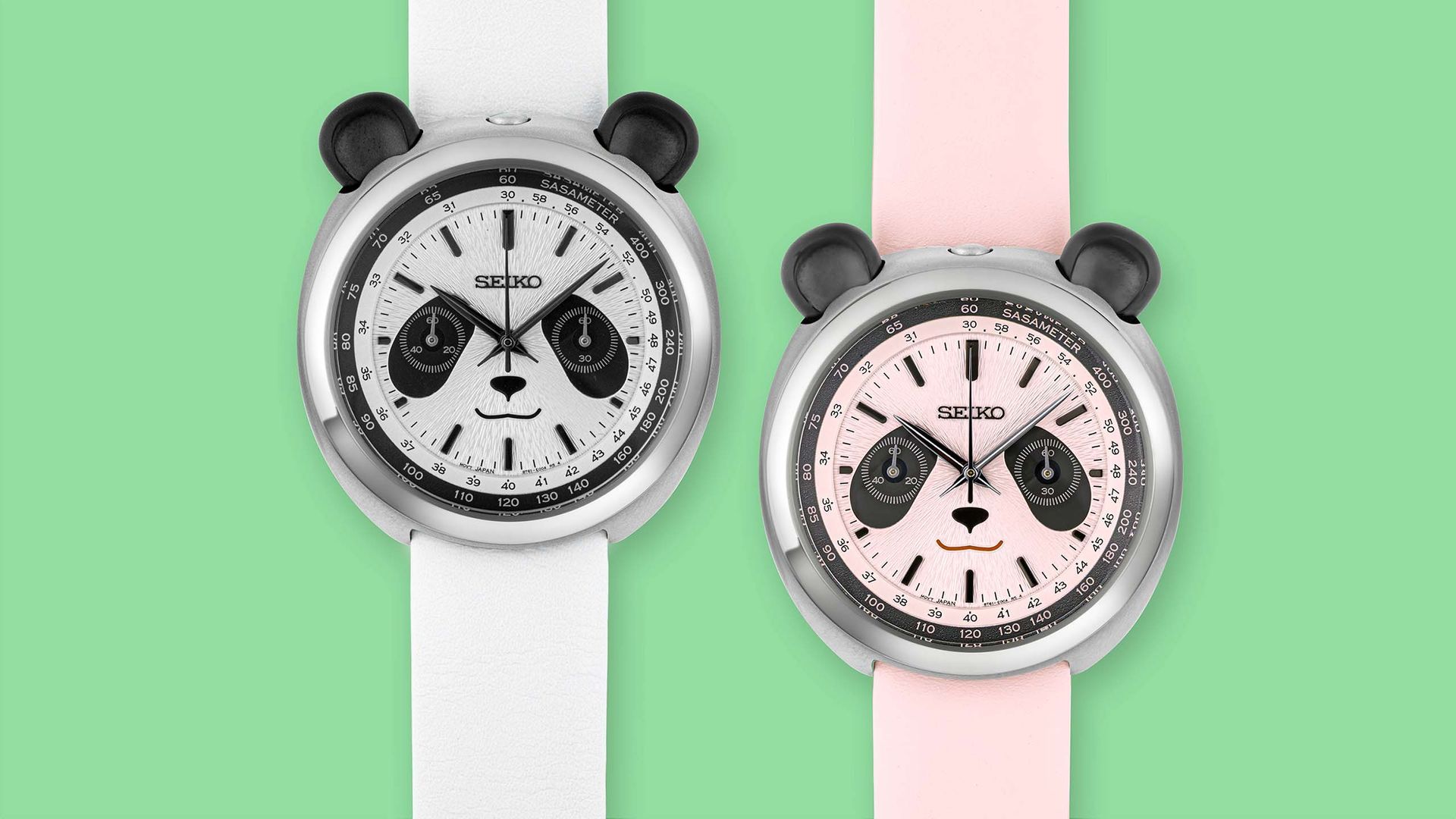
Seiko's New Panda Chronograph Is Literally a Panda: The Power Design Project HHK001 and HHK002
By Zach Charles • October 8, 2026
Seiko's Power Design Project panda chronograph (HHK001, HHK002) turns the panda dial into an actual panda face, with ear pushers, a 'Sasameter' and a 3D…
Show More