Oris Change for the Better: Sustainability and Independence
"Change for the Better" is Oris's sustainability framework and brand philosophy — formalised in the late 2010s but rooted in decisions made decades earlier. It encompasses environmental commitments, material sourcing, manufacturing transparency, and the company's foundational claim that independence from conglomerates is itself an ethical and commercial virtue.
Origins — From Practice to Philosophy
Photo: Wiki Peter Jan — CC BY-SA 4.0 — Wikimedia Commons

Oris did not arrive at "Change for the Better" by hiring a sustainability consultant. The framework is a codification of existing practice. The management buyout of 1982 — restoring independence from ASUAG — preceded the framework by four decades. The commitment to mechanical watches only preceded it by decades. The ocean conservation limited editions preceded the formal branding by several years.
The formalisation around 2019–2020 served two purposes: internal alignment (a defined set of commitments that all parts of the organisation understand) and external communication (a single articulation of values for media and retail partners). The tagline "Change for the Better" was chosen over alternatives because it implies active improvement rather than static virtue — the brand is changing, not merely claiming perfection.
Independence as a Sustainability Argument
Photo: Oris SA — CC BY-SA 3.0 — Wikimedia Commons

Oris makes an unusual argument: that independence from conglomerates is itself a form of sustainability . The reasoning:
- Conglomerate-owned brands face quarterly earnings pressure, which incentivises cost-cutting, component rationalisation, and volume maximisation
- These pressures push against sustainability investments, which have longer payback periods than production cost savings
- Independent ownership allows decisions to optimise for 10-year outcomes rather than quarterly results
- Oris's management buyout in 1982 was, in retrospect, a structural sustainability choice even if not framed that way
Co-CEO Rolf Studer has consistently articulated this position in interviews: "When we're not maximising shareholder value for shareholders who have no connection to watchmaking, we can make decisions that are genuinely better for the long term." This is a direct argument for private ownership as a governance structure.
Mechanical Watches Only
Photo: Oris SA — CC BY-SA 3.0 — Wikimedia Commons
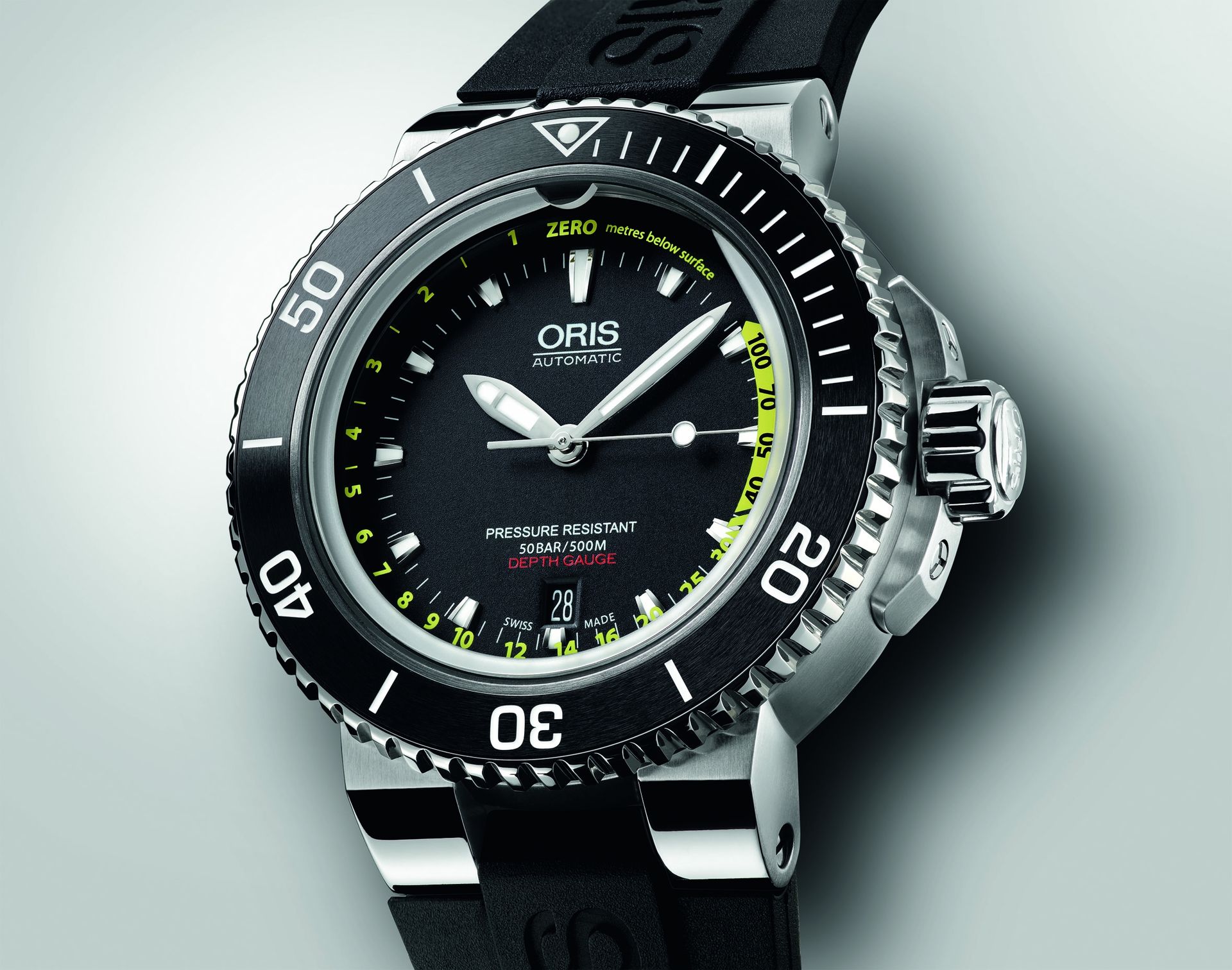
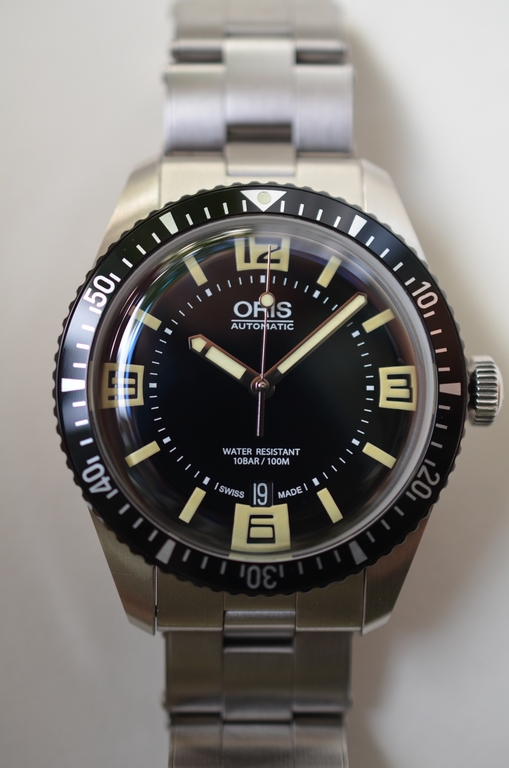
Oris's commitment to producing only mechanical watches — adopted as policy in the early 1980s and maintained since — is positioned within the Change for the Better framework as a sustainability argument:
- Mechanical watches have indefinite functional lifespans if serviced
- A mechanical watch made in 1990 can still function perfectly in 2040 with proper care
- Battery-powered quartz watches require battery replacement (creating waste) and ultimately cannot be repaired to original function as parts become unavailable
- The long service life of mechanical watches — versus the disposability of electronics — makes them the more sustainable choice per year of functional use
This argument is, of course, also commercially convenient — Oris cannot produce competitive quartz watches at the volumes ETA can. But the sustainability argument has independent merit.
Recycled and Upcycled Materials
Photo: Olaf Köster / Oris SA — CC BY-SA 3.0 DE — Wikimedia Commons
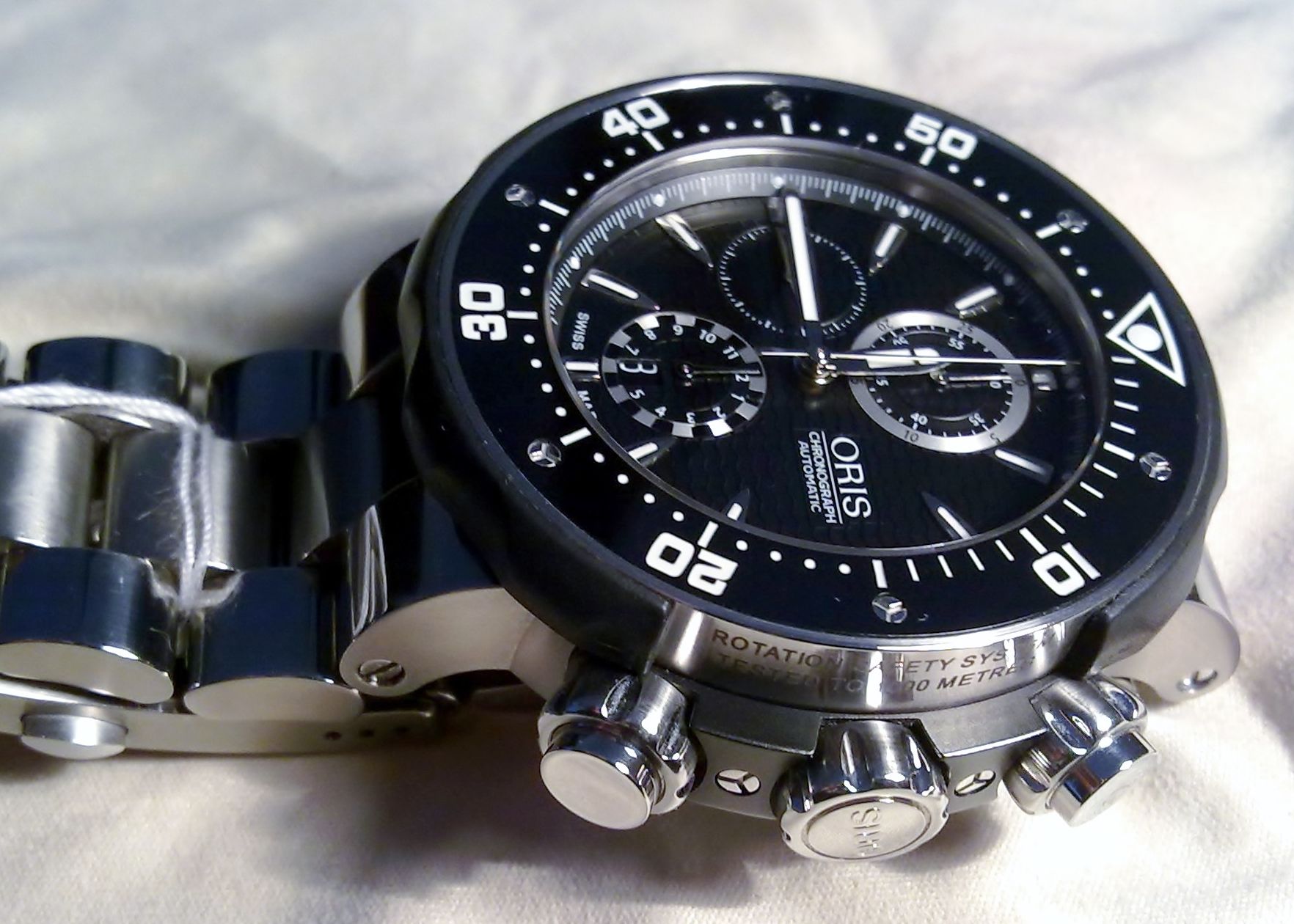
Concrete material commitments within Change for the Better:
Aquis Upcycle dials — Made from recycled PET plastic recovered from ocean waste. The dial material is processed from collected marine plastic, providing a traceable material origin story and reducing virgin plastic demand.
Recycled rubber straps — Multiple Aquis references are offered with straps made from recycled rubber rather than virgin vulcanised rubber. The recycled rubber has comparable properties to virgin material for this application.
Packaging reduction — Oris reduced the material volume of its watch boxes and eliminated non-recyclable packaging elements from its retail packaging.
Bioceramic elements — A material combining ceramic and bioplastic, used in bezel inserts for certain Aquis references, reducing dependence on petroleum-derived materials.
1% for the Planet
Photo: Johntorcasio — CC BY-SA 3.0 — Wikimedia Commons

Oris joined the 1% for the Planet network — a global network of businesses that commit to donating at least 1% of annual revenue to environmental causes. For Oris, at annual revenues of approximately CHF 100–150 million, this commitment represents CHF 1–1.5 million in environmental donations annually.
The 1% for the Planet membership is verified through the network's annual audit process. Members must demonstrate the donations were made to qualifying environmental organisations. This external verification distinguishes the commitment from unaudited self-reporting.
Conservation partners funded through this mechanism include the ocean conservation organisations mentioned in the limited editions programme (Reef Restoration Foundation, Clean Ocean Project, Coral Restauration Foundation, Hangang River project).
Manufacturing Footprint — Hölstein
Photo: Clyde94 — CC BY-SA 4.0 — Wikimedia Commons

All Oris watches are assembled in Hölstein , a village of approximately 5,000 people in the Basel-Landschaft canton. The factory employs a significant proportion of the village's working population — a social sustainability element rarely articulated but materially significant.
Swiss manufacture entails a higher carbon footprint per watch than production in lower-wage markets, due to labour costs, heating costs (Swiss winters), and transportation from component suppliers. Oris has committed to measuring and progressively reducing its manufacturing carbon footprint, with public reporting on progress.
The Rebberg factory's "Red Factory" building is the physical embodiment of Oris's independence narrative. The building has stood on the same site since the early 20th century. Its continued operation — rather than relocation to a lower-cost country — is a statement of community commitment.
What Change for the Better Is Not
Oris is explicit about limitations: Change for the Better is not a claim of perfection. The watches still use virgin steel as the primary case material. The supply chain for movement components involves multiple suppliers who are not all independently audited for sustainability. International shipping of watches generates emissions.
The framework is presented as a direction of travel rather than a destination achieved. This candour — distinguishing it from corporate sustainability claims that present current practice as already optimal — has generally been received positively by the specialist media. Critics have pointed out that for a mechanical luxury product, the sustainability frame is inherently partial: the core product is a luxury item made from mined materials, whatever the dial substrate.