Oris Artelier: Dress Watches and Complications
The Artelier — named for the French term for an artisan's workshop ( atelier ) — is Oris's dress watch collection and the home of the brand's most complicated movements. While Oris is primarily identified with tool watches (dive watches, pilot watches), the Artelier demonstrates that independent Swiss manufacture at accessible price points can also support complications: annual calendars, moonphases, chronographs, and skeleton movements.
Design Language and Origins
Photo: Oris SA — CC BY-SA 3.0 — Wikimedia Commons
The Artelier was introduced in the late 1990s as a thin, elegant alternative to Oris's sport offerings. The defining aesthetic: a round case, thin profile, sunburst or guilloche dial, dauphine or leaf hands, and a presentation on a leather strap. The case size initially centred on 40–42mm, expanding to include 38mm and 33mm variants.
The name references the atelier — the independent workshop — reflecting both Oris's Hölstein manufacture and a positioning toward craft and artisanal values. In practice, the Artelier serves as the collection that demonstrates Oris can produce refined dress watches, not merely robust tool watches.
Artelier Date and Automatic
Photo: Oris SA — CC BY-SA 3.0 — Wikimedia Commons
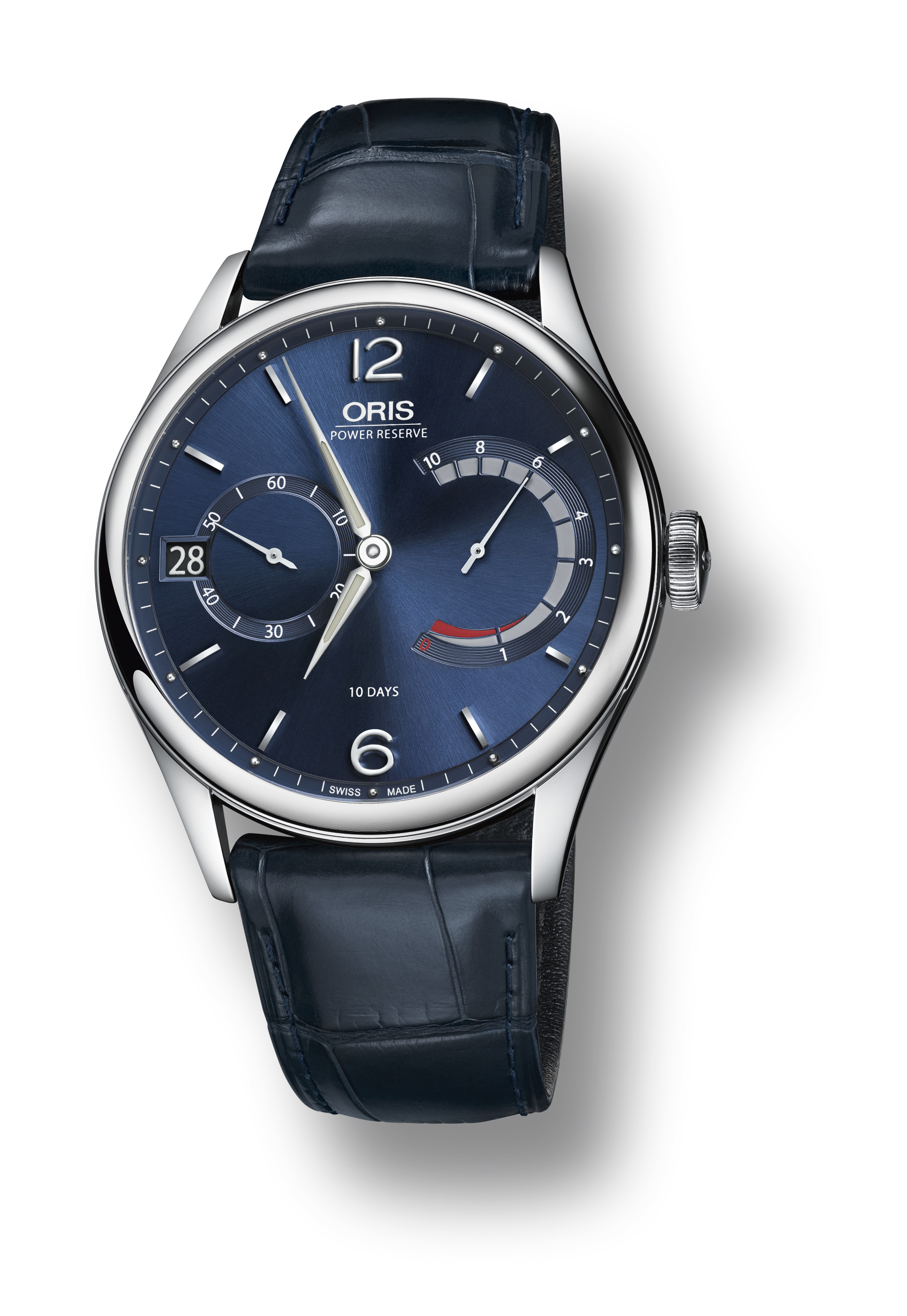
The Artelier Date is the core Artelier reference — a clean three-hand automatic with a date window, housed in a 40mm or 42mm round case, offered in steel or two-tone. Movements: initially Sellita SW200-1 base with Oris modifications, later transitioning to Cal. 400 in upgraded versions.
The Artelier Automatic (without date) is offered in slightly thinner proportions, with a clean dial design and a focus on legibility and simplicity. It is the most direct interpretation of the Artelier's original brief: an elegant automatic for dress occasions.
Artelier Chronograph
Photo: Johntorcasio — CC BY-SA 3.0 — Wikimedia Commons
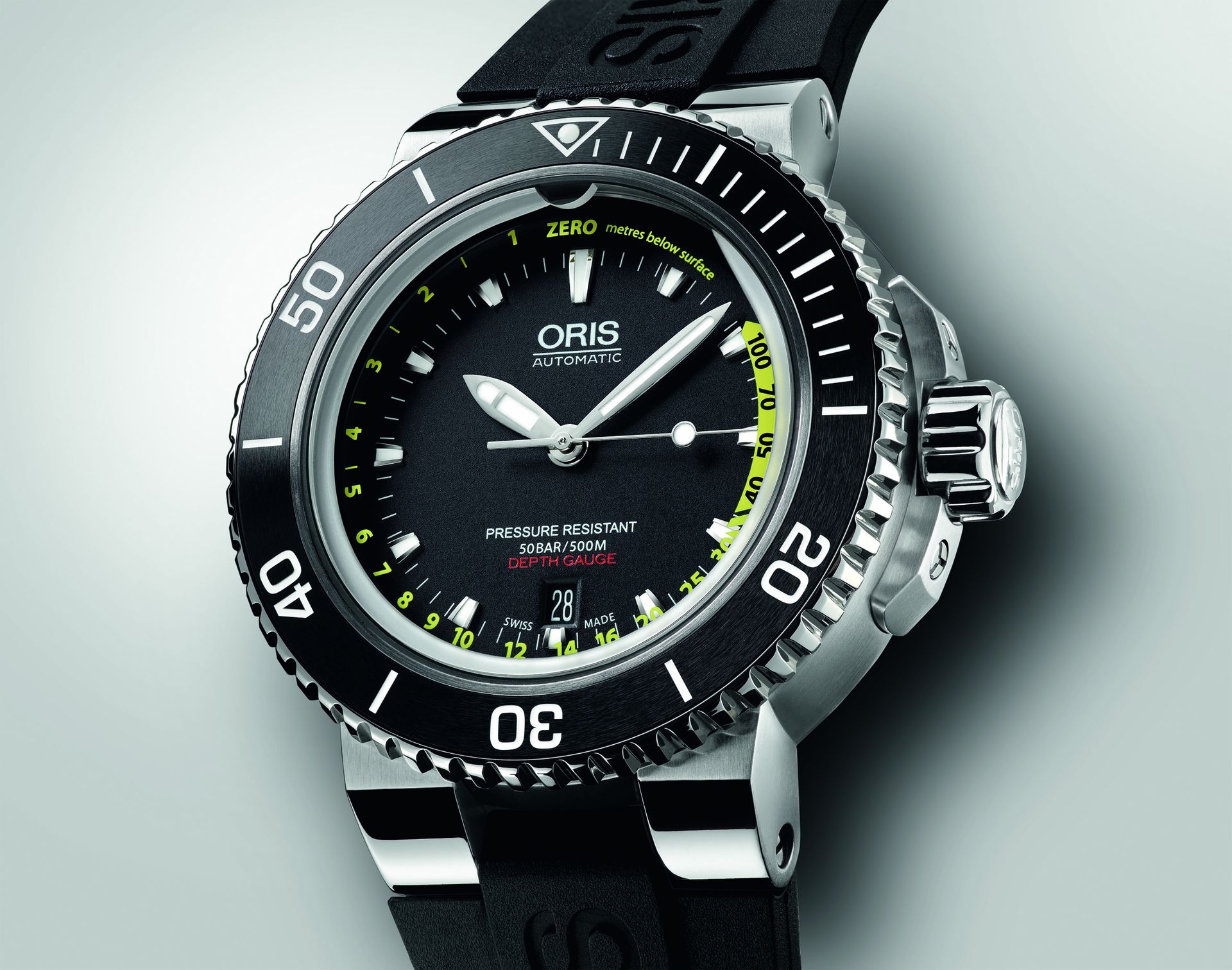
The Artelier Chronograph applies the Artelier dress case to a column-wheel chronograph movement. The movement used in most Artelier Chronograph references is the Valjoux 7750 — a proven, robust column-wheel automatic chronograph that provides genuine chronograph function without the premium of more exotic architecture.
The Artelier Chronograph has been offered in multiple dial layouts: the standard three-register layout (running seconds at 9, 30-minute counter at 3, 12-hour counter at 6), and cleaner two-register layouts in certain editions. Case sizes from 44mm to 46mm — somewhat larger than the standard Artelier to accommodate the 7750's bulk.
Artelier Complication — Annual Calendar and Moonphase
Photo: Olaf Köster / Oris SA — CC BY-SA 3.0 DE — Wikimedia Commons
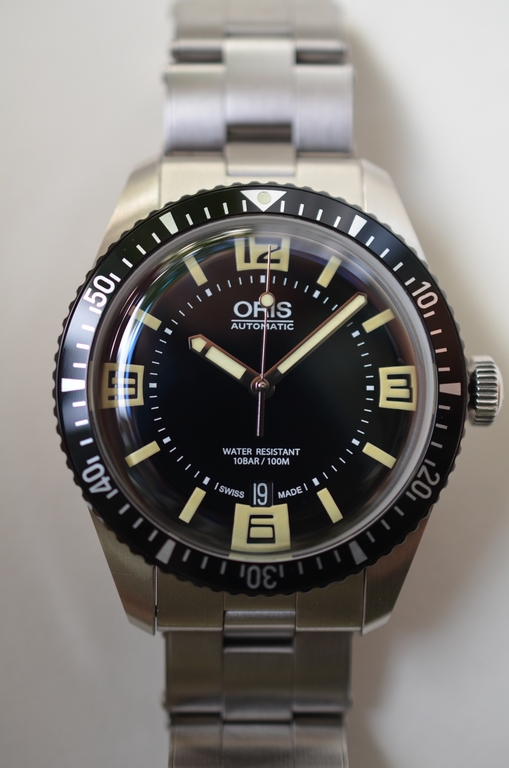
The Artelier Annual Calendar represents the most technically accomplished standard-production Artelier. An annual calendar correctly accounts for months of 30 and 31 days, requiring only one manual correction per year (at the end of February, which has 28 or 29 days). Monthly correction is eliminated for 11 out of 12 months.
The Artelier Annual Calendar uses a Sellita SW220 base modified with an annual calendar module from a specialised supplier. The dial layout: date by retrograde hand (a Pointer Date variant) or conventional date window, day of week display, month indication, and in moonphase-equipped versions, a moon phase display at 6 o'clock.
The moonphase complication uses a lunar disc with two moons, cycling over 29.5 days. The Artelier Moonphase accuracy depends on the disc's tooth count — most production versions are accurate to one day's error per 30–40 months.
Artelier Skeleton
Photo: Wiki Peter Jan — CC BY-SA 4.0 — Wikimedia Commons
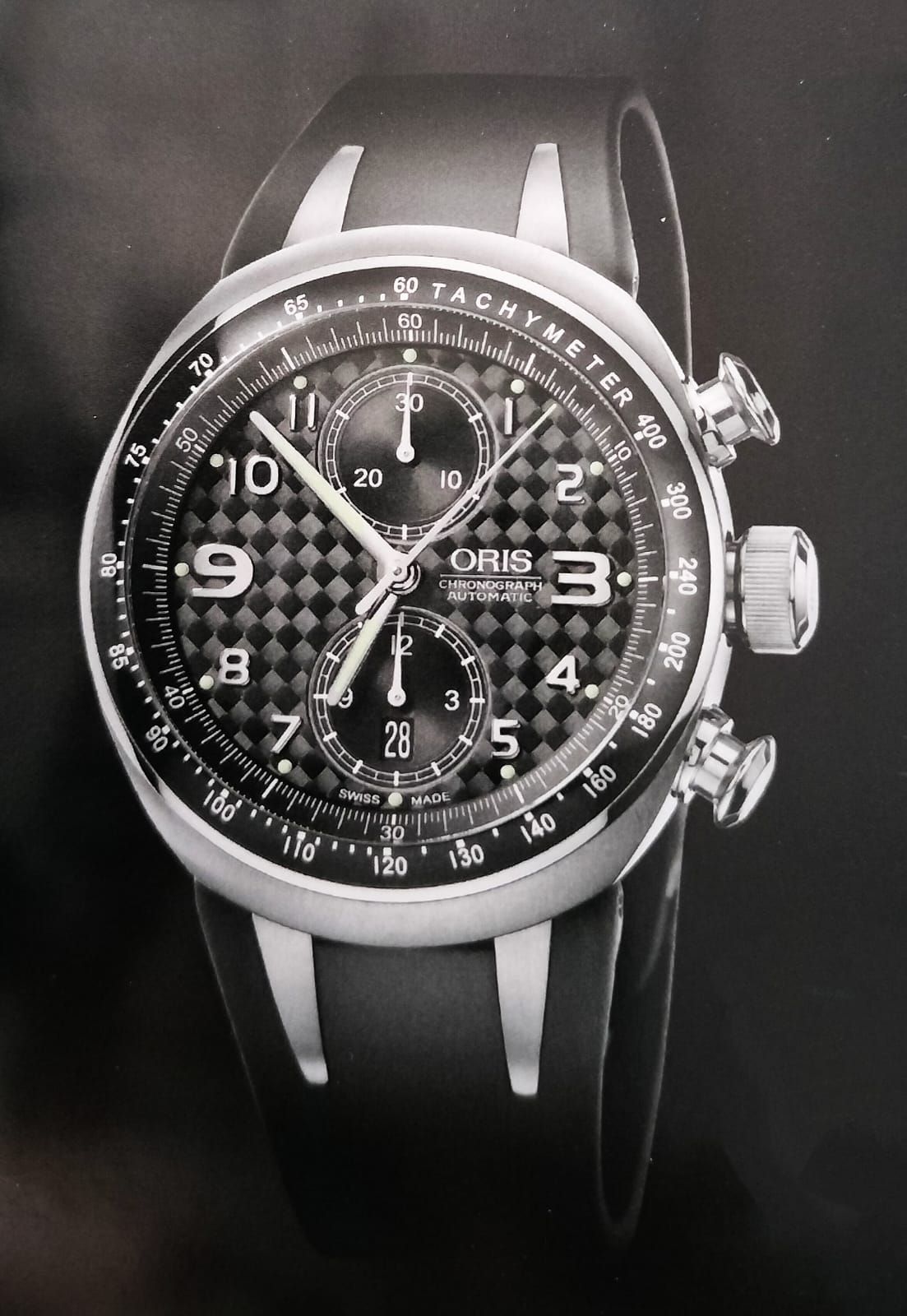
The Artelier Translucent Skeleton (also called Artelier Skeleton) removes dial material to expose the movement beneath a sapphire crystal cover. The skeletonised movement shows the gear train, mainspring barrel, and regulation system.
Movement used: a skeletonised manual-wind based on the Cal. 734 architecture, with bevelled and anglaged bridges. The case is thinner than automatic versions; the manual-wind movement allows a slimmer profile than any automatic with its rotor.
Skeleton dials present a design challenge for dress watches: the movement must be legible as a functional object while also forming a decorative composition visible through the dial opening. The Artelier Skeleton uses a grey and silver colour palette to maintain legibility while showcasing movement architecture.
Artelier Small Second and Manual
Photo: Clyde94 — CC BY-SA 4.0 — Wikimedia Commons
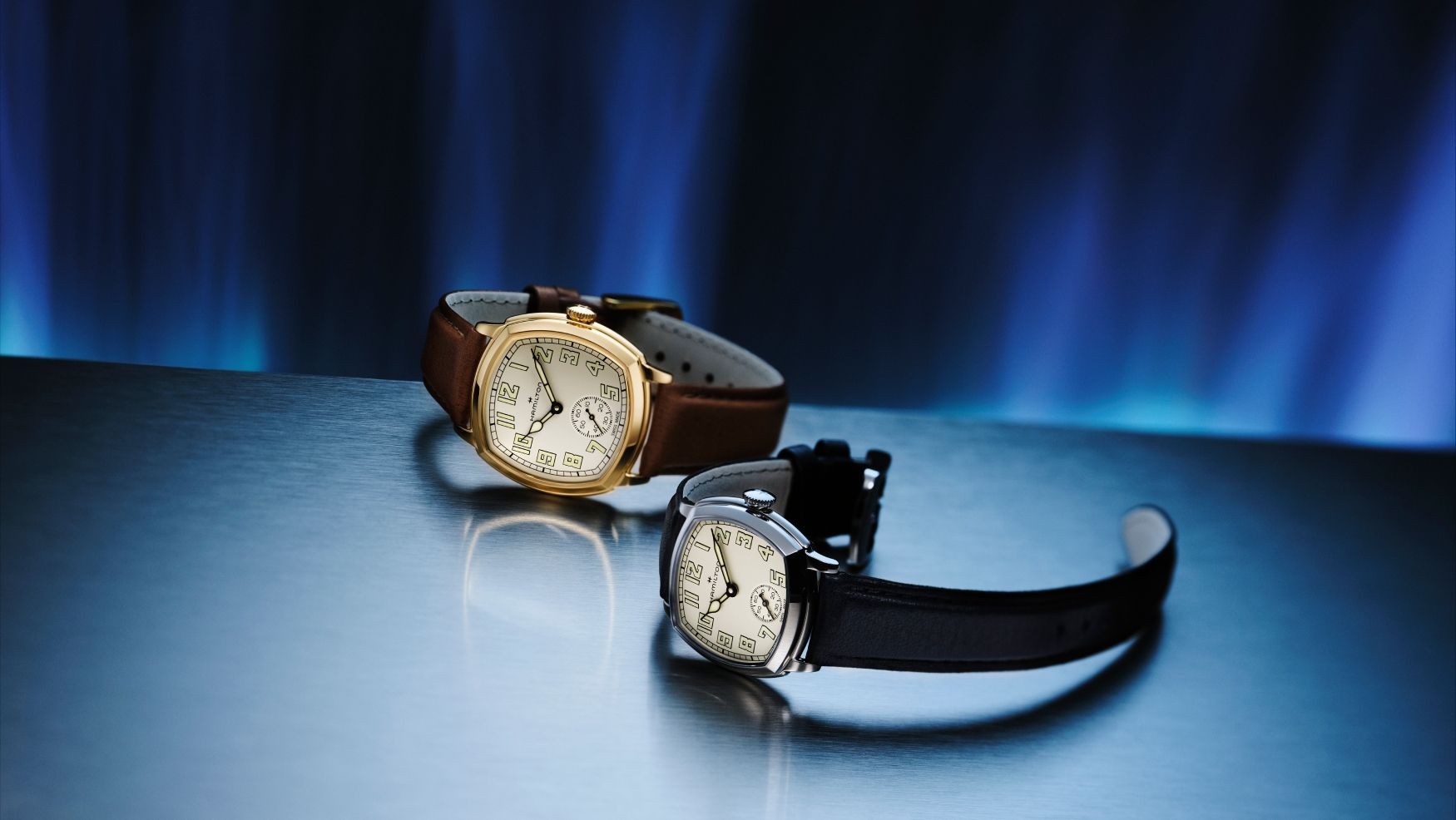
For the purist end of the market, Oris has offered Artelier Small Second manual-wind versions — a three-hand layout with running seconds at 6 o'clock, powered by a manually wound movement. The absence of an automatic rotor allows a slimmer case profile (under 10mm total case thickness) and a cleaner caseback view.
Manual-wind dress watches require daily winding — a ritual some collectors prefer as a deliberate engagement with the watch. The Artelier Small Second positions this as a feature rather than an inconvenience.
Cultural and Institutional Partnerships
Oris has paired Artelier editions with cultural institutions — art museums, music organisations, and cultural foundations — in contrast to the environmental cause partnerships of the Aquis. These have included editions themed around specific artists, musical events, and design collaborations. The Artelier's aesthetic flexibility (variety of dial decoration, case material, and strap options) makes it suitable for cultural positioning in a way that tool watches are not.
Price range: approximately CHF 1,500 (Artelier Date) to CHF 4,500 (Artelier Annual Calendar).