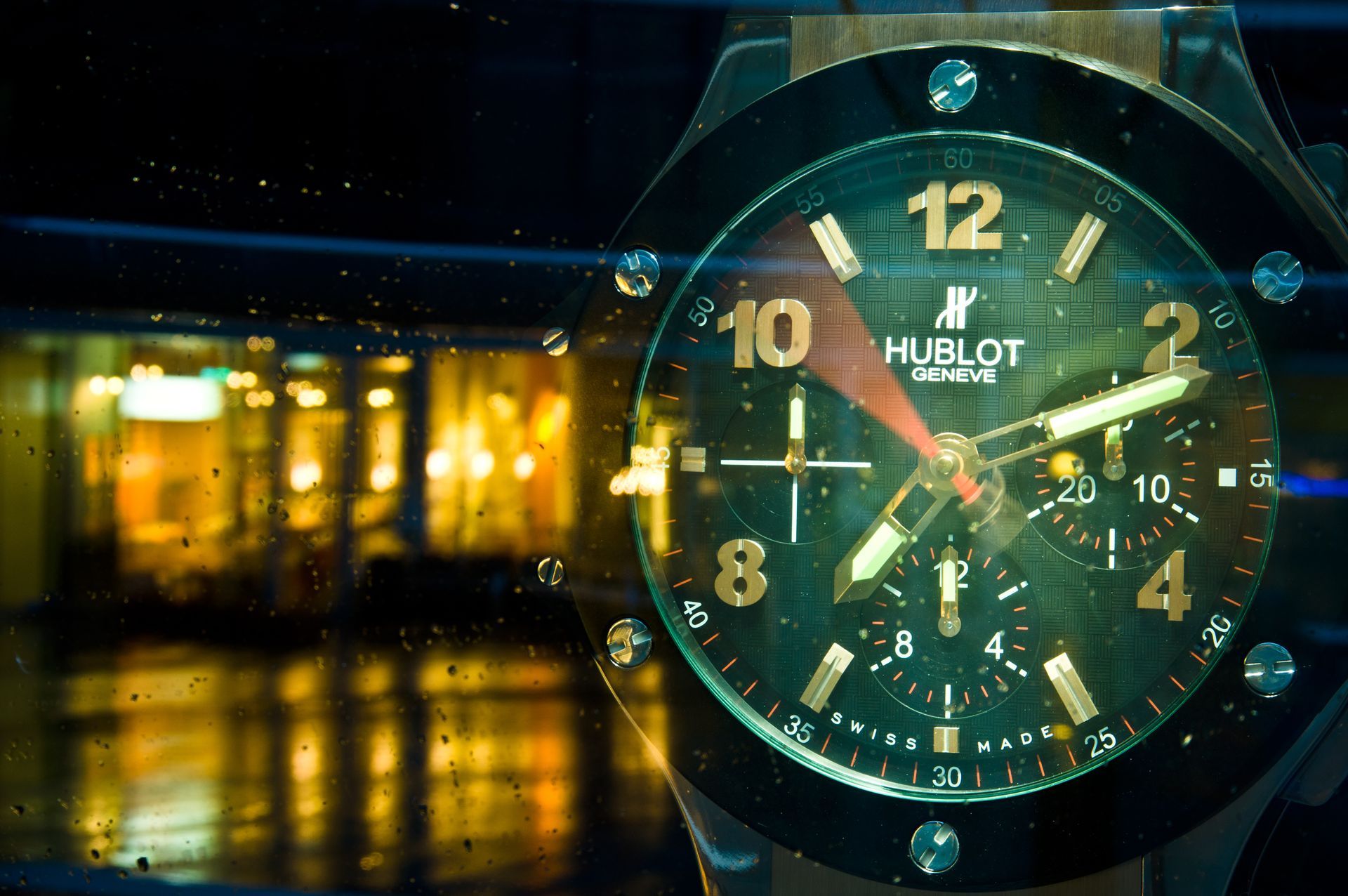
Hublot UNICO Calibre: The In-House Flyback Chronograph
The UNICO calibre was Hublot's entry into the ranks of genuine watch manufactures — companies that design and produce their own movements rather than purchasing calibres from Swiss movement suppliers. Introduced in 2010, the HUB1240 flyback chronograph movement was developed at the newly built Nyon manufacture and demonstrated that Hublot's ambitions extended beyond case design and material innovation into the mechanical core of the watch.
The Path to In-House Movement
Photo: La MèreVeille — CC BY-SA 4.0 — Wikimedia Commons
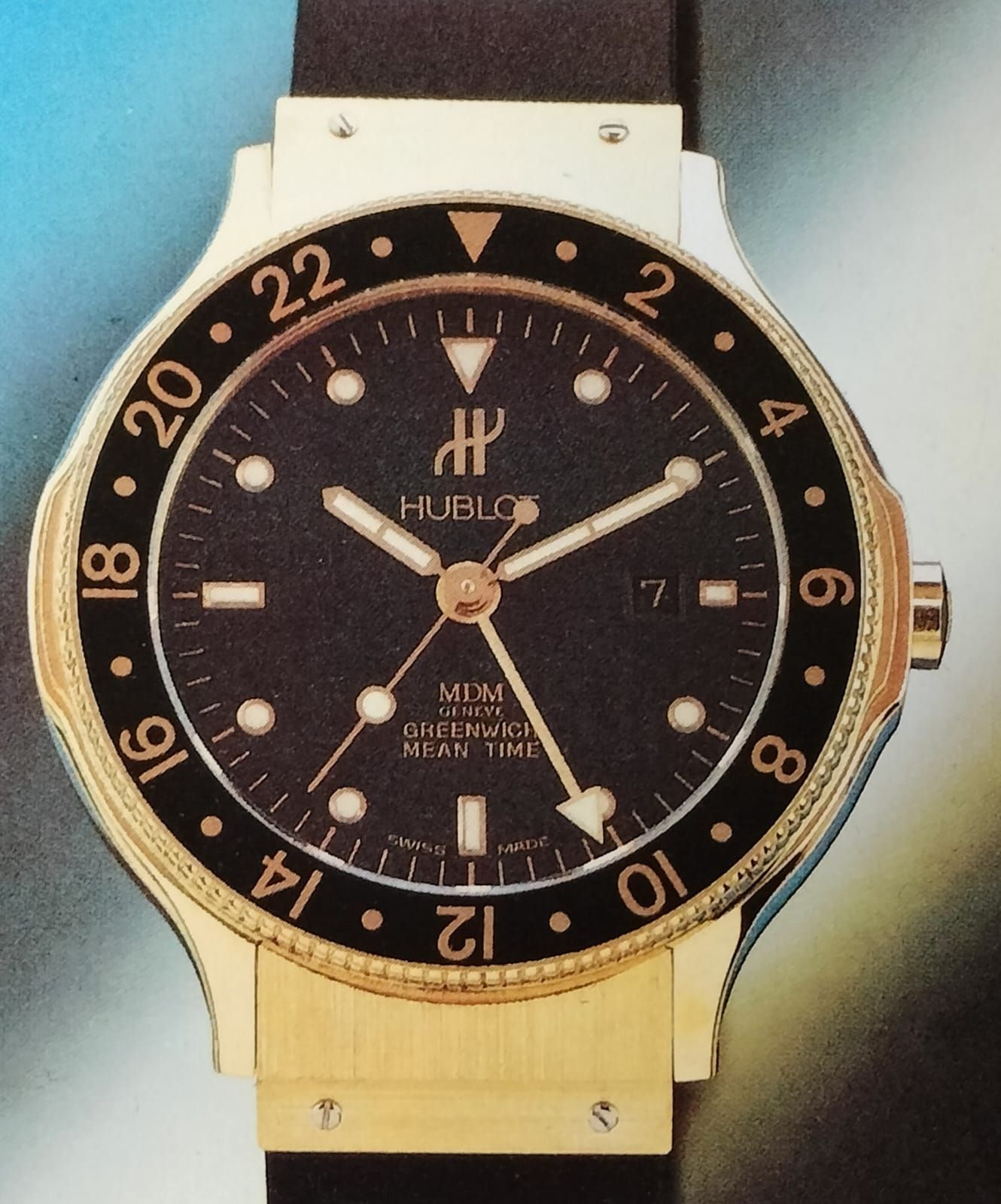
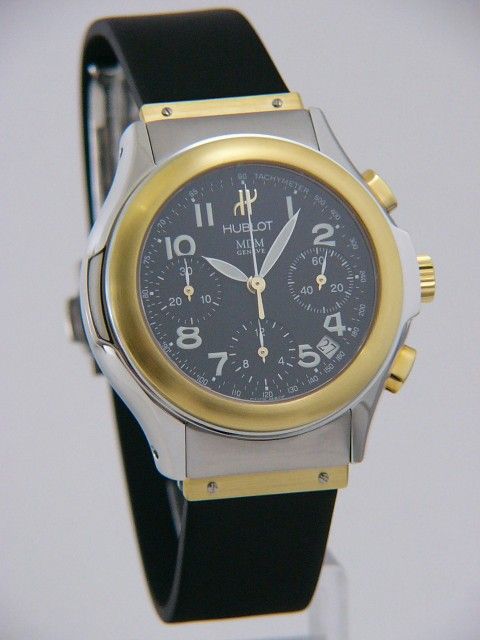
When Jean-Claude Biver acquired Hublot in 2004 and introduced the Big Bang in 2005, the movement was a modified ETA 2892 — a well-regarded Swiss automatic ebauche with a chronograph module added. This was a common approach for new luxury watch brands: use an established movement supplier's calibre, modify it for the brand's specifications, and focus development resources on case design and marketing.
The limitation of this approach: Hublot could not credibly claim manufacture status, and the ETA-based movement was not exclusive — competitors could use the same calibre. As Hublot's commercial success grew through 2006–2009, the argument for in-house movement development became stronger.
The LVMH acquisition in 2008 provided the capital; the Nyon manufacture (inaugurated 2009) provided the facility; and the engineering team assembled at Nyon provided the technical capability.
HUB1240 — UNICO Specifications
Photo: Clyde94 — CC BY-SA 4.0 — Wikimedia Commons
| Specification | Detail |
|---|---|
| Calibre | HUB1240 |
| Type | Automatic flyback chronograph |
| Frequency | 28,800 vph (4 Hz) |
| Power reserve | 72 hours |
| Jewels | 330 components, 37 jewels |
| Chronograph | Column-wheel flyback |
| Winding | Bidirectional rotor |
| Height | 8.05mm |
The flyback function allows the chronograph to be reset and restarted with a single button push — rather than the standard stop-reset-start sequence requiring three pushes. This is practically useful for timing consecutive intervals (laps, stages) without manually managing three pushes between timings.
The column wheel chronograph mechanism provides more consistent actuation than a cam-based alternative. As the column wheel rotates, its columns physically engage or disengage the chronograph levers, providing a precise and repeatable trigger feel.
UNICO Architecture — Key Design Decisions
Photo: Uhrenhandel.de — CC BY-SA 3.0 — Wikimedia Commons
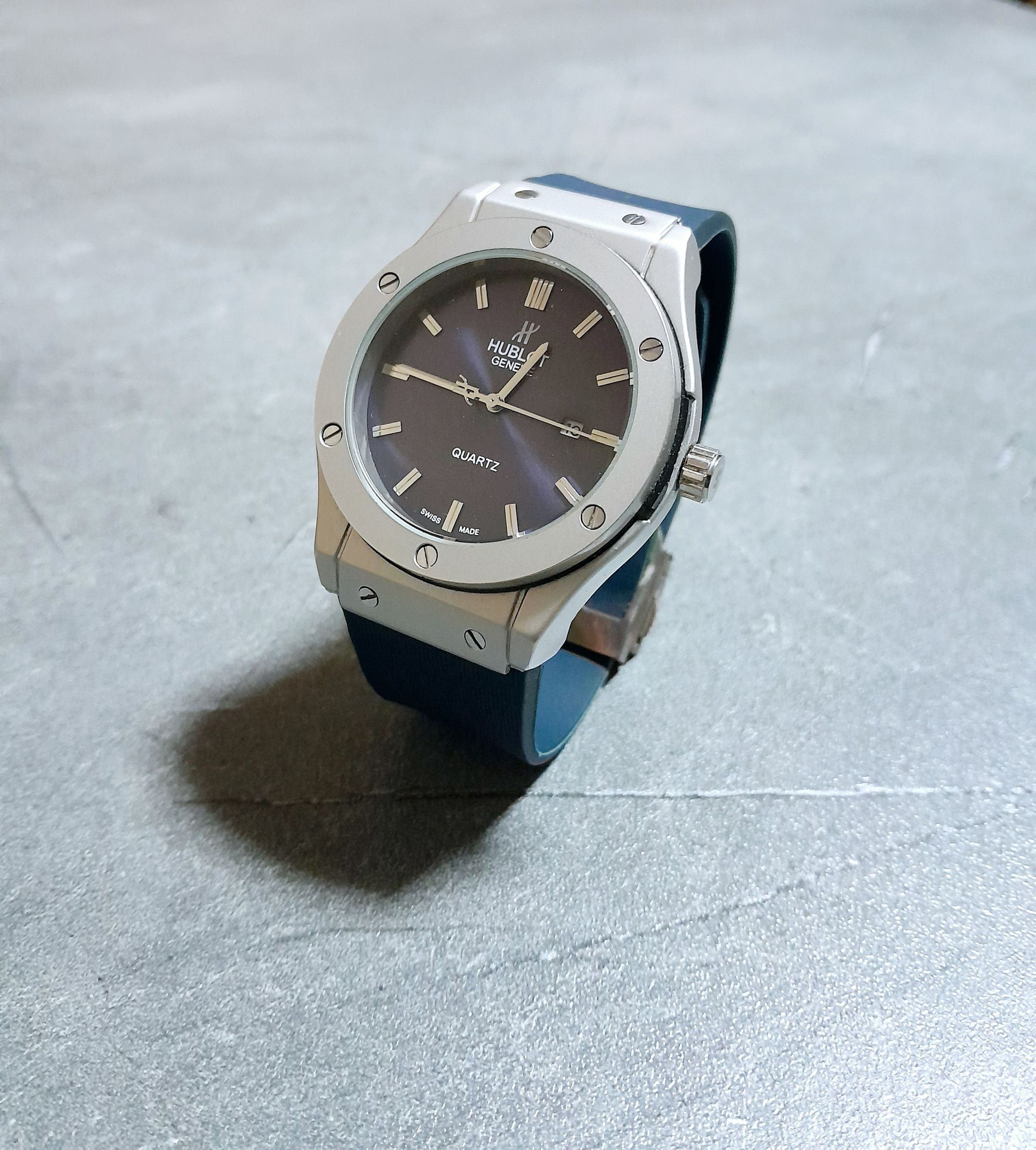
Integrated column wheel: The column wheel is visible through the dial in many Big Bang UNICO references — a design choice that turns the column wheel from a hidden mechanism into a visual element. The column wheel's rotation during chronograph operation is a kinetic display of the mechanism's function.
One-piece chassis: The UNICO's base plate and bridges are designed as an integrated architecture — components designed from the beginning to work as a system rather than adapted from separate suppliers. This increases manufacturing complexity but provides tighter tolerances between components.
Horizontal clutch: The UNICO uses a horizontal (lateral) clutch rather than a vertical clutch for chronograph engagement. The horizontal clutch provides smooth chronograph start — no jerk in the running seconds hand at the moment of engagement — at the cost of slightly more complex mechanism geometry.
UNICO 2 — The Evolution
Photo: Yorqulov Husan — CC BY 4.0 — Wikimedia Commons
The UNICO 2 (HUB1280), introduced in 2019, evolved the original UNICO architecture:
- Redesigned rotor with improved winding efficiency
- Revised column wheel geometry
- Reduced component count
- Updated skeletonisation options
The UNICO 2 demonstrates that Hublot's in-house movement programme was iterative rather than static — the manufacture was capable of developing the calibre further based on production experience and design feedback.
MECA-10 — The Manual-Wind Variant
The MECA-10 (HUB1201) is a separate in-house manual-wind calibre:
| Specification | Detail |
|---|---|
| Calibre | HUB1201 |
| Type | Manual-wind |
| Power reserve | 10 days (240 hours) |
| Barrels | 6 series-coupled |
The 10-day power reserve is achieved through six mainspring barrels arranged in series — each barrel contributing its torque in sequence as the previous one empties. The six-barrel arrangement is visible through the movement's partially open dial, making the power storage architecture a visual element of the watch.
UNICO in Hublot Context
Photo: Adam Kliczek — CC BY-SA 3.0 PL — Wikimedia Commons
The UNICO's commercial significance: it allows Hublot to credibly claim "Swiss manufacture" status on the movement front, not merely the case and materials front. A luxury brand selling watches above CHF 20,000 is increasingly expected to produce its own movements; the UNICO fulfils this expectation for the Big Bang and Classic Fusion chronograph references.
The UNICO also provides Hublot with a movement that is genuinely exclusive — competitors cannot buy the same calibre from ETA or another supplier. This exclusivity argument is important in the luxury tier, where movement provenance is a standard part of watch journalism and retail discussion.